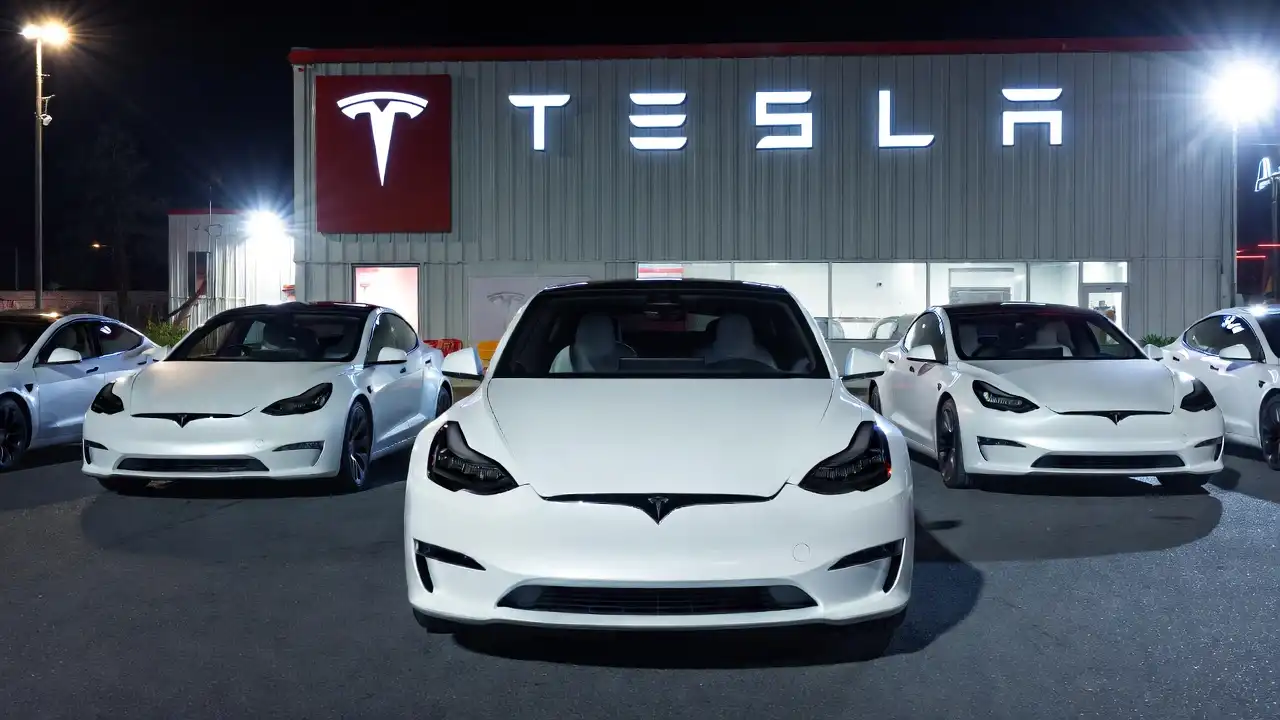
United States federal auto safety regulators opened a formal safety investigation into an estimated 1.2 million Tesla electric vehicles following multiple reports of severe front suspension component failures. The Office of Defects Investigation within the National Highway Traffic Safety Administration launched a Preliminary Evaluation covering 2017 through 2026 model years for the Tesla Model S, Model X, Model 3, and Model Y. The federal safety inquiry focuses on allegations that lower control arms, fore-links, and aft-link assemblies inside the front suspension structure are cracking, fracturing, or completely detaching from wheel hubs during operation, creating an immediate risk of sudden steering loss and vehicle crashes.
According to technical complaints submitted by vehicle owners, the front suspension fore-link can shear or separate without warning, causing the front wheel assembly to tilt outward or collapse into the inner fender well. Drivers reported experiencing sudden mechanical popping sounds followed by immediate loss of directional control, with several incidents occurring at highway speeds or during routine turning maneuvers. When a suspension control arm breaks, the collapsed wheel hub jams against the tire, locking the wheel geometry and leaving the driver unable to steer or safely bring the electric vehicle to a stop.
This sweeping federal safety evaluation marks one of the largest physical hardware investigations ever directed at the Austin, Texas-headquartered automaker. While Tesla previously addressed the vast majority of federal safety inquiries by deploying wireless over-the-air software updates, a physical suspension defect cannot be fixed through computer code. If the preliminary evaluation escalates into an official engineering analysis and a mandatory safety recall, Tesla will face a massive physical service operation requiring technicians to replace suspension hardware across hundreds of thousands of customer vehicles.
TechGolly provides an in-depth automotive safety and engineering analysis of the federal Tesla suspension investigation, evaluating double-wishbone suspension physics, heavy electric vehicle weight dynamics, historical consumer defect complaints, Federal Motor Vehicle Safety Standards, service center repair costs, and corporate financial consequences.
Unpacking the Mechanical Physics of the Front Suspension Failure
To understand why front suspension components on Tesla vehicles are fracturing, automotive engineers and safety researchers must evaluate the complex physical forces acting upon an electric vehicle’s chassis.
Tesla utilizes independent front suspension architectures across its model lineup. The Model S and Model X feature double-wishbone front suspension setups, while the high-volume Model 3 and Model Y utilize multi-link MacPherson-style front suspension geometry. In both configurations, lower control arms, fore-links, and aft-links act as critical structural bridges, connecting the steering knuckle and wheel hub assembly to the vehicle’s structural subframe.
These aluminum alloy suspension links must absorb continuous, complex physical stresses during daily driving:
- First, vertical impact loads caused by driving over road potholes, speed bumps, and expansion joints.
- Second, lateral cornering forces generated when the vehicle turns through sharp curves at speed.
- Third, intense longitudinal braking forces transferred through the control arms whenever the driver applies the brakes or regenerative braking activates.
Electric vehicles present a unique mechanical challenge for suspension engineers due to their heavy curb weights and immediate motor torque. Because battery-electric vehicles carry massive high-voltage lithium-ion battery packs beneath the cabin floor, they weigh significantly more than comparable internal combustion engine vehicles. A dual-motor Tesla Model X weighs over 5,300 pounds, while a Model S weighs over 4,500 pounds.
The combination of heavy vehicle mass, instant electric motor torque, and rigid low-profile tires exerts extreme mechanical stress on cast aluminum suspension links. If the aluminum alloy contains microscopic casting voids, improper heat treatment, or insufficient wall thickness, repetitive road impacts induce structural metal fatigue. Over time, microscopic fatigue cracks propagate through the control arm until the component suffers a complete structural fracture under normal road loads.
When a lower fore-link snaps, the bottom of the wheel hub loses its structural attachment to the vehicle frame. Unanchored, the spinning tire flops sideways into the plastic wheel liner, grinding against structural body panels and locking the steering linkage, leaving the driver completely unable to steer the vehicle.
The Historical Legacy of Tesla Suspension Complaints
The launch of a formal 1.2-million-vehicle federal safety inquiry represents the culmination of a decade-long history of consumer complaints and regulatory scrutiny regarding Tesla’s suspension durability.
For years, automotive enthusiasts, independent mechanics, and consumer safety advocates tracked recurring suspension failures on early Model S and Model X vehicles, coining the colloquial industry phrase “whompy wheel” to describe instances where a Tesla’s wheel assembly collapsed inside its fender.
In 2020, under intense pressure from Chinese government regulators at the State Administration for Market Regulation, Tesla executed a mandatory recall covering over 30,000 imported Model S and Model X vehicles in China to replace defective front and rear suspension links. However, in communications with American safety regulators at the time, Tesla contested the necessity of a similar recall in the United States, arguing that the Chinese failures were caused by “driver abuse” and aggressive driving on poor road surfaces rather than a systemic engineering design flaw.
Subsequent investigative reports revealed internal corporate documentation showing that Tesla service centers had documented thousands of suspension link and control arm failures on low-mileage vehicles operating under normal driving conditions—frequently under 50,000 miles. In many cases, Tesla technicians attributed the structural fractures to “prior external damage,” charging out-of-warranty customers thousands of dollars for control arm and steering knuckle replacements.
Previous federal inquiries also examined specific suspension fasteners, including a recall addressing loose lateral link bolts on Model 3 and Model Y vehicles and a separate service action addressing corroded aluminum power steering motor bolts in cold-weather states. The current 1.2-million-vehicle evaluation consolidates these historical concerns into a comprehensive federal review of Tesla’s front suspension engineering across its entire product lineup.
Preliminary Evaluation Mechanics: How NHTSA Conducts Defect Investigations
The opening of a Preliminary Evaluation by the NHTSA Office of Defects Investigation initiates a structured, multi-phase administrative process that determines whether a motor vehicle manufacturer must execute a mandatory safety recall.
The regulatory process begins when federal safety engineers identify a potential safety defect pattern by analyzing Vehicle Owner Questionnaires submitted directly by consumers, technical service bulletins issued by automakers, insurance field reports, and police accident files.
During the Preliminary Evaluation phase, federal investigators execute three primary investigative tasks:
- First, requesting comprehensive internal engineering data, field failure logs, customer complaint records, and warranty claim statistics directly from Tesla.
- Second, conducting independent metallurgical laboratory testing on failed suspension control arms recovered from customer vehicles to determine whether component fractures stem from metal fatigue, casting defects, or external road impacts.
- Third, evaluating crash records and injury reports to quantify the real-world safety hazard posed by fore-link separation on public highways.
If the data gathered during the Preliminary Evaluation indicates a widespread safety risk, the agency upgrades the inquiry to an Engineering Analysis. During an Engineering Analysis, federal engineers conduct physical vehicle testing and mathematical risk modeling.
If the Engineering Analysis confirms the presence of a safety defect that violates Federal Motor Vehicle Safety Standards, NHTSA issues a formal recall demand letter. Under the National Traffic and Motor Vehicle Safety Act, an automaker faced with a formal recall order must notify all affected vehicle owners and provide free, manufacturer-funded hardware repairs at certified service centers.
Comparing Software Over-the-Air Recalls with Physical Hardware Repairs
For Wall Street financial analysts and automotive industry observers, evaluating NHTSA’s safety investigation requires distinguishing between digital software updates and physical hardware recalls.
Over recent operating quarters, Tesla faced numerous high-profile NHTSA recalls addressing issues such as Autopilot driver-monitoring alerts, door-unlocking logic during crashes, seatbelt warning chimes, and small touchscreen font sizes. Tesla resolved virtually all of these safety recalls through over-the-air (OTA) software updates pushed directly to customer vehicles over wireless cellular connections. A software recall costs Tesla virtually zero marginal capital and requires no customer visits to physical service centers.
In contrast, resolving a physical suspension defect requires an intensive, highly expensive physical service campaign:
- Mechanics cannot fix a cracked aluminum control arm or an improperly manufactured ball stud using software code.
- A physical suspension recall across 1.2 million vehicles requires manufacturing over 2.4 million replacement suspension links, shipping heavy metal components to service centers worldwide, and booking millions of physical service appointments.
Furthermore, every suspension repair requires dedicated technician labor. Mechanics must hoist the vehicle on a service lift, unbolt old suspension components, install reinforced replacement control arms, and execute a full four-wheel laser alignment to ensure proper tire wear and autonomous driving camera calibration.
Executing a physical hardware recall at this scale creates massive service center bottlenecks, extending customer service wait times and exposing Tesla to significant operational expenses.
Financial Impact on Tesla Service Networks and Operating Margins
The financial consequences of a potential physical suspension recall on 1.2 million vehicles would create a substantial financial drag on Tesla’s corporate balance sheet at a moment when operating margins are already compressed.
Replacing front control arms, fore-links, and executing four-wheel alignments on a dual-motor electric vehicle costs between $800 and $1,400 per vehicle in parts and specialized labor. If NHTSA orders a mandatory physical recall covering 1.2 million vehicles, the direct hardware and labor repair expenses could cost Tesla between $960 million and $1.6 billion in direct warranty expenditures.
These potential recall expenses arrive at a sensitive moment for Tesla’s financial reporting. In its second-quarter financial disclosures, Tesla reported record revenue of $28.24 billion, but saw its GAAP operating margin drop to just 1.4%, down from 4.1% in the prior-year period. Core automotive gross margins compressed as Tesla deployed aggressive promotional financing and price discounts to sustain vehicle delivery volumes.
A $1 billion-plus physical warranty charge would absorb a substantial portion of Tesla’s operating cash flow, compounding the quarterly cash drain driven by $5.79 billion in capital expenditures on artificial intelligence infrastructure, liquid-cooled data centers, and the Optimus humanoid robot.
Beyond direct repair costs, Tesla faces secondary legal exposure. If NHTSA concludes that Tesla’s suspension design was defective and that the company possessed advance knowledge of component failures, owners who previously paid thousands of dollars out-of-pocket for out-of-warranty control arm repairs could demand full retroactive financial reimbursement.
Furthermore, plaintiff law firms could leverage NHTSA’s findings to expand pending class-action lawsuits, alleging that suspension defects reduced vehicle resale values and exposed drivers to unreasonable safety hazards.
Consumer Trust and Warranty Expense Allocations
Managing a large-scale physical safety inquiry also introduces significant brand reputation and customer satisfaction risks for Tesla.
Unlike traditional legacy automakers that operate extensive networks of independent franchised dealerships, Tesla operates a direct-to-consumer sales and service model. Tesla owns and operates its service centers directly. Consequently, any sudden spike in service center appointments created by mandatory recall inspections impacts Tesla’s internal operating capacity directly.
Tesla owners in major metropolitan markets already report long wait times for routine service appointments and collision repairs. Forcing service centers to absorb 1.2 million mandatory suspension inspection and repair appointments would overload service facilities, extending customer wait times and lowering brand loyalty scores.
To protect customer satisfaction, Tesla management must allocate additional capital to expand mobile service fleets, hire certified chassis technicians, and establish dedicated fast-lane recall service bays at regional service hubs, ensuring that recall inspections are completed efficiently without alienating existing vehicle owners.
Strategic Outlook for Tesla Quality Control and Regulatory Oversight
The 1.2-million-vehicle safety investigation marks a crucial turning point in regulatory oversight for Tesla, signaling that federal safety agencies are applying strict, uncompromising scrutiny to both digital software and physical vehicle hardware.
Looking forward over the coming year, Tesla faces a dual regulatory gauntlet:
- On the software front, NHTSA’s Office of Defects Investigation continues to monitor the real-world performance of Tesla’s Full Self-Driving (Supervised) and Autopilot systems, evaluating driver-monitoring effectiveness, emergency vehicle avoidance, and system performance during adverse weather conditions.
- On the hardware front, the 1.2-million-vehicle suspension evaluation will force Tesla’s manufacturing and materials engineering teams to execute comprehensive structural audits across its global assembly plants in Fremont, California; Austin, Texas; Berlin, Germany; and Shanghai, China.
To prevent future physical suspension failures, Tesla’s chassis development teams are updating component specifications for current and future vehicle models. The company is adopting heavier-duty forged aluminum control arms, optimizing bushed joint geometry to reduce point-stress concentrations, and enhancing quality control audits at aluminum casting suppliers.
Furthermore, as Tesla prepares to launch dedicated high-mileage commercial vehicle platforms—specifically the Cybercab autonomous robotaxi—ensuring extreme physical component durability becomes a mandatory business requirement. A commercial robotaxi operating 18 hours a day in dense urban traffic cannot tolerate fragile suspension links that fracture under routine road impacts.
Building vehicles that satisfy federal 16G crash standards and endure hundreds of thousands of miles of heavy commercial usage will require Tesla to re-prioritize rugged physical hardware engineering alongside its artificial intelligence software ambitions.
Key Takeaways for EV Owners, Automotive Executives, and Investors
The opening of NHTSA’s 1.2-million-vehicle suspension investigation delivers vital strategic lessons for electric vehicle owners, automotive manufacturing executives, component suppliers, and Wall Street investors.
First, physical hardware engineering remains the non-negotiable foundation of automotive safety. While artificial intelligence software and digital infotainment systems capture public attention, electric vehicles are heavy physical machines that require rugged, durable chassis components capable of enduring extreme mechanical stress over multi-year lifespans.
Second, electric vehicle weight dynamics require specialized component engineering. Automakers transitioning to battery-electric vehicles must design suspension links, control arms, and wheel hubs that account for the heavy curb weights and instant electric motor torque unique to electric platforms.
Third, physical hardware recalls carry substantial financial liabilities. Unlike over-the-air software updates, physical hardware recalls require massive parts manufacturing, specialized technician labor, and physical service center infrastructure, imposing direct cash costs that compress corporate operating margins.
Finally, transparent quality management is essential for long-term corporate leadership. Automakers that address component durability issues proactively, cooperate transparently with federal safety regulators, and honor customer warranty claims will preserve public trust and maintain sustainable leadership in the global electric vehicle economy.