

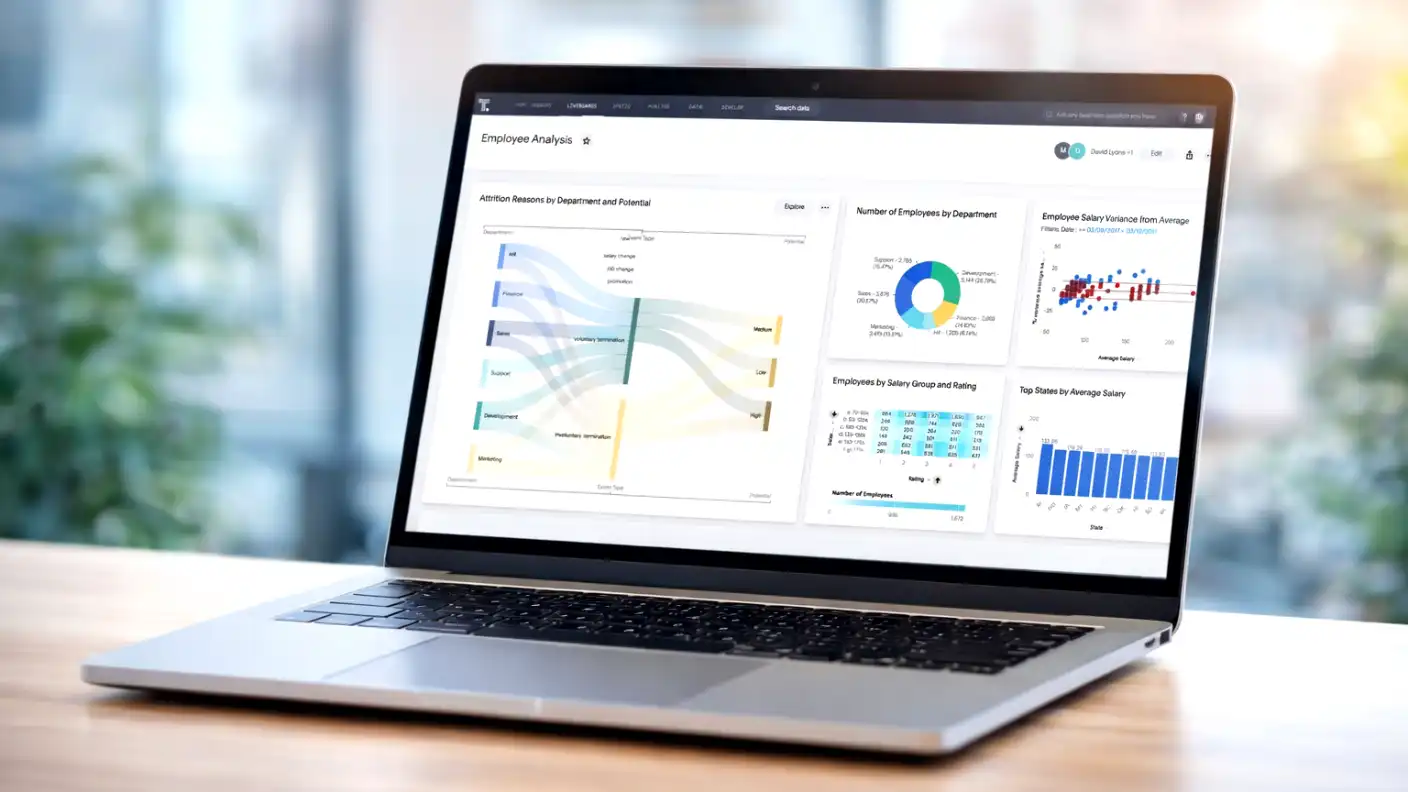
In the world of Business Intelligence (BI), the greatest hurdle has always been the gap between data and decision-making. Traditional BI tools require users to submit requests to analysts, wait for custom dashboards to be built, and hope the resulting charts answer the right questions. ThoughtSpot BI flips this script by bringing a search-based, AI-powered interface to enterprise data, allowing anyone—from the CEO to the store manager—to find answers instantly.
By leveraging Large Language Models (LLMs) and natural language processing, ThoughtSpot has evolved from a simple search box into a comprehensive data platform. In this review, we examine whether ThoughtSpot’s “Search-as-a-Service” model delivers on its promise to democratize data analytics for modern, fast-moving organizations.
What is ThoughtSpot BI?
ThoughtSpot is a modern analytics platform that enables users to analyze massive, complex data sets using natural language search. Instead of clicking through pre-defined filters and complex menus, you simply type a question like, “Show me revenue by region for last quarter,” and the platform generates a dynamic visualization in seconds.
It is designed for companies that have outgrown static dashboards and need a “data-first” culture. By connecting directly to cloud data warehouses such as Snowflake, Databricks, or BigQuery, ThoughtSpot eliminates the need to move or copy your data, ensuring every insight is based on a single, secure source of truth.
Key Features and Capabilities
The platform is designed to reduce the friction of data exploration, making it accessible to non-technical users while providing enough power for data scientists. These features are designed to transform how teams interact with their business metrics.
Search-Driven Analytics (SearchIQ)
The core of ThoughtSpot is its search interface, which is powered by a proprietary natural language processing (NLP) engine. It understands the context of your data, recognizing synonyms, industry-specific terminology, and even fuzzy queries.
- Natural Language Querying (NLQ): Type questions in plain English and receive instant, auto-generated charts and tables.
- Drill-Down Capabilities: Click on any data point to “drill into” the details, automatically uncovering the root cause of a specific trend.
- AI-Generated Insights: The “SpotIQ” feature proactively searches your data for anomalies, patterns, and trends you didn’t even know to ask about.
Live Data Connectivity
Unlike legacy BI tools that require you to extract and load data into their proprietary engines, ThoughtSpot works directly on top of your existing cloud data warehouse. This “Live Analytics” approach ensures your data is always up to date.
- Zero-ETL Integration: Connects seamlessly to Snowflake, Amazon Redshift, Google BigQuery, and Microsoft Azure Synapse.
- Security & Governance: Leverages the robust security protocols of your existing data warehouse to manage user access and row-level security.
- Scalability: Since it queries the warehouse directly, it can handle billions of rows of data without sacrificing performance.
Pros and Cons of ThoughtSpot BI
Adopting a search-based BI strategy requires a significant shift in how an organization handles data. Here is a breakdown of the specific benefits and challenges of deploying ThoughtSpot in your business.
Advantages
The following features make ThoughtSpot a market leader for companies that prioritize speed and self-service analytics.
- Accessibility: By removing the need for SQL knowledge, it empowers non-technical employees to answer their own business questions.
- Speed-to-Insight: It drastically reduces the time between asking a question and receiving a visualized answer, accelerating business decision-making.
- Proactive AI: The SpotIQ engine acts as a virtual data scientist, highlighting hidden anomalies and trends that human users might overlook.
Disadvantages
It is important to understand the technical and financial hurdles involved in implementing an AI-driven platform.
- Setup Complexity: Configuring the data modeling layer (ThoughtSpot Modeling Language) requires a high degree of technical expertise to ensure accurate search results.
- Cost: ThoughtSpot is positioned as an enterprise-grade solution, and its pricing can be steep compared to lighter dashboarding tools.
- Requirement for Clean Data: The search functionality is only as good as your underlying data quality; “garbage in, garbage out” applies strictly to NLQ models.
Final Verdict
ThoughtSpot BI is more than just a visualization tool; it is a fundamental shift in how organizations treat information. For businesses that have a robust, clean data warehouse and a culture that wants to move fast, it provides an unparalleled advantage. It effectively bridges the gap between data-rich infrastructure and decision-making teams.
While the upfront investment in both capital and data modeling is significant, the ROI lies in the hours of analyst time saved and the speed at which managers can now respond to market changes. If your organization is ready to move beyond static, outdated dashboards, ThoughtSpot is arguably the most forward-thinking analytics platform available in 2026.






