Europe’s space race has reached a historic milestone as Finnish synthetic-aperture radar (SAR) satellite pioneer ICEYE secured a massive growth funding round, lifting its corporate valuation to a staggering €10 billion. This landmark transaction marks one of the largest private space and defense-technology financings in European history.
As geopolitical tensions and territorial conflicts intensify across the globe, allied governments are treating space-based surveillance not as a luxury but as an absolute operational requirement. By building, launching, and operating the world’s largest fleet of radar-imaging satellites, the Helsinki-adjacent startup has transformed itself from an ambitious engineering project into a primary contractor for national security infrastructure.
This comprehensive exploration examines the rapid rise of Europe’s newest technology decacorn. It details the unique mechanics of synthetic-aperture radar technology, breaks down the €1 billion Series F funding round, analyzes the company’s extraordinary financial growth, and explores how this Finnish aerospace leader is positioning Europe to maintain strategic, independent technology platforms in Earth’s orbit.
Understanding the Synthetic-Aperture Radar Revolution
To understand why the international investment community has valued a satellite startup at €10 billion, one must first look at the physical limitations of traditional space-based imaging. For decades, the global earth observation market relied almost entirely on optical satellites—essentially massive, high-powered cameras floating in space.
While these optical satellites can capture beautiful, high-resolution color photographs, they suffer from a severe operational flaw: they are completely blind in the dark. If a storm system rolls in, or if heavy smoke, mist, or cloud cover blankets a region, optical satellites cannot see the ground below, making them highly unreliable for time-sensitive military operations or emergency disaster response.
Synthetic-aperture radar (SAR) technology completely solves this visibility issue. Instead of relying on ambient sunlight, a SAR satellite acts as an active sensor, emitting microwave pulses toward the Earth’s surface and measuring the reflected signals. Because microwaves easily pass through clouds, smoke, rain, and absolute darkness, SAR systems can capture highly detailed, high-resolution imagery of the ground below, day or night, rain or shine.
Key Components of ICEYE’s Satellite Dominance
The company’s ability to dominate the global radar-imaging market relies on five highly integrated technical and strategic components:
- Miniaturized Radar Payloads: Engineering highly advanced, complex SAR hardware into micro-satellites weighing under 100 kilograms, reducing manufacturing costs by an order of magnitude.
- High-Revisit Constellations: Operating a fleet of dozens of satellites orbiting the Earth every 90 minutes, providing continuous, persistent monitoring of any location on the planet.
- Deployable ISR Cells: Designing mobile software and ground-station units that push real-time satellite imagery directly to military maneuvers on the battlefield.
- Vertically Integrated Production: Building complete, launch-ready satellites in-house at its Espoo, Finland, headquarters in less than 11 weeks.
- Sovereign Procurement Models: Selling complete, dedicated satellite systems directly to allied governments, establishing a stable, long-term national security backlog.
Recent Developments in the €1 Billion Series F Funding
The dramatic valuation leap occurred on June 9, 2026, when the aerospace pioneer announced the completion of its Series F financing round. The transaction represents a massive capital injection designed to help the company expand its global footprint, accelerate satellite production, and meet the soaring demand for sovereign intelligence systems.
Joining the €10 Billion Decacorn Elite
The primary Series F equity round raised €450 million (approximately $520 million) in fresh capital, led by global growth equity firm General Atlantic. When combined with a secondary share placement that allowed early investors to realize some of their gains, the total transaction exceeded €1 billion (approximately $1.15 billion).
This massive funding round values ICEYE at a post-money primary valuation of over €10 billion, representing an extraordinary quadrupling of the company’s value from its previous €2.4 billion ($2.8 billion) valuation recorded just six months ago. With this transaction, the company has officially become only the third technology startup in Finnish history to surpass the €10 billion decacorn threshold, joining healthtech leader Oura and mobile gaming giant Supercell.
A Powerful Alliance of Global Investors
The funding round brought together a powerful coalition of domestic, sovereign, and international institutional investors. Co-investors in the round included Solidium Oy (the Finnish state-backed investment company), Tesi, Varma, Ilmarinen, Lifeline Ventures, and global growth venture firm TCV.
Notably, Finnish telecommunications and industrial communications giant Nokia also participated heavily in the round, signaling a growing desire among established European industrial leaders to partner with next-generation space technology platforms.
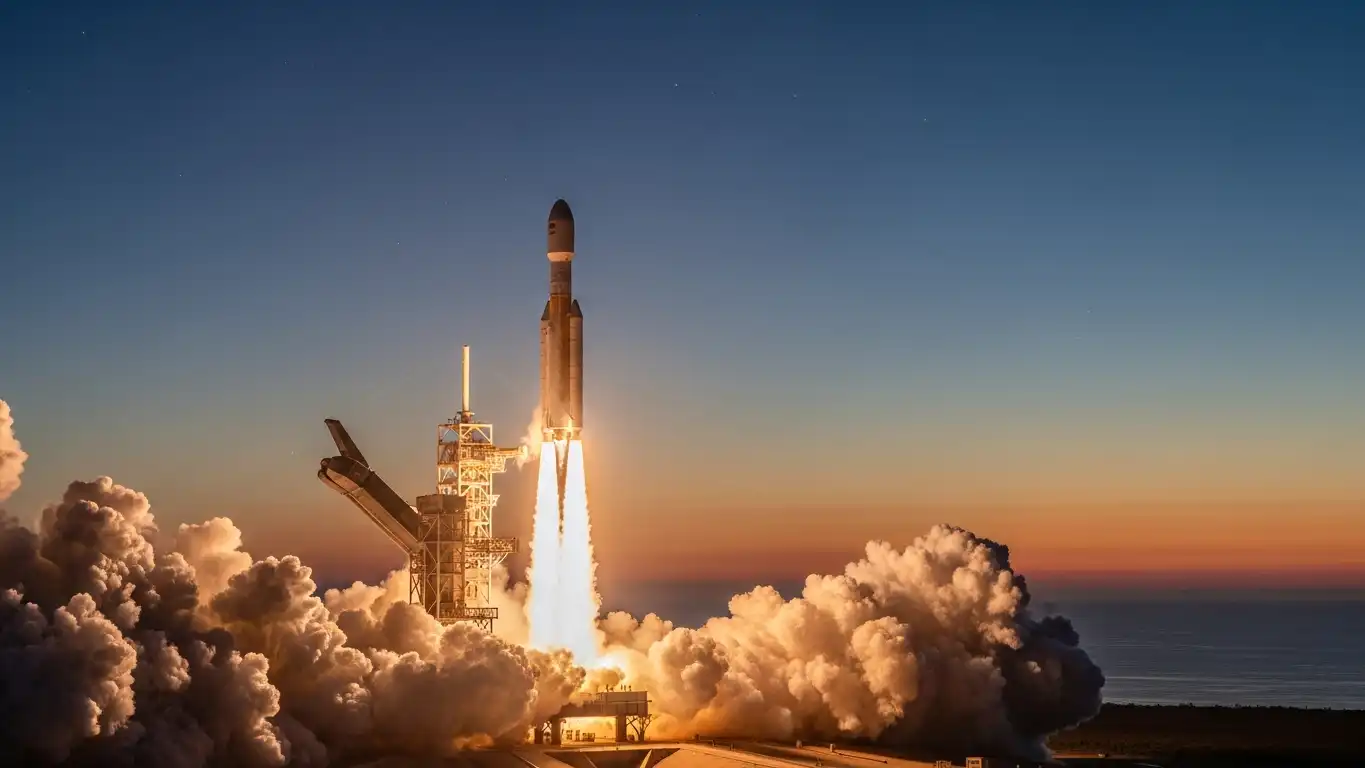
This successful funding round occurred just as the global space industry prepares for a highly anticipated SpaceX IPO scheduled for next week. As one of SpaceX’s primary European rideshare customers, routinely launching its payloads aboard Falcon 9 rockets, the company’s massive €10 billion valuation highlights the explosive capitalization currently underway across the aerospace and defense technology sectors.
Notable Financial Figures and Corporate Performance
While many high-flying aerospace startups struggle with high burn rates and distant paths to profitability, the company’s financial records show a highly disciplined, profitable business model that is scaling rapidly.
According to its audited financial briefings, the company reached a major commercial inflection point, where revenue growth, profitability, and positive cash generation scaled together. The company’s total revenue exceeded €250 million, more than doubling its prior-year performance and beating its internal projections by 25%.
The company reported earnings before interest, tax, depreciation, and amortization (EBITDA) of more than €100 million, with operating cash flows exceeding €130 million and cash reserves exceeding €350 million. More importantly, the company’s contracted order backlog reached a massive €1.5 billion ($1.7 billion), proving that its revenues are supported by long-term sovereign commitments rather than cyclical commercial spending.
Chief Financial Officer Magdalena Bartos confirmed that based on current contract pipelines, the company is on track to continue its explosive growth rate, aiming to cross the €1 billion ($1.2 billion) annual revenue threshold in 2027.
Ramping Up the Manufacturing Cadence
To satisfy this massive order backlog, the company is fundamentally altering its manufacturing cadence at its main assembly facility in Espoo, Finland. It takes only 10 to 11 weeks for the company’s technicians to build a launch-ready satellite from scratch.
The company currently has more than 64 active satellites in orbit, having launched eight units since the start of the year alone. To meet mounting international demand, the firm is scaling its assembly lines to reach a production rate of one satellite per week (50 units per year) by the end of the year, with a secondary target of reaching 100 satellites per year over the next 24 months.
Landmark Sovereign Defense and Intelligence Contracts
The primary driver behind the company’s massive valuation surge is the rapid militarization of space. In the wake of the ongoing war in Ukraine and rising territorial tensions across Eastern Europe and the Indo-Pacific, allied governments have realized they can no longer rely entirely on the United States for their space-based intelligence needs. They need their own sovereign satellite constellations that operate under full national control.
The company has successfully capitalized on this trend, transitioning from a simple data provider into a major prime contractor for national security infrastructure:
- The €1.7 Billion German Bundeswehr Alliance: In late 2025, the German Armed Forces awarded a massive €1.7 billion “SPOCK 1” satellite procurement contract to a joint venture formed between the company and German defense giant Rheinmetall.
- The Polish Armed Forces’ MikroSAR Program: The company is actively building and deploying a dedicated synthetic-aperture radar satellite constellation under Poland’s Ministry of National Defense to monitor its eastern borders.
- The Atlantic Constellation Initiative: The company is delivering dedicated space assets for the Portuguese Air Force, the Finnish Defense Forces, and Sweden’s Defense Materiel Administration, creating a highly resilient, shared intelligence architecture for allied European nations.
The real-world operational power of these systems was on full display during France’s recent ORION military exercises. During the high-intensity drills, the company successfully embedded a deployable ISR Cell directly inside a French Army infantry brigade’s sensor-to-shooter loop.
This cellular deployment placed satellite tasking, downlink, and data analysis directly inside a maneuver unit on the ground. For the first time in European military history, local tactical commanders could request and receive real-time, high-resolution radar satellite images of the battlefield within minutes, bypassing the slow, centralized bureaucratic channels that typically delay space-based intelligence.
Future Trends in Sovereign Space Technology
As the company deploys its massive new capital reserves, several key technological trends are set to reshape the global earth observation market over the next decade.
The Shift from Optical to Persistent Radar Imaging
The ongoing conflicts in Europe and Asia have proven that traditional optical imaging is highly vulnerable to seasonal weather patterns. During winter months, constant cloud cover and short daylight hours can render optical satellites useless for weeks at a time, leaving military commanders blind to enemy troop movements.
The defense sector is undergoing a permanent structural shift toward persistent radar imaging, utilizing dense constellations of small, low-cost SAR satellites to maintain around-the-clock surveillance of critical geographic zones regardless of weather conditions.
The Transition to Generation 4 Satellites
To maintain its competitive edge over emerging rivals, the company is rapidly deploying its next-generation Generation 4 (Gen4) satellites. These upgraded systems represent a massive technological leap forward:
- Doubling the Radar Antenna Size: The Gen4 satellites feature an antenna that is twice the size of previous models, significantly increasing the radiated power of the microwave pulses.
- 16-Centimeter Image Resolution: This massive power boost enables the satellites to capture the highest-fidelity commercial SAR imagery in the world, down to 16-centimeter resolution.
- 400-Kilometer Swath Width: The Gen4 systems increase the high-resolution imaging area by 250%, expanding the coverage area from a 150-kilometer to a 400-kilometer swath width. This expanded range allows a single satellite to scan vast swathes of land or sea in a single pass, capturing up to 500 images daily while simultaneously downloading the data to ground stations.
Conclusion
The historic €1 billion funding round and €10 billion valuation of ICEYE represent a major, structural victory for the European technology ecosystem. By pioneering the miniaturization of synthetic-aperture radar technology and building the world’s largest commercial SAR constellation, the Finnish startup has proved that Europe can build world-class, strategic aerospace infrastructure entirely independent of United States providers. Supported by an exceptional €1.5 billion contracted order backlog and massive defense contracts with Germany, Poland, and France, the company’s profitable business model stands on a robust financial foundation. As the company continues to scale its manufacturing cadence to one satellite per week and deploys its advanced Gen4 spacecraft, it is successfully shifting the balance of power in Earth’s orbit. The global space race is no longer a private playground for American tech billionaires; with ICEYE leading the charge, Europe is firmly in the driver’s seat of the sovereign space intelligence revolution.