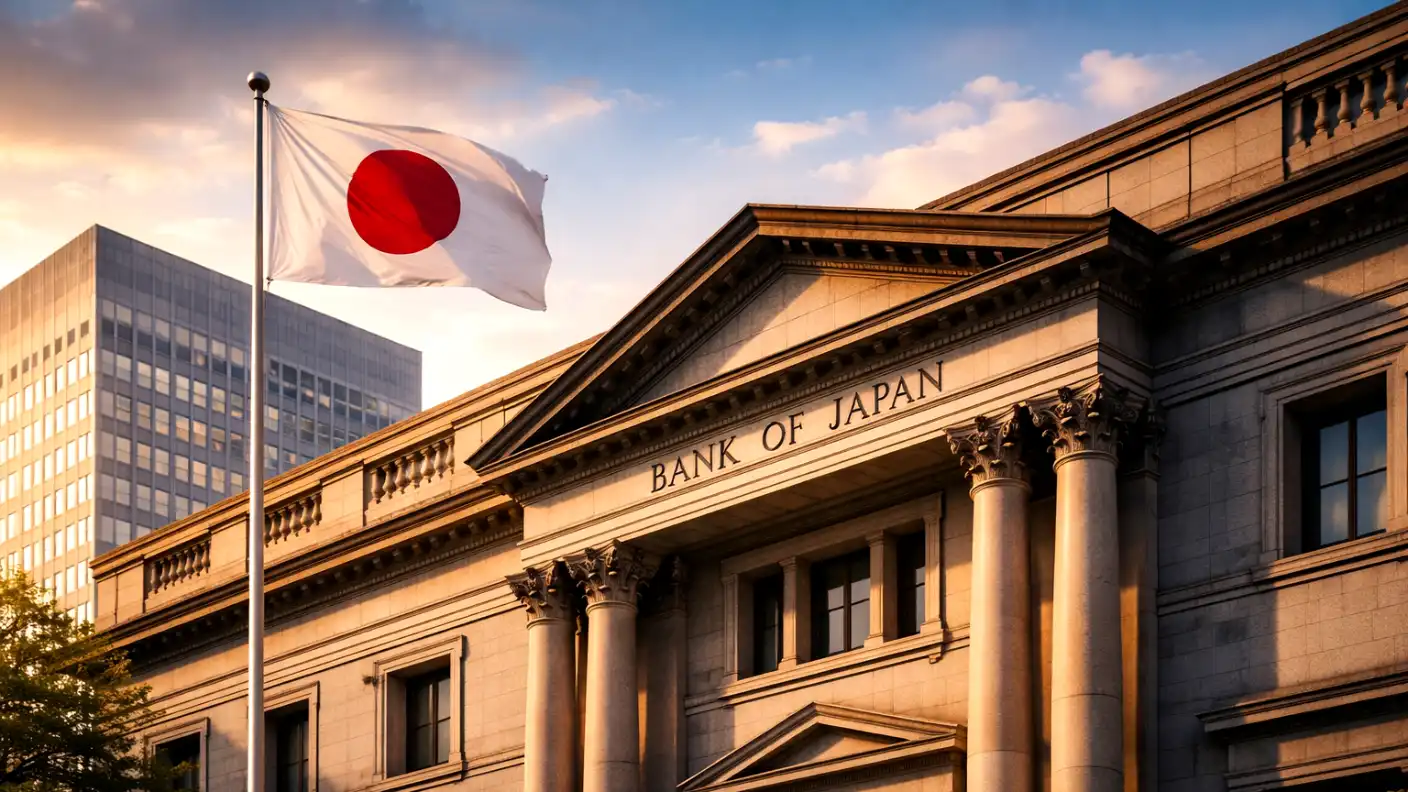
Consumer price growth in Japan’s capital accelerated in July, holding firmly above the central bank’s official target and reinforcing expectations that the Bank of Japan will proceed with further interest rate hikes. According to official data published by the Ministry of Internal Affairs and Communications, the Tokyo core consumer price index—which excludes volatile fresh food prices—rose 2.2% year-over-year. The monthly reading represents an acceleration from the 2.1% gain recorded in June, marking the 26th consecutive month that inflation in Japan’s capital has met or exceeded the central bank’s 2.0% price stability benchmark.
The acceleration in Tokyo inflation is widely recognized across global financial markets as the premier leading indicator for nationwide Japanese price trends. The uptick was driven primarily by a reduction in government utility subsidies, alongside steady price increases for processed foods, dining out, and personal services. A separate index that excludes both fresh food and energy costs—a key metric tracked by monetary policy makers to measure underlying demand-driven price pressures—rose 1.5% year-over-year, confirming that baseline inflation is maintaining a firm floor across the urban economy.
The latest inflation figures provide strong economic justification for Bank of Japan Governor Kazuo Ueda and the Governing Council to continue normalizing monetary policy. Having previously ended negative interest rates and raised short-term borrowing costs to 0.25%, the central bank is preparing to execute additional rate hikes toward 0.50% and beyond. With persistent currency weakness inflating the cost of imported raw materials and corporate wage gains feeding into service sector prices, Japanese central bankers are acting to prevent cost-push inflation from damaging household purchasing power.
TechGolly provides an in-depth macroeconomic analysis of Tokyo’s latest inflation report, evaluating category-level price trends, energy subsidy phaseouts, Bank of Japan policy rate trajectories, service sector wage dynamics, currency exchange physics, and long-term implications for global financial markets.
Unpacking the July Tokyo CPI Data and Category Breakdown
A detailed examination of the July Tokyo consumer price index reveals that price increases are broadening across both goods and services, reflecting a fundamental shift in corporate price-setting behavior across Japan.
The headline Tokyo consumer price index, which includes fresh food, accelerated to 2.2% year-over-year, up from 2.1% in the prior month. The primary contributor to the monthly price acceleration was the energy category, where electricity and gas prices rose as the national government phased out utility relief subsidies that had previously suppressed household energy bills. Reduced utility relief added approximately 0.3 percentage points directly to the headline annual inflation figure.
Food prices remained a major source of upward pressure on household budgets. Processed food costs expanded at an annual rate above 2.8%, driven by higher prices for imported grains, cooking oils, and packaged items. Additionally, eating-out expenses increased by 3.2% year-over-year as restaurant chains and fast-food operators adjusted menu pricing to cover higher food ingredient bills and rising hourly wages for kitchen and service staff.
Conversely, certain non-essential goods categories demonstrated price moderation. Household durable goods and consumer electronics experienced slower price growth as domestic retailers offered promotional discounts to clear inventory. However, structural service categories—including medical care, educational services, and public transportation—maintained steady upward price trajectories, confirming that inflation in Tokyo is increasingly supported by domestic economic activity rather than isolated commodity spikes.
The Reduction of Government Energy Subsidies
To understand the mechanics behind July’s inflation acceleration, analysts must examine the fiscal policy adjustments executed by the Japanese government.
During the height of global energy volatility, Japanese policy makers introduced temporary utility subsidies to shield households and small businesses from skyrocketing international natural gas and crude oil prices. These state subsidies artificially lowered monthly electricity and town gas bills, subtracting up to 0.5 percentage points from headline inflation metrics throughout late 2023 and early 2024.
As global energy markets stabilized, the government initiated a phased reduction of utility relief payments, gradually scaling back subsidies to restore normal market pricing. The reduction of electricity and gas subsidies in early summer allowed retail utility bills to reflect true underlying fuel costs, creating an immediate upward step-change in monthly energy price metrics.
Furthermore, international crude oil benchmarks experienced a dramatic rally, with Brent crude futures surging past $100 per barrel due to military conflicts in Middle Eastern maritime shipping straits and Black Sea supply disruptions. High international petroleum prices, combined with reduced domestic utility subsidies, ensured that energy costs made a positive contribution to July’s headline inflation reading, reinforcing the central bank’s conviction that price pressures will persist.
The Bank of Japan Policy Trajectory: Moving Rates toward 0.50 Percent
The 2.2% Tokyo inflation reading delivers critical validation for the Bank of Japan as it executes one of the most significant monetary policy transitions in modern central banking history.
For over two decades, the Bank of Japan deployed aggressive, non-traditional monetary stimulus—including negative short-term interest rates at -0.10% and Yield Curve Control—to lift the economy out of chronic deflation. However, ultra-loose monetary policy generated unintended structural side effects, severely depressing the value of the Japanese yen and squeezing profit margins for domestic commercial banks.
Under Governor Kazuo Ueda, the Bank of Japan initiated a structured policy normalization plan:
- First, dismantling negative interest rates and raising the short-term policy target to 0.25%—the highest benchmark policy rate in Japan in 31 years.
- Second, terminating Yield Curve Control, allowing long-term Japanese Government Bond yields to be determined by open market forces.
- Third, publishing a quantitative tightening schedule to reduce monthly JGB purchases from 6 trillion yen ($38 billion USD) down toward 3 trillion yen per month over a two-year horizon.
The 2.2% Tokyo CPI reading confirms that Japanese inflation is holding comfortably above the central bank’s 2.0% target for more than two years. This sustained inflation performance gives Governor Ueda clear economic room to execute additional 25-basis-point interest rate hikes, bringing the policy rate to 0.50% in upcoming quarters and targeting 0.75% to 1.0% by 2027.
Moving policy rates higher allows the Bank of Japan to narrow the massive interest rate differential separating Japan from the United States, helping to stabilize the yen and reduce the landed cost of imported consumer essentials.
Service Sector Inflation and the Labor Shortage Catalyst
For Bank of Japan policy makers, the most encouraging detail within the July Tokyo inflation report is the sustained acceleration in service sector prices.
During Japan’s deflationary decades, service prices remained completely stagnant. Corporate managers believed that raising prices for haircuts, restaurant meals, home repairs, or hotel stays would cause customers to abandon their businesses immediately. However, in the current economic environment, Tokyo service sector inflation accelerated to 1.4% year-over-year, marking a fundamental break from historical deflationary norms.
The structural force driving service price inflation is an acute national labor shortage caused by Japan’s demographic aging. Japan’s working-age population is shrinking annually, creating severe staffing shortages across labor-intensive service industries, including healthcare, elderly care, logistics, hospitality, and retail trade.
To attract and retain workers in a tight labor market, service enterprises are being forced to raise baseline hourly wages substantially. Because labor represents the largest single operating expense for service businesses, managers must raise consumer service fees to maintain business solvency.
The central bank views service price inflation as the gold standard of sustainable inflation because it reflects internal domestic wage growth rather than external commodity price shocks. As long as service prices continue to rise alongside wages, the Bank of Japan can remain confident that its 2.0% inflation target is securely established.
The Wage-Price Cycle: 5.1 Percent Pay Hikes and Consumer Purchasing Power
The foundation supporting the Bank of Japan’s interest rate hike path is the emergence of a healthy, self-sustaining wage-price feedback loop across the Japanese corporate sector.
In the 2024 spring labor negotiations, known as Rengo, major Japanese corporations agreed to average annual wage increases of 5.10%—the largest consolidated wage hike delivered by Japanese employers in 33 years. Major industrial champions, including Toyota, Sony, Hitachi, and Fast Retailing, met union demands in full, recognizing that raising pay was necessary to retain skilled workers.
The central bank’s economic strategy relies on these nominal wage increases filtering down into real household purchasing power. For over two years, high import inflation outpaced nominal wage growth, causing real inflation-adjusted wages to contract and forcing households to economize on everyday retail purchases.
However, as 5.10% wage increases take full effect on employee paychecks and headline inflation stabilizes near 2.2%, real wages are turning positive. Positive real wage growth expands household disposable income, giving Japanese consumers the financial capacity to absorb moderate price increases without cutting back on overall retail spending.
When consumers possess the financial ability to pay higher prices, corporate managers gain the confidence to invest in capital equipment, expand business operations, and offer further wage increases, completing the virtuous economic cycle that central bankers have sought for a generation.
Currency Dynamics: The Weak Yen and Import Inflation Pass-Through
The persistent weakness of the Japanese yen remains a primary factor forcing the Bank of Japan to maintain an active interest rate hike trajectory.
Over recent months, the yen experienced extreme foreign exchange volatility, breaking past 158.00 and touching 160.00 per United States dollar—its weakest exchange rate in over three decades. Extreme currency weakness prompted Japan’s Ministry of Finance to execute massive, direct market interventions, spending 9.8 trillion yen ($62 billion USD) in foreign currency reserves to buy yen and sell dollars.
While direct currency intervention provided temporary market stabilization, driving the dollar-yen rate back toward 153.00, intervention alone cannot reverse currency trends when interest rate differentials remain wide. With the Federal Reserve holding United States interest rates between 5.25% and 5.50%, the spread between US and Japanese rates created a powerful 500-basis-point incentive for global investors to execute yen carry trades, borrowing cheap yen to invest in higher-yielding dollar assets.
A weak currency acts as a continuous import inflation engine for Japan. Because the nation imports over 90% of its energy and 60% of its food, a weak yen instantly inflates the local currency cost of imported crude oil, natural gas, wheat, and industrial metals at domestic shipping ports.
By raising short-term interest rates toward 0.50%, the Bank of Japan narrows the interest rate gap with the Federal Reserve, reducing the financial profitability of short-yen carry trades. Stabilizing the yen reduces imported cost pressures, protecting Japanese households from artificial inflation spikes caused by currency depreciation.
Strategic Outlook for Global Markets and Japanese Financial Assets
The acceleration of Tokyo inflation and the Bank of Japan’s ongoing interest rate hike path carry profound implications for global financial markets, international trade flows, and institutional asset allocation.
In domestic fixed-income markets, rising inflation expectations and central bank rate hikes are driving a structural re-pricing of Japanese Government Bonds. Benchmark 10-year JGB yields broke above 1.10%, reaching their highest levels since 2011. Higher sovereign bond yields enhance net interest income for Japanese commercial banks and life insurance companies, while raising long-term borrowing costs for the Japanese government.
In equity markets, the Nikkei 225 index is navigating a transition. While a weak yen historically boosted profits for mega-cap Japanese exporters like Toyota and Sony, rising domestic interest rates and a stabilizing currency are shifting institutional investor focus toward domestic-focused value stocks, including commercial banks, telecommunications operators, and real estate developers that benefit from higher interest margins and rising domestic wages.
Globally, the unwinding of the Japanese carry trade represents a major liquidity factor. Japan is the world’s largest net creditor nation, with domestic institutional investors holding over $3 trillion in foreign equities, United States Treasuries, and European sovereign debt. As Japanese interest rates rise, Japanese institutional capital will increasingly remain at home or repatriate foreign earnings back to Tokyo, altering global capital flows across international bond and equity markets.
Key Takeaways for Financial Executives, Traders, and Economists
The acceleration in July Tokyo CPI data delivers several vital strategic lessons for international corporate leaders, foreign exchange traders, corporate treasurers, and global institutional investors.
First, Japanese monetary policy normalization is an irreversible trend. With Tokyo core inflation holding above 2.0% for 26 consecutive months and service prices rising, the Bank of Japan will continue raising policy rates toward 0.50% and 1.0% over coming quarters.
Second, domestic wage growth is transforming Japanese consumer economics. 5.10% corporate wage hikes are restoring real household purchasing power, creating sustainable domestic demand that supports corporate price increases and domestic economic expansion.
Third, the US-Japan yield gap is narrowing. As the Bank of Japan raises interest rates while Western central banks enter rate-cutting cycles, the structural yield advantage driving yen carry trades will diminish, supporting long-term yen recovery.
Finally, global capital allocations must account for rising Japanese yields. Institutional investors should prepare for a multi-year period where Japanese domestic assets offer competitive risk-adjusted returns, attracting capital back to Tokyo and reshaping global financial market liquidity for years to come.