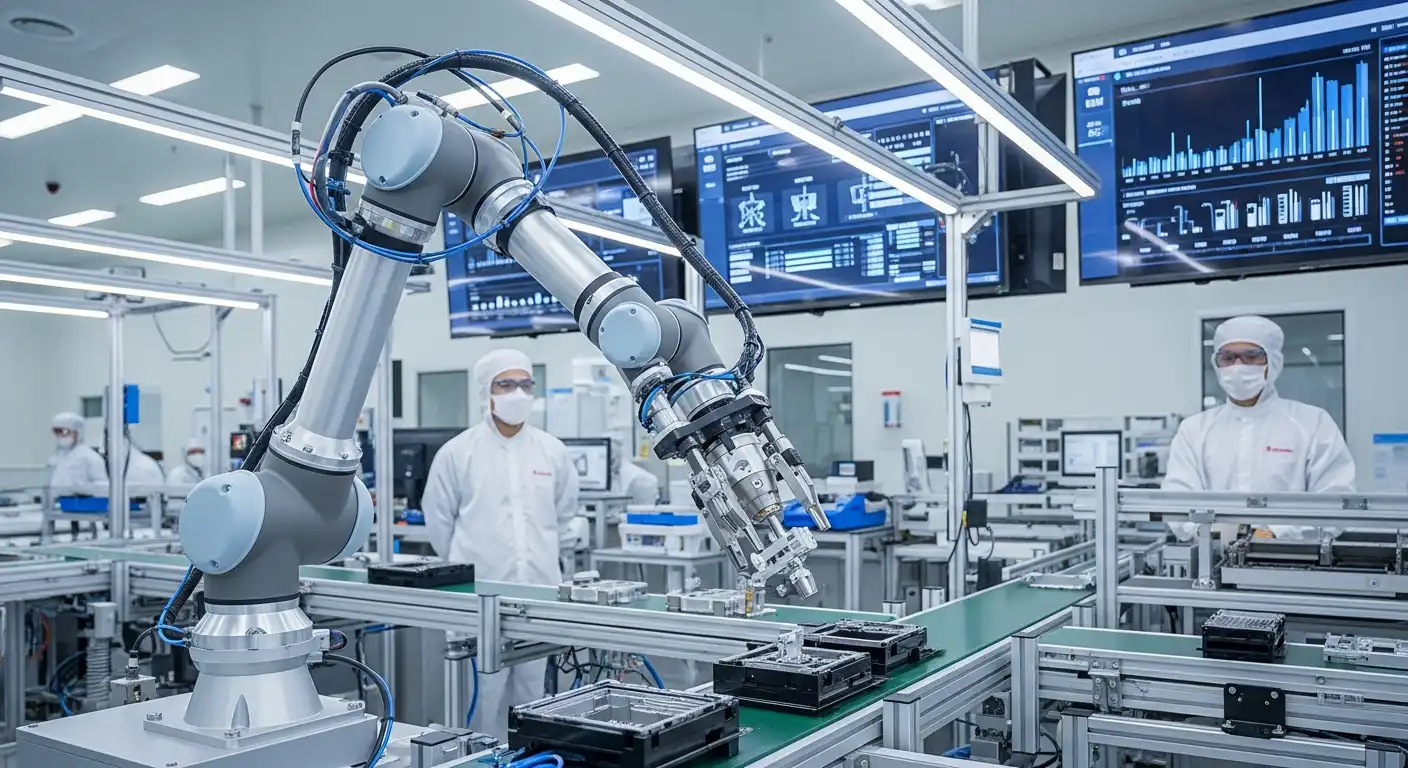
The era of manual, repetitive data entry is rapidly coming to an end. By 2026, Robotic Process Automation (RPA) will have evolved from simple “screen-scraping” scripts into a sophisticated layer of “Digital Intelligence” that acts as the connective tissue for enterprise operations. The leading platforms no longer just record clicks; they leverage generative AI, computer vision, and predictive analytics to manage complex workflows that previously required human cognitive effort.
Choosing the right RPA partner is a strategic imperative for organizations aiming to achieve hyper-automation. The market is currently dominated by vendors that have successfully bridged the gap between basic task automation and true, end-to-end intelligent orchestration. Here are the top 5 RPA companies poised to redefine enterprise efficiency in 2026.
UiPath, Inc. (UiPath)
UiPath remains the undisputed global leader in the RPA space, having successfully transitioned from a task-based automation tool to a holistic “Business Automation Platform.” Its dominance is driven by an incredible ecosystem of developers and an aggressive roadmap that embeds AI into every single component of its software.
By 2026, UiPath’s platform will have become the standard for large-scale enterprise transformation. Its key strengths include:
- Integrated Generative AI: Through its “Autopilot” technology, the platform allows non-technical users to build complex automations using natural language prompts.
- Document Understanding: Built-in computer vision and ML models enable the platform to process, extract, and classify unstructured data from invoices, emails, and PDFs with near-human accuracy.
- Automation Hub: A centralized command center that helps organizations identify high-ROI processes and track the “dollar-value” of automation in real-time.
- Enterprise-Grade Governance: Superior security and auditing features allow massive global organizations to manage thousands of robots without compromising compliance.
Best For: Global enterprises that need a robust, scalable, and AI-first platform to automate complex, end-to-end business processes.
Microsoft Corporation (Microsoft Power Automate)
Microsoft has disrupted the RPA landscape by lowering the barrier to entry, making automation accessible to every office worker through the Power Platform. By bundling automation capabilities directly into the Microsoft 365 ecosystem, they have captured a massive segment of the mid-market and enterprise workforce.
In 2026, Microsoft Power Automate is essentially the “default” choice for organizations already running on Windows and Azure. Its unique advantages are:
- Seamless Integration: Native connectivity with over 1,000+ connectors, including SAP, Salesforce, and the entire Microsoft 365 suite, makes it effortless to move data between apps.
- Desktop and Cloud Flows: The platform perfectly bridges legacy desktop applications (using UI automation) and modern cloud APIs, providing total flexibility.
- Low-Code/No-Code Empowerment: Its intuitive drag-and-drop designer allows departmental “citizen developers” to automate their own daily tasks without needing IT intervention.
- AI Builder: Deep integration with Azure OpenAI allows users to easily add intelligence to their workflows, such as sentiment analysis or text summarization, without writing code.
Best For: Organizations already invested in the Microsoft stack that want to foster a culture of “citizen automation” across their workforce.
Automation Anywhere, Inc. (Automation Anywhere)
Automation Anywhere has differentiated itself by focusing heavily on cloud-native architecture and “Automation-as-a-Service.” While other vendors struggled to migrate legacy desktop models to the cloud, Automation Anywhere led the charge, offering a platform that is ready to scale instantly across global regions.
By 2026, their focus on “Document Automation” and cloud-scale infrastructure makes them the preferred choice for the finance and healthcare industries. Their top strengths are:
- Cloud-Native Architecture: An entirely web-based control room allows for easier deployment, maintenance, and scaling compared to traditional on-premises RPA architectures.
- Document Automation: Their specialized AI models for processing structured and semi-structured documents are among the best in the industry, significantly reducing manual data handling.
- Bot Insight: Advanced real-time analytics that don’t just track bot performance, but provide operational intelligence about the business process being automated.
- Strong Partner Ecosystem: A massive global network of consulting and integration partners helps firms deploy and manage their automations with high speed to value.
Best For: Companies that require a pure cloud-native experience and highly specialized document processing capabilities.
Blue Prism Group plc (SS&C Blue Prism)
Acquired by SS&C Technologies, Blue Prism is widely regarded as the “gold standard” for security and reliability in the RPA sector. It was built from the ground up for the banking and insurance sectors, where the cost of a bot error is not just lost time, but significant financial or legal liability.
In 2026, SS&C Blue Prism continues to win in highly regulated industries by focusing on a “Digital Workforce” approach rather than just task automation. Their key differentiators include:
- Security-First Foundation: With advanced credentials management and granular access controls, it is the most compliant-friendly RPA platform for heavily regulated environments.
- Robust Lifecycle Management: Their platform handles the entire lifecycle of a bot—from development to deployment to retirement—with a rigorous focus on auditability and governance.
- Digital Worker Concept: Instead of just automating a task, they conceptualize the bots as “Digital Workers” with specific roles, which can be managed and scaled like a human workforce.
- Object-Oriented Design: Their unique approach to building reusable “objects” makes the maintenance of bots significantly easier as enterprise applications evolve.
Best For: Banks, insurance firms, and government agencies where security, auditability, and regulatory compliance are non-negotiable.
WorkFusion, Inc. (WorkFusion)
WorkFusion has carved out a unique position as the leader in “Intelligent Automation,” specifically designed for anti-money laundering (AML) and banking compliance. Unlike general-purpose RPA platforms, they provide “out-of-the-box” AI solutions for specific industry problems.
By 2026, WorkFusion’s focus on “Pre-trained AI” for compliance makes it the fastest way for a bank to automate a high-stakes, specialized process. Their strengths lie in:
- AI-Native Compliance: Rather than teaching a bot how to read, WorkFusion provides bots that are already trained on banking data and regulatory requirements.
- Human-in-the-Loop (HITL): Their platform seamlessly hands off exceptions to human experts for final decision-making, ensuring compliance and accuracy in high-stakes environments.
- Predictive Operations: Using behavioral analytics, WorkFusion can predict bottlenecks in compliance workflows before they happen, allowing for proactive resource allocation.
- Specialized Skillsets: They offer a library of “pre-built” bots for standard banking tasks like KYC (Know Your Customer) and sanctions screening.
Best For: Financial services firms looking for vertical-specific AI automation that solves complex regulatory challenges with minimal configuration.
Conclusion
The RPA landscape in 2026 is no longer about robots following rules; it’s about autonomous agents making intelligent decisions. While UiPath and Microsoft lead the market in breadth and accessibility, Automation Anywhere, SS&C Blue Prism, and WorkFusion provide the specialized power required for cloud-native scaling and high-stakes compliance. For leaders, the key to success in 2026 is moving beyond tactical task reduction and toward a strategic vision of a hybrid workforce where bots and humans operate in seamless synchronization.