Japanese trading powerhouse Toyota Tsusho Corporation has unveiled a massive 1.2 trillion yen ($8 billion) cumulative investment strategy through March 2028 to establish dominance over global rare metal recycling and scrap processing markets. The ambitious corporate master plan aims to position the Toyota Group’s main trading arm as the world’s largest urban mining and metal recycling enterprise. By building an end-to-end circular economy framework, Toyota Tsusho plans to collect end-of-life vehicles, extract high-purity critical minerals, and feed recycled raw materials directly back into global battery and electric vehicle manufacturing supply chains.
The multi-billion-dollar commitment responds directly to accelerating global vehicle electrification and intensifying geopolitical competition over critical energy transition minerals. As global demand for lithium, nickel, cobalt, copper, and rare earth elements accelerates, traditional mining operations face severe environmental hurdles, long development lead times, and volatile geopolitical risks. Recovering high-value metals from discarded batteries, electric motors, and electronic waste offers a sustainable, domestic alternative that insulates automotive manufacturers from global supply shocks.
At the core of Toyota Tsusho’s operational model is the integration of “vein” collection systems with “artery” manufacturing networks. The company is connecting scrap yards, dismantling centers, and processing facilities directly with battery cell gigafactories and automotive assembly plants. This closed-loop infrastructure ensures that valuable critical minerals remain within a continuous industrial cycle, transforming environmental compliance into a highly profitable, low-risk business segment.
TechGolly provides a detailed analysis of Toyota Tsusho’s landmark recycling initiative, examining its financial commitments, North American expansion through Radius Recycling, urban mining technology, critical mineral de-risking strategies, and broader macroeconomic implications for the clean energy transition.
Unpacking the 1.2 Trillion Yen Circular Economy Master Plan
Toyota Tsusho’s 1.2 trillion yen capital outlay represents one of the largest corporate commitments to circular economy infrastructure in industrial history. Running through March 2028, the investment plan expands the company’s traditional role from an automotive commodities trader into an active manager of global resource recovery systems. Management plans to deploy capital across specialized shredding technology, advanced hydrometallurgical refining plants, automated battery dismantling facilities, and strategic international acquisitions.
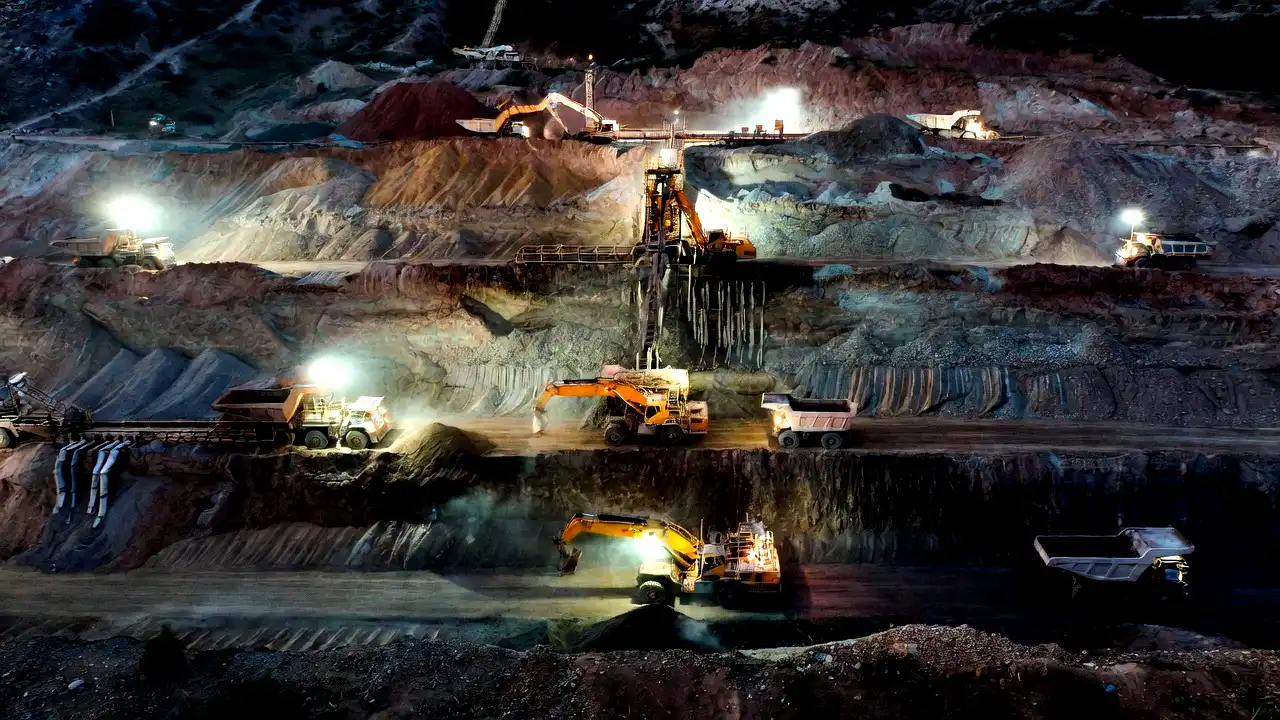
The economic rationale for urban mining centers on resource density and processing efficiency. Natural mineral ores often contain less than 1% target metal content, requiring energy-intensive mining, crushing, and chemical refining operations. In contrast, end-of-life electric vehicle batteries and traction motors contain concentrated amounts of high-purity lithium, nickel, cobalt, neodymium, and dysprosium. Recovering these refined elements requires significantly less energy and produces a fraction of the carbon emissions associated with virgin open-pit mining.
To capture this value stream, Toyota Tsusho is upgrading its global “Green Metals” network. The company operates sophisticated processing plants capable of achieving a 99.5% material recovery rate from end-of-life vehicles. Automated shredding and non-ferrous sorting technologies separate iron, aluminum, copper, brass, and mixed plastics, ensuring that almost no vehicle component ends up in municipal landfills.
The circular master plan also targets high-value non-automotive electronic waste. By processing multi-function office machines, industrial electronics, and consumer appliances alongside discarded vehicles, Toyota Tsusho maximizes equipment utilization rates across its global recycling centers. This diversified scrap intake provides steady volume flows that stabilize processing margins even during cyclical downturns in new vehicle production.
Scaling North American Dominance Through Radius Recycling
A cornerstone of Toyota Tsusho’s global recycling expansion is its major strategic acquisition of Radius Recycling Inc., a leading North American metal recovery giant headquartered in Oregon. Radius operates an extensive footprint comprising more than 100 operational sites across the United States, Canada, and Puerto Rico. The facility network processes approximately 480,000 tonnes of end-of-life vehicles and scrap metals annually, providing an immediate, high-volume collection platform across North America.
Acquiring Radius addresses the primary bottleneck facing the battery recycling industry: securing a steady, large-scale supply of spent batteries and end-of-life vehicles. While many recycling technology startups possess advanced chemical refining processes, they frequently struggle to build cost-effective collection networks. Radius’s established logistics web, vehicle dismantling yards, and port access give Toyota Tsusho unmatched collection capabilities across the North American continent.
By integrating Radius into its reverse supply chain, Toyota Tsusho connects North American scrap collection directly with domestic battery manufacturing investments. Spent hybrid and electric vehicle battery packs collected at Radius yards undergo safe discharge and dismantling before moving to specialized material recovery plants. The extracted battery-grade metals then supply domestic battery cell plants, helping automakers fulfill local content requirements mandated under North American trade agreements.
Furthermore, Radius operates major deep-water port terminals along the Pacific and Atlantic coasts. These maritime facilities allow Toyota Tsusho to route processed scrap and refined metal fractions efficiently to global processing hubs, optimizing freight costs and ensuring continuous material supply to industrial customers across Asia, Europe, and the Americas.
De-Risking Critical Mineral Supply Chains and Foreign Reliance
Geopolitical friction over critical mineral supplies serves as a primary catalyst driving Toyota Tsusho’s massive investment strategy. Currently, a small number of countries dominate global critical mineral refining, with China controlling over 80% of global rare earth element processing and a major share of lithium and cobalt refining capacity. This extreme concentration leaves global automakers vulnerable to export quotas, resource nationalism, and geopolitical trade restrictions.
Rare earth elements like neodymium, dysprosium, and terbium are essential components in high-performance permanent magnets used in electric vehicle traction motors, wind turbines, and defense systems. Obtaining a secure, reliable supply of these critical elements without relying on foreign mining concessions is a national security priority for Japan, the United States, and the European Union.
Urban mining through rare metal recycling offers an effective defense against supply chain weaponization. By extracting rare earth magnets from discarded hybrid and electric vehicle motors, Toyota Tsusho creates a localized, domestic supply of high-purity magnetic materials. These recovered minerals are refined and reused to manufacture new permanent magnets, reducing overall national import dependency.
Governments in major industrial nations are supporting these circular economy initiatives through targeted subsidies, tax credits, and streamlined environmental permitting. Japan’s Ministry of Economy, Trade and Industry, along with United States federal agencies, actively encourage public-private partnerships that establish closed-loop recycling networks, recognizing urban mining as a vital pillar of national economic security.
Expanding Vehicle Dismantling Infrastructure in India and Emerging Markets
While expanding its North American footprint, Toyota Tsusho is aggressively scaling its vehicle dismantling and resource recovery infrastructure across rapidly growing emerging markets. India represents a central focus of this strategy as the country expands its position as the world’s third-largest automotive market.
Through its joint venture, Maruti Suzuki Toyotsu India (MSTI), Toyota Tsusho operates modern, automated vehicle scrapping and recycling facilities in India. To support booming end-of-life vehicle volume, Toyota Tsusho plans to double its specialized technical staff in India to approximately 100 personnel while expanding its local network of dismantling centers. Establishing formal recycling infrastructure in emerging economies replaces unsafe informal scrap practices with environmentally sound, high-recovery industrial processes.
The company’s global recycling division now operates across 17 countries with more than 26 operational sites worldwide. Expanding dismantling capacity in rapidly motorizing markets across Southeast Asia, Latin America, and Africa ensures that Toyota Tsusho captures valuable end-of-life vehicle volume before informal markets disperse critical metal scrap.
By building localized recycling hubs in the Global South, Toyota Tsusho also establishes early market relationships with regional government agencies and local steelmakers. As these emerging economies enact stricter environmental standards and phase out aged, polluting vehicles, Toyota Tsusho stands positioned as the premier partner for national end-of-life vehicle management.
The Technical Architecture of Closed-Loop Battery Recycling
Extracting high-purity battery materials from spent lithium-ion and nickel-metal hydride battery packs requires complex mechanical, thermal, and chemical processing techniques. Toyota Tsusho’s closed-loop architecture manages every stage of the battery recycling lifecycle, ensuring maximum material recovery while maintaining strict environmental safety standards.
The recycling workflow begins with automated battery health diagnostics and safe electrical discharging. Spent battery modules deemed suitable for stationary energy storage are refurbished and redeployed in backup power systems for industrial facilities and telecommunications towers. Modules unfit for second-life applications move directly to mechanical crushing and shredding lines operating under inert gas environments to prevent thermal runaways.
Mechanical processing yields a concentrated material mixture known as “black mass,” which contains high concentrations of lithium, nickel, cobalt, manganese, and graphite. Toyota Tsusho then utilizes advanced hydrometallurgical refining processes to dissolve the black mass in chemical solutions, selectively precipitating individual battery-grade metal salts. These recovered metal salts achieve chemical purity levels exceeding 99.9%, matching the performance standards of newly mined battery raw materials.
The refined battery chemicals flow directly back into the “artery” side of the Toyota Group’s manufacturing ecosystem. Partner companies, including Prime Planet Energy & Solutions—a joint venture between Toyota Motor Corporation and Panasonic—utilize these recycled chemical inputs to manufacture new cathode materials and lithium-ion battery cells. This seamless integration ensures a continuous, closed-loop supply of sustainable battery materials.
Urban Mining vs. Traditional Extraction: Environmental and Cost Advantages
The environmental and economic advantages of urban mining over traditional primary resource extraction are compelling. Comprehensive Life Cycle Assessments (LCAs) conducted by industrial researchers confirm that utilizing recycled critical metals significantly reduces the carbon footprint of electric vehicle production.
Producing battery-grade nickel, cobalt, and lithium from recycled black mass generates up to 80% fewer carbon dioxide emissions compared to refining virgin ores extracted from open-pit mines or brine pools. Furthermore, urban mining eliminates the severe environmental impacts associated with primary mining, such as tropical deforestation, massive tailings pond construction, and heavy groundwater consumption in arid mining regions.
From a capital expenditure standpoint, building advanced hydrometallurgical recycling plants requires significantly lower initial capital outlays and shorter construction timelines than opening new greenfield mines. A major lithium or nickel mine often requires 7 to 15 years to navigate environmental permitting, community consultations, and infrastructure development. In contrast, a modern battery recycling hub can be permitted, built, and fully operational within 2 to 3 years.
These operational efficiencies translate directly into lower material acquisition costs for automakers over the long term. As global carbon regulations penalize high-emission supply chains, vehicles built using recycled, low-carbon critical metals will enjoy significant regulatory and cost advantages in premium consumer markets.
Market Outlook and Strategic Lessons for Global Industry Leaders
Toyota Tsusho’s 1.2 trillion yen investment signals a fundamental evolution in how multinational industrial conglomerates view resource recycling. Historically treated as a low-margin, regulatory compliance expense, scrap metal recovery has transformed into a high-margin, strategically vital growth engine.
Global automotive competitors, including Tesla, Volkswagen, Ford, and General Motors, are closely watching Toyota Tsusho’s vertical integration strategy. While many automakers rely on third-party recycling startups through non-exclusive off-take agreements, the Toyota Group is building a fully owned, end-to-end circular infrastructure. Owning both the manufacturing arterial networks and the recycling venous channels provides unmatched cost control and supply security.
Financial analysts emphasize that managing volatile commodity spot prices remains a central operational challenge for recycling enterprises. Raw material price swings for lithium, nickel, and cobalt can impact short-term processing margins. However, Toyota Tsusho mitigates market volatility by maintaining long-term supply agreements with affiliated automakers and operating a highly diversified scrap portfolio that includes steel, aluminum, copper, and precious metals.
As battery chemistries evolve toward sodium-ion and lithium-iron-phosphate (LFP) formulations, recycling facilities must maintain technical flexibility to process varying chemical inputs efficiently. Toyota Tsusho’s flexible processing architectures ensure that its recycling infrastructure can adapt to changing battery chemistries without requiring complete facility overhauls.
Key Takeaways for Clean Tech Executives and Supply Chain Managers
Toyota Tsusho’s landmark circular economy strategy offers vital strategic lessons for corporate executives, supply chain strategists, and clean technology developers worldwide.
First, securing reverse logistics platforms is as critical as securing primary raw material supplies. Developing advanced recycling technology is ineffective without an established, high-volume collection network capable of feeding processing facilities. Strategic acquisitions of established scrap operators offer the fastest route to achieving collection scale.
Second, circular economy integration delivers a powerful double dividend: enhanced supply chain resilience and significant carbon emission reductions. Automakers that integrate recycled materials into their core manufacturing processes insulate themselves from geopolitical supply shocks while satisfying stringent global environmental mandates.
Finally, public-private alignment accelerates circular infrastructure deployment. Industrial leaders that partner with government agencies to build domestic resource recovery networks gain access to supportive regulatory frameworks, targeted subsidies, and long-term policy stability. Toyota Tsusho’s 1.2 trillion yen master plan establishes a global benchmark for sustainable, closed-loop industrial manufacturing in the electric mobility era.