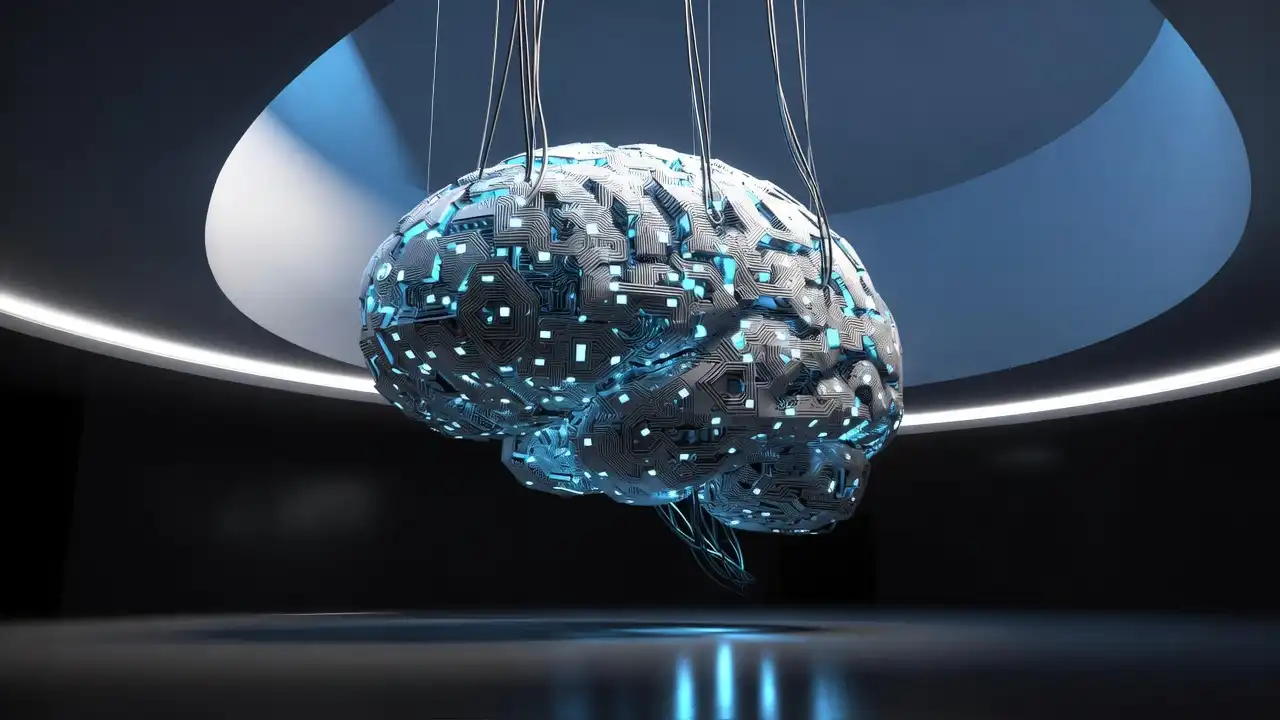
Senior United States government officials are actively courting Japan’s top technology conglomerates to join the Genesis Mission, a flagship American-led initiative designed to supercharge scientific research through artificial intelligence. United States policymakers are inviting Japanese industrial leaders—including SoftBank, NTT, Fujitsu, Sony, NEC, and Tokyo Electron—to integrate their advanced hardware, all-optical networking, and supercomputing systems into a multinational artificial intelligence research coalition. The strategic alliance aims to apply frontier artificial intelligence models and exascale supercomputing to solve complex physical science challenges, from discovering room-temperature superconductors to commercializing nuclear fusion.
The Genesis Mission represents a major strategic evolution in how Western allies approach artificial intelligence development. While consumer applications like chatbots and automated image generators dominate public attention, government policymakers recognize that the true long-term value of artificial intelligence lies in “AI for Science.” By training foundation models on physical laws, chemical structures, genomic sequences, and materials science datasets, researchers can automate laboratory experiments, compress decades of trial-and-error research into months, and invent new physical materials that power the clean energy economy.
The geopolitical timing of the coalition push is deeply connected to rising international competition. As China deploys its 500-exaflop national “Six Networks” computing strategy and state-backed guidance funds mobilize over $420 billion for domestic tech industries, the United States is building a unified technology alliance with key international partners. Bringing Japan’s premier hardware designers, optical network operators, and materials science champions into the Genesis Mission creates an allied technology coalition capable of maintaining an insurmountable lead in frontier scientific research.
TechGolly provides a detailed analysis of the Genesis Mission, evaluating the participation of SoftBank and NTT, exascale supercomputing physics, all-optical network integration, materials science AI models, nuclear fusion research, and global technology competition.
Unpacking the Genesis Mission Architecture and Scientific AI Vision
The Genesis Mission, established by United States science and defense agencies, marks a fundamental departure from traditional academic research models. Historically, scientific research operated in fragmented silos: chemistry labs synthesized new molecules manually, physics teams conducted isolated supercomputer simulations, and pharmaceutical researchers spent years conducting manual lab tests.
The Genesis Mission unifies these separate disciplines into a closed-loop, AI-driven scientific discovery framework. The platform connects the world’s most powerful exascale supercomputers—including the Department of Energy’s Frontier, Aurora, and El Capitan systems in the United States alongside Japan’s Fugaku network—directly to automated robotic laboratory equipment.
In an AI-driven scientific discovery pipeline, the research process unfolds at machine speed:
- First, a specialized scientific foundation model analyzes millions of academic papers, patent filings, and atomic structure databases to propose a novel chemical compound or solid-state battery electrolyte.
- Second, the model executes high-resolution quantum mechanical simulations on an exascale supercomputer to evaluate the compound’s stability, electrical conductivity, and thermal tolerance.
- Third, the AI system transmits automated instructions across high-speed optical networks to automated robotic laboratories, where robotic arms physically synthesize and test the candidate material within hours.
- Fourth, physical sensor data from the laboratory experiment feeds directly back into the AI model, allowing the algorithm to learn from physical results and instantly generate improved chemical candidates.
By executing thousands of virtual simulations and automated physical experiments concurrently, the Genesis Mission aims to reduce scientific research cycles from 10 years down to under 6 months. This accelerated discovery timeline will be deployed across critical national priorities, including designing next-generation electric vehicle batteries, developing carbon-capture materials, engineering advanced semiconductors, and synthesizing targeted cancer therapeutics.
The Key Japanese Partners: SoftBank, NTT, Fujitsu, and Sony
The decision to recruit Japan’s top technology enterprises into the Genesis Mission reflects the specialized, world-class capabilities maintained by Japanese industrial champions.
SoftBank Corp. brings immense physical compute capacity and private equity capital to the coalition. SoftBank is investing over 150 billion yen ($1 billion USD) to build high-density, liquid-cooled AI data centers across Japan, equipping server halls with tens of thousands of Nvidia Blackwell GPUs. SoftBank’s hardware infrastructure will supply the massive processing capacity required to pre-train specialized Asian-language and scientific foundation models.
Nippon Telegraph and Telephone (NTT) contributes an indispensable physical communications technology: its All-Photonics Network built on IOWN (Innovative Optical and Wireless Network) architecture. NTT’s optical technology transmits data entirely as light signals, delivering sub-1-millisecond latency and 100-fold reductions in energy consumption across long-distance data center connections, enabling real-time data synchronization between American and Japanese supercomputers.
Fujitsu brings unmatched heritage in high-performance computing hardware design. In partnership with Japanese research institute RIKEN, Fujitsu co-developed the Fugaku supercomputer, which held the title of the world’s fastest supercomputer for multiple years. Fujitsu and RIKEN are currently engineering Fugaku-NEXT, a next-generation AI supercomputer hybrid targeted to achieve computational performance exceeding 10 exaflops by the late 2020s.
Sony and NEC contribute advanced sensor optics, computer vision algorithms, and industrial robotics. Sony’s high-precision image sensors and NEC’s industrial automation software will power the physical robotic laboratories that execute automated chemical and biological synthesis experiments guided by AI models.
Solving the Compute Energy Bottleneck: Photonics and Liquid-Cooled Infrastructure
A primary engineering challenge facing the Genesis Mission is the extreme electrical power draw required to run multi-exaflop scientific AI supercomputers. A single exascale supercomputing campus can consume over 100 to 300 megawatts of continuous electrical power—enough electricity to power a mid-sized city.
Connecting distant supercomputers across the Pacific Ocean introduces severe network latency and power dissipation challenges when using traditional electronic networking gear. Converting light signals into electrical signals at every network router consumes massive amounts of electricity and adds dozens of milliseconds of network latency, making real-time, distributed supercomputing across continents impossible.
NTT’s IOWN all-optical network technology solves this spatial communication bottleneck. By maintaining data in an optical photon state from source to destination without electronic conversion, IOWN achieves a 100-fold reduction in network power consumption while expanding data transmission bandwidth by 125 times.
Achieving sub-1-millisecond transmission latency across international fiber optic networks allows researchers in Oak Ridge, Tennessee, and Tsukuba, Japan, to link their supercomputers into a single, unified virtual processing fabric. Researchers can run complex multi-physics simulations where one portion of the calculation executes on American GPUs while another portion executes on Japanese ARM-based supercomputers in real time.
At the individual data center level, the Genesis Mission is deploying 100% direct-to-chip liquid cooling systems. Circulating dielectric fluids or chilled water directly across processor cold plates removes heat up to 3,000 times more efficiently than air cooling, reducing data center power usage effectiveness (PUE) to below 1.15 and allowing supercomputers to operate at peak clock speeds without thermal throttling.
Materials Science and Nuclear Fusion Breakthroughs
The Genesis Mission’s primary scientific objectives focus on unlocking game-changing physical material breakthroughs that will transform global industrial manufacturing and clean energy generation.
In materials science, the initiative is targeting the discovery of novel solid-state battery electrolytes and high-temperature permanent magnet alloys that do not rely on scarce heavy rare earth elements like dysprosium or terbium. By simulating atomic lattice structures inside AI models, researchers can identify stable crystal configurations that deliver high electrical conductivity and high magnetic strength using abundant, low-cost raw materials.
Nuclear fusion energy represents another high-priority research application. Commercializing nuclear fusion requires controlling superheated plasma operating at temperatures exceeding 100 million degrees Celsius inside tokamak magnetic confinement reactors.
Controlling magnetic plasma is an extraordinarily complex physics challenge, as high-temperature plasma develops turbulent instabilities within microseconds that can damage reactor walls. By running real-time deep reinforcement learning models trained on exascale supercomputers, the Genesis Mission is developing AI plasma controllers capable of predicting and correcting magnetic field adjustments in sub-milliseconds, maintaining stable plasma fusion reactions and accelerating the arrival of commercial fusion power.
In biotechnology, the coalition is applying generative AI models to synthetic biology and protein engineering. AI models are designing custom enzymes capable of breaking down industrial plastics, synthesizing low-carbon aviation fuels from captured carbon dioxide, and developing targeted mRNA therapeutics that neutralize rapidly mutating viral pathogens.
Geopolitical Alignment: Western Alliance versus State-Directed Tech Grids
The recruitment of Japanese technology giants into the Genesis Mission reflects a broader geopolitical effort to align Western democratic nations and their industrial allies behind a shared, high-security technology ecosystem.
Global technology competition has bifurcated into two distinct national approaches:
The Western and allied model, led by the United States, Japan, the United Kingdom, and the European Union, emphasizes private innovation, public-private research partnerships, international scientific collaboration, and strict adherence to data privacy and intellectual property protections.
The Chinese model, executed through state-directed programs like the “Six Networks” strategy and Big Fund III, relies on centralized government capital, state-owned energy grids, and domestic hardware substitution to build a public utility-style computing network.
By integrating the top technology firms from the United States and Japan, the Genesis Mission creates an allied research pool that China cannot easily match. Combining American software model engineering with Japanese optical networking, precision sensors, and advanced materials manufacturing establishes an end-to-end scientific pipeline that spans pure theory down to physical factory execution.
Furthermore, the coalition is establishing international standards for scientific AI safety and biosecurity. As AI models gain the ability to design novel biological molecules and chemical compounds, the Genesis Mission is embedding automated screening guardrails into the software stack, ensuring that synthetic biology models automatically flag and block hazardous bioweapon configurations before they reach automated laboratory equipment.
Protecting Intellectual Property and Sovereign Data Security
Collaborating across international borders on high-value scientific research requires establishing sophisticated legal and technical frameworks to protect corporate trade secrets and national security data.
Participating Japanese enterprises—such as Sony, Toyota, and NTT—possess multi-billion-dollar proprietary datasets containing confidential trade secrets, chemical formulas, and manufacturing process parameters. Corporate legal teams require guarantees that sharing data within the Genesis Mission will not expose their intellectual property to corporate espionage or foreign government subpoenas.
To secure data privacy, the Genesis Mission utilizes advanced federated learning and homomorphic encryption architectures. Under a federated learning framework, sensitive corporate datasets remain safely stored on local private servers inside Japan or the United States. AI models are trained locally on private data, with only encrypted mathematical weight updates transmitted across the secure IOWN network to update the master model.
Using homomorphic encryption allows the master scientific AI model to perform calculations on encrypted data without ever decrypting the raw underlying information. This zero-trust security architecture allows American national laboratories and Japanese corporate research centers to co-train frontier scientific models without exposing proprietary formulas or violating national security classification rules.
Strategic Outlook for the Global Scientific AI Economy
The formation of the US-Japan Genesis Mission coalition marks the beginning of a transformative era in global scientific research and industrial innovation.
Looking forward through the late 2020s and into the 2030s, the traditional trial-and-error scientific method will be replaced by simulation-first, AI-guided discovery. Physical products—ranging from electric vehicle batteries and solar panels to jet engines and pharmaceuticals—will be designed, tested, and optimized inside exascale AI supercomputing clusters before physical prototypes are ever constructed in a factory.
This technological evolution will deliver profound economic benefits:
- First, lowering R&D capital expenditure across physical industries, allowing startup firms and established industrial leaders to commercialize breakthrough clean energy technologies in record time.
- Second, building a resilient, geographically secure supply chain for critical materials, advanced microelectronics, and green energy hardware across allied nations.
- Third, creating high-wage engineering jobs across North America and Japan in specialized fields like quantum chemistry, AI compiler engineering, photonics, and automated robotics.
By uniting federal scientific resources with private sector technological scale, the United States and Japan are constructing the physical and digital research foundation that will power the global economy for generations to come.
Key Takeaways for Tech Executives, Scientists, and Policy Analysts
The recruitment of Japanese tech giants into the US-led Genesis Mission delivers vital strategic insights for corporate decision-makers, Chief Technology Officers, research directors, and international policymakers.
First, scientific AI is the ultimate driver of long-term economic value. Corporate leadership must recognize that applying AI to physical materials science, clean energy, and biotechnology will generate far greater long-term economic value than consumer software applications.
Second, photonics and optical networking are essential for global compute scale. Connecting high-performance supercomputers across long distances requires low-power, sub-millisecond optical networks like NTT’s IOWN to prevent data transmission bottlenecks.
Third, federated privacy architectures enable international collaboration. Implementing zero-trust security, homomorphic encryption, and federated learning allows corporate enterprises and national laboratories to co-train AI models without surrendering trade secrets.
Finally, international technology alliances are mandatory for national sovereignty. In an era of intense global competition, democratic nations and industry leaders that pool capital, computing capacity, and scientific talent will lead the global economy and define the future of technology.