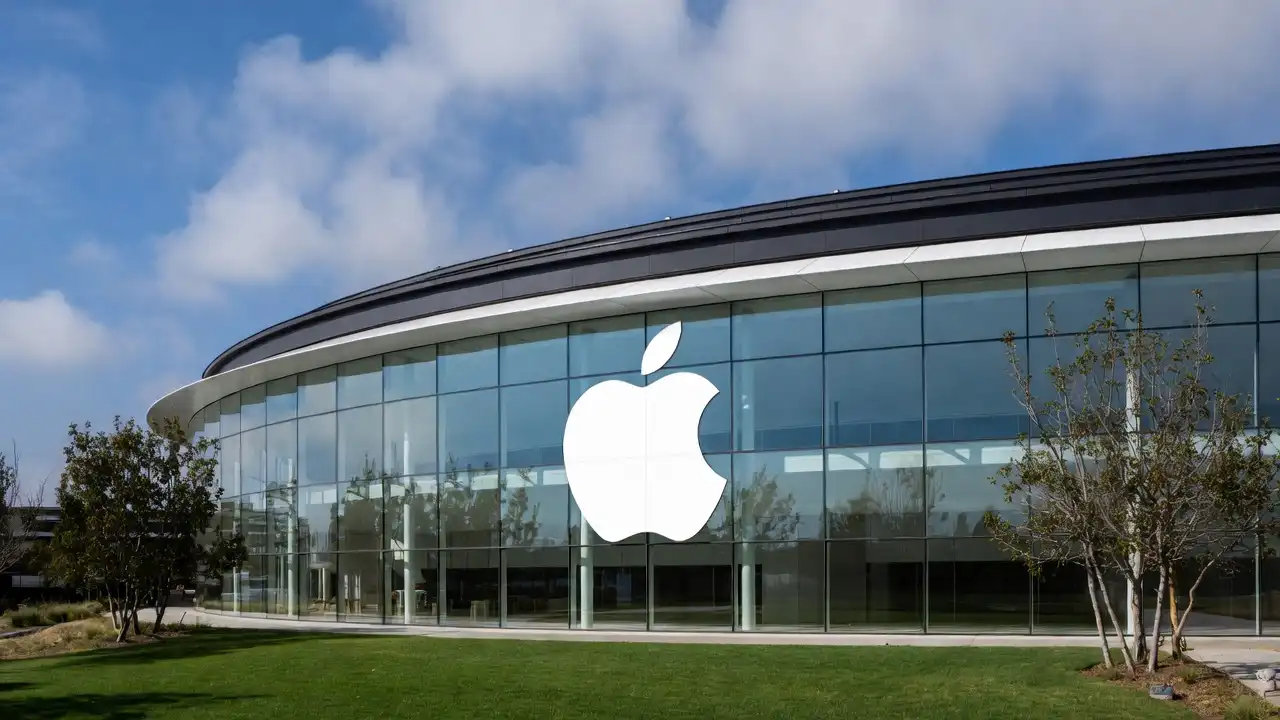
The U.S. Supreme Court agreed to review a civil contempt ruling against Apple Inc., keeping a high-profile legal battle with Fortnite maker Epic Games active. The justices granted Apple’s petition on June 30, 2026, agreeing to hear the tech giant’s appeal of a lower court decision that found the company willfully violated a previous judicial order. This final stage of the yearslong legal conflict will take place during the court’s next term, which officially begins in October 2026, following the summer recess.
At the center of this dispute is how Apple manages payments in its digital marketplace. While Apple largely won the core federal antitrust case in 2021, the presiding judge ordered the company to relax its restrictive “anti-steering” rules and allow app developers to steer users toward cheaper payment methods outside the App Store. Apple’s subsequent compliance strategy—which permitted links to outside payment methods but slapped a 27% commission on those transactions—triggered a civil contempt finding. The Supreme Court’s decision to review this contempt order represents a significant development that could reshape the regulatory and financial landscape for global digital marketplaces, mobile application development, and alternative in-app payment systems.
From App Store Monopolies to the Anti-Steering Mandate
The legal battle began in August 2020, when North Carolina-based Epic Games intentionally bypassed Apple’s in-app payment system in its hit game Fortnite to avoid paying the standard 30% App Store commission. Apple responded by immediately blocking Fortnite from its digital storefront, prompting Epic to file a federal lawsuit accusing Apple of running an illegal monopoly over iOS app distribution and payments.
Following a high-profile bench trial in May 2021, U.S. District Judge Yvonne Gonzalez Rogers ruled in favor of Apple on nine of ten counts, concluding that Apple was not an illegal monopolist under federal antitrust law. However, she ruled against Apple on the tenth count, finding that the company’s anti-steering rules violated the California Unfair Competition Law. The judge issued a nationwide permanent injunction prohibiting Apple from stopping developers from informing users about alternative, cheaper payment options outside the App Store or providing buttons and links to external payment portals.
Both companies appealed the judgment, but the Ninth U.S. Circuit Court of Appeals largely affirmed the district court’s decision in April 2023. In January 2024, the Supreme Court declined to review the core antitrust rulings of the case, forcing Apple to comply with the anti-steering injunction. The compliance plan that Apple subsequently implemented, however, laid the groundwork for the current contempt case.
The Core of the Contempt Case: The 27% Commission Controversy
To comply with the court order, Apple updated its App Store guidelines to allow developers to include external payment links in their iOS applications. However, the company accompanied this policy with a major financial condition: it imposed a 27% commission on any purchases that users completed on a developer’s external website within seven days of clicking the in-app link. This rate was only slightly lower than the standard 30% commission that Apple charges for purchases processed directly through its native in-app payment system.
Epic Games immediately challenged this new fee structure, arguing that the 27% commission made alternative payment methods economically unviable and effectively undermined the spirit of the court’s injunction. Epic accused Apple of charging anticompetitive “junk fees” to preserve its digital revenues and discourage developers from steering users outside the App Store. Apple, on the other hand, defended the fee as a necessary charge to cover its ongoing investments in iOS security, developer tools, and user privacy, arguing that developers should not get a free ride on the platform that Apple built.
The Legal Inception of the Contempt Finding
The dispute over the 27% fee returned to Judge Yvonne Gonzalez Rogers, who held a series of evidentiary hearings to determine whether Apple’s compliance measures were genuine. In April 2025, the judge ruled in favor of Epic, holding Apple in civil contempt of court. She concluded that Apple’s high fee structure and complex user warnings willfully violated the 2021 anti-steering injunction by creating artificial barriers that prevented developers from utilizing alternative payment systems.
Apple appealed the contempt finding to the Ninth Circuit, which partially upheld the district court’s ruling in December 2025. The appeals court agreed that Apple’s initial implementation violated the injunction but sent the case back to the district court to determine a reasonable fee structure. The appeals court ruled that the district court’s total ban on Apple collecting any commission on external transactions went too far. This partial victory did not satisfy Apple, which filed its petition for a writ of certiorari with the Supreme Court in May 2026, setting up the upcoming October review.
Apple’s Defense: Violating the “Spirit” vs. Express Terms
In its appeal to the Supreme Court, Apple is raising a fundamental question of judicial authority. The company argues that a court cannot hold a party in civil contempt for allegedly violating the vague “spirit” of an injunction if that party has complied with the express, written terms of the order. Apple contends that because the 2021 injunction did not explicitly ban the collection of commissions on linked transactions, the company was within its rights to establish a new fee structure.
The tech giant warns that allowing lower courts to issue contempt findings based on subjective interpretations of an injunction’s spirit creates dangerous legal uncertainty for businesses. Apple argues that the original court order was ambiguous regarding commissions, and that the company acted in good faith to protect the integrity of its ecosystem. By taking up the case, the Supreme Court will decide whether judges can use the threat of contempt to enforce broad, unwritten expectations that go beyond the literal text of their official court orders.
The Scope of Remedies and Global Regulatory Stakes
The second major issue that the Supreme Court will review is the geographic and corporate scope of the district court’s injunction. Apple has consistently argued that the nationwide injunction should apply strictly to the plaintiff in the case, Epic Games, rather than to millions of other third-party developers who were not parties to the original 2020 lawsuit.
The Challenge to Nationwide Injunctions in Single-Plaintiff Cases
Apple’s challenge to the scope of the injunction touches on a broader, highly contentious legal debate regarding the power of individual federal district judges to issue nationwide, class-wide injunctions. In recent years, several Supreme Court justices have expressed skepticism over the practice of a single judge in a single district court dictating policy for the entire nation, particularly in cases that have not been certified as class actions.
Apple contends that the district court exceeded its judicial authority by applying the anti-steering mandate to all iOS developers in the United States. If the Supreme Court agrees with Apple and limits the scope of the injunction to Epic Games, the ruling would represent a major victory for the iPhone maker. Such a decision would effectively allow Apple to maintain its anti-steering restrictions for the rest of the App Store ecosystem, requiring other developers to file their own individual lawsuits to secure the same payment liberties.
Global Implications for App Store Monetization and Crypto Payments
The outcome of the Supreme Court’s review will have profound consequences for the global technology ecosystem. Antitrust regulators and lawmakers in the European Union, Japan, South Korea, and the United Kingdom are closely monitoring the case as they draft and enforce their own digital marketplace regulations, such as the EU’s Digital Markets Act. A ruling that restricts Apple’s ability to collect high commissions on external payments would accelerate the global push to open up mobile platforms to third-party payment systems.
The decision is also particularly important for alternative payment systems, including cryptocurrency and blockchain-based solutions. Historically, Apple’s strict App Store policies and standard 30% commission have served as a major barrier to crypto wallet integration, decentralized applications, and microtransactions on iOS devices. If the Supreme Court upholds the ruling forcing Apple to allow low-fee or fee-free external payment links, it could pave the way for alternative payment networks to establish a secure foothold on mobile devices, fundamentally altering how digital goods and services are bought and sold online.
Strategic Positioning for Apple and Epic Games
The Supreme Court’s decision to hear the appeal has drawn sharp reactions from both companies. In an official statement, Apple welcomed the court’s decision to review the case, describing it as an important question of law. With a market capitalization of approximately $4.24 trillion, Apple is fighting to protect its highly lucrative services division, which generated billions of dollars in high-margin revenue from App Store commissions. Preserving the integrity of its payment system is critical to maintaining the company’s long-term profit margins.
Epic Games, based in Cary, North Carolina, has vowed to continue its fight against what it describes as anti-competitive practices. The developer’s leadership reiterated its commitment to defending free markets, stating that lower courts have repeatedly and correctly found Apple’s fees to be illegal. Epic’s strategy involves using the litigation to pressure Apple and other platform holders into allowing independent, third-party app stores on mobile operating systems, which would allow developers to distribute their software directly to consumers without paying a toll to platform owners.
Conclusion
The U.S. Supreme Court’s agreement to hear Apple’s appeal in its App Store contempt battle with Epic Games marks a critical chapter in the decade-long debate over Big Tech’s control of digital marketplaces. By reviewing the validity of the civil contempt finding and the scope of the anti-steering injunction, the high court will decide whether judges can enforce broad compliance standards based on the unwritten spirit of their orders.
While the legal arguments scheduled for October 2026 will focus on complex technical and constitutional questions, the practical consequences will shape the future of mobile software distribution, payment processing, and corporate compliance worldwide. As the Supreme Court prepares to weigh in, both Apple and Epic Games are preparing for a showdown that will define the boundaries of digital competition and establish the rules of the road for the multi-billion-dollar app economy.