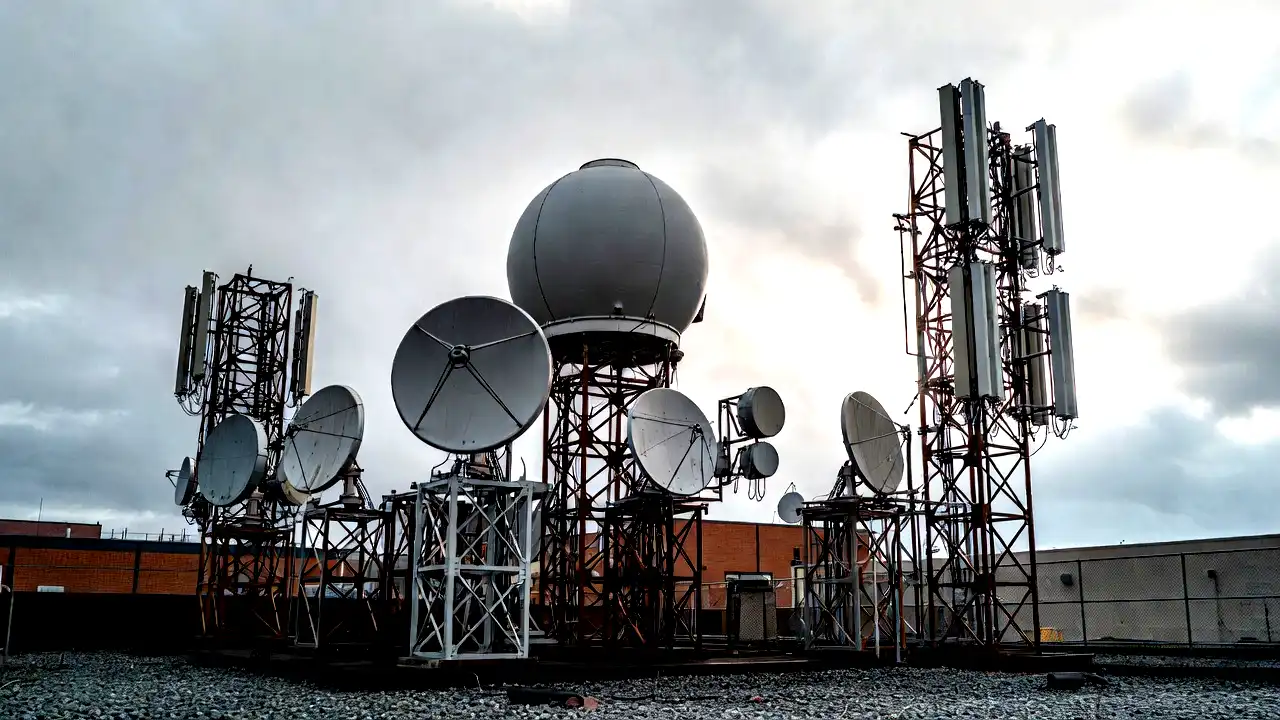
Australia and Canada have finalized a historic defense agreement that reshapes the global trade of high-tech military hardware. In a record-breaking export deal worth A$2.5 billion (approximately $1.7 billion to $1.8 billion USD), Australia will sell its highly sophisticated, long-range over-the-horizon radar technology to Canada. This agreement represents a massive milestone for Australia, marking the country’s largest-ever single defense export contract in its history. It also signals a major strategic shift for Canada, which is moving aggressively to fortify its vast and vulnerable northern borders.
Instead of buying conventional, shorter-range systems from its traditional defense suppliers, the Canadian government chose to acquire an Australian-developed technology that can peer deep into the Arctic. The sale will see Australian defense scientists and engineers collaborate with their Canadian counterparts to build a massive early warning radar network. For decades, Australia used this specialized technology to monitor its own northern maritime approaches. Now, this desert-tested technology will find a new home in the freezing expanses of the Canadian Arctic.
Inside the Record-Breaking Defense Agreement
The formal signing of the contract took place at the Australian Parliament House in the capital city of Canberra. Australian Defense Minister Richard Marles met with the Canadian Secretary of State for Defense Procurement, Stephen Fuhr, to finalize the first phase of the massive bilateral pact. Under the terms of the agreement, BAE Systems Australia will take the lead in manufacturing and delivering the core components of the radar system. The defense company is scheduled to begin the physical delivery and implementation process on July 1, 2026, setting off a multi-year engineering and construction effort.
The deal highlights a major pivot in how middle-power nations approach sovereign defense. Historically, countries like Australia and Canada relied heavily on importing technologies from global powers like the United States or the United Kingdom. This contract flips that traditional dynamic on its head. Australia is now exporting world-leading sensor capabilities to a major G7 nation, proving that its domestic defense sector can compete with and beat the world’s largest arms manufacturers.
The Strategic Shift Under Prime Minister Mark Carney
The decision to acquire Australia’s over-the-horizon radar technology was not a sudden move. It represents a calculated geopolitical decision spearheaded by Canadian Prime Minister Mark Carney. Shortly after taking office last year, Carney chose the Australian-designed radar network over competing, highly advanced American technology. He argued that Australia’s system offered superior long-range tracking capabilities that are uniquely suited to the vast geographic scale of the Canadian North.
This defense partnership gained momentum during a high-profile diplomatic visit in March, when Carney traveled to Australia. That trip marked the first time a Canadian prime minister had visited Australia in 12 years. During deep bilateral meetings with Australian Prime Minister Anthony Albanese, the two leaders agreed to dramatically expand their cooperation on defense technologies, artificial intelligence, and critical minerals. The signing of the A$2.5 billion radar contract is the first major concrete outcome of that renewed bilateral commitment, transforming a diplomatic promise into a multibillion-dollar engineering project.
Strengthening the Five Eyes Intelligence Alliance
Both Australia and Canada are key members of the Five Eyes intelligence-sharing alliance, which also includes the United States, the United Kingdom, and New Zealand. For generations, these nations have shared intelligence, satellite data, and tactical assessments. However, this new radar contract elevates that relationship to a deeper co-development level. During the joint press conference in Canberra, Stephen Fuhr emphasized that as the global security landscape grows more unpredictable, close partners must rely more on each other’s unique technological strengths.
By integrating Australian-designed radar arrays into Canada’s northern airspace, the two countries are effectively building a seamless, highly resilient security shield. The data gathered by the Canadian Arctic radar system will feed directly into the broader allied intelligence network. This will give all Five Eyes partners, including the United States, unprecedented early warning capabilities regarding potential air and missile threats crossing over the North Pole.
How Over-the-Horizon Radar Technology Defies the Curvature of the Earth
To understand why Canada was willing to spend A$2.5 billion on this specific technology, one has to look at the severe limitations of standard military radars. Conventional radar systems operate on a “line-of-sight” principle. They transmit microwave signals in straight lines. Because the Earth is a sphere, the planet’s physical curvature quickly blocks these straight-line signals. This means conventional radars cannot detect low-flying aircraft, ships, or missiles once they drop below the horizon. For a country as massive as Canada, relying solely on conventional radar leaves dangerous blind spots.
Australia solved this geographical challenge over 40 years of continuous research and development. The country built and refined the Jindalee Operational Radar Network, commonly known as JORN. Instead of trying to force signals through the earth or across its curved surface, JORN shoots high-frequency radio waves straight up into the upper atmosphere. This technique allows the system to see around the bend of the earth, unlocking a massive surveillance range that standard sensors simply cannot match.
Ionospheric Refraction and Long-Range Missile Detection
The secret to over-the-horizon radar lies in a natural atmospheric layer called the ionosphere. Located between 60 and 1,000 kilometers above the Earth’s surface, the ionosphere is filled with electrically charged particles. When the radar transmitter shoots high-frequency radio waves into the sky, these waves hit the ionosphere and refract, bending back down toward the Earth’s surface thousands of kilometers away.
When these bent radio waves strike a target—such as a cargo ship, a stealthy military jet, or a long-range cruise missile—they bounce back. The returning signal traces the exact same path, bouncing off the ionosphere once more before returning to giant, highly sensitive receiver arrays on the ground. Computers then analyze these weak, scattered return signals to calculate the target’s precise speed, altitude, and direction. This method allows operators to spot and track threats up to 3,000 kilometers away, giving defense commanders crucial extra minutes to coordinate a response.
Adapting Australian Desert Tech for the Arctic Tundra
While Australia’s JORN technology has proven its worth in the hot, dry, and flat expanses of the Australian Outback, transferring it to the Canadian Arctic is a massive engineering challenge. The polar regions present a completely different set of physical and electromagnetic conditions. Extreme cold, sub-zero permafrost, and severe winter storms require specialized hardware that can survive in some of the most unforgiving environments on Earth.
Even more challenging is the behavior of the ionosphere near the poles. The northern lights, or aurora borealis, are caused by intense solar activity and charged particles hitting the Earth’s magnetic field near the polar regions. This atmospheric activity creates severe ionospheric disturbances, which can distort or completely block high-frequency radio signals. To overcome this, Australia’s Defence Science and Technology Group is working closely with BAE Systems Australia and Defence Research and Development Canada. Together, they are developing advanced software algorithms and unique signal-processing techniques to filter out polar interference, ensuring the radar remains highly accurate even during intense solar storms.
The Economic and Industrial Impact on Both Commonwealth Nations
The benefits of the A$2.5 billion deal extend far beyond defense strategy. The contract will inject massive amounts of capital into the domestic industries of both countries, driving job growth, advanced manufacturing, and technological innovation. It also establishes a long-term supply chain that will link the defense industrial bases of Australia and Canada for decades to come.
For Australia, the deal proves that its long-term investments in sovereign military technology can yield major economic returns on the global market. For Canada, the project represents a major infrastructure investment in its northern territories, bringing jobs and specialized training to remote regions that have historically suffered from underinvestment.
Creating Advanced Manufacturing Jobs in Australia
According to statements from Prime Minister Anthony Albanese, this export agreement will immediately create at least 300 highly skilled domestic jobs in Australia. These jobs will span software engineering, radar hardware manufacturing, systems integration, and project management. Most of this work will center around BAE Systems Australia’s facilities, where technicians will build the complex transmitter and receiver modules before shipping them across the Pacific.
This contract also helps sustain Australia’s specialized sovereign radar industrial base. By securing a major international customer like Canada, Australian defense manufacturers can maintain continuous production lines, lower the per-unit cost of future upgrades for their own domestic systems, and retain high-tech talent within the country. The skills and capabilities developed while adapting the radar for Arctic conditions will also feed directly back into upgrading Australia’s own JORN network, creating a continuous cycle of innovation.
Upgrading Canada’s Northern Defense Infrastructure
On the Canadian side, the purchase is the cornerstone of a broader, multi-billion-dollar military modernization plan. The Canadian Arctic accounts for roughly 40% of the nation’s total land territory. However, this massive region is home to less than 1% of the country’s population and features highly limited roads, power grids, and communications lines. Monitoring this vast space has been an ongoing security headache for Ottawa.
Canada has already begun laying the groundwork for the physical radar sites. The Department of National Defence has acquired large tracts of land for the project, including a transmitter site in Kawartha Lakes and a receiver site in Clearview Township. Heavy construction at these sites is scheduled to begin in the winter of 2026. Because Canada enforces a strict Industrial and Technological Benefits Policy, Australia and BAE Systems are required to reinvest a portion of the contract value back into the Canadian economy. This policy will ensure that Canadian construction firms, software developers, and engineering consultants participate directly in building and maintaining the massive radar sites, creating long-term economic benefits in Canada.
Geopolitical Ramifications in a Warming Arctic
The timing of this historic radar deal is highly significant. Climate change is warming the Arctic region at roughly four times the global average rate. As polar ice melts at an accelerating pace, once-impassable waterways are transforming into viable seasonal shipping lanes. These new routes, such as the Northwest Passage, could cut transit times between Europe and Asia by up to 40% compared to traditional routes through the Suez Canal.
However, this newly accessible ocean is also turning the Arctic into a hotbed of geopolitical tension. Great powers are rapidly moving to assert their influence over the region’s shipping lanes and vast untapped natural resources, which include massive deposits of oil, natural gas, and critical minerals. Russia has aggressively rebuilt its Soviet-era military bases along its northern coastline, deploying advanced air defense systems, icebreakers, and long-range missiles. Meanwhile, China has declared itself a “Near-Arctic State” and is building its own fleet of heavy icebreakers to secure commercial and strategic access to the region.
Against this backdrop of rapid militarization, Canada’s current northern surveillance capabilities are woefully outdated. The existing North Warning System, which Canada operates jointly with the United States, relies on aging, conventional short-range radars built during the Cold War. These older systems are increasingly incapable of detecting modern, fast-moving threats like low-flying stealth cruise missiles or hypersonic weapons.
By deploying Australia’s over-the-horizon radar technology, Canada is taking a giant leap forward in its defensive posture. The new A-OTHR system will allow Canadian military operators to monitor the entire airspace above the Arctic Circle in real-time, giving them the ability to track incoming aircraft or missiles the moment they launch, thousands of kilometers away. This early detection capability will allow Canada and its NORAD partner, the United States, to intercept potential threats long before they reach North American cities.
The A$2.5 billion agreement between Australia and Canada is a prime example of how modern, middle-power democracies are taking charge of their own security needs. Rather than waiting for larger nations to provide solutions, Canberra and Ottawa have leveraged their respective industrial strengths to solve a shared, highly complex security challenge. As BAE Systems Australia prepares to begin delivery of the system, this historic contract will likely serve as a blueprint for future defense collaborations between like-minded nations across the globe.