Key Points:
- A consortium of 13 tier-one Chinese solar and tech firms launched the “Space Energy Development Alliance” at the 19th SNEC exhibition in Shanghai.
- The alliance seeks to merge aerospace engineering with green energy by integrating solar power, energy storage, hydrogen, and real-time computing in orbit.
- GCL Group Chairman Zhu Gongshan projected that radiation-resistant solar packaging could support active space-bound applications within five to ten years.
- While space-based solar power offers continuous energy, analysts warn that the industry must still prioritize resolving immediate terrestrial overcapacity challenges.
China’s dominant solar panel manufacturers are looking beyond the Earth’s atmosphere to secure their long-term technological leadership and escape a punishing price war on the ground. At the opening ceremony of the 19th International Photovoltaic Power Generation and Smart Energy Conference and Exhibition in Shanghai on Tuesday, June 2, 2026, a powerful consortium of 13 tier-one solar and technology enterprises officially launched the Space Energy Development Alliance. This strategic coalition plans to merge aerospace engineering and green technology, establishing a highly advanced framework to harvest continuous, clean solar energy from extraterrestrial orbits.
The creation of the China Space Solar Alliance represents a bold effort to find new, high-value applications for China’s massive solar manufacturing capacity, which currently produces over 80 percent of the world’s solar panels. Over the past three years, a bruising domestic price war and severe industrial overcapacity have crashed solar panel prices on Earth, squeezing profit margins for even the largest developers. By launching this space-bound initiative, Chinese solar majors are working to escape intense domestic competition and tap into massive, uncommoditized incremental markets, transforming their business models from simple hardware production to high-end aerospace engineering.
Zhu Gongshan, the billionaire Chairman of GCL Group, outlined a highly visionary roadmap for the industry’s future during his opening address in Shanghai. He argued that the solar sector is undergoing a profound paradigm revolution. “If the first half of the photovoltaic industry’s paradigm revolution is the symbiosis of watts and bits, the second half is the dance between materials and aerospace,” Zhu declared. He described the shift to space-based energy as an “epic expansion” of the industry’s operational boundaries, stretching past the limits of land and oceans to establish permanent, high-yielding energy outposts in geostationary orbits.
This new phase of the energy revolution relies on a highly complex, cross-sectoral technology cluster that far exceeds the industry’s traditional, terrestrial roadmap. According to Zhu, building these space-bound systems requires integrating advanced power electronics, digital control systems, lightweight carbon materials, aerospace engineering, high-speed communication networks, and synthetic biology. Gathering solar energy in the near-ideal cosmic environment allows solar panels to avoid atmospheric filtering and Earth’s day-night cycle. This continuous, unhindered exposure results in a highly stable, highly efficient, and constant form of energy capture.
Historically, the single biggest obstacle facing space-based solar power has been the astronomical cost of rocket launches. However, Zhu pointed out that the rapid development of the private aerospace industry is changing the economic equation. “Reusable rockets continuously lower launch costs, and giant commercial constellations create large-scale demand, pushing space-based photovoltaics into the realm of engineering economics,” Zhu explained. He projected that once the alliance’s newly developed, radiation-resistant packaging passes rigorous testing, these space-bound solar technologies could begin active operational testing within five to ten years.
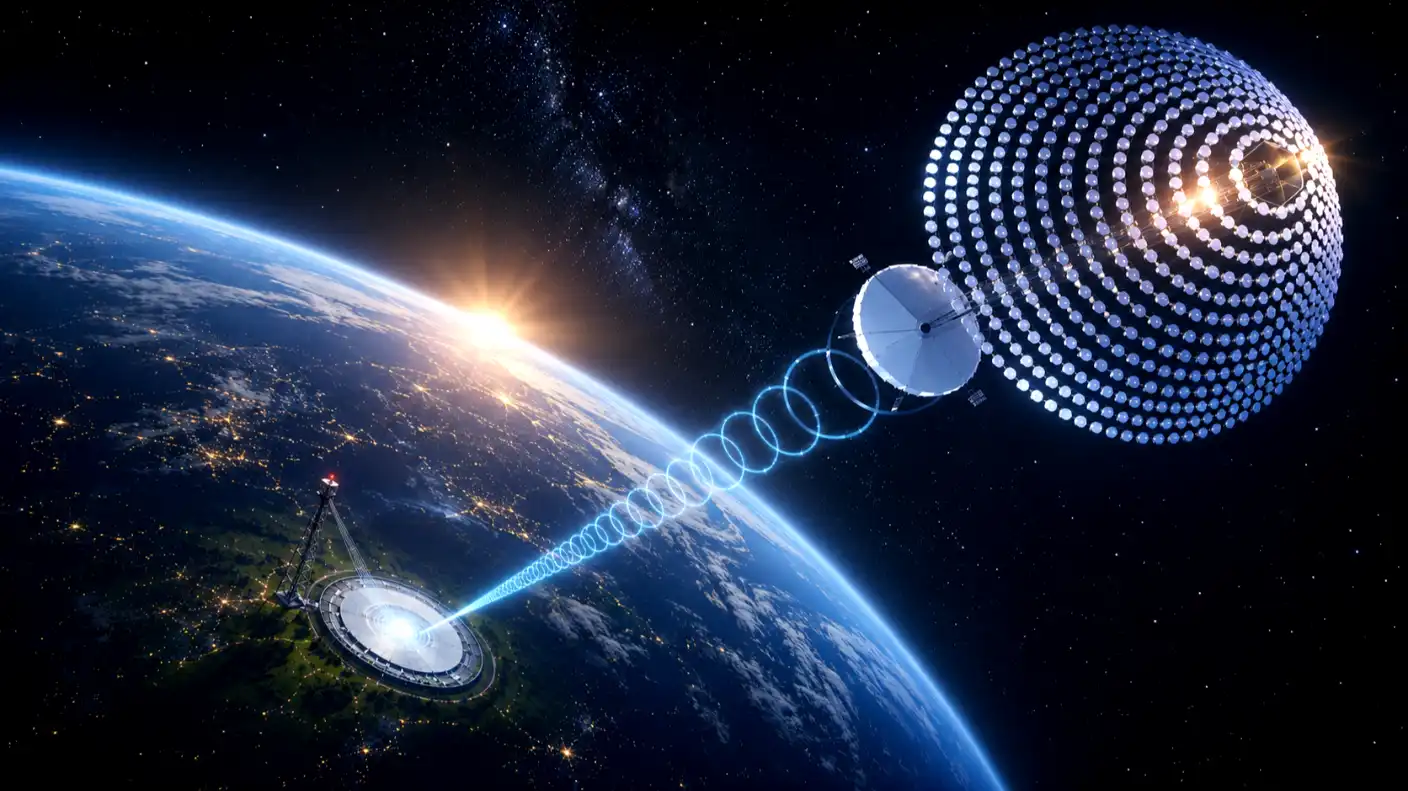
The long-term vision of the alliance is to completely replace traditional generation, transmission, and consumption chains with advanced space-to-earth wireless power delivery. By converting solar energy into microwave radiation or laser beams, these orbital platforms can beam a continuous stream of clean power directly to receiving stations on Earth, eliminating the need for expensive, high-voltage land grids. This capability will enable instant, on-demand power supplies to remote military outposts, isolated islands, and disaster-struck emergency sites. While these highly speculative outer-space pilot projects currently account for less than 1.5% of the industry’s total research and development spend, the long-term potential of orbital energy capture has captivated corporate strategists. Placing these systems in orbit will maximize the synergy between on-site solar energy production and real-time, low-latency computing.
While the long-term potential of the space alliance has captured the imagination of the tech sector, independent energy experts are advising a highly pragmatic approach to these near-term developments. Lin Boqiang, the head of Xiamen University’s China Institute for Studies in Energy Policy, praised the launch of the alliance as a highly commendable and farsighted initiative. However, he warned that commercial, utility-scale operations remain on a distant horizon. “Space-based solar power will likely be significantly more expensive than terrestrial alternatives for at least the next decade, meaning ground-based solar installations will remain our primary reliance for a long time to come,” Lin cautioned.
Other prominent industry analysts share this cautious perspective. Tan Youru, a senior solar analyst at BloombergNEF, agreed that these corporate initiatives represent vital, highly anticipated frontier applications of clean-tech engineering. However, Tan emphasized that the domestic solar industry must remain closely focused on resolving its immediate, Earthly challenges. The brutal domestic price war has severely damaged the financial health of several mid-tier manufacturers, making consolidation necessary. While the Chinese solar sector—currently worth over $150 billion—possesses the capital to fund these advanced space-bound projects, companies must still manage their short-term operational budgets with absolute discipline to survive.
Ultimately, the launch of the China Space Solar Alliance marks a bold, historic milestone for the global renewable energy transition. By bringing together 13 tier-one companies to bridge the gap between aerospace engineering and green technology, the Chinese solar industry is proving that it will fight aggressively to maintain its global technological lead. While the technical, regulatory, and financial hurdles of space-based solar power remain incredibly steep, the rapid progress of rocket launch technologies and advanced materials is bringing the dream closer to reality. For China’s solar giants, the message is clear: by looking to the stars, they are building the ultimate foundation for a clean, limitless, and decentralized energy future.