Key Points:
- The United States Department of Defense expanded its blacklist of Chinese military-linked companies to include major commercial giants Alibaba, Baidu, and BYD.
- This latest regulatory update follows a fragile trade truce established during high-profile talks in Beijing between President Donald Trump and Chinese President Xi Jinping.
- Appearing on the list prevents companies from securing lucrative U.S. defense contracts and restricts federal agencies from buying their products by 2027.
- Chinese officials and designated corporations strongly condemned the move, labeling the national security classification as discriminatory and entirely baseless.
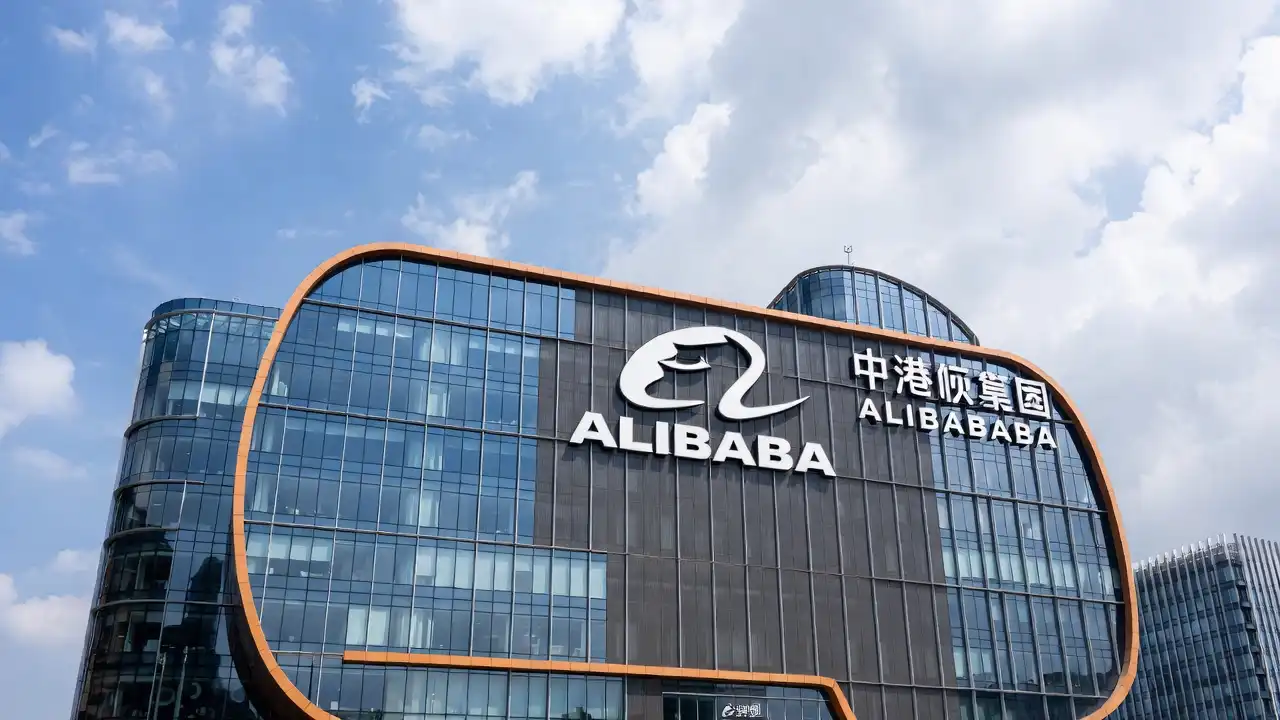
The intense geopolitical and technological competition between Washington and Beijing has once again escalated, shattering the brief post-summit calm. The United States Department of Defense released an updated, significantly expanded list of entities it believes are working directly or indirectly with China’s military. In a sweeping move that directly targets the heart of China’s commercial technology sector, the Pentagon added some of the country’s best-known international brands to the index, including e-commerce giant Alibaba, search and artificial intelligence leader Baidu, and electric vehicle pioneer BYD. This decision signals that the United States intends to maintain severe economic pressure on Beijing despite recent diplomatic attempts to stabilize bilateral relations.
This highly aggressive regulatory update comes less than a month after President Donald Trump met Chinese leader Xi Jinping during a state visit to Beijing in mid-May, where both leaders shook hands on a delicate trade war truce. Analysts from Washington-based think tanks describe the Pentagon’s sudden announcement on Monday as a post-summit reality check, proving that the Trump administration is not treating the perception of diplomatic success as a reason to stand down. By expanding the blacklist so soon after the high-level meeting, Washington is sending a clear message that it will continue to sequence geopolitical pressure to protect its national security interests.
Formally known as the Section 1260H List, or the Chinese Military Companies (CMC) list, the index emerged from a 2021 congressional mandate requiring the Pentagon to annually identify Chinese firms operating in the United States with ties to Beijing’s defense establishment. In designating the new companies, the Pentagon asserted that the targeted firms contribute directly to China’s defense industrial base because they are affiliated with the country’s Ministry of Industry and Information Technology (MIIT). The U.S. government believes that Beijing’s state-sponsored “military-civil fusion” strategy systematically co-opts civilian businesses, universities, and research programs to modernize the People’s Liberation Army (PLA) rapidly.
The newly updated blacklist targets a much broader swath of non-state-owned Chinese technology companies than previous versions, which traditionally focused on defense and state-owned security contractors. With the inclusion of Alibaba and Baidu alongside the previously listed Tencent, the list now covers China’s three largest internet companies, representing a combined private market value of roughly $850 billion. Other prominent additions include electric-vehicle manufacturer NIO, pharmaceutical research giant WuXi AppTec, and leading smart-robotics companies RoboSense and Unitree. The addition of Unitree is particularly notable, occurring just a week after U.S. chipmaker Nvidia announced plans to use the company’s robot dogs for its research projects.
While appearing on the 1260H list does not trigger immediate financial sanctions or asset freezes, it carries severe, highly damaging reputational and operational consequences for the designated firms. The U.S. Defense Department is legally restricted from entering into any direct procurement contracts with blacklisted companies starting later this month. Furthermore, subsequent rules will completely ban federal agencies from purchasing their products or services through third-party contractors by 2027. The designation also serves as a formal warning to American investors, making it significantly more difficult for these companies to access Western capital markets.
The publication of the expanded list has already triggered aggressive calls for further economic retaliation from prominent lawmakers in Washington. Representative John Moolenaar, the Republican chairman of the House Select Committee on China, publicly urged American businesses and government agencies to cut ties with the newly listed firms immediately. Moolenaar declared that any of the blacklisted entities currently trading on U.S. exchanges should face immediate delisting. At the same time, their products should be systematically purged from critical American supply chains to prevent them from enabling China’s military ascendance.
The sudden expansion of the blacklist could inflict severe financial pain on Western tech companies that rely on Chinese manufacturing and components. Sourcing advanced parts, solar panels, and battery packs already requires navigating highly complex supply chains, with U.S. firms spending billions to procure hardware from Chinese leaders such as JA Solar, Trina Solar, and EVE Energy, which the Pentagon also added to its list. Even a minor 1.5% increase in administrative compliance and supply-chain audits can severely compress the profit margins of American electronics builders. If lawmakers implement a full procurement ban, U.S. firms must spend over $1 billion to reconfigure their international logistics networks.
The Chinese government reacted with strong anger to the Pentagon’s announcement, accusing Washington of using national security as a hollow pretext to cover up raw protectionism. China’s embassy in Washington, D.C., issued a sharp statement condemning the blacklist as a highly discriminatory and unfair practice. An embassy spokesperson argued that Chinese companies operating overseas strictly comply with the laws and regulations of their host countries, accusing the U.S. of overextending security concepts to smear Chinese brands and suppress legitimate international competition.
The targeted Chinese corporations have also launched their own corporate defense campaigns, categorically rejecting the military-linked designation. In an emailed statement to Al Jazeera, Alibaba declared there was absolutely no basis to conclude that the company should be placed on the Section 1260H list, emphasizing that the e-commerce giant is not a military company nor part of any military-civil fusion strategy. Baidu issued a similar statement on Chinese social media, branding the accusations as entirely baseless and stating that there is no credible justification for their inclusion. Several designated companies, including WuXi AppTec, have already confirmed plans to seek immediate removal from the list through all available legal channels.
Ultimately, the sudden expansion of the Pentagon’s Chinese military blacklist highlights the deep, structural divisions that are rewriting the global technology sector. While political leaders in Washington and Beijing try to maintain a fragile trade truce to protect their domestic economies, the underlying security anxieties of the digital age continue to drive a steady, Cold War-style decoupling. As new procurement bans take effect and more tech champions find themselves caught in the geopolitical crossfire, the global technology supply chain must adapt to a fractured world in which national security and economic efficiency can no longer coexist.