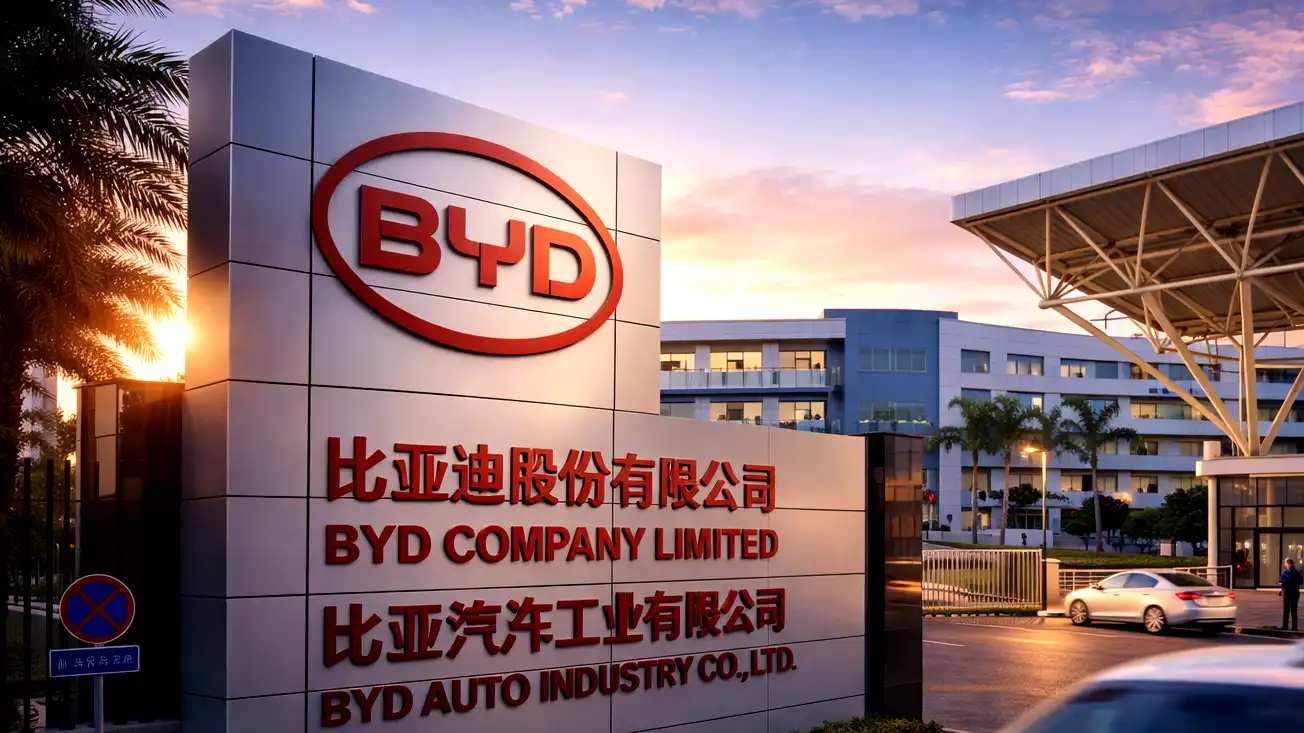
Chinese automotive power Build Your Dreams, universally known as BYD, is executing a bold commercial expansion into Japan’s domestic automobile market, deploying a fleet of ultra-affordable compact electric vehicles designed to conquer the nation’s unique micro-car category. By launching small, battery-electric hatchbacks priced below 2.0 million yen ($13,000 USD), BYD is mounting a direct challenge against entrenched Japanese auto giants like Toyota, Nissan, Honda, and Suzuki on their own home turf. The strategic push into Japan’s mini-vehicle market represents a central pillar of BYD’s global export campaign as Western trade barriers close traditional North American and European growth channels.
The primary target of BYD’s Japanese expansion is the iconic “Kei car” segment—a specialized category of micro-vehicles engineered specifically to meet strict Japanese legal dimensions and municipal parking requirements. Kei cars represent a massive commercial opportunity, accounting for roughly 35% to 40% of all passenger car sales across Japan, with annual transaction volumes exceeding 1.6 million vehicles. By engineering compact electric platforms equipped with high-density lithium iron phosphate batteries, BYD aims to deliver a zero-emission urban commuter vehicle that undercuts domestic Japanese competitors on price while delivering superior electric driving range.
The commercial timing of BYD’s small EV push is heavily driven by international trade and geopolitical friction. As the United States enforces 100% statutory import tariffs on Chinese-made electric vehicles and the European Union implements anti-subsidy duties reaching up to 38%, BYD must secure high-volume export destinations across non-sanctioned markets. Establishing a successful commercial footprint inside Japan—the world’s fourth-largest auto market and a nation famous for its demanding consumer quality standards—delivers crucial global brand validation, proving that Chinese electric vehicle technology can compete against the world’s most established automotive manufacturers.
TechGolly provides a detailed analysis of BYD’s small EV expansion in Japan, evaluating Kei car market dynamics, Blade LFP battery technology, sub-2 million yen pricing strategies, competitive threats to Toyota and Nissan, dealer network buildouts, and the long-term realignment of global automotive trade.
Unpacking Japan’s Kei Car Market and BYD’s Micro EV Strategy
To appreciate the strategic ambition behind BYD’s Japanese expansion, automotive analysts and corporate strategists must examine the unique structural characteristics of Japan’s domestic vehicle market. Japan represents the fourth-largest national automotive market in the world, registering approximately 4.7 million new vehicle sales annually. However, unlike North American consumer markets dominated by heavy pickup trucks and mid-sized crossover SUVs, Japanese retail sales are heavily weighted toward ultra-compact passenger vehicles.
The origin of the Kei car dates back to post-World War II industrial policy, when the Japanese government established a lightweight vehicle category to provide affordable transportation for working families. Under current Japanese road regulations, a Kei car must adhere to rigid physical dimensions: maximum length under 3.4 meters (11.2 feet), maximum width under 1.48 meters (4.8 feet), and engine displacement capped at 660 cubic centimeters for internal combustion engines. In exchange for adhering to these compact dimensions, Kei car owners enjoy significant financial benefits, including lower national road taxes, reduced highway tolls, and exemptions from strict urban proof-of-parking certificate requirements in many regional prefectures.
BYD’s initial entry into the Japanese market focused on larger global models, including the ATTO 3 electric crossover, the Seal sports sedan, and the standard Dolphin hatchback. However, with retail prices ranging between 3.6 million and 5.2 million yen ($24,000 to $35,000 USD), foreign imports struggled to achieve high volume in a nation where consumer purchasing habits favor compact, affordable urban commuters. Japanese retail buyers demonstrated high loyalty to local brands, purchasing fewer than 2,500 total BYD vehicles during the company’s first 18 months of domestic sales.
Recognizing that capturing meaningful market share in Japan requires competing in high-volume micro categories, BYD shifted its product strategy. The automaker adapted its low-cost global micro EV architecture—exemplified by the popular Dolphin Mini and Seagull platforms—to align with Japanese urban driving requirements. By delivering a compact electric car that fits narrow residential streets and multi-level mechanical parking garages across Tokyo and Osaka, BYD is positioning itself to capture price-sensitive suburban commuters and multi-car rural households.
The Battle for Sub-2 Million Yen Electric Mobility
The commercial spearhead of BYD’s renewed Japanese campaign is aggressive retail pricing. BYD plans to market its compact electric models at base prices hovering between 1.8 million and 2.0 million yen ($12,000 to $13,500 USD) before applying national and municipal government clean-energy vehicle subsidies.
When factoring in Japan’s national government EV purchase incentives—which offer up to 550,000 yen ($3,600 USD) in direct consumer rebates—the effective out-of-pocket purchase price for a new BYD micro EV drops to approximately 1.3 million to 1.5 million yen ($8,500 to $10,000 USD). This price point places BYD’s electric offerings in direct price parity with traditional gasoline-powered Kei cars, eliminating the upfront purchase price premium that historically deterred Japanese consumers from transitioning to battery-electric vehicles.
BYD’s sub-2 million yen pricing structure creates immediate competitive friction for domestic Japanese automakers. Japan’s best-selling electric vehicle, the Nissan Sakura—a joint venture development with Mitsubishi marketed as the eK X EV—starts at a retail base price near 2.54 million yen ($16,800 USD) before subsidies. While the Nissan Sakura captured over 40% of Japan’s domestic electric vehicle sales following its commercial debut, its higher price point leaves a significant market opening for BYD’s lower-cost alternative.
By offering a fully electric urban car at a 25% discount relative to domestic competitors, BYD is forcing Japanese automakers to re-evaluate their internal vehicle margins. Domestic Japanese brands must either accelerate cost-reduction programs for their electric Kei car assembly lines or risk forfeiting their most reliable, high-volume customer segment to an aggressive foreign challenger.
Technological Weaponry: Blade LFP Batteries and Cell-to-Body Integration
The fundamental engineering capability that enables BYD to offer compact electric vehicles at disruptive price points while maintaining positive gross profit margins is its proprietary, in-house battery manufacturing technology.
Unlike legacy automakers that rely on third-party battery suppliers like CATL, LG Energy Solution, or Panasonic, BYD began its corporate life as a rechargeable battery manufacturer before expanding into automobile assembly. BYD manufactures 100% of its battery cells internally, capturing full vertical integration and eliminating middleman supplier profit margins.
The technological core of BYD’s compact vehicle fleet is its proprietary Blade Battery. The Blade Battery utilizes Lithium Iron Phosphate (LFP) chemistry, completely eliminating expensive, supply-constrained raw materials like nickel and cobalt. LFP battery chemistry offers superior thermal stability, exceptionally long charge-discharge cycle lifespans exceeding 3,000 full cycles, and a physical safety profile that eliminates thermal runaway fire risks during physical puncture tests.
Furthermore, BYD incorporates advanced Cell-to-Body (CTB) structural engineering into its compact vehicle architectures. In traditional electric vehicle construction, individual battery cells are packed into modules, modules are assembled into heavy battery packs, and the pack is bolted beneath the vehicle chassis, consuming valuable interior cabin space and adding structural weight.
In BYD’s Cell-to-Body architecture, the Blade Battery cells are integrated directly into the floor structure of the vehicle shell itself. The battery pack functions as a structural load-bearing member of the vehicle frame, increasing torsional rigidity by 50% while reducing total structural thickness.
Cell-to-Body integration delivers critical interior packaging advantages for compact urban cars. By eliminating bulky battery module casings, BYD maximizes interior legroom and headroom inside compact vehicle footprints, ensuring that a 3.8-meter hatchback delivers interior cabin room comparable to a larger traditional passenger sedan.
Equipped with a 30 to 38 kilowatt-hour Blade Battery pack, BYD’s compact models deliver real-world driving ranges between 300 and 380 kilometers (186 to 236 miles) per charge under the official Japanese WLTC test cycle. A 300-kilometer driving range easily satisfies 95% of daily Japanese urban and suburban commuting requirements, where average daily driving distances hover under 40 kilometers.
Bypassing Western Tariffs through Asian and Latin American Expansion
Understanding BYD’s aggressive commercial strategy in Japan requires analyzing the rapid erection of protective trade walls across major Western economies.
Over recent quarters, federal policymakers in Washington enacted 100% tariffs on Chinese-manufactured electric vehicles under Section 301 trade rules, effectively locking Chinese automakers out of the North American automotive market. Concurrently, the European Commission finalized countervailing duties ranging between 17% and 38% on Chinese electric vehicle imports, alleging that state industrial subsidies provide Chinese manufacturers with an uncompetitive market advantage.
Facing severe tariff friction across North America and Europe, BYD’s corporate executive team is reallocating export capital toward high-growth, non-sanctioned markets across Asia, Latin America, and the Middle East. BYD is building a global export footprint spanning high-volume markets in Southeast Asia (Thailand, Indonesia, Malaysia), Latin America (Brazil, Mexico), and East Asia (Japan).
Winning market share in Japan carries immense strategic value for Chinese automakers beyond immediate unit sales volume. Historically, Japanese automotive manufacturers established an international reputation for uncompromised vehicle reliability, mechanical precision, and long-term quality control.
If BYD can convince conservative, quality-focused Japanese consumers to purchase Chinese-built electric vehicles, the company achieves an irreplaceable global marketing validation. Demonstrating success in Japan proves to consumers across Southeast Asia, Europe, and Latin America that Chinese electric vehicles satisfy the world’s most rigorous automotive quality and safety standards.
Threatening the Toyota Fortress: Domestic Loyalty versus Battery Superiority
BYD’s small EV push strikes at the heart of Japan’s industrial economy, creating a high-stakes competitive battle against Toyota Motor Corporation, the world’s largest automaker by volume.
Toyota maintains a dominant position in its home market, capturing over 50% of total passenger vehicle sales in Japan through its popular line of gasoline-electric hybrids, including the Prius, Yaris, and Corolla. Toyota’s corporate strategy prioritized hybrid-electric vehicles (HEVs) and plug-in hybrids (PHEVs) as pragmatic, near-term decarbonization solutions, while delaying mass production of pure battery-electric vehicles (BEVs).
However, Toyota’s cautious approach to pure electric vehicles has created a temporary product vacuum in the low-cost urban BEV segment. While Toyota and its mini-vehicle subsidiary Daihatsu offer competitive hybrid Kei cars, their pure electric vehicle offerings remain limited, leaving an open commercial market for foreign battery pioneers.
Recognizing the competitive threat posed by BYD, domestic Japanese automakers are executing rapid defensive measures. Suzuki Motor Corporation—the long-standing market leader in Japan’s Kei car segment—partnered with Daihatsu and Toyota to accelerate the development of next-generation commercial electric Kei vans and compact passenger cars. Similarly, Honda Motor Company announced plans to launch a family of low-cost micro EVs designed specifically to protect its domestic market share.
The primary obstacle facing BYD in Japan is not hardware engineering or battery technology, but deeply entrenched consumer perception and brand heritage. Japanese consumers display strong emotional loyalty to domestic brand names that have served Japanese families for generations. Furthermore, foreign vehicles in Japan historically carried a reputation for high maintenance expenses, difficult spare parts availability, and rapid secondary market depreciation.
To overcome consumer skepticism, BYD is executing a localized corporate strategy, avoiding aggressive nationalistic marketing and positioning itself as an accessible, high-tech mobility brand that complements modern urban Japanese lifestyles.
Dealer Network Expansion and After-Sales Infrastructure in Japan
Recognizing that Japanese consumers require reliable local service infrastructure before purchasing a foreign vehicle brand, BYD is investing heavily in constructing a physical sales and after-sales network across Japan’s 47 prefectures.
Unlike digital-only direct-to-consumer sales models deployed by foreign electric vehicle makers in other markets, BYD partnered with established Japanese automotive retail groups to construct traditional brick-and-mortar dealership showrooms. BYD established a corporate target to open 100 fully operational dealership locations across major Japanese metropolitan centers, offering test-drive centers, maintenance bays, and localized spare parts warehouses.
To address consumer concerns regarding long-term battery durability and vehicle resale values, BYD offers an industry-leading warranty package across its Japanese vehicle lineup: an 8-year or 160,000-kilometer warranty covering the electric drive battery, power electronics, and electric motor.
Furthermore, BYD is deploying mobile service fleets equipped with specialized diagnostic equipment, providing home service calls and roadside assistance to Japanese customers residing outside major metropolitan areas. Building a transparent, physical service ecosystem provides conservative Japanese buyers with the peace of mind required to transition away from traditional domestic auto brands.
Strategic Outlook for the Asian Automotive Landscape
The arrival of BYD’s low-cost electric vehicles in Japan marks a permanent structural shift in global automotive trade, ending the era when Japanese automakers enjoyed unchallenged control over their domestic market.
Looking forward through the late 2020s, competition in the Asian automotive market will center on battery chemistry efficiency, software intelligence, and manufacturing cost optimization. As Chinese battery and vehicle production achieves unprecedented scale—producing over 10 million electric vehicles annually—Chinese automakers will continue to drive down the global cost of electric mobility.
If BYD successfully captures 5% to 10% of Japan’s compact vehicle market over the next five years, it will force a historic acceleration across the Japanese auto industry. Legacy Japanese automakers will be compelled to abandon their exclusive reliance on hybrid technologies, accelerating capital investments in solid-state batteries, low-cost LFP chemistries, and dedicated electric vehicle manufacturing platforms to protect their domestic and global market share.
Ultimately, the competition between Chinese battery scale and Japanese automotive engineering will deliver major benefits to global consumers. As global auto giants compete to deliver low-cost, high-reliability electric vehicles, the transition toward zero-emission transportation will achieve permanent, self-sustaining momentum worldwide.
Key Takeaways for Auto Executives, Investors, and Market Analysts
The expansion of BYD into Japan’s micro EV market delivers crucial strategic lessons for corporate decision-makers, automotive executives, supply chain strategists, and international institutional investors.
First, affordable entry-level pricing is the ultimate driver of electric vehicle adoption. Automakers cannot achieve mass market electric transition relying solely on high-margin luxury sedans; mastering low-cost LFP battery chemistry and compact vehicle engineering is essential for capturing high-volume mass markets.
Second, vertical battery integration determines commercial survival. Automakers that manufacture their own battery cells internally capture lower unit production costs, protecting operating profit margins and enabling aggressive retail pricing that unintegrated competitors cannot match.
Third, global trade protectionism accelerates regional market competition. When Western nations erect high import tariff walls, competitive manufacturers will redirect export volumes toward non-sanctioned regional markets, intensifying competition in Asia, Latin America, and emerging economies.
Finally, physical retail and service infrastructure remains mandatory for foreign brand acceptance. Foreign technology companies entering conservative consumer markets must invest in local brick-and-mortar dealer networks, long-term warranty guarantees, and reliable spare parts logistics to earn consumer trust and secure long-term commercial success.