Key Points:
- The New Zealand government has progressed two shortlisted providers to the Request for Proposal stage for the country’s first liquefied natural gas import facility, slated to be operational by 2028.
- Energy Minister Simeon Brown confirmed that the government has completely abandoned its plan to fund the terminal through a levy on consumer power bills, instead placing the financial responsibility on the electricity sector.
- The planned terminal is designed to manage “dry-year” electricity risks when low hydro lake levels constrain renewable generation, potentially saving the country up to $800 million annually.
- Alongside the terminal, the government launched consultations on a new Winter Energy Reliability Obligation, imposing stiffer fines of up to $10 million on power companies that fail to secure backup supplies.
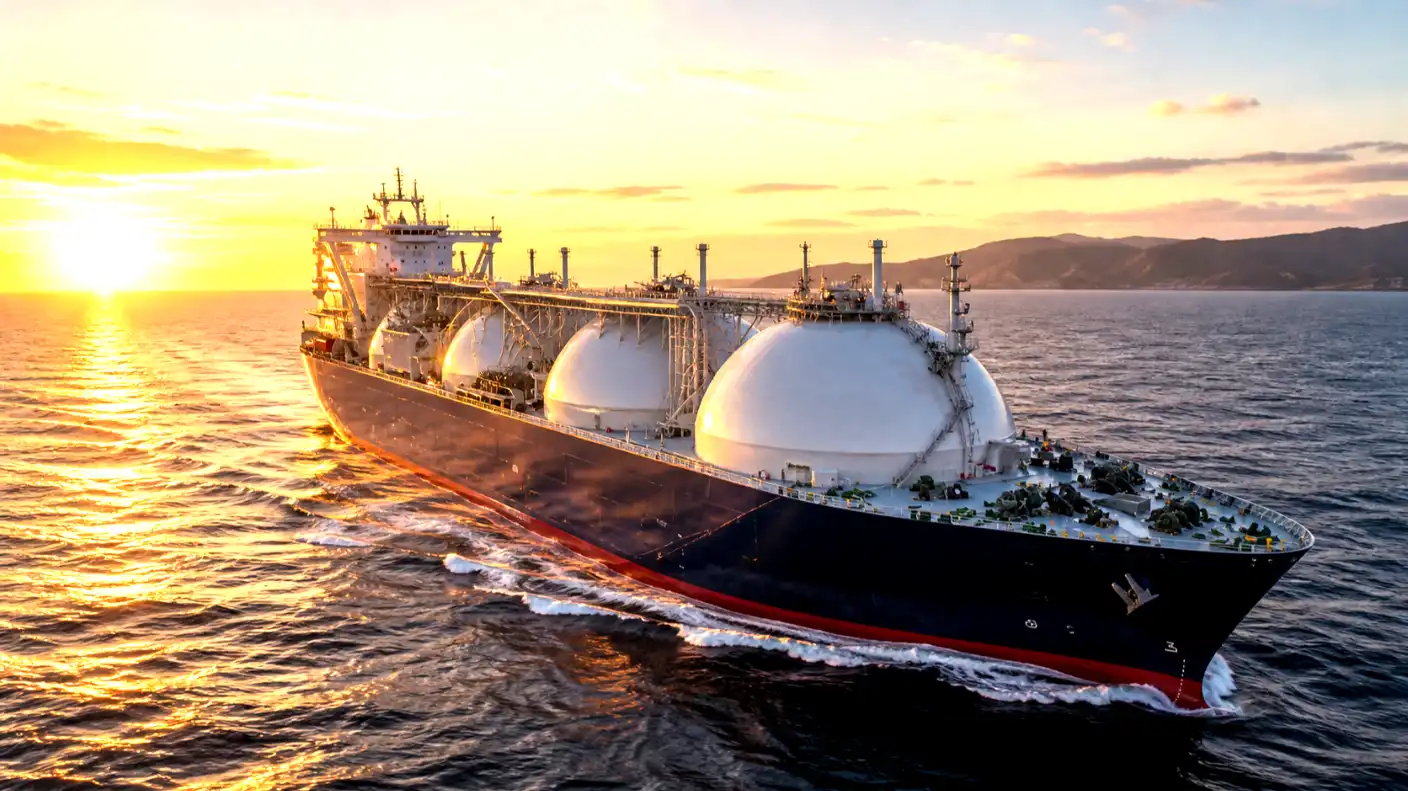
New Zealand is taking a major step to secure its electricity grid as its domestic natural gas supplies rapidly decline. Energy Minister Simeon Brown confirmed that the government is moving forward with plans to build the country’s first liquefied natural gas (LNG) import facility. Speaking to the Auckland Business Chamber, Brown announced that the government has officially progressed two potential providers to the Request for Proposal (RFP) stage. The state expects to finalize a contract with the preferred builder later this year, aiming to have the import terminal fully operational in 2028 to shield the country from catastrophic power shortages.
The announcement contained a major, highly welcomed policy shift for everyday consumers. The government has completely abandoned its previous plan to fund the $1 billion infrastructure project through a levy on consumer power bills. Initially proposed in February, the plan called for a levy of between $2 and $4 per megawatt-hour on electricity, a charge that opposition parties quickly branded as a “gas tax.” Recognizing the political damage and the unfair burden on struggling households, the minister scrapped the levy entirely. Instead, the government is working through a new funding model guided by the principle that the electricity sector itself must pay for its own security-of-supply backups.
Brown told reporters that the responsibility for keeping the lights on sits squarely with the country’s major power companies, commonly known as “gentailers” (generator-retailers). Companies like Contact Energy, Genesis Energy, Meridian Energy, and Mercury Energy, many of which remain majority state-owned, must now bear the financial burden of managing dry-year risks. The Ministry of Business, Innovation and Employment (MBIE) has begun engaging directly with these gentailers to design a fair funding model. This structural change ensures that everyday Kiwis do not face higher utility bills to subsidize private and semi-state corporate risk management.
The urgency behind the LNG terminal stems from New Zealand’s high reliance on hydroelectricity. While water, wind, and geothermal power dominate the grid, the country is highly vulnerable to “dry years” when low rainfall drains the major storage lakes that generate over 60 percent of the nation’s electricity. During the dry year of 2024, a major gas outage compounded low lake levels, driving wholesale electricity prices to a staggering $800 per megawatt-hour. This price spike forced the New Zealand Aluminium Smelter to cut production, drove several manufacturing firms into permanent closure, and cost the country an estimated $5.2 billion in lost gross domestic product (GDP) in 2025 alone.
A rapid, faster-than-expected decline in domestic natural gas reserves has severely worsened this dry-year vulnerability. The government’s latest Petroleum Reserves report shows that New Zealand’s gas reserves dropped by 23 percent last year, down to 731 petajoules. About half of this decline reflects gas consumed, while the other half represents downgrades by operators who realized they had previously overestimated their fields. Most notably, the historic Maui gas field is set to stop producing entirely this year, with eight of the country’s remaining gas fields forecast to close by 2036. This rapid depletion leaves the country with almost zero domestic backup fuel to support its renewable grid.
This energy crisis has already had a severe impact on the wider economy. Economists estimate that the gas shortage led to a 1.65% cut in household spending and a 1.4% reduction in real wages in 2025, alongside a $275 million loss in the national trade balance. While the country is experiencing a boom in renewable generation, with over 900 megawatts of new wind and solar projects coming online, weather-dependent resources cannot cover the multi-week or multi-month gaps during dry years. Without a flexible, firm backup fuel like LNG to support the grid, future droughts would inevitably bring higher power bills, factory closures, and rolling blackouts.
The government’s decision to press ahead with the import terminal comes despite a massive surge in global gas prices driven by the ongoing war in the Middle East. The effective closure of the Strait of Hormuz in late February has choked off global energy shipments, causing price shocks across international markets. However, officials concluded that LNG remains the fastest, cheapest, and most flexible dry-year solution that New Zealand can implement this decade. To bypass Middle Eastern supply risks, New Zealand plans to secure long-term contracts from stable, non-Middle East producers in Canada, Australia, and the United States, where export capacity is expected to grow by 50 percent through 2030.
Both shortlisted proposals for the new terminal use Port Taranaki on the North Island, which is geographically close to the country’s existing pipeline infrastructure. The planned facility will have the capacity to import up to 12 petajoules of gas—equivalent to roughly 218,000 tonnes of LNG—during the crucial winter period, covering about half of the country’s dry-year fuel reserve requirement. The landed gas price is estimated at $10.12 to $10.37 per million British thermal units (Btu). By introducing this physical backup, the government expects to cut forward wholesale electricity prices by about $20 per megawatt-hour, delivering up to $800 million in annual savings for households and businesses.
Alongside the physical terminal, the government has launched consultations on a new Winter Energy Reliability Obligation. This new regulatory framework will legally require major electricity retailers and large industrial users to secure backup power supply well ahead of forecast dry winters. It will also require generators to have firm fuel available before the hydro storage runs low. To enforce compliance, the government plans to drastically increase penalties for serious rule-breaking from the current maximum of $2 million to up to $10 million, or three times the commercial gain, or 10 percent of a company’s total turnover.
The opposition Labour and Green parties have fiercely attacked the government’s strategy, calling the plan an expensive, long-term commitment that ties New Zealand to volatile international fossil fuel markets. They argue that the government should instead spend the capital to supercharge domestic renewable generation, battery storage, and geothermal projects. However, the ruling coalition maintains that relying solely on weather forecasts to run a national grid is a dangerous gamble. By forcing power companies to take real responsibility for keeping the lights on, the government aims to rebuild a resilient, affordable, and secure energy system that protects Kiwi jobs from avoidable economic shocks.