Key Points:
- The United States added some of the world’s largest solar and battery manufacturers, including Trinasolar and JA Solar, to its military-linked companies blacklist.
- Major battery manufacturers EVE Energy and CALB Group also joined the Pentagon’s updated 1260H list of restricted entities.
- The designation prohibits the U.S. Department of Defense from contracting directly with these firms and restricts indirect purchases by 2027.
- Industry leaders warn that penalizing dominant Chinese solar and battery suppliers will severely disrupt global clean energy transition timelines.
The ongoing economic and geopolitical conflict between Washington and Beijing has delivered a massive, unexpected blow to the global clean energy transition. The United States government recently expanded its highly controversial blacklist of Chinese military-linked companies, targeting some of the world’s largest solar panel and battery manufacturers. By adding these green-technology champions to the index of restricted entities, Washington hopes to decouple its critical energy networks from Chinese suppliers. However, because Chinese firms currently dominate the global supply chains for renewable energy hardware, this aggressive regulatory shift is sending shockwaves through the international utility and clean-tech sectors.
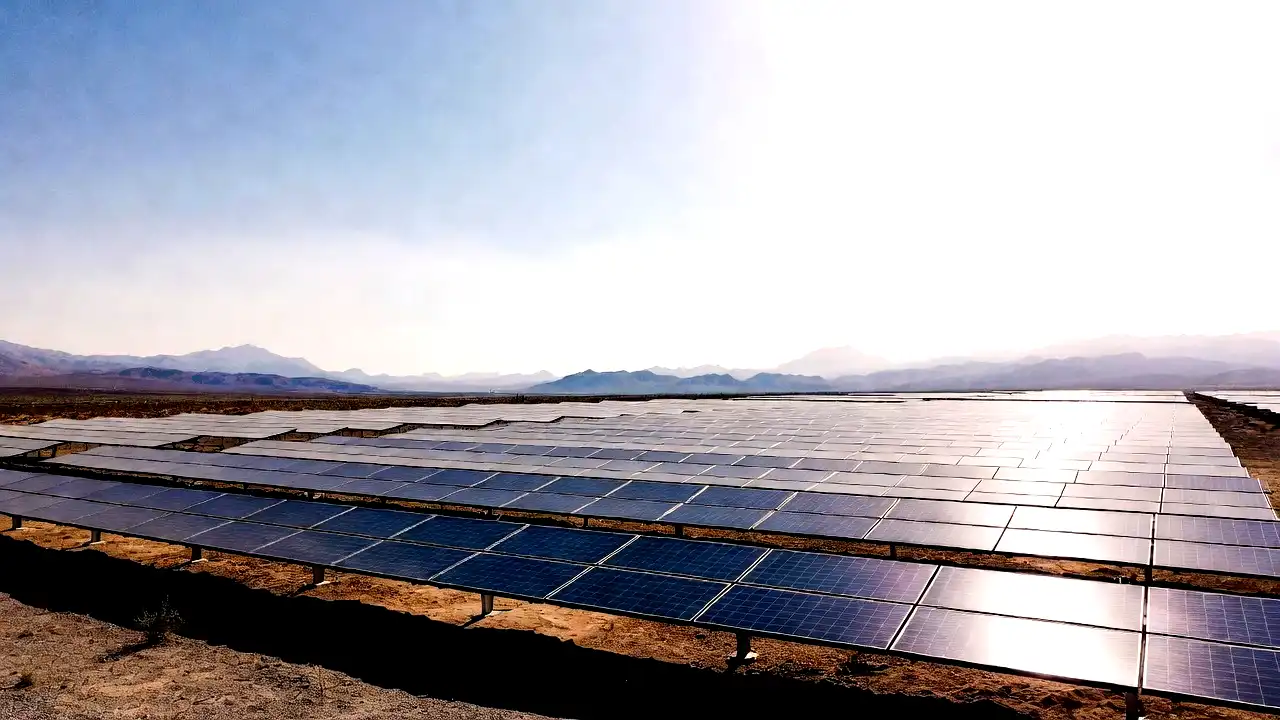
The latest update to the U.S. Department of Defense’s restricted list targets several of the most influential players in the global renewable energy industry. The newly designated companies include Trinasolar and JA Solar Technology, two of the world’s largest solar panel manufacturers. The Pentagon also added EVE Energy and CALB Group, two massive manufacturers of lithium-ion batteries designed for electric vehicles and utility-scale energy storage systems. By targeting these green-tech giants alongside internet and search providers such as Alibaba and Baidu, the United States is systematically expanding its national security focus to encompass the entire clean energy supply chain.
The legal framework guiding this trade restriction stems from Section 1260H of the National Defense Authorization Act, which requires the Pentagon to annually identify and publish a list of “Chinese military companies” operating directly or indirectly within the United States. In its official notice, the U.S. Defense Department asserted that these solar and battery firms contribute directly to China’s defense industrial base through their close affiliations with the Ministry of Industry and Information Technology (MIIT). The U.S. government believes that Beijing’s state-sponsored “military-civil fusion” strategy systematically utilizes private commercial enterprises to modernize the People’s Liberation Army.
While appearing on the 1260H list does not trigger immediate financial sanctions or asset freezes, it carries severe, highly damaging consequences for the designated firms. The U.S. Defense Department is legally prohibited from entering into any direct procurement contracts with these blacklisted companies. Furthermore, subsequent rules will completely restrict federal agencies from purchasing their products or services through third-party contractors by 2027. This impending ban represents a major operational hurdle for U.S. military bases and federal facilities, many of which rely on cheap, imported Chinese solar panels and battery storage arrays to meet their green energy targets.
The targeted Chinese green-tech giants have reacted to the Pentagon’s announcement with strong, highly vocal opposition, promising to protect their commercial reputations through all available legal channels. While Trinasolar and JA Solar did not immediately respond to requests for comment, other high-profile tech additions such as Alibaba, Baidu, and biotech outsourcing giant WuXi AppTec issued statements denouncing their inclusion. WuXi AppTec called the military-linked designation incorrect and stated that it is an independent, publicly traded business that does not meet the statutory criteria. An Alibaba spokesperson added that there was absolutely no basis to conclude the firm aids China’s military-civil fusion.
The sudden expansion of the blacklist could inflict severe financial pain on Western clean energy developers who rely on Chinese manufacturing and components. Sourcing advanced parts, solar wafers, and battery packs already requires navigating highly complex supply chains, with U.S. firms spending billions to procure hardware from Chinese leaders. Industry experts from the Mission Possible Partnership report that China currently accounts for nearly 90% of the world’s solar panel production and over 75% of global lithium-ion battery manufacturing, making it incredibly difficult for Western developers to find viable alternative suppliers in the near term.
The financial impact of these shifting trade rules is particularly acute for mid-sized renewable energy developers. Even a minor 1.5% increase in administrative compliance, supply-chain audits, and tariff-related expenses can severely compress the thin operating margins of utility-scale solar and wind projects. If federal regulators implement a full procurement ban on these dominant suppliers, U.S. developers must spend over $1 billion to reconfigure their international logistics networks and import more expensive components from alternative hubs in Europe or Southeast Asia, potentially slowing down the transition to clean power.
To mitigate these supply chain risks, the U.S. government has prioritized domestic clean energy manufacturing through the Inflation Reduction Act, providing billions in tax credits and direct subsidies. However, building out a domestic solar and battery manufacturing base is an incredibly slow and capital-intensive process. While American firms have announced plans to invest upwards of $100 billion to construct local solar wafer and battery cell factories, these facilities will take years to reach commercial scale. For now, the U.S. green energy sector remains highly dependent on Chinese imports, making any sudden regulatory bans highly disruptive.
The long-awaited update to the military blacklist took place at a highly sensitive diplomatic moment. The regulatory move follows a high-profile state visit to Beijing in mid-May, during which President Donald Trump and Chinese President Xi Jinping signed a delicate trade-war truce. The sudden expansion of the blacklist has introduced fresh friction into bilateral relations, signaling that Washington remains highly committed to protecting its technological and industrial sovereignty despite recent diplomatic attempts to stabilize relations. This ongoing tension makes a prolonged trade conflict highly likely.
Ultimately, the addition of major Chinese solar and battery firms to the U.S. military company blacklist highlights a defining challenge of the modern digital age. As Western governments move to secure their critical energy and technology infrastructure from geopolitical adversaries, geographic IP bans and market restrictions are becoming standard operating procedure to insulate sensitive data. While these protectionist policies aim to foster domestic manufacturing, they risk slowing down the global clean energy transition by raising costs and cutting off access to the world’s most advanced technology. How successfully the global supply chain adapts to this fractured regulatory landscape will dictate the future of international climate governance.