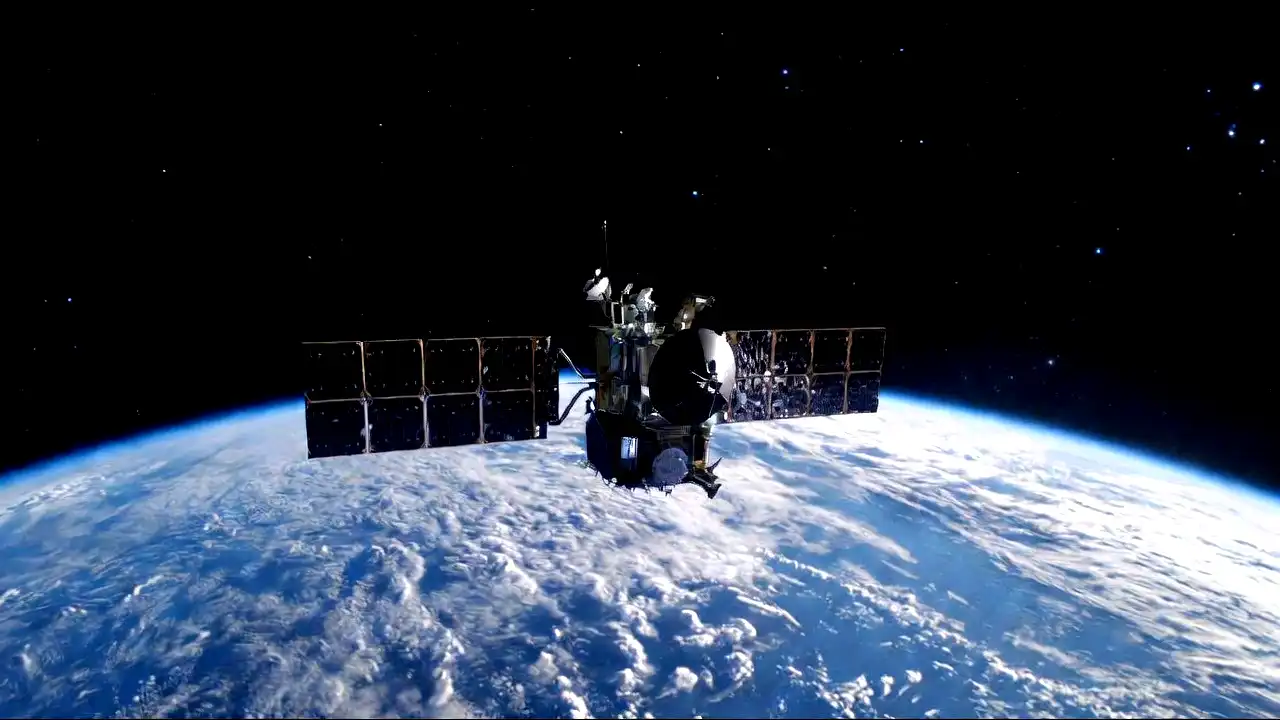
The global race to blanket the Earth in high-speed, low-latency satellite connectivity has entered a highly intensive, capital-heavy commercialization phase. For several years, SpaceX’s Starlink operated with an effective monopoly, securing lucrative aviation deals, government defense contracts, and millions of retail subscribers. However, Amazon is aggressively moving to challenge this dominance with its own Low Earth Orbit (LEO) satellite constellation.
Formerly known as Project Kuiper, Amazon recently rebranded its orbital division as “Amazon Leo.” This massive project is rapidly approaching a major milestone, with plans to launch initial consumer and enterprise services as early as the mid-third quarter of this year.
A comprehensive research note published by Barclays analysts led by Ross Sandler argues that while Amazon faces severe near-term launch bottlenecks, the project’s long-term potential remains exceptionally strong. The investment bank points out that the global market for satellite internet is so vast that Amazon finishing second to Starlink still represents an incredibly lucrative, multi-billion-dollar business opportunity.
This deep dive analyzes the technical advantages of Amazon’s upcoming network, details the severe launcher bottlenecks threatening its near-term timeline, explains why its integration with Amazon Web Services (AWS) provides a secret weapon, and explores the financial scale of this massive orbital arms race.
Understanding Amazon’s Satellite Internet Vision
To understand why Amazon is spending billions of dollars to build an orbital network, one must look at the physical limitations of traditional internet infrastructure. Standard copper and fiber-optic cables are incredibly expensive to lay across rugged mountain terrains, dense jungles, and sparse rural regions. For decades, satellite internet relied on massive geostationary (GEO) satellites orbiting 35,000 kilometers above the equator. Because these satellites sit so far away, sending a signal up and back takes a long time, resulting in a lag or “latency” of over 600 milliseconds, making them useless for video calls, online gaming, and real-time financial trading.
Low Earth Orbit (LEO) satellite internet completely solves this latency issue. By deploying thousands of smaller satellites just 300 to 1,200 kilometers above Earth, companies can dramatically reduce signal travel time. Amazon Leo’s architecture achieves a latency of less than 50 milliseconds, matching the speed and responsiveness of traditional land-based fiber-optic networks. This low-latency performance allows Amazon to target high-value enterprise markets, aviation Wi-Fi networks, and remote cellular towers.
Key Components of Amazon Leo’s Orbital Strategy
Amazon’s plan to challenge Starlink’s dominance relies on five highly integrated, advanced technological systems:
- Low Earth Orbit Constellation: A planned network of approximately 3,200 highly advanced satellites approved by the FCC to provide global high-speed broadband.
- Integration with Amazon Web Services: Tightly coupling the satellite receivers to AWS data centers, offering unmatched security and processing speeds.
- Direct-to-Device Connectivity: Entering the space cellular race via the strategic acquisition of satellite operator Globalstar.
- Commercial Enterprise Contracts: Securing early, high-profile commercial partnerships with airlines like Delta and JetBlue, and telecommunication giants like Vodafone.
- High-Volume Production Facilities: Utilizing a newly opened 100,000-square-foot payload processing facility at Kennedy Space Center to build up to 100 satellites per month.
The Launch Bottleneck: Surviving a Multi-Front Rocket Crisis
While the long-term commercial potential of Amazon Leo is undisputed, the project faces a severe, immediate bottleneck: getting its satellites into space. To maintain its FCC regulatory approval, Amazon must deploy at least half of its 3,200-satellite constellation by mid-2026.
Currently, the company has just over 200 operational satellites in orbit. It requires a minimum of 500 satellites in space just to begin initial, limited commercial operations. This means Amazon must maintain an aggressive, uninterrupted launch schedule, even as its launch partners face a series of severe technical and physical crises.
The Blue Origin New Glenn Pad Explosion
Amazon’s primary launch plan relied heavily on Blue Origin’s next-generation New Glenn rocket. Amazon contracted Blue Origin to launch 48 satellites per mission, relying on the massive rocket to deploy the bulk of its constellation. However, those plans suffered a major setback during a recent test.
A catastrophic explosion during testing severely damaged the only available launchpad for the New Glenn rocket. The accident has grounded the vehicle indefinitely. While Blue Origin publicly stated it hopes to fly before the end of the year, industry analysts estimate that repairing the highly complex launchpad and completing necessary safety audits will take more than a year, leaving Amazon’s deployment schedule in limbo.
The Shrinking Pool of Alternative Launch Providers
Because of the New Glenn delay, Amazon must rely on a shrinking pool of alternative launch providers, most of which are facing their own capacity limits:
- The Retired Atlas V Rocket: Operated by United Launch Alliance (ULA)—a joint venture of Boeing and Lockheed Martin—the reliable Atlas V has only one remaining launch available for Amazon, with the company refusing to manufacture any additional vehicles.
- The Vulcan Centaur Anomalies: ULA’s next-generation Vulcan Centaur rocket is slowly ramping up production, but the vehicle experienced technical anomalies on two of its first four flights, delaying its high-volume launch schedule.
- Arianespace’s Inconsistent Pace: While the European launch provider remains a viable option, it has yet to demonstrate a consistent, high-frequency monthly launch pace.
These launch limitations mean that Amazon must carefully manage its remaining payloads, potentially relying on its direct competitor, SpaceX, to launch a portion of its satellites to meet its strict FCC regulatory deadlines.
Why a Second-Place Finish is Still Highly Lucrative
Despite these short-term launch bottlenecks, Barclays analysts remain highly optimistic about Amazon’s long-term financial case. The bank points out that the global market for satellite connectivity is not a “winner-take-all” industry.
The global market is easily vast enough to support two major, multi-billion-dollar players. Just as Microsoft Azure and Amazon Web Services dominate the global cloud computing market as a duopoly, Starlink and Amazon Leo can comfortably coexist, dividing the massive market among enterprise, military, and aviation customers.
The AWS Advantage: A Powerful Enterprise Edge
Amazon has a massive strategic advantage that Starlink does not: Amazon Web Services. AWS is the largest cloud computing provider in the world, trusted by millions of corporations, banks, and government agencies to host their most sensitive data.
By integrating Amazon Leo directly with AWS, Amazon can offer enterprise clients a highly secure, private connection. A multinational corporation operating a remote mine in Australia or an oil rig in the Gulf of Mexico can route its data directly from a local satellite terminal to an orbital Amazon Leo satellite, which then beams it to an AWS data center.
The data never has to travel over the public internet, eliminating the risk of cyberattacks and providing unmatched security. This cloud-integrated architecture gives Amazon a powerful competitive edge when bidding for high-value corporate and government contracts.
High-Profile Commercial Aviation and Telecom Partnerships
This enterprise-first strategy is already delivering major commercial victories. Even though Amazon is not yet ready for wide-scale deployment, major global brands are actively signing up to use its future network:
- Delta Air Lines Blockbuster Deal: Delta recently announced a major partnership with Amazon Leo, committing to install the satellite internet system on an initial 500 aircraft starting in 2028. This move will allow Delta to offer its passengers ultra-fast, low-latency in-flight Wi-Fi, matching the speeds passengers enjoy on land.
- JetBlue’s Early Adoption: JetBlue signed a similar agreement last September, becoming one of the first major airlines to commit to Amazon’s upcoming orbital network.
- The Vodafone Backhaul Partnership: Vodafone partnered with Amazon Web Services and the Leo constellation to supplement mobile network coverage in remote areas of Europe and sub-Saharan Africa. The partnership targets download speeds of up to 1 Gbps and upload speeds of 400 Mbps. By using Amazon Leo as an orbital backhaul, Vodafone can avoid laying expensive fiber-optic cables across rugged terrain, reducing its network deployment costs by up to 76%, according to GSMA benchmarks.
Entering the Space-Based Cellular Race via Globalstar
Amazon has also shown that it is serious about competing in the emerging direct-to-device space cellular sector, commonly referred to as “cell towers in space.” This technology allows standard smartphones to connect directly to satellites to send emergency messages and place calls in areas with zero cell tower coverage.
In mid-April, Amazon executed a blockbuster strategic move by acquiring satellite operator Globalstar, Inc. (GSAT). This transaction represents Amazon’s biggest acquisition in nearly a decade, signaling to the market that the tech giant is ready to spend heavily to dominate the next layer of global connectivity.
The acquisition has completely reshaped the competitive landscape. While the announcement initially triggered a sharp sell-off in rival AST SpaceMobile, analysts believe Amazon’s entry validates the massive potential of the space-based cellular market.
Furthermore, regulatory comments from the FCC indicate that the commission aims to foster a “healthy, three-player market” to promote competition and protect consumers. This regulatory support will likely speed up Amazon’s approval timelines, giving it a formidable advantage as it builds out its direct-to-device network alongside its standard broadband constellation.
The Financial Scale: Capital Intensity and Long-Term Value
Building a global satellite network requires an extraordinary, continuous commitment of capital. Amazon’s overall investment in the project is estimated to run into tens of billions of dollars.
However, unlike smaller, highly leveraged startups that struggle to survive during periods of high interest rates, Amazon can easily fund these orbital ambitions through the massive free cash flows generated by its highly profitable retail and AWS cloud divisions.
Barclays recently reaffirmed its “Overweight” rating on Amazon stock, setting an aggressive price target of $275 per share. The bank believes that Wall Street is undervalued on the long-term capital efficiency of Amazon’s investments.
Once the initial constellation is successfully deployed, the high-margin recurring revenues from enterprise broadband subscriptions, aviation contracts, and government defense agreements will quickly offset launch costs. Furthermore, the satellite network will serve as a major customer acquisition funnel, locking more enterprise clients into the AWS ecosystem and further widening Amazon’s competitive moat against its cloud and logistics rivals.
Conclusion
The latest market analysis of the autonomous satellite sector shows that Amazon’s orbital ambitions are built on a highly resilient, long-term foundation. While short-term launch bottlenecks—including Blue Origin’s launchpad explosion and ULA’s Vulcan engine anomalies—will likely complicate its near-term deployment timeline, the long-term case for the “Amazon Leo” project remains incredibly strong. The global market for satellite connectivity is easily vast enough to support two major players. By tightly integrating its satellite network with the global power of Amazon Web Services, securing major commercial contracts with airlines like Delta, and acquiring Globalstar to enter the direct-to-device cellular market, Amazon is positioned to capture a significant share of this emerging multibillion-dollar industry. Starlink may have won the first round of the satellite race. However, Amazon’s financial muscle, corporate partnerships, and cloud integration ensure that its second-place finish will still deliver extraordinary value to its shareholders for decades to come.