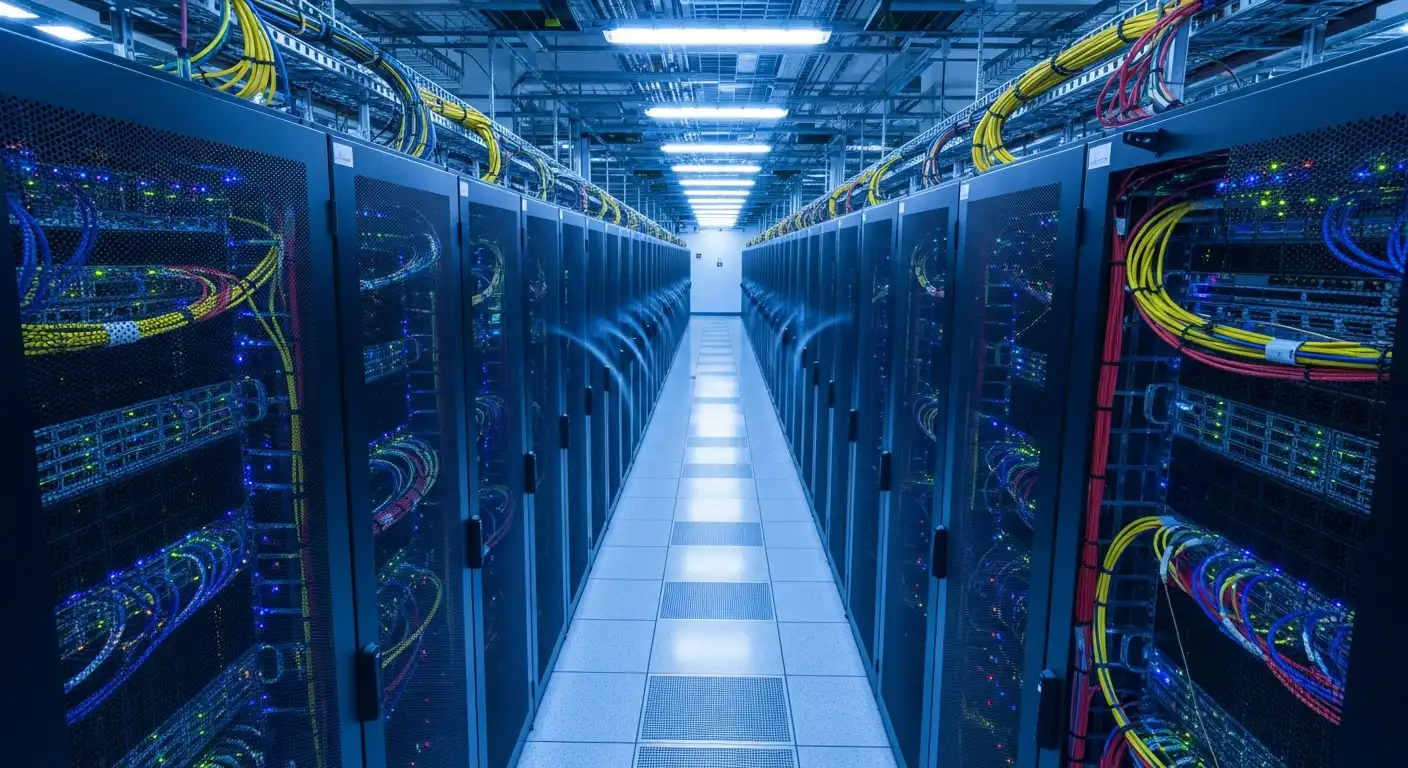
We live our lives in a digital cloud. Every time we stream a movie, send a message, search for information, or run an artificial intelligence model, we feel like we are using a weightless, invisible service. But this clean digital world relies on massive, heavy physical infrastructure. Giant concrete warehouses packed with thousands of humming computer servers run twenty-four hours a day, seven days a week, consuming enormous amounts of electricity. This hunger for power has pushed our global energy grids to their absolute limits. We can no longer ignore the carbon footprint of our digital habits. The tech sector has reached a critical turning point where green data centers must become the industry standard.
The Invisible Power Giant of the Internet
Most people never see the inside of a data center, so they do not realize how much energy they burn. Servers generate intense heat when they process data, and they require constant, aggressive cooling to prevent them from melting down. This combination of processing power and nonstop air conditioning makes data centers among the largest energy consumers on the planet. For decades, tech companies treated electricity as a cheap, infinite resource. Today, that luxury is gone. We must treat every watt of power as a precious resource and redesign our digital world to be lean and efficient.
Cooling Servers with the Power of Nature
We are finally moving away from traditional, energy-hungry air-conditioning systems to cool our server rooms. Ingenious engineers now build new data centers in the coldest regions of the world, using the freezing outside air to cool the machinery naturally. Others build their facilities deep underground or near cold oceans and rivers, using the water’s constant chill to absorb heat. This natural cooling, known as “free cooling,” cuts electricity bills by more than half. By working with local climates rather than fighting them, we make the digital backbone of our world much lighter on the earth.
Data Centers That Balance the Grid
A traditional data center acts as a greedy consumer, demanding a steady, high-voltage power supply regardless of whether the local grid is struggling. Green data centers are changing this relationship by becoming active, helpful participants in the local energy network. They install massive on-site battery storage systems that soak up excess wind and solar energy during the day. When the public grid faces a sudden spike in demand, the data center switches to its own batteries, relieving pressure on the grid and preventing blackouts. We are turning these technology hubs into giant batteries that stabilize our local communities.
Writing Software That Respects the Planet
We spent decades writing software to run as fast as possible, completely ignoring how much energy the code consumed. We created bulky, bloated programs that forced processors to run at maximum speed for no good reason. Today, sustainable software engineering is becoming a core discipline. Developers are learning to write “green code” that completes tasks with the fewest possible mathematical steps. They design apps that put servers into a deep sleep the moment their work finishes. By optimizing the logic inside our machines, we can save billions of kilowatt-hours without the end user ever noticing any difference in their screen performance.
The Rise of Modular and Recyclable Hardware
We cannot build a green digital future if we continue to dump millions of tons of toxic electronic waste into landfills every year. Traditional servers are difficult to repair, forcing companies to throw away entire machines when a single component fails. Green data centers are driving a massive shift toward modular hardware design. We are building servers where individual parts can be easily popped out, upgraded, and recycled. We use sustainably sourced metals and biodegradable materials for our components. By planning for the end-of-life of every single chip and wire, we prevent our tech expansion from burying the planet in trash.
Reusing Waste Heat to Warm Our Cities
The heat generated by computer chips used to be treated as dangerous waste that we needed to vent into the air as quickly as possible. Now, green data centers are capturing this heat and using it to warm nearby homes, offices, and greenhouses. We are piping hot water from server cooling systems directly into local municipal heating networks. Your digital searches can now heat local swimming pools or grow fresh vegetables in winter. By turning our waste product into a valuable utility, we build a circular energy loop that benefits both the tech industry and local neighborhoods.
Demanding Total Carbon Transparency
For a long time, tech companies hid their environmental impact behind vague marketing promises and selective statistics. They bought cheap carbon credits to claim they were “neutral” while continuing to burn coal. Those days of greenwashing are ending. Customers, investors, and regulators now demand total carbon transparency. We need to see real-time data on where a data center gets its power, how much water it consumes, and where its waste goes. By bringing this information to light, we create a competitive market where companies must prove their green credentials with hard facts, not just glossy brochures.
Conclusion
We do not have to choose between digital progress and a healthy planet. We can have both, but only if we design our digital world with a strict energy conscience. By cooling our servers with nature, writing cleaner code, stabilizing our energy grids, and recycling our physical hardware, we can build a tech industry that gives back to the earth instead of taking from it. The digital world is growing faster than ever, and we must ensure its foundation is built on green, sustainable power. The choices we make today on our server floors will decide the health of our planet tomorrow.