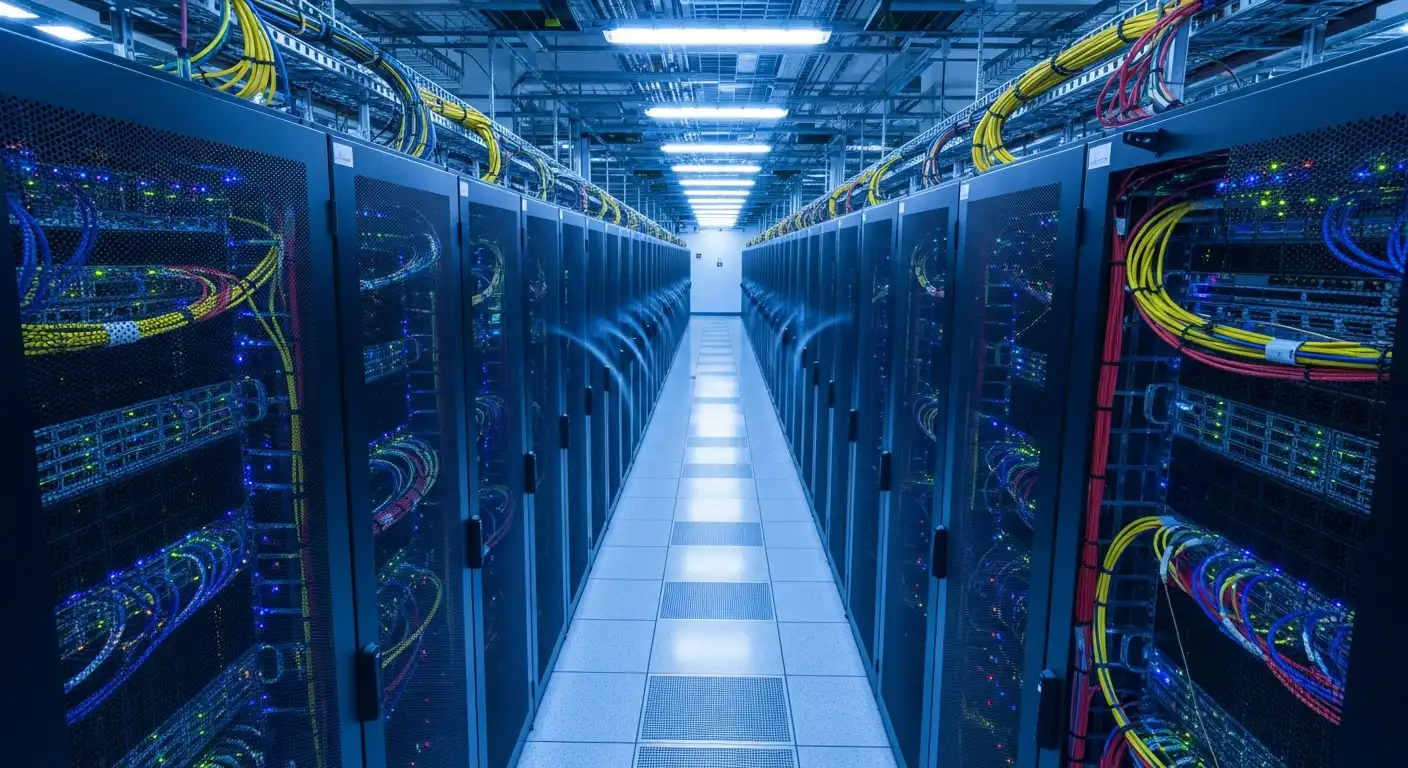
A fundamental transformation is sweeping through the digital infrastructure sector as cryptocurrency mining enterprises execute a massive pivot away from pure digital asset treasury models toward high-density artificial intelligence data center hosting. Confronted by compressed block rewards following the latest Bitcoin halving event, rising electricity tariffs, and depressed public equity valuations, executive teams across the crypto mining industry are leveraging their most valuable physical asset: secured access to gigawatts of high-voltage electrical grid power.
The strategic shift is being met with enthusiasm by Wall Street institutional investors and Big Tech hyperscalers. Artificial intelligence cloud providers and mega-cap technology conglomerates are facing an acute shortage of electrical power capacity across North America. Public utilities in major data center markets report that connecting a new 100-megawatt computing campus requires navigating multi-year grid interconnection queues, with wait times extending between 4 and 7 years. Because crypto miners spent years securing land rights, building high-voltage electrical substations, and signing long-term Power Purchase Agreements, their physical facilities have suddenly become high-value targets for artificial intelligence infrastructure developers.
In response to this demand, former Bitcoin mining companies are converting simple industrial warehouses into liquid-cooled data center fortresses. Industry leaders—including Core Scientific, IREN, TeraWulf, Hut 8, and Bit Digital—have signed multi-billion-dollar long-term hosting contracts with specialized AI cloud providers. These multi-decade agreements deliver predictable, high-margin cash flows that contrast sharply with the volatile revenue cycles of digital currency mining, driving dramatic stock market re-valuations across the sector.
TechGolly provides a detailed analysis of the crypto-to-AI data center pivot, evaluating power contract valuations, the engineering realities of facility retrofitting, direct-to-chip liquid cooling upgrades, corporate balance sheet transformations, and the long-term strategic outlook for global energy and computing infrastructure.
Unpacking the Collapse of the Pure Crypto Treasury Model
To understand why cryptocurrency mining boards are aggressively reallocating capital toward artificial intelligence, financial analysts must examine the economic pressure building inside the digital asset sector. The primary economic catalyst was the 2024 Bitcoin halving event, which automatically slashed the block reward granted to network miners from 6.25 Bitcoin down to 3.125 Bitcoin per mined block.
The 50% reduction in production output severely compressed gross profit margins for global mining operators. While total network hash rates continued to reach historic peaks, rising global electricity prices and increased hardware competition meant that less efficient mining fleets began operating at net operational losses.
Simultaneously, the corporate strategy of building a pure “digital asset treasury”—where mining companies held 100% of their mined Bitcoin on corporate balance sheets rather than converting it to cash—lost its appeal among Wall Street equity analysts. During crypto market drawdowns, holding unhedged digital asset reserves subjected mining stocks to extreme share price volatility, creating severe valuation discounts relative to traditional technology companies.
Public equity markets reflected this valuation gap. Traditional cryptocurrency mining enterprises routinely traded at low valuation multiples ranging between 4x and 8x earnings before interest, taxes, depreciation, and amortization (EBITDA). Conversely, artificial intelligence cloud hosting providers, data center real estate investment trusts, and high-performance computing operators commanded premium market valuations between 15x and 25x EBITDA.
Recognizing this valuation disparity, corporate boards realized that holding pre-permitted power capacity was far more lucrative than using that power solely to mine digital tokens. By pivoting physical infrastructure to support artificial intelligence compute, mining companies are transforming low-multiple, volatile crypto operations into high-multiple, long-term enterprise infrastructure assets backed by creditworthy corporate off-takers.
The Power Capacity Grab: Why Hyperscalers Need Crypto Infrastructure
The driving force behind multi-billion-dollar data center hosting deals is an unprecedented global shortage of electrical power capacity suitable for high-density computing.
The rapid deployment of frontier artificial intelligence models has triggered an explosive demand for continuous electrical baseload power. Technology hyperscalers—including Microsoft, Amazon Web Services, Alphabet, and Meta Platforms—are committing over $200 billion annually in combined capital expenditures to build out computing infrastructure. However, their expansion plans are running directly into physical power grid bottlenecks.
In major data center hubs across Virginia, Ohio, Texas, and Georgia, electric utilities face severe transformer shortages, overloaded transmission corridors, and long environmental permitting delays. For an artificial intelligence firm seeking to deploy 100,000 graphics processing units, waiting 5 years for a new utility grid connection represents an unacceptable commercial delay in a hyper-competitive software market.
Crypto miners offer an immediate solution to this power bottleneck because they possess gigawatts of pre-connected, energized high-voltage power. A typical large-scale Bitcoin mining facility operates its own on-site electrical substation capable of stepping down 138-kilovolt or 345-kilovolt transmission line power to usable industrial voltages.
By contracting with former crypto miners, artificial intelligence cloud providers can bypass public utility study queues entirely, bringing thousands of liquid-cooled server racks online 3 to 4 years faster than building greenfield facilities from scratch.
The Engineering Challenge: Retrofitting ASIC Barns into AI Fortresses
While the commercial demand for power capacity is immense, physically converting a Bitcoin mining warehouse into a tier-three artificial intelligence data center requires complex structural, electrical, and mechanical engineering overhauls.
The physical requirements of cryptocurrency mining and artificial intelligence computing differ fundamentally. A traditional Bitcoin mining facility is engineered as a low-cost, ambient-air-cooled warehouse. Application-Specific Integrated Circuit (ASIC) mining machines are designed as disposable industrial hardware that can operate in dusty, non-climate-controlled environments. Furthermore, Bitcoin miners operate under flexible demand-response agreements, allowing them to shut down server racks instantaneously when regional power grids experience peak demand or high electricity spot prices.
In stark contrast, an artificial intelligence high-performance computing facility is a high-security, highly controlled cleanroom environment. Frontier artificial intelligence server clusters house delicate, multi-thousand-dollar graphics processing units that require pristine climate control, absolute environmental filtration, and zero humidity fluctuations.
Cost metrics highlight the immense physical gap between the two facility types. Constructing a basic Bitcoin mining facility requires a modest capital expenditure of $300,000 to $500,000 per megawatt of installed capacity. Converting that same space into a fully redundant, high-density artificial intelligence data center costs between $8 million and $12 million per megawatt.
Power reliability requirements represent another critical engineering hurdle. While Bitcoin mining can tolerate periodic power outages without data corruption, artificial intelligence model training runs across interconnected GPU clusters cannot tolerate voltage sags or power drops. A single microsecond power drop during a multi-week foundation model training run can corrupt cached memory states, destroying millions of dollars in compute time.
To satisfy enterprise service level agreements guaranteeing 99.999% operational uptime, former crypto sites must undergo heavy structural renovations. Engineering teams must install high-capacity Uninterruptible Power Supply (UPS) battery banks, multi-megawatt backup diesel generator yards, redundant fiber optic conduit pathways, and physical security perimeters.
Liquid Cooling, Power Density, and Server Rack Evolution
The physical evolution from crypto mining to artificial intelligence hosting is defined by a massive surge in rack-level power density, forcing data center operators to abandon traditional air cooling in favor of direct-to-chip liquid cooling architectures.
A standard Bitcoin mining container typically hosts server racks drawing between 10 kilowatts and 15 kilowatts of electrical power per rack, relying on large industrial exhaust fans to blow ambient air through the chassis.
In contrast, next-generation artificial intelligence server architectures—such as Nvidia’s Blackwell GB200 NVL72 liquid-cooled racks—draw up to 120 kilowatts of continuous electricity per individual server cabinet. Pushing 120 kilowatts of power into a single server rack generates extreme thermal heat that air conditioning systems are physically incapable of removing.
To handle these extreme thermal loads, retrofitted crypto facilities are installing 100% direct-to-chip liquid cooling loops. Closed-loop liquid cooling systems circulate specialized dielectric fluids or chilled water directly across copper cold plates mounted on top of GPU and CPU dies. Direct liquid cooling absorbs and removes heat up to 3,000 times more efficiently than forced air, lowering facility cooling power draw by up to 40% and allowing operators to pack dense processing capacity within compact floor plans.
Facility retrofits also require major upgrades to subsea and terrestrial telecommunications infrastructure. While Bitcoin mining requires minimal network bandwidth to transmit small block header data, AI training clusters require multi-terabit fiber optic interconnects to synchronize calculations across geographically distributed server nodes without creating latency bottlenecks.
Landmark Commercial Deals and Wall Street Revaluations
The commercial execution of the crypto-to-AI pivot is already generating landmark multi-billion-dollar transactions that are reshaping corporate balance sheets across the mining sector.
A premier case study of this transformation is Core Scientific. Following its emergence from corporate restructuring, Core Scientific signed a series of historic 12-to-15-year contract agreements with artificial intelligence cloud provider CoreWeave. Under the terms of the deals, Core Scientific committed over 500 megawatts of its energized power capacity to host CoreWeave’s high-density AI server clusters.
The financial terms of the Core Scientific and CoreWeave partnership highlight the immense scale of the opportunity. The long-term hosting contracts are projected to generate over $3.5 billion to $6.7 billion in cumulative total revenue for Core Scientific over the contract lifecycle. To fund the necessary facility retrofits, CoreWeave agreed to provide capped capital expenditure financing, allowing Core Scientific to upgrade its power infrastructure without incurring excessive debt.
Other major public mining operators are executing similar strategic pivots:
TeraWulf reallocated significant power capacity at its Lake Mariner facility in upstate New York toward high-performance computing hosting, leveraging low-cost nuclear and hydroelectric power to attract enterprise AI clients.
Hut 8 secured a $150 million strategic debt investment from technology-focused investment firm Coatue to build out a dedicated, multi-tier artificial intelligence infrastructure platform.
IREN (formerly Iris Energy) expanded its high-performance computing division, acquiring thousands of Nvidia H100 and H200 GPUs to operate as a vertically integrated AI cloud provider while utilizing its 100% renewable-powered data center parks in British Columbia and Texas.
Bit Digital transitioned a substantial portion of its operating model toward AI compute, purchasing multi-million-dollar GPU clusters and signing long-term hosting agreements that generate tens of millions of dollars in predictable, high-margin annual recurring revenue.
The Asset-Light vs. Vertically Integrated Hosting Debates
As former crypto miners execute their AI expansion plans, corporate boards are debating two distinct operational strategies: pure colocation hosting versus vertically integrated cloud operations.
Under the colocation hosting model—exemplified by Core Scientific’s deal with CoreWeave—the former miner acts purely as a real estate and power infrastructure provider. The miner provides the physical building, continuous high-voltage power, backup generators, and direct liquid cooling loops, while the client supplies and owns the expensive GPU server hardware.
Colocation hosting carries lower technology risk and lower capital intensity. The former miner avoids purchasing short-lifecycle GPU chips that depreciate rapidly over 3 to 4 years, securing stable, long-term fee-based hosting revenues backed by multi-decade customer contracts.
Under the vertically integrated cloud model—pursued by operators like IREN and Bit Digital—the former miner purchases the GPU processors directly, builds the software stack, and sells high-performance cloud compute directly to artificial intelligence developers on a per-token or hourly rental basis.
Vertically integrated operations capture significantly higher gross profit margins per megawatt of power, but they require massive upfront capital expenditures to purchase microprocessors and expose the business to rapid hardware obsolescence and software competition from major public cloud providers.
Strategic Outlook for the Global Data Center and Energy Infrastructure
The convergence of cryptocurrency mining infrastructure and artificial intelligence computing marks a permanent structural shift in global energy and data center management.
Looking ahead through the late 2020s, the pure single-purpose Bitcoin mining facility will become increasingly rare in developed Western economies. As electricity prices rise and grid capacity grows scarce, operating flexible, hybrid infrastructure facilities will become the standard corporate operating model.
Future high-performance computing campuses will operate under dual-use energy management frameworks:
During normal operating conditions, the facility will allocate its prime, high-reliability power capacity to host high-margin, non-interruptible artificial intelligence workloads.
Simultaneously, the facility will maintain a secondary, flexible fleet of containerized Bitcoin miners operating on surplus power capacity. During peak summer heatwaves or localized grid emergencies, automated software controllers will instantaneously throttle down the Bitcoin mining operations, releasing hundreds of megawatts of electricity back to the local public utility grid in exchange for lucrative capacity credit payments.
This hybrid operational model solves a fundamental energy grid challenge, transforming data centers from passive grid drains into active, highly responsive grid stabilization assets.
Key Takeaways for Tech Executives, Energy Investors, and Miners
The rapid migration of crypto mining capacity toward artificial intelligence infrastructure delivers vital strategic lessons for corporate decision-makers, technology architects, energy developers, and institutional investors.
First, energized power capacity is the ultimate strategic asset of the modern digital economy. Companies that possess secured, pre-permitted grid interconnections and long-term Power Purchase Agreements hold an irreplaceable competitive advantage over capital-rich competitors facing 5-year utility waiting lists.
Second, corporate strategy must align with capital market valuation multiples. Transitioning volatile, low-multiple crypto mining operations into predictable, high-multiple AI infrastructure hosting unlocks immense corporate shareholder value.
Third, facility retrofitting requires rigorous capital discipline and specialized engineering expertise. Upgrading basic industrial sheds into 99.999% reliable, liquid-cooled AI data centers requires multi-hundred-million-dollar capital investments, advanced thermal engineering, and strict execution oversight.
Finally, the boundary between energy markets and computing infrastructure has permanently dissolved. As artificial intelligence models scale toward multi-gigawatt compute clusters, organizations that successfully integrate energy management, real estate acquisition, and specialized hardware operations will dominate the physical digital ecosystem of the 21st century.