Key Points:
- Amazon founder Jeff Bezos argued that artificial intelligence will trigger global labor shortages rather than cause mass human unemployment.
- Speaking at the VivaTech conference, Bezos explained that AI tools will allow human teams to identify and solve significantly more problems.
- Bezos highlighted his new industrial AI startup, Prometheus, which recently secured $12 billion in funding at a $41 billion valuation.
- The billionaire also shared a bold vision for space-based chip manufacturing and running massive orbital data centers through Blue Origin.
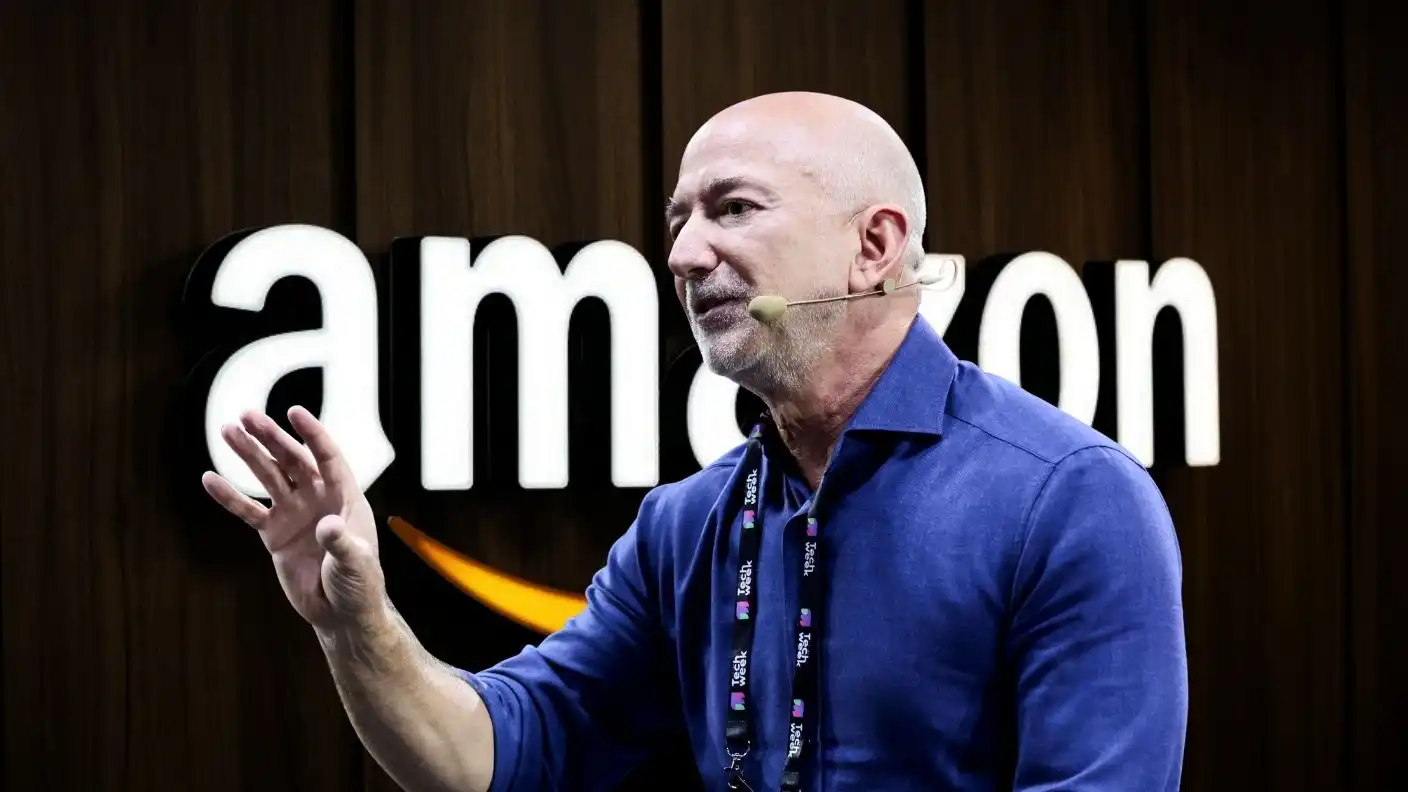
Amazon founder Jeff Bezos has pushed back against fears of a robotic takeover, arguing that artificial intelligence will actually create severe labor shortages instead of mass job losses. Speaking at the VivaTech technology conference in Paris, the billionaire entrepreneur outlined an optimistic future where software does not replace human workers but instead supercharges their capabilities. Bezos stated that the public anxiety surrounding massive layoffs is misplaced, pointing out that technology consistently unlocks more opportunities than it eliminates. The bold prediction comes as global enterprises rapidly integrate generative systems across their operations.
To explain his counterintuitive thesis, Bezos emphasized that humanity possesses an inexhaustible to-do list that is currently bottlenecked by productivity barriers. When companies deploy AI tools, they immediately lower these barriers, enabling teams to spot and address far more problems than previously possible. Rather than reducing the need for workers, this rapid problem identification will generate an unprecedented demand for skilled labor to implement solutions. According to Bezos, the ultimate bottleneck in the future economy will not be a lack of available jobs, but rather a lack of enough human workers to handle the sheer volume of new projects.
This optimistic forecast contrasts sharply with current public sentiment and the worries of major economic analysts. A recent national public opinion poll revealed that nearly 50% of people fear they or their immediate family members could lose their jobs to rapid automation. Many corporate leaders have also treated AI primarily as a tool for cost-cutting and workforce reduction. Bezos, however, rejects this narrow view of productivity. He insists that every time a technological leap increases operational efficiency, overall market demand spikes proportionally, ultimately expanding the workforce needed to sustain that growth.
The billionaire is putting his own capital behind this vision through a major new business venture. During his presentation, Bezos discussed his emerging startup, Prometheus, which he co-founded to revolutionize physical manufacturing and industrial engineering. Unlike standard consumer tech companies that build general language chatbots, Prometheus focuses entirely on advanced engineering tools designed to bridge the gap between design and physical production. The venture recently closed a massive $12 billion Series B funding round, valuing the industrial AI startup at an estimated $41 billion. This capital injection will help the firm deploy its tools directly into factories to accelerate production times.
Bezos’s manufacturing ambitions extend far beyond traditional terrestrial factories. During his panel, the space entrepreneur detailed a long-term roadmap for his aerospace venture, Blue Origin, which aims to relocate heavy, highly polluting industries entirely off the Earth. By moving manufacturing processes and resource extraction to the Moon or nearby asteroids, Bezos believes humanity can restore Earth to a cleaner, more sustainable state. Under this ambitious environmental plan, the planet’s industrial footprint would shrink significantly, transforming the globe back into a healthier ecosystem while keeping economic growth on an upward trajectory.
A major element of this off-world vision involves the construction of massive orbital data centers and chip manufacturing plants. As terrestrial data centers face growing criticism for consuming immense amounts of water and electricity, Bezos argues that shifting compute tasks into space makes logical sense. Powered by limitless solar energy, space-based computing structures could handle heavy AI workloads without straining the Earth’s electrical grids. The entrepreneur predicted that the lines of economic feasibility would eventually cross, making it cheaper and more efficient to manufacture advanced silicon chips in microgravity and beam the resulting data back to ground stations on Earth.
The path to space has not been without its setbacks, a reality that Bezos addressed directly. He openly discussed a recent launchpad explosion involving a Blue Origin rocket, describing the incident as a painful gut punch for the entire organization. However, he praised the deep resilience of his workforce, noting that within twenty-four hours of the failure, employees spontaneously began designing and wearing T-shirts with the slogan “Worth It”. Bezos cited this corporate culture as proof that ambitious endeavors require a high tolerance for risk and a willingness to learn from operational failures.
The debate over how AI will reshape the global labor force remains highly fluid. Other major tech executives have presented much more disruptive predictions, with some warning that advanced virtual agents will soon replace traditional smartphone apps and administrative roles entirely. While these warnings have triggered regulatory scrutiny and labor disputes across several sectors, Bezos’s stance places him firmly in the camp of technological optimists. With a personal net worth hovering around $250 billion, his strategic investments in both terrestrial AI systems and aerospace infrastructure will heavily influence how these twin industries evolve over the coming decade.
As the technology continues to mature, the focus for both businesses and governments is shifting toward retraining the global workforce. If Bezos’s predictions prove accurate, the primary challenge of the next decade will be preparing workers to collaborate with highly capable AI assistants rather than competing against them. Educational institutions and corporate training programs will need to adapt rapidly to prevent severe shortages in specialized technical fields. Ultimately, the successful integration of these systems will depend on whether society can build the talent pipelines necessary to keep pace with an incredibly fast-moving technological landscape.