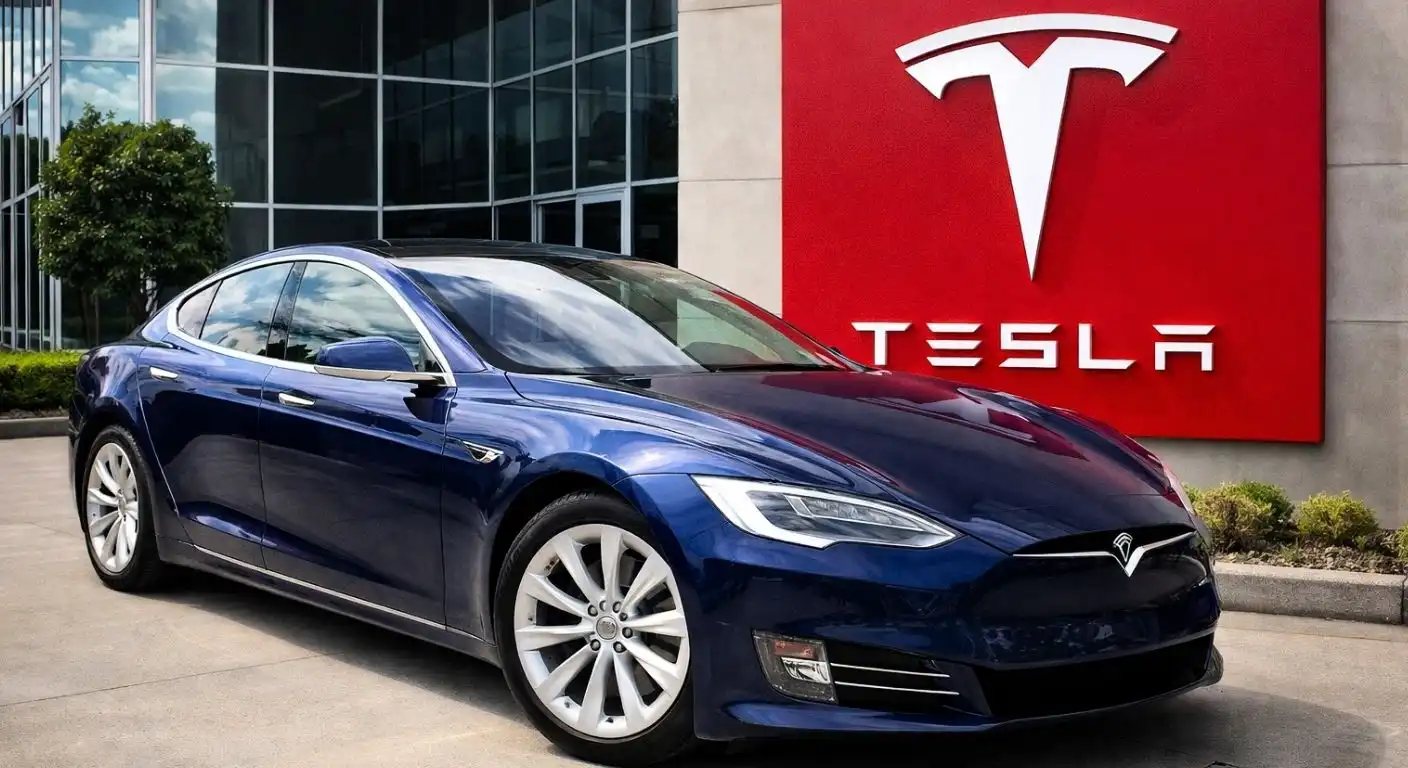
The quiet residential streets of Katy, Texas, became the center of a national safety debate following a horrific, fatal collision in June 2026. A Tesla Model 3 left the road at high speed, crashed through a residential brick home, and killed a woman inside. The driver told local authorities that the vehicle was operating on Autopilot at the moment of the crash. This claim immediately caught the attention of federal safety regulators, who launched a formal investigation into the crash.
This incident has added intense pressure to Tesla’s driver-assistance technology. It raises serious questions about whether the system can safely operate on local neighborhood roads. The National Highway Traffic Safety Administration (NHTSA) opened a special crash investigation to determine whether the software failed to detect the dead-end intersection or if driver error caused the crash. As local deputies and federal investigators piece together what happened, this tragic event highlights the growing tension between rapid technology deployment and public safety.
The Timeline of the Texas Crash
The tragedy unfolded on the evening of Friday, June 19, 2026, around 8:00 PM. A 44-year-old man, identified as Michael Butler, was driving a Tesla Model 3 eastbound down Rose Hollow Lane in Katy, a suburb of Houston. Security camera footage from neighboring homes captured the vehicle traveling at a high rate of speed down the quiet residential road.
At the end of the street, the road meets a T-intersection. Instead of braking and making a right-hand turn, the Tesla continued straight. The car jumped the curb, crossed a front yard, and plowed directly through the front brick wall of a two-story home on Blooming Park Lane.
Inside the front room of the house stood 76-year-old Martha Avila. The grandmother of the household had lived there with her daughter’s family for years. The high-speed impact tore a massive hole through the brick exterior, sending debris flying and striking Avila. First responders rushed to the scene and arranged for a Life Flight helicopter to transport her to Memorial Hermann Hospital. Despite the efforts of medical staff, she soon died from her severe injuries.
Butler, the driver, survived the impact. Paramedics took him to a nearby hospital by ambulance for treatment of his injuries. Deputies with the Harris County Sheriff’s Office Vehicular Crimes Division tested Butler for sobriety and found no signs of intoxication. Throughout the initial inquiry, Butler remained cooperative. He explicitly told investigators from the Harris County Precinct 5 Constable’s Office that the Tesla was running on its Autopilot system when the crash occurred.
While Butler’s account remains a primary focus, investigators are working with technical experts to retrieve the vehicle’s black box data. This data will verify whether Autopilot or Full Self-Driving (Supervised) was truly active, what inputs the driver made, and how the vehicle’s collision-avoidance systems reacted in the seconds leading up to the impact.
The Technical Anatomy of Level 2 Driver Assistance
The tragedy in Katy has reignited the technical debate surrounding Tesla’s automated driving software. Many consumers do not fully understand the technical limits of driver-assistance systems. They often believe these cars are fully autonomous when they are not.
The Vision-Only Strategy and Sensor Limitations
A few years ago, Tesla made the controversial decision to remove radar and ultrasonic sensors from its vehicles, opting for a system called “Tesla Vision.” This approach relies entirely on eight external cameras and advanced machine-learning algorithms to detect obstacles, measure distances, and steer the vehicle.
While cameras can recognize lanes, signs, and traffic lights, vision-only systems face significant limitations. Cameras can struggle in low-visibility environments, such as during heavy rain, thick fog, or direct headlight glare. Additionally, computer vision algorithms sometimes fail to recognize stationary, flat surfaces that do not resemble typical vehicles. In this case, the flat, solid brick wall of a residential home at the end of a dark street may not have registered as an immediate threat to the vehicle’s software, allowing the car to maintain its high speed rather than applying the emergency brakes.
Understanding Autopilot vs. Full Self-Driving
Tesla offers two main tiers of driver-assist technologies: standard Autopilot and Full Self-Driving. Standard Autopilot includes Traffic-Aware Cruise Control and Autosteer, which keep the car in its lane and maintain a safe distance from other vehicles on highways. Full Self-Driving (Supervised) is designed to handle more complex driving tasks, such as navigating city streets, making turns, and stopping at traffic lights.
Regardless of the name, regulators classify both systems as Level 2 automated driving features. This classification means the vehicle is not autonomous. The human driver remains legally responsible for the car’s operation at all times. Tesla’s owner manuals explicitly state that the systems are designed for use with a fully attentive driver who has their hands on the wheel and is prepared to take over at any moment. However, critics argue that naming a system “Autopilot” or “Full Self-Driving” creates a false sense of security, encouraging drivers to look away from the road or relax their supervision.
The Driver Monitoring Challenge
To prevent drivers from disengaging, Tesla utilizes a driver monitoring system. This setup uses a small cabin camera located above the rearview mirror and torque sensors in the steering wheel. If the system detects that the driver is looking away or has taken their hands off the wheel for too long, it issues visual and audible warnings. If the driver ignores these alerts, the system disables Autopilot for the remainder of the trip.
Safety experts argue that these monitoring features contain a critical safety gap. Torque sensors do not actually measure whether a driver’s hands are on the wheel; they only detect physical resistance to steering. Some drivers have used steering wheel weights or other aftermarket devices to trick the system. Additionally, camera-based eye-tracking can be unreliable in dark conditions or if the driver is wearing sunglasses. This allows drivers to remain disengaged for dangerously long stretches of time, leaving them unable to react quickly when a system error occurs.
Automation Bias and Delayed Human Reaction Time
When a system works successfully 99% of the time, humans naturally develop a psychological reliance on it, a phenomenon known as automation bias. Over time, drivers stop actively scanning the road, assuming the vehicle will handle any sudden obstacles.
In a high-speed residential scenario, human reaction times are critical. If a vehicle traveling at 45 miles per hour suddenly fails to turn, a human driver has less than two seconds to recognize the error, move their foot to the brake pedal, and press it down. If the driver is even slightly distracted, looking at a phone or conversing with a passenger, they cannot react in time to prevent a crash. The combination of system confusion and delayed human response can be deadly.
NHTSA’s Deepening Scrutiny of Tesla
The federal government’s decision to launch a special crash investigation into the Katy incident is part of a much larger, ongoing regulatory struggle between the NHTSA and Tesla. The federal safety agency has spent years tracking, analyzing, and investigating crashes involving automated driving systems.
A Legacy of Federal Special Crash Investigations
The NHTSA’s Special Crash Investigations program focuses on unique, real-world accidents that can provide valuable data on the performance of new automotive technologies. Over the past decade, the agency has opened more than 40 special crash investigations into Tesla incidents where investigators suspected that Autopilot or Full Self-Driving was active.
Many of these investigated crashes share a common theme: the Tesla vehicle struck a stationary object at high speed. Past incidents include Teslas crashing into parked emergency vehicles with flashing lights on highways, striking jackknifed tractor-trailers crossing the road, and colliding with concrete barriers. Each of these cases suggests that Tesla’s camera-only software has a persistent vulnerability when it comes to identifying and reacting to stationary hazards in its path.
The Escalation to Engineering Analysis
The federal probe into Tesla’s software has escalated past simple information gathering. The NHTSA previously moved its investigation into Tesla’s Full Self-Driving system into the “Engineering Analysis” phase. This is the final investigative step before the agency can legally demand a mandatory safety recall.
The engineering analysis covers approximately 3.2 million Tesla vehicles equipped with the technology. It focuses on the software’s performance in low-visibility conditions, road construction zones, and complex intersections. The agency is also reviewing several documented incidents where the software allegedly initiated sudden, unexplained braking or failed to respect traffic control signals. The fatal crash in Katy will likely provide critical physical data and software logs for this broader safety probe.
Evaluating the Effectiveness of the 2-Million Vehicle Recall
In December 2023, following a two-year NHTSA investigation, Tesla issued a massive software recall affecting more than 2 million vehicles in the United States. The goal of the recall was to install more aggressive driver-monitoring safeguards, including more frequent alerts and harsher penalties for drivers who disengaged.
The Katy crash shows that these software updates may not have solved the core safety issues. Critics argue that adding more warnings does not fix the underlying software errors that cause a vehicle to miss a turn or fail to see a brick wall. If drivers can still bypass the monitoring system, or if the system fails to grab the driver’s attention fast enough in an emergency, the risk of fatal accidents remains high. Regulators are now reviewing whether Tesla’s recall measures were insufficient, which could lead to a second, more restrictive recall.
Legal and Financial Liability Implications
As federal investigators analyze the physical evidence from the Katy crash, a parallel legal and financial battle is taking shape. The outcome of these legal proceedings could redefine liability rules for automated vehicles and impact the entire automotive industry.
Redefining Driver vs. Manufacturer Liability
For decades, traffic laws have operated under a simple premise: the person sitting in the driver’s seat is responsible for the movement of the vehicle. If a car crashes, the driver is held liable, unless a mechanical failure, such as a broken axle or cut brake lines, caused the accident.
Automated driving systems have complicated this legal framework. In the Katy incident, Michael Butler was behind the wheel, sober, and cooperating with the police. If he relied on Autopilot, and the software failed to turn, who is to blame?
A Houston-based law firm representing the family of Martha Avila has already announced plans to file a major civil lawsuit against Tesla. The plaintiffs’ attorneys will likely argue that Tesla’s marketing, product design, and branding misled the driver into believing the vehicle could navigate residential streets safely without constant intervention. They will also argue that the vehicle’s design is defective because it failed to detect a massive brick home directly in its path. If the court rules in favor of the family, it could set a major legal precedent, holding manufacturers liable for the failures of their driver-assistance systems.
The Marketing and Branding Battleground
Tesla has long faced criticism for its marketing strategies. Consumer advocacy groups and safety organizations argue that terms like “Autopilot” and “Full Self-Driving” are inherently deceptive. While the fine print in Tesla’s user manuals clarifies that the driver must remain alert, the company’s promotional videos and public statements by executives have often depicted vehicles driving smoothly through complex environments with no driver interaction.
This marketing discrepancy is a key focus for regulators and plaintiff attorneys. If a company advertises a system as “self-driving,” courts may find that the manufacturer bears partial responsibility when a consumer takes that marketing literally. Other automakers, such as General Motors and Ford, have chosen more conservative names for their driver-assist programs, such as “Super Cruise” and “BlueCruise,” and they use robust eye-tracking cameras to ensure drivers remain focused on the road.
Financial Impacts on Tesla and the Automotive Sector
The legal and regulatory pressure surrounding Autopilot has serious financial implications for Tesla. The company’s massive stock market valuation is not based solely on its vehicle sales; it is heavily tied to the promise that Tesla will launch a fully autonomous robotaxi network.
If federal regulators determine that Tesla’s camera-only hardware is fundamentally incapable of operating safely without human supervision, the company’s autonomous dreams could suffer a massive blow. A mandatory recall or court-ordered restrictions on Autopilot and Full Self-Driving could cost the company billions of dollars in software updates, retrofits, and legal damages. Furthermore, it could delay the launch of future autonomous products, allowing competitors to catch up in the highly lucrative autonomous vehicle space.
The Path Forward for Automated Driving
The fatal crash in Katy, Texas, is a tragic reminder that the transition to automated transportation is filled with real-world dangers. While technology has the potential to make roads safer in the long run, the current middle ground—where cars handle most driving tasks but still require human supervision—presents a dangerous transition phase.
The NHTSA’s investigation into the Model 3 crash will play a crucial role in shaping future regulations. If the agency finds that Tesla’s system failed to identify the residential home, it may force the company to implement stricter operational design domains. This could involve disabling Autopilot or Full Self-Driving on residential roads that lack clear lane markings, painted curbs, or standardized signage.
For the auto industry, the Katy crash serves as a warning. Automakers must realize that safety safeguards must be robust and clear. They cannot rely on fine-print disclaimers to shield themselves from liability when automated systems fail in predictable ways. Until vehicles achieve true, unsupervised autonomy, drivers must remain fully engaged, recognizing that the technology on their dashboard is an assistant, not a replacement for human judgment.