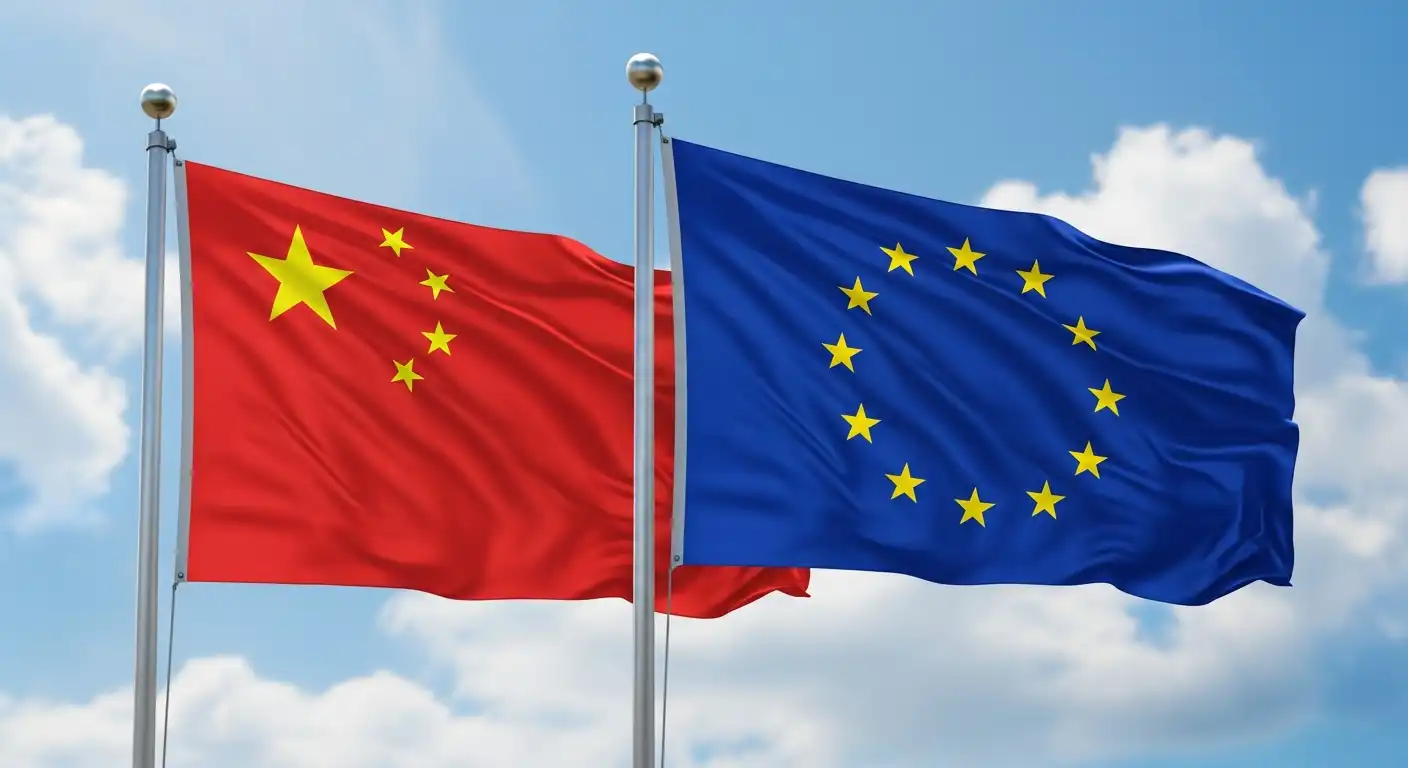
A brewing trade conflict between the European Union and China has reached a critical turning point. Following a high-level summit in Brussels, European Union leaders directed the European Commission to explore, develop, and potentially expand its trade defense toolbox. This move aims to curb a massive surge in Chinese exports that Brussels increasingly views as an existential threat to European industries.
In response, the China Chamber of Commerce to the EU (CCCEU) issued a strong warning, expressing deep regret over the proposed measures. The chamber warned that these unilateral actions risk introducing severe uncertainty for businesses, disrupting global supply chains, and triggering a damaging cycle of retaliation.
The escalating tension highlights a fundamental dilemma facing the European continent. While European policymakers are eager to protect local manufacturing and reduce strategic dependencies, international trade experts warn that aggressive protectionism could backfire. Many of the products imported from China are deeply integrated into European manufacturing networks, meaning that blocking them could raise costs for European businesses and slow down the continent’s green and digital transitions.
As the European Commission prepares to outline its new trade strategy, both sides are bracing for a period of prolonged economic friction.
The Core Debate: Deficit vs. Symbiosis
The push for new trade defenses is driven by a massive, widening trade imbalance. In 2025, the European Union’s goods trade deficit with China reached a record-breaking €360 billion, which is equivalent to roughly $413 billion.
By early 2026, this deficit had expanded further, reaching approximately €31.9 billion in April alone. This means that European imports from China exceed exports by nearly €1 billion every single day. For European Commission President Ursula von der Leyen and her supporters, this imbalance is simply unsustainable, representing an erosion of Europe’s industrial base.
The Dual Nature of the Bilateral Balance Sheet
While the headline deficit figure is striking, the CCCEU argues that focusing solely on the bilateral goods trade balance presents a distorted picture of the economic relationship. The chamber pointed out that when looking at the global stage, the European Union is far from a weak trading partner. In 2025, the bloc as a whole recorded an external trade surplus of around €140 billion in its global trade in goods. This global surplus demonstrates that European exporters remain highly competitive in many international markets.
Furthermore, the goods trade deficit tells only half the story. The European Union has long enjoyed a substantial and consistent surplus in its services trade with China. European firms in financial services, design, engineering, software, and high-end logistics generate billions of euros in revenue from the Chinese market.
By ignoring this service surplus and focusing exclusively on physical goods, European policymakers risk miscalculating the true economic value of the relationship, potentially harming the highly profitable service sectors that depend on open trade with Beijing.
Industrial Integration and Embedded Supply Chains
Another key point raised by the CCCEU is the specific nature of Chinese exports to Europe. Rather than consisting entirely of cheap consumer goods, Chinese shipments to the European Union are increasingly concentrated in machinery, electrical equipment, industrial components, and high-tech parts. These items are not simply replacing European products; they are deeply integrated into European production networks.
For example, European automotive giants, aerospace firms, and electronics manufacturers rely on Chinese-made electrical components, circuit boards, and precision sub-assemblies to build their final products. This high level of integration means that Chinese imports act as essential inputs that support, rather than replace, European manufacturing.
If Brussels imposes heavy duties or quotas on these components, European factories will face higher manufacturing costs, making their own finished products less competitive in the global market. This integration makes the relationship highly complementary, where the manufacturing strengths of both economies support mutual growth.
The Genesis of the New Trade Defense Arsenal
The European Union’s move toward tougher trade measures is a direct reaction to what Brussels describes as structural industrial overcapacity in China. European leaders argue that China’s state-sponsored industrial policies have flooded global markets with heavily subsidized products, particularly in green technology sectors like electric vehicles (EVs), lithium-ion batteries, and solar panels.
The Fight Against Industrial Overcapacity and State Subsidies
The rapid growth of China’s clean technology sector has put immense pressure on European competitors. European solar panel manufacturers have struggled to survive against a flood of lower-priced Chinese imports, while local automakers are bracing for intense competition from affordable Chinese electric vehicles.
In response, the European Commission has already ramped up its defensive actions. Since the start of 2026, the commission has opened seven dumping investigations targeting Chinese products, including chemical compounds like adipic acid and welded steel mesh. This is up from just four investigations over the same period in 2025.
Additionally, as of June 2026, the commission had imposed 19 definitive anti-dumping duties, with 14 of those measures targeting goods originating from the Chinese mainland. These figures show that Brussels is already using its existing trade defense tools far more aggressively than in previous years.
The Shift Into High-Tech and Digital Barriers
The European Union’s trade strategy is also expanding beyond traditional heavy industries like steel and chemicals. The bloc is increasingly focusing on digital and technology sectors, seeking to build what it calls “technological sovereignty.”
The European Commission’s newly proposed Technological Sovereignty Package covers critical future technologies, including artificial intelligence, cloud computing, advanced semiconductors, and open-source software. This package aims to shield European tech firms from foreign competition and reduce reliance on non-EU digital suppliers by introducing tougher data security audits and market access reviews.
While this strategy is designed to protect local tech ecosystems, it carries a massive financial cost. A joint analysis published by the CCCEU and KPMG estimated that a proposed overhaul of the EU’s cybersecurity rules, which could force Chinese suppliers out of key telecommunications and digital sectors, could cost the European Union nearly €367.8 billion over a five-year period.
This high cost stems from the need to replace existing, cost-effective infrastructure with more expensive European or Western alternatives. For European businesses and taxpayers, the push for technological independence could come with a very high price tag.
European Capitals Divided: The Hardline vs. Conciliatory Camps
While there is a general consensus in Brussels that the trade imbalance with China is a serious concern, European leaders are deeply divided on how to solve the problem. The debate at the June summit exposed familiar political divisions, with different member states prioritizing different economic interests.
The Coalition of the Willing and the German-Spanish Reluctance
A coalition of member states, including France, Italy, Lithuania, and the Netherlands, has pushed for swift, aggressive, and unilateral trade tools. These countries want the European Commission to implement strict import quotas, higher tariffs, and robust anti-subsidy duties to protect domestic industries from foreign competition.
For France and Italy, whose domestic manufacturing and automotive sectors are highly exposed to Chinese competition, a strong defensive stance is seen as vital for preserving local jobs and industrial capabilities.
On the other side of the debate, Germany and Spain are urging extreme caution. Germany’s industrial sector, particularly its luxury automotive manufacturers like BMW, Mercedes-Benz, and Volkswagen, is heavily dependent on the Chinese market. These companies sell millions of premium vehicles to Chinese consumers every year and operate massive manufacturing plants within China.
If the European Union imposes harsh tariffs on Chinese goods, Germany fears that Beijing will respond with retaliatory tariffs on European luxury cars, devastating its domestic auto industry.
Spain has also favored a more conciliatory approach. Arriving at the Brussels summit, Spanish Prime Minister Pedro Sánchez publicly defended engagement with Beijing, arguing that Europe needs to build bridges and maintain balanced, pragmatic relationships with major global economies rather than provoking damaging trade conflicts.
The Threat of Escalating Trade Retaliation
The CCCEU’s warning that unilateral trade tools risk provoking retaliatory actions is a serious concern for European businesses. History has shown that trade disputes rarely remain confined to a single product or sector, and Beijing has a well-established history of using targeted economic countermeasures to defend its interests.
Unilateralism vs. Mutual Destruction
If the European Union moves forward with new trade defense instruments, China could target several vulnerable European export sectors. For example, Chinese authorities could launch anti-dumping investigations into European agricultural exports, such as pork, dairy, and wine, which would hit farmers in France, Spain, and Denmark.
Additionally, Beijing could restrict European access to its massive consumer market, impacting luxury fashion brands, cosmetics manufacturers, and industrial engineering firms that rely on Chinese demand to sustain their global revenues.
China could also leverage its dominance in the processing of critical minerals and rare earths. In April 2025, in response to tariffs imposed by the United States, Beijing placed strict export restrictions on several rare earth elements that are essential for manufacturing electric vehicle motors, wind turbines, and advanced electronics.
Because European manufacturers remain highly dependent on Chinese suppliers for these critical raw materials, any further restrictions would disrupt production across the continent, making it impossible for Europe to meet its ambitious climate goals. The threat of mutual economic harm makes a cooperative, dialogue-based approach far more attractive to many member states.
Focus on Internal Competitiveness
Rather than relying solely on defensive trade walls, the CCCEU suggested that European leaders should focus on improving the fundamental drivers of the European Union’s own competitiveness. The chamber argued that the success of Chinese manufacturing does not stem from government subsidies, but rather from continuous technological innovation, highly efficient and integrated supply chains, and intense domestic market competition.
To compete effectively, Europe must address its own structural weaknesses, such as high energy costs, burdensome regulatory requirements, and a lack of venture capital for early-stage technology startups. By investing in local research and development, upgrading digital infrastructure, and reducing bureaucratic red tape, the European Union could strengthen its industries from the inside out, making them resilient enough to compete on the global stage without relying on protective tariffs.
Conclusion: Navigating the De-risking Tightrope
The ongoing trade dispute between the European Union and China represents a delicate balancing act for European policymakers. The goal of “de-risking”—reducing strategic vulnerabilities without completely cutting ties with the world’s second-largest economy—is incredibly difficult to execute in a highly interconnected global economy.
The European Commission’s push for new trade defense tools is an attempt to address a very real political and economic concern: a record-breaking trade deficit and the potential erosion of Europe’s industrial base. However, as the CCCEU’s analysis demonstrates, an overly aggressive, unilateral approach carries significant risks.
Heavy tariffs and trade barriers could raise costs for European businesses, slow down the adoption of clean energy technologies, and provoke retaliatory measures that would harm key European export industries.
The path forward will require careful diplomacy and a focus on constructive dialogue. While the European Union must defend its core economic interests and ensure fair competition, it must also recognize the complementary nature of its trade relationship with China.
By addressing trade frictions through mutual consultation rather than unilateral actions, both sides can avoid a damaging trade war that would ultimately serve neither economy’s long-term interests. In the end, the best defense for Europe’s industrial future is not a higher trade wall, but a more competitive, innovative, and resilient internal market.