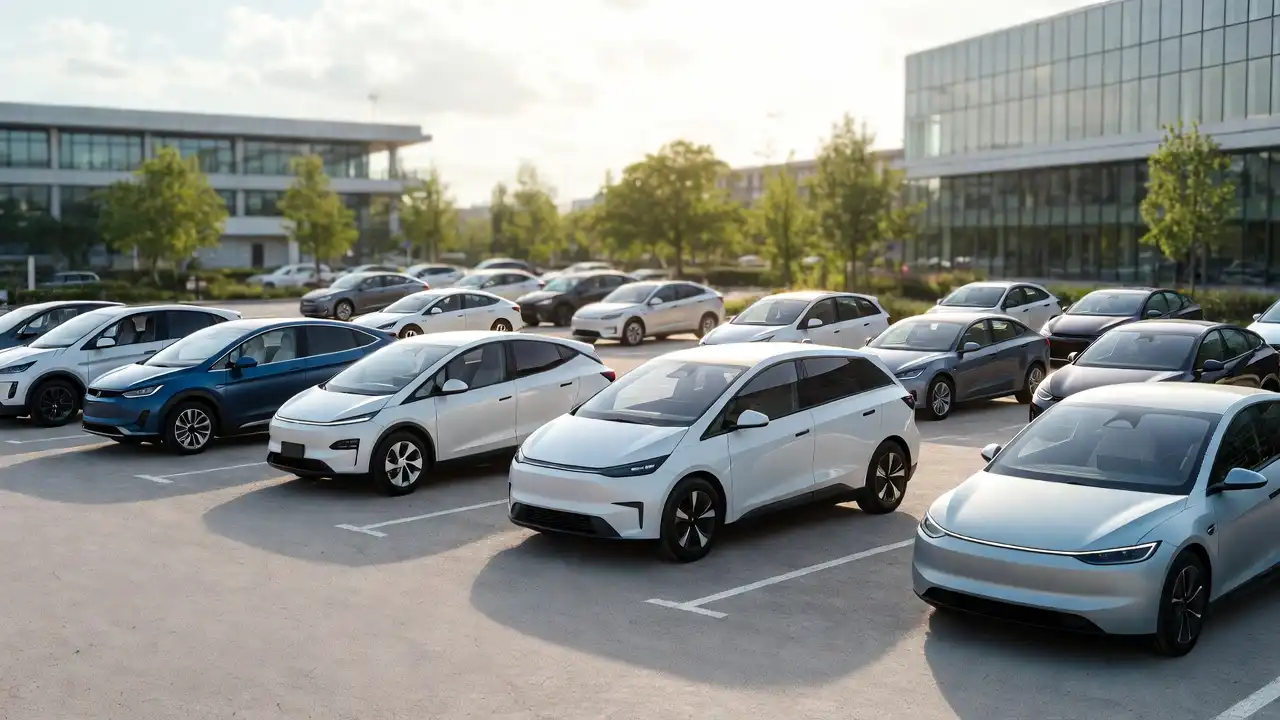
The European automotive market is undergoing a profound structural shift. According to the latest monthly registration data released by the European Automobile Manufacturers’ Association (ACEA), European new car sales rose by 3.6% year-on-year in May 2026. Across the European Union, the European Free Trade Association (EFTA), and the United Kingdom, total passenger car registrations reached 1,152,523 units for the month. This growth was driven almost entirely by surging demand for electrified and hybrid vehicles, which successfully offset a sharp decline in traditional petrol and diesel models.
This upward trend is not a short-term anomaly. In the first five months of the year, cumulative registrations across the broader European market grew by 4.5% year-on-year to reach 5,821,304 units. Looking specifically at the European Union, new car registrations rose 3.2% in May to 955,012 units, while the year-to-date total climbed 4.0% to 4.75 million units.
The data confirms that the transition to cleaner transportation is accelerating rapidly. Electrified vehicles—including battery-electric, plug-in hybrid, and standard hybrid models—now account for more than two-thirds of all new registrations in Europe. As legacy combustion engines lose their grip on the market, domestic European manufacturers and aggressive Chinese newcomers are locked in an intense battle for market share.
A Regional Breakdown of Major European Markets
The recovery in car sales was not uniform across the continent. While some of Europe’s largest economies recorded healthy growth, others experienced minor setbacks or near-total stagnation.
Among the European Union’s four largest automotive markets, Italy and France led the gains in May. In Italy, new car registrations rose by 7.6%, driven by a fresh wave of government-backed purchasing incentives. France also turned in a solid performance, with registrations climbing 3.7% compared to the same month in the prior year.
In contrast, Germany, the largest automotive market on the continent, barely registered any growth. New car registrations in Germany edged up by a mere 0.1% in May, reflecting a highly cautious consumer sentiment amid broader industrial stagnation.
Despite Germany’s sluggish monthly performance, its year-to-date registrations for the first five months of the year remained positive, up 3.6% to 1.18 million units. Meanwhile, France recorded a slight cumulative decline of 0.6% over the same five-month period, landing at 668,378 units, highlighting the differing speeds of economic recovery across the Eurozone.
The Dominance of Electrification and the Combustion Demise
The most significant takeaway from the May data is the changing of the guard in engine technology. The decline of the internal combustion engine is no longer a slow, gradual process; it is a rapid retreat.
The Battery-Electric Vehicle Surge
Battery-electric vehicles (BEVs) were the primary growth engine for the entire European automotive market in May. Across the EU, EFTA, and UK, registrations of fully electric cars jumped by a massive 39.1% year-on-year to 268,487 units. According to independent industry data, fully electric cars accounted for a record-breaking 23.6% of all new registrations during the month, meaning nearly one in four new car buyers chose a fully electric model.
This surge is being driven by several factors. First, car manufacturers are offering a much wider variety of affordable electric models, with several key European and Chinese brands introducing highly competitive vehicles priced around €25,000.
Second, rising oil prices, fueled by ongoing instability in the Middle East, have made the cost savings of electric driving far more attractive. The International Energy Agency (IEA) recently reported that with oil prices hovering near $100 per barrel, electric vehicle drivers enjoy fuel cost savings that are 35% higher than they were just a year ago. Across the European Union, the rapid adoption of electric cars has already cut oil demand by an estimated 140,000 barrels per day, saving European economies billions of euros in fossil fuel import bills.
The Dual Growth of Hybrids and Plug-Ins
While fully electric cars captured the headlines, other electrified technologies also recorded solid growth in May. Registrations of plug-in hybrid electric vehicles (PHEVs) rose by 13.2% across Europe, as buyers who are still hesitant to go fully electric opted for a middle-ground solution. In the European Union, plug-in hybrid sales for the first five months of the year climbed 22.1% to reach 460,217 units.
Standard hybrid-electric vehicles (HEVs) continue to hold the largest overall market share of any electrified technology. Registrations of standard hybrids rose 8.2% in May, and over the first five months of the year, EU hybrid sales rose 12.1% to 1.79 million units. This technology now accounts for 37.8% of all new car sales in the European Union, proving that consumers highly value the fuel efficiency of hybrid drivetrains even without the ability to plug them in.
The Collapse of Petrol and Diesel Engines
The rapid rise of electrified vehicles has come at the direct expense of traditional internal combustion engines. In May, demand for conventional fossil-fuel vehicles weakened sharply across Europe, with sales of both gasoline and diesel passenger cars declining by approximately 19% each.
This double-digit drop-off highlights the effectiveness of the European Union’s strict climate policies. Under the EU’s “Fit for 55” package, carmakers face steep financial penalties if their average fleet emissions exceed strict limits, forcing them to prioritize the production and sale of electric models.
This regulatory pressure, combined with changing consumer preferences, has permanently reduced the market share of traditional engines. In the EU, gasoline car registrations fell 18.2% in the first five months of the year, reducing their market share to just 22.4%. Diesel registrations fell even faster, dropping 16.6% to 361,971 units, leaving diesel with a meager 7.6% share of the new car market.
The Battle of the Brands: Tesla’s Rebound vs. China’s Onslaught
The rapid transition to electric vehicles has created a highly competitive corporate battleground, with established American manufacturers and aggressive Chinese exporters challenging the dominance of traditional European auto giants.
Tesla’s Massive May Rebound
Tesla experienced a significant sales recovery in Europe in May, reversing more than a year of sluggish demand and regulatory setbacks. Across the broader European market (including the EU, EFTA, and UK), Tesla’s monthly registrations surged by 107.9% year-on-year to 28,610 vehicles. This strong performance lifted Tesla’s total market share to 2.5%, up from 1.2% in the same month in the prior year.
Looking at the European Union alone, Tesla’s monthly sales jumped by an even more impressive 152.4% to reach 21,767 units. This rebound demonstrates that despite intensifying competition, the Tesla brand retains massive appeal among European consumers.
The company’s year-to-date registrations across the EU rose 77.3% to 89,180 units, proving that Tesla’s localized production at its Gigafactory Berlin is finally paying dividends in terms of supply chain stability and delivery speed.
The Chinese EV Offensive Led by BYD
Despite Tesla’s impressive comeback, the company is facing an incredibly aggressive challenge from Chinese automakers, who are entering the European market with an array of affordable, high-tech models. Leading this charge is BYD, which actually outpaced Tesla in total European registrations in May.
Across the EU, EFTA, and UK, BYD’s monthly registrations soared by 136.6% to 32,380 vehicles, giving the Chinese manufacturer a 2.8% market share. For the first five months of the year, BYD’s European sales jumped 145.2% to 135,307 units.
In the European Union specifically, BYD’s registrations surged 158.8% in May to 26,017 units, exceeding Tesla’s monthly EU sales. This rapid expansion is a direct result of BYD’s diverse product range and highly vertical supply chain, which allows the company to produce battery cells and electric motors at a much lower cost than its Western rivals.
Other Chinese-linked brands also recorded striking gains in May, demonstrating that Chinese automakers are rapidly expanding their footprint. Registrations for Chery Automobile soared by 244.1% across Europe to 27,412 vehicles, while Leapmotor, which is backed by Stellantis, recorded an astronomical 465.1% sales surge.
These companies are rapidly establishing local dealer networks and shipping vehicles directly from high-capacity Chinese factories, placing immense pricing pressure on local European brands.
Legacy Automakers Under Pressure
The rapid rise of Tesla and Chinese brands is occurring at the direct expense of Europe’s traditional automotive giants. Legacy carmakers are finding it increasingly difficult to defend their market share as they transition their massive, legacy manufacturing operations from combustion engines to electric drivetrains.
In May, major European automotive groups recorded soft sales figures across the continent. Registrations for Renault, Stellantis, and the Volkswagen Group all slipped by between 1% and 3%, reflecting the intensifying competitive environment. These companies are currently caught in a difficult transition phase; they must continue to fund expensive electric vehicle development programs while watching their highly profitable combustion-engine sales shrink.
Despite these challenges, the Volkswagen Group managed to retain its position as Europe’s largest overall automaker. The German giant captured a 26.6% share of the EU market in May, even though its monthly sales declined by 3.6% to 254,011 units.
For the first five months of the year, Volkswagen Group’s EU sales rose a modest 1.5% to 1.27 million units. This stability is largely due to the group’s diverse portfolio of brands, including Audi, Skoda, and Porsche, which allows it to maintain high sales volumes even as its core Volkswagen brand faces intense competition in the mass-market EV space.
Macroeconomic and Policy Catalysts Driving the Shift
The transformation of the European car market is not happening in a vacuum. It is being shaped by a complex mix of government policies, tax incentives, and geopolitical events that are heavily influencing consumer behavior.
A primary driver of the electric vehicle surge is the introduction of targeted government subsidies. In Italy, for example, the government launched a major new incentive program in the spring, offering generous subsidies to consumers who trade in older, polluting vehicles for fully electric models.
This policy had an immediate impact: Italian consumers registered 13,276 battery-electric vehicles in May, more than doubling their sales from the previous year and lifting the BEV market share in Italy to 8.8%. Similar tax benefit schemes in France and the Nordics have kept consumer demand robust, even as general economic growth across the continent remains sluggish.
At the same time, European manufacturers are benefiting from a growing public awareness of energy security. The war in the Middle East and the resulting volatility in global energy markets have highlighted the dangers of relying on imported fossil fuels.
For European governments, transitioning the transport sector to locally produced renewable electricity is no longer just an environmental goal; it is a critical national security priority. By supporting the domestic EV market through infrastructure spending and localized incentives, European nations are working to permanently reduce their dependence on foreign oil, creating a highly supportive environment for the clean transport industry.
Conclusion: A Permanent Transformation of the European Automotive Landscape
The May 2026 registration data from the ACEA makes one thing clear: the European car market has reached a point of no return. The days when electric vehicles were viewed as a niche market segment are officially over. With electrified models now representing more than two-thirds of all new sales, the internal combustion engine is rapidly becoming a technology of the past.
This rapid transition presents both massive opportunities and severe challenges. For agile companies like Tesla and Chinese giants like BYD, Europe represents a highly lucrative market that is eager to adopt clean technologies. For legacy European manufacturers, the pressure to accelerate their electric transition has never been higher.
To survive, these companies must rapidly scale up their battery production, lower their manufacturing costs, and deliver affordable electric vehicles that can compete with the influx of high-quality Chinese imports. As the race for the future of transportation intensifies, the companies that can deliver the most efficient, affordable, and high-tech electric vehicles will lead the global industry for decades to come.