A major sigh of relief is rippling through corporate boardrooms across Europe and Asia. In June 2026, businesses reported that a massive surge in operating costs, triggered by the sudden outbreak of a military conflict in the Middle East in late February, was finally beginning to cool. This positive development follows a tentative peace agreement and rapid progress in diplomatic negotiations between the United States and Iran, which has helped ease immediate fears of a global energy crisis.
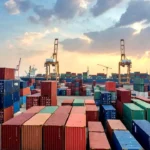
The economic relief is closely tied to the gradual stabilization of the world’s most critical maritime oil transit chokepoint, the Strait of Hormuz. For months, intense security risks and naval blockages had stranded hundreds of commercial vessels, sending shipping insurance premiums skyrocketing and throwing global logistics networks into chaos.
With a new diplomatic roadmap taking shape, shipping confidence is starting to recover. This stabilization is helping to lower raw material and freight costs, allowing businesses to adjust their pricing strategies and plan for the second half of the year with greater confidence.
While the easing of geopolitical tensions represents a highly welcome development, economists warn that a full economic recovery remains a gradual process. The speed at which global business activity rebounds will depend heavily on how quickly commercial shipping and energy supplies return to their normal prewar levels.
In the meantime, the latest global purchasing managers’ index (PMI) surveys show an economic landscape that is showing remarkable resilience, but still carries the visible scars of a major geopolitical shock.
The Energy Price Pullback and the Reopening of the Strait of Hormuz
The primary driver of the cooling cost environment is a significant drop in global energy prices. When the conflict in the Middle East broke out, crude oil and natural gas prices spiked immediately, raising utility bills and transport costs for businesses worldwide.
The market dynamics began to shift when the United States temporarily waived sanctions on Iranian crude, issuing a specialized 60-day license that cleared the way for Iran to sell its oil on international markets in US dollars.
This diplomatic compromise had an immediate, downward impact on energy futures. Crude oil prices recorded a notable pullback, with Brent crude falling to approximately $76.50 per barrel and West Texas Intermediate (WTI) weakening to around $73.10 per barrel. These levels represent a substantial drop from the pre-peace-deal peaks, with WTI hovering near its lowest level since March. This rapid price correction has taken the wind out of global inflation expectations, allowing businesses to reduce their internal pricing forecasts.
At the same time, the physical flow of oil is slowly starting to normalize. During the height of the naval blockade, the Strait of Hormuz became a massive parking lot for global maritime trade. Satellite data from the European Space Agency showed that on the afternoon of June 21, 2026, approximately 441 large vessels, many equivalent in size to Very Large Crude Carriers, were clustered near the ports of Sohar in Oman and Fujairah in the United Arab Emirates. This massive concentration was significantly higher than normal levels, but it represented a decrease of 42 vessels compared to five days earlier, showing that the maritime logjam is slowly starting to clear.
As shipping companies regain confidence, they are beginning to reactivate their onboard positioning systems and attempt to transit the strait. For example, four Qatari liquefied natural gas carriers successfully passed through the Strait of Hormuz, providing a vital psychological boost to the international shipping community.
However, logistics experts warn that a rapid return to prewar transit volumes is unlikely. Shipowners still face a maze of logistical constraints, including mine-clearance operations, routing bottlenecks, and localized transit inspections, suggesting that the normalization of global supply chains will be gradual rather than immediate.
Resilience and Technical Recession Risks in the Eurozone
The economic impact of this geopolitical de-escalation is clearly visible in the latest business activity surveys from the Eurozone. The S&P Global Composite Purchasing Managers’ Index, which tracks business activity across both the services and manufacturing sectors in the 20-nation single-currency bloc, rose to 49.5 in June, up from 48.5 in May.
This reading beat the Bloomberg consensus forecast, which had estimated a modest rise to 49.1. Although the composite index remains below the critical 50.0 threshold that separates growth from contraction, the upward trend indicates that the Eurozone’s economic contraction is slowing down.
The Service Sector Drag in Germany and the United Kingdom
Despite the overall improvement in the Eurozone’s composite PMI, the survey data revealed significant structural weaknesses within Europe’s largest economies. The service sector, which had previously acted as a strong engine of growth, experienced a sharp downturn in June.
In Germany, the service sector PMI fell to its lowest level in 43 months, reflecting a sharp drop in domestic consumer demand and business spending. The United Kingdom experienced a similar trend, with its services index recording its largest drop in 41 months.
This synchronized decline in services across Germany and the UK shows that consumers are still struggling with high living costs and elevated interest rates. Although energy costs are beginning to cool, the cumulative impact of months of high inflation has left households with very little discretionary cash.
With service activity shrinking, economists warn that the Eurozone economy remains at risk of contracting for a second consecutive quarter, which would place the region in a technical recession.
A Modest French Services Rebound
In contrast to the weakness in Germany and the UK, France turned in a stronger-than-expected performance in June. The French services sector experienced a modest rebound, helping to lift the country’s overall composite index, although its final reading remained below the 50.0 growth line.
This short-term recovery in France was supported by a temporary boost in domestic tourism and localized retail spending, showing that consumer demand can recover quickly when temporary catalysts are present.
However, without a sustained recovery in consumer confidence and a permanent drop in energy bills, the French recovery remains fragile and highly vulnerable to broader European economic trends.
The ECB’s Defensive Interest Rate Hike
The economic difficulties facing European businesses are being compounded by tight monetary policy. Earlier this month, the European Central Bank became the first major central bank to raise its benchmark interest rate, marking its first interest rate hike since 2023.
The ECB chose to raise borrowing costs in direct response to the sudden, war-driven inflation spike that occurred in the spring, warning that rising energy costs were beginning to drive up prices across the wider economy.
This interest rate hike has made borrowing significantly more expensive for European businesses, discouraging them from committing to new capital investments and slowing down hiring.
With composite PMI numbers showing that the Eurozone is barely staying out of recession, the ECB now faces a very difficult balancing act. Central bankers must decide whether to keep interest rates high to ensure that inflation is completely brought under control or lower rates to support a fragile economy that is struggling under the weight of high energy bills and tight credit conditions.
The Asian Divergence: Japan’s Cost Surge vs. India’s Moderation
While businesses in Europe are seeing their costs cool, the economic picture in Asia is highly fragmented. The latest PMI surveys from June 2026 show a stark divergence between the continent’s major economies, with Japan experiencing rising price pressures while India’s explosive growth begins to moderate.
Japan as the Global Exception
Japan stood as a major exception to the global cooling trend in June. While cost pressures eased in Europe and other parts of Asia, Japanese businesses reported that their input costs rose at their fastest pace since July 2022.
This persistent cost inflation is a direct result of the extreme weakness of the Japanese yen. The yen has spent months trading near multi-decade lows against the US dollar, making imported energy, food, and raw materials incredibly expensive for Japanese companies.
Despite these intense cost pressures, Japan’s headline composite PMI managed to rise to 52.5 in June, up from 51.1 in May. This reading indicates that the Japanese economy is still expanding, but economists warn that this momentum is far more fragile than it appears.
The current period of growth is being driven largely by temporary stockpiling efforts. Fearing future supply disruptions and further currency weakness, Japanese manufacturers have been aggressively building up their inventories of raw materials. Once these stockpiling efforts fade in the coming months, Japan’s manufacturing output is likely to slow down, exposing the underlying fragility of the domestic economy.
India’s Slowing Inventory Build-up
India, which has been one of the fastest-growing economies in the world over the last few years, is also seeing its manufacturing momentum shift. India’s composite PMI remained firmly in expansion territory at 57.4 in June, demonstrating that the country’s domestic demand remains incredibly strong.
However, the June reading represents a slight weakening compared to the previous month, as the country’s rapid pace of inventory-building began to lose steam.
For several quarters, Indian manufacturers had been building up massive stockpiles of raw materials to front-run potential price increases and guard against supply chain disruptions.
With global cost pressures starting to cool, Indian companies are beginning to draw down these existing inventories rather than placing new orders, leading to a natural moderation in manufacturing growth.
Nevertheless, with a PMI score of 57.4, India remains a primary driver of global economic activity, providing a vital source of stability for the Asian continent.
Global Growth Projections and World Bank Assessments
The sudden economic disruptions caused by the Middle East conflict have forced international financial institutions to revise their global growth forecasts. The global economy entered the year on a solid footing, with the combined GDP output of the G20 nations rising by 3.2% year-on-year in the first quarter of 2026, matching the growth rate recorded in the final three months of the prior year.
However, the subsequent closure of the Strait of Hormuz and the spike in energy costs have created a significant drag on global trade. In a comprehensive report published earlier this month, the World Bank warned that if shipments of oil, natural gas, and other critical raw materials do not return to normal prewar levels quickly, global economic growth could slow to 2.5% this year. This represents a significant decline compared to the 2.9% growth rate recorded last year.
The World Bank’s baseline forecast assumes that the tentative peace agreement will hold and that transit through the Strait of Hormuz will begin returning to normal starting in August. Under this scenario, the impact of the conflict on full-year global economic growth will be relatively modest, with lower energy prices in the second half of the year helping to offset the damage caused by the spring inflation spike.
However, if peace talks stall and the strait remains closed, the global economy could face a prolonged period of stagflation, with high energy costs and stagnant growth putting severe pressure on businesses and consumers worldwide.
The Path Forward for Global Trade and Monetary Policy
The tentative peace agreement in the Middle East has brought a highly welcome period of stability to global financial markets. For businesses in Europe and Asia, the cooling of input costs represents a vital opportunity to stabilize their operations, rebuild their profit margins, and adjust to a highly complex economic environment.
As global trade routes slowly begin to reopen, the focus of the financial community is shifting back to central bank policy. Financial markets are becoming highly selective, with investors paying less attention to energy-shock fears and focusing more on interest rate paths, corporate positioning, and political uncertainty.
With the European Central Bank and the Bank of Japan already raising rates, and the Federal Reserve signaling that it may keep borrowing costs elevated, businesses must learn to operate in a high-interest-rate environment.
By utilizing the current window of falling energy prices to streamline their operations, invest in automated technologies, and diversify their supply chains, forward-looking enterprises can build the resilience needed to navigate whatever challenges the global economy throws at them next.