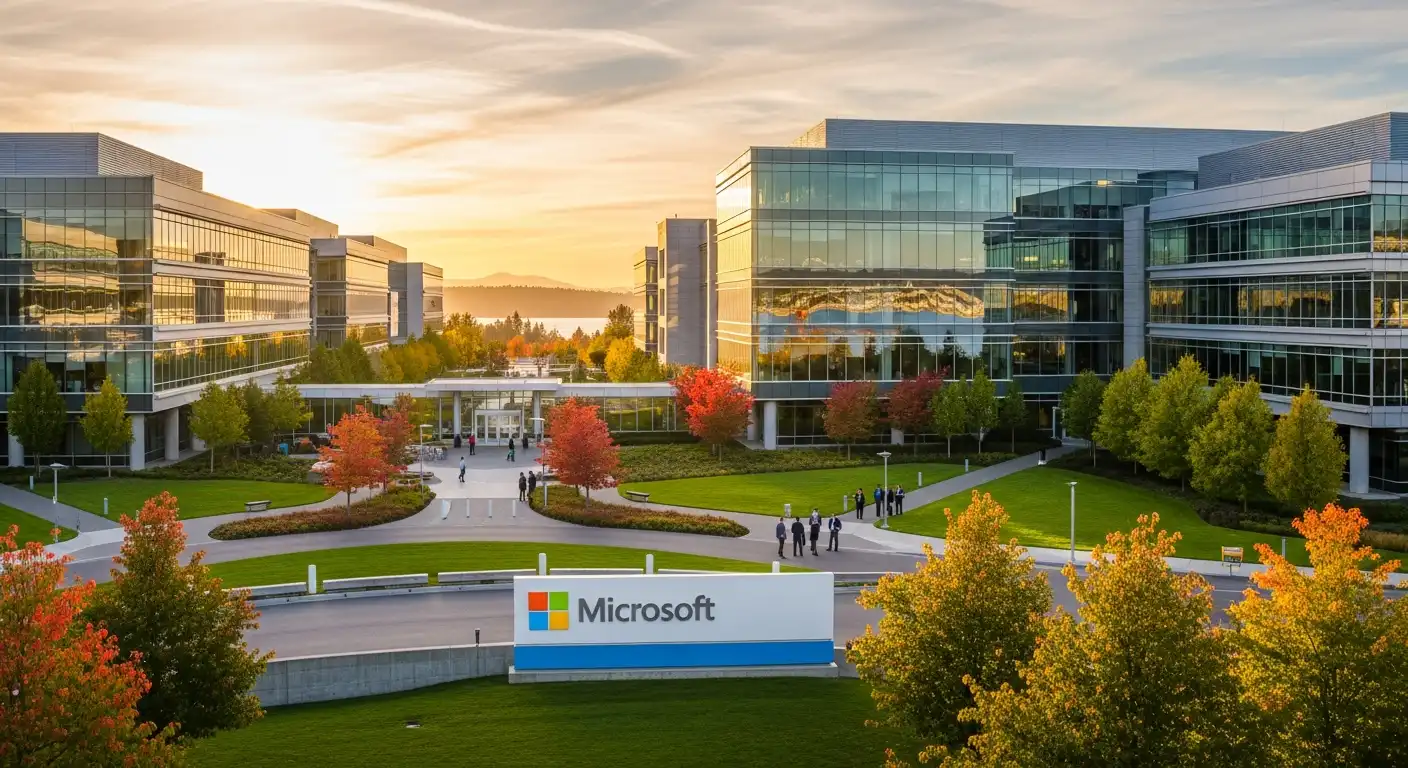
The corporate landscape of artificial intelligence is experiencing a massive, quiet realignment. For several years, the artificial intelligence story of Microsoft Corporation was inextricably linked to OpenAI. Through a massive, multi-year investment of $13 billion, the software giant established itself as the primary distributor of the startup’s generative models, embedding “Copilot” assistants across Windows, Microsoft 365, and Azure.
This deep reliance, however, created a significant strategic vulnerability, leaving Microsoft highly dependent on its partner’s pace, management decisions, and technical roadmaps.
A major transformation is now unfolding. At its annual Build developer conference in California, Microsoft unveiled a comprehensive, full-stack independent technology strategy. By launching a suite of in-house models, developing its own custom silicon, and introducing centralized management tools, the Redmond-based giant is actively writing its own path.
This transition represents a calculated effort to lower operational costs, reduce reliance on a single partner, and build a highly integrated, sovereign technology stack. As the enterprise technology race shifts from simple AI experimentation to large-scale, autonomous operations, Microsoft is positioning itself to lead the next era of computing on its own rails.
The Historic October 2025 Restructuring: The Legal Gateway to Autonomy
Microsoft’s newly discovered independence is not an overnight development. The contractual groundwork for this massive pivot was quietly laid in October 2025, when Microsoft and OpenAI agreed to a significant restructuring of their iconic partnership.
Breaking the Exclusivity Clause
Under the original terms of their partnership, Microsoft was legally barred from developing competing artificial general intelligence (AGI) systems on its own. This exclusivity clause effectively locked Microsoft into OpenAI’s development cycle, forcing the software giant to wait on its partner for next-generation model upgrades.
The October 2025 restructuring dissolved this restriction. Microsoft successfully negotiated the right to pursue AGI independently or with other partners, freeing its in-house research divisions to build competing, high-end models.
In exchange, Microsoft extended its intellectual property rights to OpenAI’s underlying technology through 2032, ensuring it retained access to its partner’s algorithms even as it built its own competing systems.
Reducing the Equity Stake and Expanding Compute Options
The restructured agreement also adjusted the financial and operational relationship between the two companies. Microsoft’s equity stake in OpenAI dropped from 32.5% to approximately 27%, reflecting a more arms-length relationship.
Furthermore, the restructuring removed Microsoft’s exclusive right to serve as OpenAI’s sole compute provider. OpenAI gained the freedom to work with other cloud infrastructure giants, including Amazon Web Services.
In return, OpenAI committed to purchasing an additional $250 billion in cloud services from Microsoft Azure over the life of the agreement. This massive commitment guaranteed that even as OpenAI diversified its infrastructure partners, Microsoft would continue to generate billions of dollars in recurring cloud revenue from its partner’s computational workloads.
The Rise of the MAI Suite: Microsoft’s In-House Models
With the legal restrictions of the partnership removed, Microsoft’s in-house artificial intelligence research division—led by Mustafa Suleyman—immediately went to work. The result of this effort is the “MAI” suite, a family of in-house models designed to compete directly with frontier models in performance, speed, and cost efficiency.
MAI-Thinking-1 and the Reasoning Breakthrough
The flagship model of the new in-house lineup is MAI-Thinking-1, a highly advanced reasoning model featuring 35 billion active parameters. Unlike standard generative models that predict the next most likely word in a sentence, MAI-Thinking-1 uses advanced reasoning steps to evaluate complex problems, debug code, and perform logical deductions before generating a final response.
According to internal benchmarks, MAI-Thinking-1 performs at parity with Anthropic’s Claude Sonnet 4.6 on complex software engineering tasks.
Crucially, Microsoft achieved this level of performance at a significantly lower per-token cost compared to competing frontier models. By optimization of the model’s underlying architecture, the Microsoft AI Superintelligence team created a highly efficient reasoning engine that allows enterprises to run complex cognitive tasks at scale without facing high licensing fees.
MAI-Code-1-Flash and Native Tool Integration
For software developers, Microsoft introduced MAI-Code-1-Flash, a lightweight, highly optimized coding model designed specifically for low-latency operations. Rather than hosting the model as a general-purpose API, Microsoft has integrated MAI-Code-1-Flash natively into the foundations of GitHub Copilot.
This native integration represents a major shift away from OpenAI’s GPT models, which previously powered the vast majority of GitHub Copilot’s auto-complete and code generation features.
By running GitHub Copilot on its own in-house model, Microsoft has gained full control over the developer experience, reducing latency, improving code suggestion accuracy, and eliminating the royalty fees it previously had to pay to its partner for every line of code generated.
MAI-Transcribe-1.5 and the Multimodal Push
Microsoft’s in-house model expansion also includes advanced speech and multimodal capabilities, led by the release of MAI-Transcribe-1.5. This specialized speech model claims leading transcription accuracy across 43 languages, delivering highly precise text translations at five times the speed of competing commercial systems.
Alongside transcription, the company has made MAI-Voice-1 and MAI-Image-2 commercially available through its specialized Microsoft Foundry platform.
These models cover three of the most commercially valuable capabilities in enterprise artificial intelligence—speech transcription, voice generation, and image creation. By offering its own models across these multiple modalities, Microsoft is ensuring that its corporate clients can build advanced multimedia applications without needing to route sensitive data through third-party platforms.
The Custom Silicon Gambit: Maia and Cobalt Chips
Developing highly capable in-house models is only half the battle. To truly achieve independence and lower the cost of computing, a technology giant must also control the physical silicon that runs those models.
Challenging Google’s TPUs and Amazon’s Trainium
For years, Google and Amazon have argued that owning the entire hardware-software stack is the only way to lower operational costs and deliver maximum performance. Google has paired its Gemini models with custom Tensor Processing Units (TPUs) for several generations, while Amazon has successfully paired its Nova models with custom Trainium silicon.
This custom hardware has allowed both competitors to reduce their reliance on expensive graphics processing units (GPUs) from Nvidia, giving them a significant cost advantage.
Microsoft is now aggressively executing this same playbook. The company is investing billions of dollars to develop and deploy its own Maia custom silicon and Cobalt CPUs across its Azure data centers.
By co-designing its in-house MAI models to run specifically on Maia and Cobalt chips, Microsoft can achieve levels of hardware-software optimization that are impossible when running generic models on standard, off-the-shelf hardware.
While Microsoft still depends on Nvidia for training compute at a frontier scale, its custom chip investments are beginning to pay off. Running inference workloads on Maia and Cobalt chips allows Microsoft to reduce its dependency on expensive GPU clusters, insulate itself from chip shortages, and offer significantly lower per-token pricing to its enterprise clients.
This hardware independence is a critical component of Microsoft’s long-term strategy, giving the company the flexibility to set its own technical roadmap and negotiate more favorable terms with chip suppliers.
Managing the Agentic Estate: Microsoft Scout and Agent 365
As artificial intelligence transitions from passive assistants to active, autonomous agents, businesses face a major challenge: how to coordinate, monitor, and secure these digital workers across their entire organization.
At its Build conference, Microsoft introduced a comprehensive software and security ecosystem designed to act as the central control layer for this new agent era.
Microsoft Scout: The First Always-On Autopilot Agent
Microsoft launched its first “always-on” autonomous agent, named Microsoft Scout. Built on the open-source OpenClaw framework, Scout is designed to run quietly in the background of Microsoft Teams and Microsoft 365, taking proactive, autonomous actions on behalf of the user.
Unlike traditional assistants that must be prompted to perform a task, Scout monitors a user’s calendar, emails, and project boards to identify upcoming needs.
If Scout detects an upcoming meeting, it can automatically review previous conversation threads, locate relevant spreadsheets, draft an agenda, and share preparation materials with invitees beforehand. By automating these routine coordination tasks, Scout represents a transition of AI from a reactive search tool into a proactive team member.
Agent 365: Enterprise Governance and Control
While autonomous agents promise massive productivity gains, they also introduce significant security and compliance risks. If a digital agent has access to sensitive company folders, it could accidentally expose proprietary financial data or violate customer privacy regulations.
To address these security concerns, Microsoft introduced Agent 365. Working in close integration with Entra, Purview, and Defender, Agent 365 acts as a centralized governance platform that allows IT administrators to monitor and manage their entire “agent estate.”
Every agent deployed within an organization—regardless of whether it was built inside Microsoft Foundry or by a third-party developer—shows up in a single, comprehensive catalog in Agent 365.
IT administrators can easily see who deployed an agent, what specific data and databases it has permission to access, how it is behaving in real-time, and what computing costs it is generating.
If an agent behaves abnormally or attempts to access restricted files, IT officers can immediately revoke its permissions or disable the software, ensuring that the deployment of autonomous systems remains safe and within the organization’s control.
The Strategic Path Beyond OpenAI
Microsoft’s multi-layered independent strategy represents a permanent realignment of the enterprise software market. By building its own in-house models, developing custom silicon, and introducing centralized security platforms, the company has successfully transitioned from a mere licensing partner to a full-stack technology builder.
This shift does not mean that the partnership with OpenAI is over. The two companies will continue to collaborate closely, with OpenAI purchasing billions of dollars in Azure services and Microsoft retaining the rights to integrate OpenAI’s frontier technologies.
However, by building its own robust, parallel technology stack, Microsoft has successfully hedged its bets.
If OpenAI faces regulatory roadblocks, management instability, or a slowdown in its development cycle, Microsoft can continue to lead the enterprise market on its own rails.
As businesses across the globe continue to invest heavily in digital transformation, Microsoft’s independent AI strategy ensures that the company remains at the absolute center of the technological world, delivering maximum value, security, and innovation to its clients on its own terms.