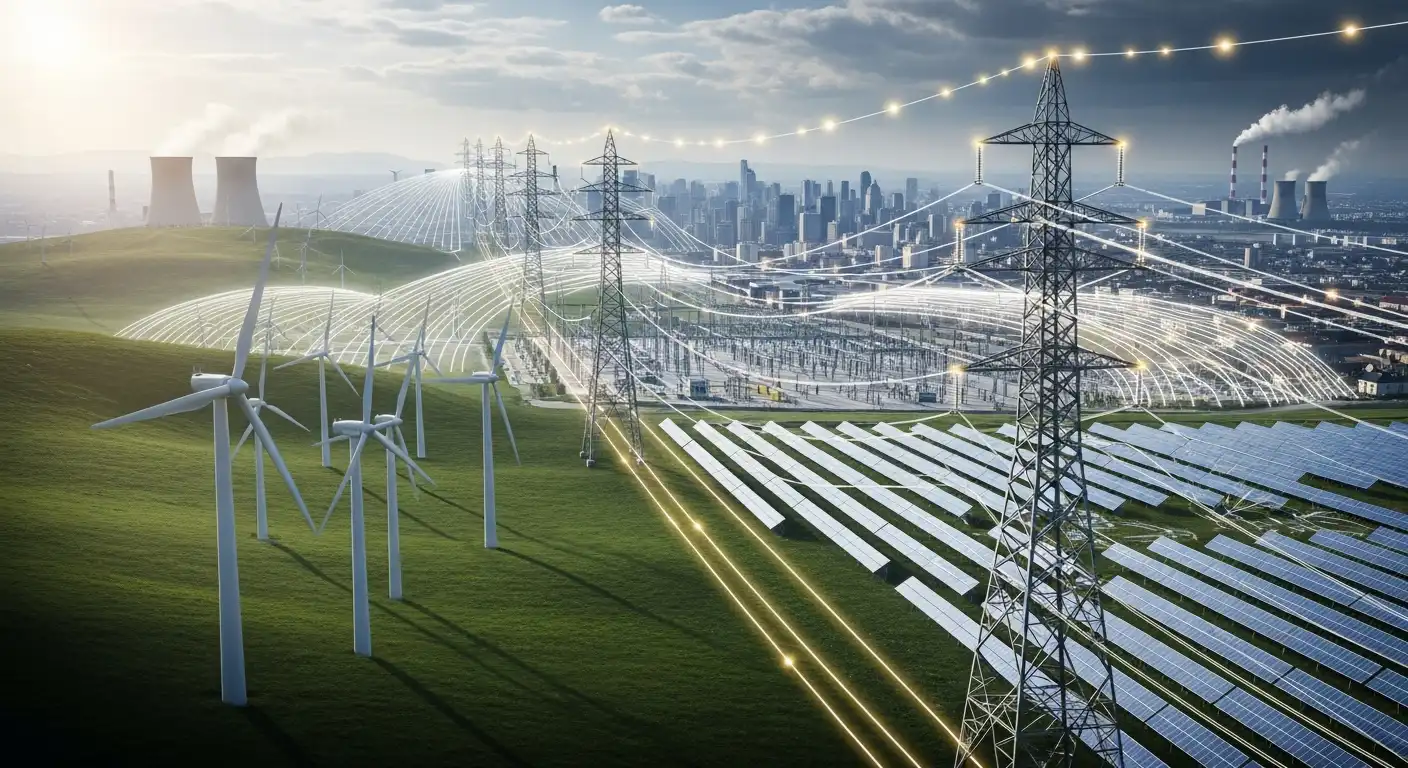
Nearly half of all electricity generated across the European Union now comes from renewable sources, marking a historic milestone in the continent’s transition toward clean, homegrown energy. According to the latest net generation data published by Eurostat, the statistical office of the European Union, renewable energy sources accounted for 45.5% of the net electricity produced across the 27-nation bloc during the first quarter of 2026. This represents a significant year-over-year increase from the same period in 2025, when the renewable share stood at 42.7%.
This massive green energy expansion arrives at a critical moment for European national security and economic planning. The devastating energy crisis triggered by geopolitical conflicts in the Middle East and shipping disruptions in the Strait of Hormuz earlier this year sent global oil and gas prices soaring, forcing the European Union to downgrade its overall 2026 economic growth forecast. This sudden, painful reminder of the volatility of foreign fossil fuel markets has prompted European policymakers to double down on domestic wind, solar, and hydropower projects, transforming the clean energy transition from a purely environmental objective into an urgent matter of national security and economic sovereignty.
The Strategic Triad of Europe’s Green Transition: Denmark, Portugal, and Lithuania
While the overall European Union average of 45.5% represents a major step forward, the pace of the transition remains highly uneven across the continent. A select group of highly proactive nations is leading the charge, outperforming their regional targets and demonstrating that near-total reliance on clean power is technically and economically viable.
According to the Eurostat data, Denmark, Portugal, and Lithuania have established themselves as the strategic triad leading Europe’s green transition:
- Denmark’s Wind Sovereignty: Denmark recorded the highest share of renewable electricity generation in the European Union, generating an extraordinary 90.0% of its net power from clean sources during the first quarter. This massive achievement was driven almost entirely by the country’s extensive offshore and onshore wind farm networks.
- Portugal’s Hydropower Engine: Portugal secured the second-place position, generating 82.9% of its net electricity from renewable sources. High rainfall and melting snow in early 2026 filled the country’s massive reservoirs, allowing its highly advanced hydropower network to supply the bulk of its power, supplemented by strong solar and wind capacities.
- Lithuania’s Baltic Wind Surge: Lithuania claimed the third-place spot, generating 75.7% of its electricity from renewable sources. Like Denmark, Lithuania’s green transition is powered primarily by wind energy, as the Baltic nation has aggressively modernized its onshore and offshore wind infrastructure to sever its historical ties to the Russian electricity grid.
These leading nations prove that with strong political commitment, streamlined permitting processes, and targeted capital investments, countries can successfully transition their national grids to run almost entirely on clean, local power, insulating their economies from global fossil-fuel price shocks.
Breaking Down the European Union’s Q1 2026 Renewable Energy Mix
The transition to a green power grid requires a highly diversified mix of renewable technologies to ensure grid stability and constant power availability. The Eurostat data reveals that the European Union has built a highly balanced renewable energy mix, with different technologies complementing each other’s natural seasonal variations.
A breakdown of the 45.5% overall net renewable electricity generation share shows the relative contributions of each green technology:
- Wind Power: The undisputed champion of the European grid, contributing 44.9% of all renewable electricity generated during the first quarter, up from 42.3% in the same period in 2025.
- Hydropower: The reliable, baseline runner-up, contributing 28.0% of the green electricity mix.
- Solar Energy: The rapidly expanding technology, contributing 17.3% of the total, showing solid gains despite the winter seasonal lag.
- Combustible Renewable Fuels: Biofuels, biogas, and solid biomass accounted for 9.4% of the green mix.
- Geothermal and Other Sources: Representing the final 0.4% of the total.
The dominant performance of wind power during the first quarter is a critical structural feature of Europe’s transition. Because wind speeds are typically higher and more consistent during the winter months, wind energy provides high-capacity, winter-aligned output when solar generation experiences its natural seasonal dip, ensuring that the grid remains fully powered during the coldest months of the year.
The Massive Acceleration of Wind Power as the Grid’s Backbone
The rapid growth of wind power from 42.3% to 44.9% of the total renewable mix is the direct result of massive capital investments in mega-scale offshore wind projects, particularly in the North Sea and Baltic Sea. European countries have recognized that offshore wind represents one of the most reliable sources of clean, high-volume electricity, as offshore winds are stronger and far more consistent than those on land.
By constructing massive offshore wind arrays and connecting them via high-voltage direct current (HVDC) subsea cables, European nations are building a highly resilient, cross-border energy network. This allows countries experiencing low wind speeds to import excess wind power from neighboring nations, helping to balance the overall European grid and reduce reliance on natural gas peaking plants during periods of high demand.
The Seasonal Resilience of Hydropower and Solar Energy
While wind power serves as the backbone of the European grid, the contributions of hydropower and solar energy are essential for ensuring long-term grid stability. Hydropower, which contributed 28.0% of the green mix, acts as a giant physical battery for the European electricity system.
Unlike wind and solar, which generate power only when the weather permits, hydroelectric reservoirs can store vast quantities of potential energy. Grid operators can quickly release this water to generate electricity when wind and solar output fluctuate, helping to balance the grid, prevent localized blackouts, and stabilize wholesale electricity prices. At the same time, the rapid expansion of solar capacity, which contributed 17.3% of the mix, is preparing the continent for the summer months, when solar generation will take over as the dominant source of clean power.
Geopolitical Volatility and the Push for National Energy Security
The rapid acceleration of Europe’s green transition is deeply tied to the changing geopolitical realities of the modern era. Earlier this year, the outbreak of a military conflict in the Middle East and the subsequent closure of the Strait of Hormuz sent global energy prices soaring, forcing the European Union to downgrade its overall 2026 economic growth forecast and raising fears of a prolonged stagflationary shock.
This energy crisis served as a massive wake-up call for European leaders. It proved that relying on imported liquefied natural gas (LNG) and crude oil from politically unstable regions represents a severe risk to national security and economic sovereignty. Homegrown renewable energy—such as wind, solar, and hydropower—cannot be embargoed, shut off, or manipulated by foreign adversaries. This realization has transformed the green transition from a purely environmental goal into a critical matter of national security, prompting member states to fast-track their renewable infrastructure projects to build a self-reliant, secure energy union.
The Statistical Laggards: Why Some Nations are Falling Behind
While Denmark, Portugal, and Lithuania are leading the continent toward a clean energy future, a select group of member states is falling seriously behind, dragging down the overall European Union average.
The Eurostat data reveals a stark performance gap at the bottom of the regional rankings:
- Czechia: Recorded the lowest share of renewable electricity generation in the European Union, generating just 12.7% of its net power from clean sources.
- Malta: Ranked as the second-lowest performer, generating only 13.0% of its electricity from renewables.
- Slovakia: Ranked third from the bottom, recording a renewable electricity share of just 17.2%.
- Structural Barriers: These lagging nations face significant structural challenges, including landlocked geographies that prevent the deployment of offshore wind, historical dependencies on legacy coal and nuclear infrastructure, and slow, bureaucratic permitting pipelines that delay new project approvals.
To bridge this regional gap, the European Commission is urging lagging member states to streamline their regulatory frameworks and leverage EU funding to modernize their national grids, warning that failing to invest in clean energy will leave their economies highly vulnerable to future global energy shocks.
Distinguishing Between Net Generation and Gross Consumption
To prevent confusion and ensure accurate reporting, Eurostat has emphasized a critical methodological distinction regarding its latest energy dataset. The 45.5% statistic represents the share of renewable energy in net electricity generation—which measures the actual volume of green power produced within the physical borders of the European Union.
This net generation figure should not be confused with the main indicator used to monitor compliance with the EU’s Renewable Energy Directive (RED), which measures the share of renewables in gross electricity consumption. The consumption-based indicator divides a nation’s total renewable electricity generation by its overall electricity consumption, adjusting for electricity imports, exports, and specific regulatory multipliers. Because highly integrated, exporting nations like Denmark often export a significant portion of their clean power, their consumption-based shares can sometimes exceed 100%, making the net generation figure a more accurate reflection of physical domestic power production.
Job Creation and the Transition to the Clean Industrial Deal
The rapid expansion of renewable energy is not just a victory for national security and the environment; it is also a powerful driver of economic growth and job creation across the continent. The construction, operation, and maintenance of massive wind farms, solar arrays, and hydroelectric plants are creating thousands of highly skilled “green” technology jobs, helping to offset the loss of employment in legacy fossil-fuel industries.
This employment boom aligns directly with the European Union’s planned Clean Industrial Deal and the upcoming Industrial Accelerator Act. These legislative initiatives are designed to protect European clean-tech manufacturers from fierce, state-subsidized competition from the United States and China, ensuring that the physical components of the green transition—such as wind turbines, solar panels, and battery storage systems—are manufactured locally within Europe. By keeping both the manufacturing and the deployment of clean energy technologies within its borders, the EU hopes to build a highly competitive, self-sustaining green economy that can support millions of high-paying jobs for decades to come.
The Path Forward: Permitting Reforms and Grid Bottlenecks
While generating 45.5% of net electricity from renewable sources is a massive historic achievement, the European Union faces significant physical and regulatory challenges as it enters the next phase of the transition. The primary bottleneck is no longer the cost or efficiency of the solar panels and wind turbines themselves, but the physical limitations of the electricity grid.
Many of Europe’s high-voltage transmission lines were designed decades ago to transport power from centralized coal and nuclear plants to nearby cities. Connecting thousands of decentralized, highly variable wind and solar projects to this aging grid is incredibly complex, leading to massive connection queues and localized transmission bottlenecks. If European governments do not invest heavily in modernizing their electricity grids, installing large-scale energy storage systems, and streamlining permitting processes for new transmission lines, a significant portion of the clean power generated by wind and solar farms will be wasted or curtailed, slowing down the pace of the transition.
Conclusion
The latest Eurostat data showing that 45.5% of net electricity generated in the European Union comes from renewable sources represents a major milestone in the continent’s journey toward energy independence. Led by the stellar performances of Denmark, Portugal, and Lithuania, the steady rise of wind power as the grid’s backbone proves that the transition is progressing at an unprecedented pace. Driven by the urgent requirement for national energy security in the wake of the Middle East energy crisis, European capitals are successfully fast-tracking their clean energy projects to reduce their dependence on volatile foreign fossil-fuel markets.
While the structural challenges of grid bottlenecks, slow permitting pipelines, and a stark performance gap between leading and lagging member states remain difficult to resolve, the long-term trend is clear. The expansion of clean energy is driving significant economic benefits, creating high-paying green jobs, and supporting the continent’s transition to a highly competitive, self-sustaining green economy under the Clean Industrial Deal. By investing in grid modernization and maintaining a unified commitment to the green transition, the European Union can secure its technological and economic future, proving that a sustainable, clean-energy-powered society is no longer just a distant environmental goal, but a practical reality.