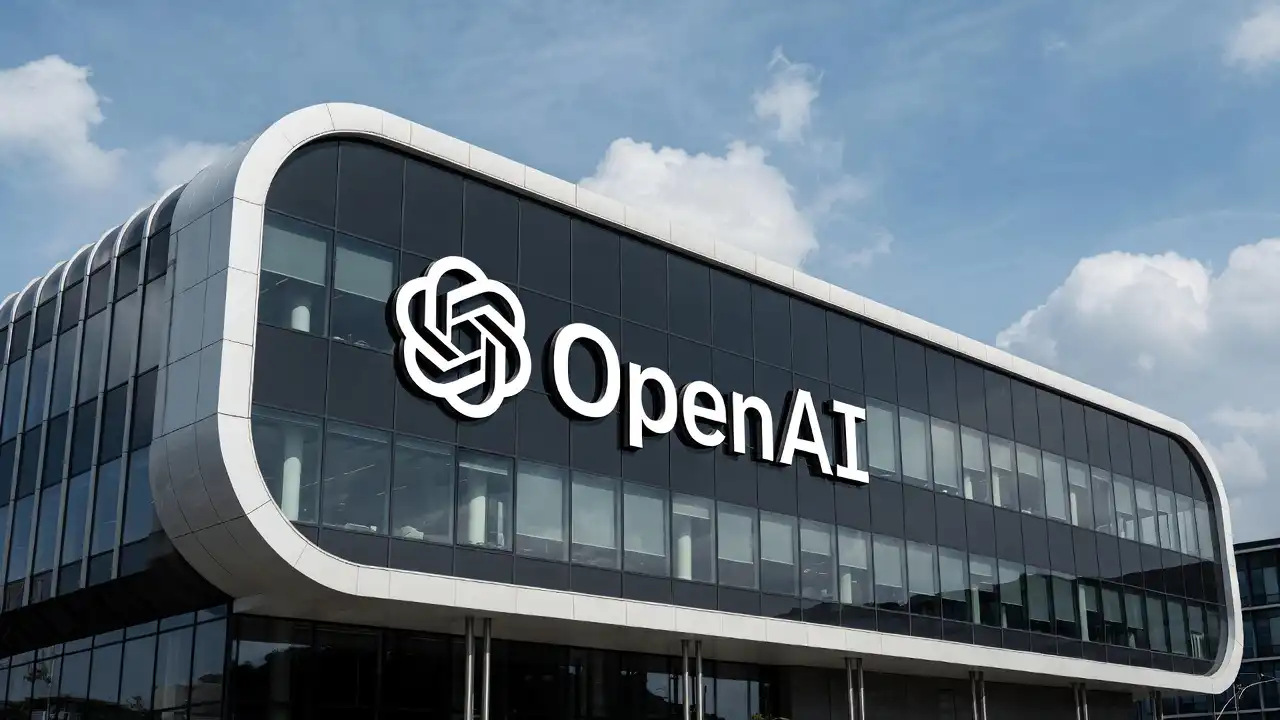
OpenAI is in early, conceptual discussions to grant the U.S. government a 5% equity stake in the company, marking an unprecedented effort to align Silicon Valley’s most valuable startup with national interests. At OpenAI’s historic $852 billion valuation, which the artificial intelligence developer established during its massive March 2026 funding round, a 5% stake is worth approximately $42.6 billion. The proposal, first reported by the Financial Times on July 2, 2026, aims to ease the growing political and regulatory pressures facing the company in Washington, while providing a framework for the American public to share directly in the financial windfall of the artificial intelligence boom.
The ambitious proposal extends beyond OpenAI alone. Chief Executive Officer Sam Altman has argued that the largest artificial intelligence developers in the United States should collectively donate a similar 5% equity slice to the federal government. This pooled equity would sit inside a newly created, state-run public wealth fund designed to pay out “digital dividends” to the American public, helping to mitigate the intense public backlash over technological unemployment and job losses. While the negotiations remain in the early, conceptual stages, the move demonstrates that AI developers are willing to consider radical structural changes to protect their business operations and secure their future public listings.
The Mechanics of the Proposed AI Public Wealth Fund
The corporate and financial structure that OpenAI has sketched out is modeled closely on the Alaska Permanent Fund. Established by the Alaskan state government in 1976 and currently valued at nearly $91.2 billion, the Alaskan fund is seeded with state oil revenues and pays out an annual cash dividend to every eligible resident, helping to fund the state budget and support household incomes. OpenAI’s executives want to replicate this structure at a national level, replacing oil revenue with corporate equity from the country’s leading artificial intelligence champions.
Under the proposed framework, OpenAI would donate its shares rather than sell them to the government. This donation structure allows the company to bypass the legal and political hurdles of transferring private equity to the federal government, while ensuring that the public wealth fund does not require a direct, multi-billion-dollar cash outlay from the U.S. Treasury. By pooling 5% equity stakes from a cohort of leading developers—including OpenAI, Anthropic, Google, and Meta—the fund would accumulate tens of billions of dollars in highly valuable technology assets, distributing the resulting financial upside to citizens, particularly those who do not hold traditional stock market investments.
High-Stakes Diplomacy: Altman’s Bipartisan Outreach
To build support for this highly unusual public ownership model, Sam Altman has engaged in a high-stakes, bipartisan diplomatic campaign in Washington. According to people familiar with the discussions, Altman has presented the 5% equity proposal directly to President Donald Trump, Commerce Secretary Howard Lutnick, and Treasury Secretary Scott Bessent. These cabinet-level discussions are aimed at convincing the administration that giving the government a direct financial stake in the success of the domestic AI industry is the most effective way to secure America’s technological leadership.
At the same time, Altman has reached out to prominent progressive lawmakers, including independent Senator Bernie Sanders of Vermont. Sanders recently introduced the American AI Sovereign Wealth Fund Act, a competing and considerably more aggressive proposal that seeks to impose a one-time 50% tax on the stock of the largest AI companies to build a massive, $7 trillion public fund. By engaging with both the pro-business Trump administration and progressive advocates like Sanders, Altman is attempting to forge a rare, bipartisan consensus on how the economic benefits of artificial intelligence should be shared, neutralizing the growing political opposition to the technology before the company makes its public market debut.
The Regulatory Pressure: Keeping Superintelligence in American Hands
The timing of OpenAI’s 5% equity pitch is directly tied to an increasingly restrictive, national-security-driven regulatory environment in Washington. As the United States and China compete for computational supremacy, federal regulators have adopted a highly interventionist approach to the development of frontier artificial intelligence models, prioritizing cybersecurity, data safety, and national defense over uninhibited corporate expansion.
This regulatory pressure has manifested in several recent, highly disruptive interventions that have forced AI developers to reconsider their relationship with Washington. Both OpenAI and its primary competitor, Anthropic, have had to adjust their product timelines to satisfy federal security reviews, highlighting the growing power of the state over the technology sector.
The Government-Mandated Delay of GPT-5.6
The most immediate regulatory headwind facing OpenAI is the delayed rollout of its next-generation foundation model, GPT-5.6. The company had planned to launch the highly advanced model to the public last week, promising significant breakthroughs in reasoning, agentic planning, and multimodal processing.
However, following a direct request from the Trump administration, OpenAI agreed to delay the wide public release of GPT-5.6. Federal regulators requested the delay to allow national security agencies and cybersecurity experts to conduct a thorough review of the model’s capabilities, evaluating its vulnerability to exploitation by hostile foreign actors and ensuring that its advanced reasoning features do not pose a systemic threat to critical U.S. digital infrastructure.
The Temporary Export Ban on Anthropic’s Fable 5
While OpenAI managed the delay of GPT-5.6, its primary competitor, Anthropic, faced an even more severe regulatory intervention. The U.S. government ordered the San Francisco-based startup to suspend access to its most advanced models, including Fable 5 and Mythos 5, to prevent foreign nationals from utilizing the highly capable software.
This temporary export ban represented a significant operational disruption for Anthropic, which has spent millions of dollars to build global cloud partnerships. The company complied immediately, disabling access to its premium models while working with federal investigators to address security vulnerabilities and implement strict, localized access controls. Although the U.S. government officially cleared those restrictions and allowed Anthropic to restore access to Fable 5 on Tuesday, June 30, the incident served as a stark warning to the entire industry that Washington is prepared to use its executive authority to restrict the distribution of advanced models on national security grounds.
The Looming S-1 Filings and the Pre-IPO Regulatory Clearance
The need to resolve these ongoing regulatory disputes is a matter of corporate survival for both OpenAI and Anthropic, as both companies prepare to transition from private startups to public corporations. Earlier this year, both firms announced that they had confidentially submitted their S-1 registration statements to the SEC for planned initial public offerings, setting up what are expected to be some of the largest listings on Wall Street.
For prospective investors, regulatory uncertainty is the single greatest risk factor associated with these high-profile IPOs. If a company’s primary product can be delayed, restricted, or banned by executive order at any moment, its future revenue projections become highly unpredictable, depressing its valuation and discouraging institutional buyers. By offering the U.S. government a direct 5% equity stake in the business, OpenAI’s management hopes to build a more collaborative, stable relationship with Washington, transforming the regulator into a financial stakeholder that is directly incentivized to support the company’s commercial success.
Bypassing the Traditional Capitalist Playbook
The proposal to cede a multi-billion-dollar equity stake directly to the federal government represents a radical departure from the traditional capitalist playbook that has defined Silicon Valley’s relationship with Washington for decades. Historically, technology startups operated under a strictly laissez-faire philosophy, fighting against government regulation and viewing state intervention as a threat to innovation.
The shift toward a public ownership model has drawn sharp criticism from some market analysts and venture capitalists, who argue that the proposal resembles a form of state capitalism or “corporate bribery” designed to buy political protection. Critics worry that if the federal government becomes a major shareholder in private AI companies, it will create a massive conflict of interest, where regulators are incentivized to protect their own investments by blocking competition, enacting protectionist tariffs, and restricting the growth of open-source alternatives. This debate highlights the complex ethical questions of the AI era, where the boundaries between corporate power and national sovereignty are increasingly blurred.
The Geopolitical Horizon: The US-China AI Tech War
The overarching force driving the convergence of Silicon Valley and Washington is the intense, multi-decade technological rivalry between the United States and China. Beijing has made artificial intelligence a cornerstone of its national security strategy, utilizing a highly integrated, state-led model to build advanced computing clusters and develop competitive open-source models that are significantly cheaper than their American counterparts.
To maintain its global lead, the U.S. government must treat advanced artificial intelligence as a strategic national asset, similar to the domestic semiconductor supply chain. By establishing a public wealth fund that holds a direct 5% stake in American AI champions, Washington can align its national security priorities with the commercial success of its tech sector. This “sovereign tech alliance” ensures that the United States remains the primary beneficiary of the AI boom, keeping advanced research, high-quality jobs, and capital gains within the country while building a highly resilient, independent digital infrastructure capable of outcompeting foreign adversaries.
Conclusion
OpenAI’s conceptual proposal to hand the U.S. government a 5% equity stake worth $42.6 billion represents a historic turning point in the relationship between Silicon Valley and Washington. By suggesting that the nation’s leading AI companies cede a portion of their wealth to a national public fund modeled on the Alaska Permanent Fund, Sam Altman is attempting to build a bipartisan consensus that can share the economic benefits of the AI boom while easing regulatory scrutiny ahead of the company’s planned IPO.
While the proposal faces significant technical, legal, and ethical challenges—including concerns over state capitalism, conflict of interest, and the willingness of competitors like Google and Meta to participate—the strategic necessity of the move is clear. In an era where advanced AI models like GPT-5.6 are treated as strategic national assets subject to government-mandated delays, managing regulatory risk is essential for corporate survival. By transforming the regulator into a financial stakeholder, OpenAI hopes to build a more collaborative, stable future, proving that in the age of superintelligence, the division between corporate power and national sovereignty is rapidly dissolving, paving the way for a new, sovereign-backed technology ecosystem.