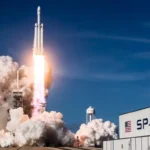
United Launch Alliance (ULA) successfully executed an overnight rocket launch from Florida, carrying another batch of high-speed internet satellites into orbit for Amazon. Early on Thursday, July 2, 2026, an Atlas V rocket lifted off from Cape Canaveral Space Force Station, placing 29 new satellites securely into low Earth orbit (LEO). The successful mission represents a major operational turning point for the e-commerce giant, pushing its active constellation size to 396 spacecraft. Following the deployment, Amazon officially confirmed plans to debut its initial commercial satellite broadband service later this year, signaling the start of a direct, high-stakes battle against SpaceX’s dominant Starlink network.
This milestone marks a key shift in Amazon’s multi-billion-dollar space program. Originally developed under the codename Project Kuiper, the company rebranded its low-Earth orbit broadband initiative to Amazon Leo in November 2025 as it moved from the research phase toward active commercialization. With nearly 400 operational satellites now in orbit, the company has accumulated enough spatial assets to begin offering continuous, high-speed internet coverage over select geographic regions. The initial rollout will target underserved communities near the Earth’s polar regions before gradually expanding toward the equator as more satellites join the network.
The Mechanics of the $10 Billion Satellite Broadband Bet
The development of the Amazon Leo network represents one of the most expensive and complex infrastructure projects in the history of the modern technology sector. Since initiating the program in 2019, Amazon has committed more than $10 billion to design, manufacture, and launch its satellite constellation. The primary objective is to build a massive global network consisting of 3,236 low-Earth orbit satellites, designed to deliver low-latency, high-speed broadband connectivity to residential consumers, corporate enterprises, maritime vessels, and commercial aviation partners worldwide.
Securing this global network requires navigating strict regulatory and manufacturing deadlines. Under the licensing guidelines established by the Federal Communications Commission (FCC), Amazon faces a critical regulatory mandate requiring the company to launch at least half of its planned constellation—equivalent to 1,618 satellites—by July 30, 2026, to preserve its primary operating license. While the current constellation size of 396 spacecraft falls short of this initial milestone, the company’s recent manufacturing ramp-up and expanded launch partnerships demonstrate a massive effort to close the gap and secure its regulatory standing.
By placing its satellites in low Earth orbit, which sits at altitudes between 300 and 400 miles above the Earth’s surface, Amazon can deliver significantly faster data speeds and lower latency compared to traditional, high-altitude geostationary satellites. Traditional satellite internet often suffers from long signal delays because the data must travel over 22,000 miles into space. Low-Earth orbit satellites resolve this issue, allowing Amazon Leo to offer a highly responsive, low-latency internet experience that can easily support online gaming, real-time video conferencing, and high-volume corporate database access.
Inside the Final Operational Atlas V Flight
The overnight launch from Florida, designated AV-114, was a highly significant event for both Amazon and United Launch Alliance. The mission utilized ULA’s powerful Atlas V 551 rocket configuration, which features a five-meter payload fairing, five solid rocket boosters, and a single Centaur upper stage. The massive rocket carrying the 29 Amazon Leo satellites lifted off on schedule, successfully deploying the spacecraft into their assigned orbits approximately 70 minutes after liftoff.
This launch represents several key operational milestones:
- It marks the ninth Atlas V launch dedicated to the Amazon Leo constellation, with the very first flight in 2023 carrying two prototype satellites to orbit.
- The mission represents the eighth and final operational Atlas V flight reserved for the project, officially concluding the first phase of Amazon’s launch contract.
- The AV-114 flight tied the all-time record for the heaviest commercial payload the Atlas V has ever successfully flown into orbit.
- To complete the remaining 3,200-satellite constellation, Amazon is shifting its deployment strategy to next-generation, heavy-lift launch vehicles.
This transition to new launch vehicles is one of the largest commercial launch procurement programs in history. Amazon has signed contracts with multiple launch providers to secure dozens of flights over the coming years, utilizing ULA’s new Vulcan Centaur, Arianespace’s Ariane 6, Blue Origin’s New Glenn, and even rival SpaceX’s highly active Falcon 9 rocket. This diversified launch strategy ensures that Amazon is not dependent on any single rocket model or launch provider to meet its aggressive deployment targets.
The Customer Terminal Tiers and Performance Promises
To serve a wide variety of customers, Amazon Leo is developing three distinct customer terminal configurations designed to balance size, cost, and performance. These terminal designs feature highly advanced, low-profile phased array antennas engineered to track multiple satellites simultaneously as they sweep across the sky, ensuring a seamless, uninterrupted transition of data signals.
The three planned terminal tiers include:
- Leo Nano: This ultra-compact terminal measures just 7×7 inches, making it the smallest and most portable option in the lineup. It is designed primarily for basic, low-cost residential connectivity, delivering download speeds of up to 100 megabits per second (Mbps).
- Leo Pro: The standard consumer-grade terminal features an 11×11-inch square design, weighing just 5.3 pounds. It is priced at under $400 and is rated to deliver download speeds of up to 400 Mbps, serving as the primary option for residential families and small businesses.
- Leo Ultra: The enterprise flagship model features a larger 19×30-inch installation designed for high-throughput applications. It is capable of delivering up to 1 gigabit per second (Gbps) download speeds with a 400 Mbps uplink, making it ideal for maritime vessels, large corporate campuses, and commercial aircraft.
By promising download speeds of up to 400 Mbps on its standard consumer dishes, Amazon is positioning its service as a faster and potentially more affordable alternative to Starlink, which typically delivers standard speeds of up to 150 Mbps. While Amazon has not yet disclosed final consumer pricing, industry analysts speculate that the company will price its subscriptions competitively to gain market share quickly.
Strategic Partnerships with Telecom and Aviation Giants
To accelerate its commercial adoption and secure high-volume customer accounts ahead of its launch, Amazon has signed major partnerships with prominent telecommunications, transport, and aviation companies worldwide. These strategic alliances will allow Amazon to integrate its satellite service directly into existing enterprise networks and consumer platforms.
Among its key partners, the company has secured several major agreements:
- Verizon and Vodafone: These telecommunications giants plan to use Amazon Leo’s high-capacity backhaul connections to link their remote, rural cellular towers to their primary networks, expanding their 5G and 4G coverage without needing to build expensive fiber-optic cables.
- Delta Air Lines: The major carrier has signed an agreement to install Amazon Leo Ultra terminals across 500 of its aircraft beginning in 2028, providing passengers with free, high-speed in-flight Wi-Fi.
- JetBlue and NASA: The startup is collaborating with JetBlue to upgrade its in-flight connectivity systems, while working with NASA to demonstrate advanced optical communications technologies in space.
These pre-established enterprise relationships provide Amazon Leo with a massive, guaranteed revenue pipeline, helping to offset the high capital expenditures of building and maintaining its global satellite network.
Global Footprint and the African Expansion
While early service will focus on North America and Europe, Amazon is also moving aggressively to establish a major presence in emerging markets, particularly across Africa. The continent represents one of the fastest-growing and most underserved internet markets in the world, with millions of people living in remote communities beyond the reach of traditional cellular towers or fiber networks.
To lead this expansion, Amazon Leo recently selected Kenya as the site for its first African satellite gateway. The company’s local subsidiary, Amazon Kuiper Kenya Limited, has submitted a formal application to the Communications Authority of Kenya for a 15-year international gateway operator license. This license will allow the company to establish a dedicated satellite earth station and network control center to transmit and receive internet traffic internationally. By establishing its first regional hub in Kenya, Amazon hopes to challenge Starlink’s early dominance in the African market, providing local businesses and communities with a faster, more reliable connection to the global digital economy.
The Core Tech: Custom Prometheus Chips and Optical Links
The advanced performance of the Amazon Leo network is made possible by several key technological innovations built into each spacecraft. The satellites are designed and manufactured at Amazon’s state-of-the-art facility in Kirkland, Washington, utilizing advanced robotics and highly automated assembly lines to produce multiple satellites every day.
Under the hood, each satellite features two critical technologies:
- The Prometheus Chip: Every satellite is equipped with Amazon’s proprietary “Prometheus” baseband chip, which combines the processing power of a cellular base station with the routing capabilities of a high-performance network switch, allowing each spacecraft to process up to 1 terabit per second (Tbps) of data.
- Optical Inter-Satellite Links (OISL): The satellites utilize advanced, infrared laser systems to transmit data directly between spacecraft in orbit at speeds of up to 100 Gbps. These optical links allow the satellites to route internet traffic across space without needing to send the signals back down to ground stations, significantly improving data speeds and expanding coverage to remote ocean regions.
By integrating these advanced technologies into its spacecraft, Amazon is building a highly flexible, decentralized, and intelligent space-based network capable of managing complex data routing tasks autonomously.
Starlink’s Massive Lead vs. Amazon’s Long-Term Synergy
Despite Amazon’s impressive progress, the company faces a monumental challenge as it attempts to compete with market pioneer SpaceX. Led by Elon Musk, SpaceX has built an immense, multi-year lead in the low-Earth orbit internet market through its highly successful Starlink network.
The current competitive gap is staggering:
- SpaceX has already deployed over 10,000 active, operational satellites into orbit.
- Starlink serves millions of active customers across more than 80 countries, generating billions of dollars in recurring revenues.
- SpaceX possesses its own highly active, reusable Falcon 9 launch vehicles, allowing it to deploy new satellites at a fraction of the cost and speed of its competitors.
To challenge this dominant position, Amazon is counting on its massive corporate synergies. By integrating its satellite service with Amazon Web Services (AWS)—the world’s largest public cloud provider—and leveraging its massive global e-commerce logistics network, the company hopes to offer a highly integrated, value-added platform that can win over enterprise, government, and consumer clients.
Operational Realities of the Initial Rollout
As Amazon prepares to launch its first commercial services later this year with under 400 satellites in orbit, early customers must prepare for several operational realities. While 400 satellites are sufficient to begin providing a continuous, permanent signal over certain northern and southern latitudes, the coverage will initially be regionally limited.
This initial rollout will likely mirror the early phases of Starlink’s deployment in 2020:
- Early users in high-latitude regions, such as the northern United States, Canada, and Northern Europe, will be the first to receive access.
- Because the constellation density is still relatively low, early subscribers may experience brief, periodic latency spikes or temporary signal drops during certain times of the day.
- The performance, speed, and reliability of the connection will evolve and improve continuously as Amazon launches hundreds of additional satellites over the coming months.
By managing these early operational expectations and focusing initially on enterprise and remote government users, Amazon can gather valuable, real-world performance data to refine its systems before scaling the service to the global mass market.
Conclusion
The successful launch of 29 new Amazon Leo satellites aboard a ULA Atlas V rocket marks a defining milestone for the global satellite internet industry. By pushing its active constellation size past 390 spacecraft, the company has officially reached the critical operational threshold necessary to launch its first commercial broadband services later this year. Backed by a massive, $10 billion overall investment and supported by strategic partnerships with telecommunications giants like Verizon and Vodafone, the newly rebranded Amazon Leo is building a highly competitive platform.
While the company must still navigate the immense challenge of catching up to SpaceX’s dominant, 10,000-satellite Starlink network and meeting its strict FCC licensing deadlines, its advanced technological innovations—including custom Prometheus chips and 100 Gbps optical inter-satellite links—give it a powerful competitive foundation. As the first commercial services launch near the polar regions, the competition between Amazon’s massive corporate ecosystem and SpaceX’s aerospace powerhouse will drive rapid innovation, ultimately deciding who controls the future of the global space-based internet.