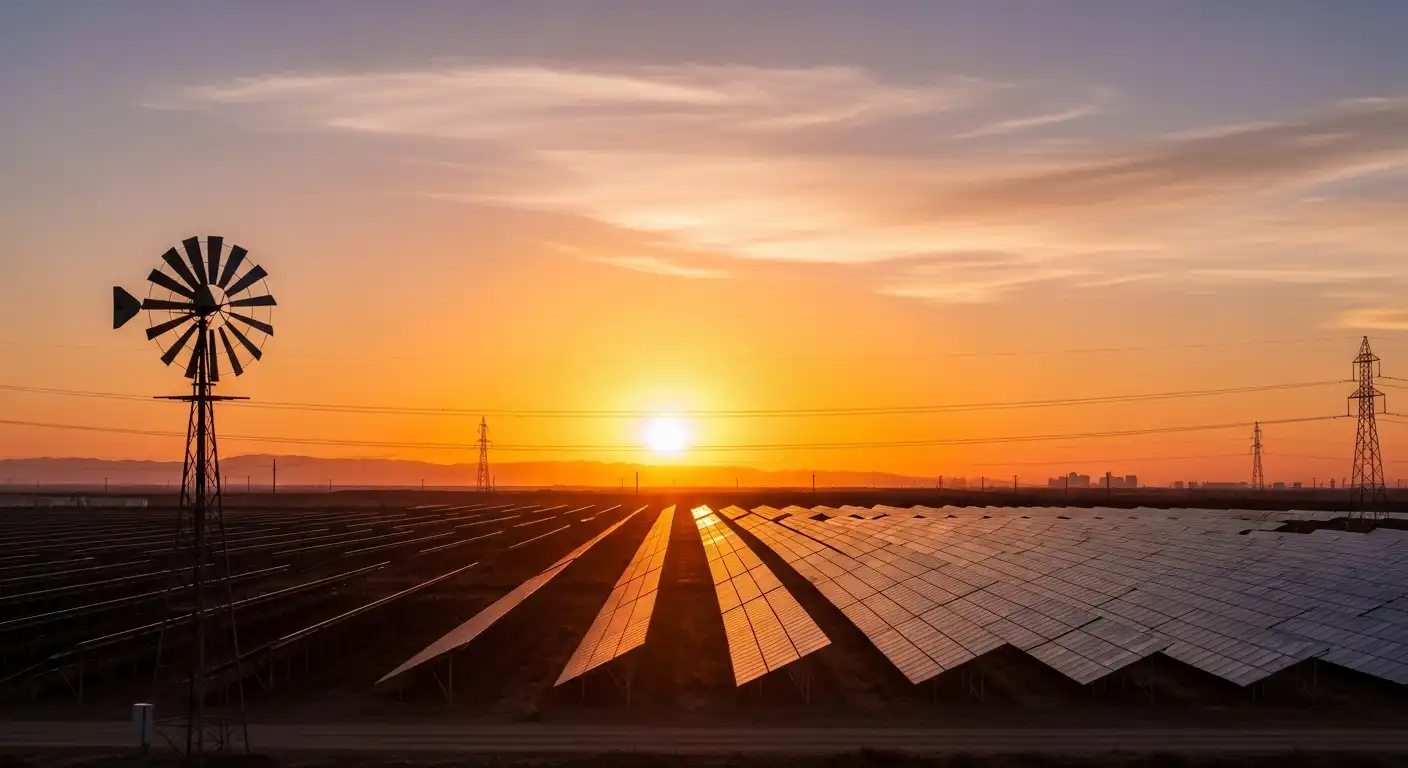
The Chinese government’s top economic planner and energy regulator jointly published a comprehensive new roadmap for the nation’s energy system, revealing a highly pragmatic dual-track approach to decarbonization. The National Development and Reform Commission (NDRC) and the National Energy Administration (NEA) released the 15th Five-Year Plan for Building a New Energy System, laying out the country’s energy goals through 2030. The document confirms two seemingly contradictory positions: China will continue to lead the world in both renewable energy deployment and coal production and consumption, anchoring its economic security in abundant domestic fossil fuels while simultaneously building out a record-shattering green energy network.
This balanced approach represents a major structural shift in how Beijing manages the clean energy transition. While Western nations often debate the difficult tradeoffs between rapid decarbonization and industrial strength, China’s policymakers treat energy security, climate action, and industrial dominance as three sides of the same coin. Confronted with a series of global energy shocks and shipping disruptions in the Middle East earlier this year, China is systematically reducing its reliance on imported crude oil and liquefied natural gas (LNG). By using its vast domestic coal reserves as a reliable safety net, the country aims to insulate its massive industrial base from international market volatility while flooding the world with cheap, subsidized solar panels, wind turbines, and electric vehicles.
The Gargantuan Scale of China’s Coal-to-Chemicals Playbook
A primary reason why China’s coal consumption continues to hover at record levels is the rapid expansion of an obscure, highly strategic industrial sector: the coal-to-chemicals, coal-to-syngas, and coal-to-liquid fuels (CTL) industry. Instead of simply burning coal in traditional, dirty power plants to generate electricity, Chinese state-owned enterprises have built a massive, high-tech industrial segment that gasifies coal to produce synthetic natural gas, diesel, methanol, and other chemical building blocks.
The sheer physical scale of this coal-gasification ecosystem is extraordinary:
- This industrial segment alone consumes a gargantuan 380 million metric tons of coal as feedstock annually for chemical and liquid fuel production.
- If this single, obscure corner of the Chinese coal industry were treated as an independent country, it would rank as the world’s third-largest coal consumer.
- The segment’s annual coal consumption exceeds the total coal usage of the entire United States, Japan, Germany, and other top coal-consuming nations like Indonesia and Turkey, trailing only the rest of the Chinese coal sector and India.
- Under the guidelines of the newly released five-year plan, China intends to double its coal gasification capacity by 2030.
By using domestic coal as a direct substitute for oil and natural gas in key industrial processes, China has successfully reduced its exposure to volatile global commodity markets. This chemical sovereignty allows Chinese manufacturers to maintain stable production costs even during major international crises, giving them a significant competitive advantage over global rivals that remain dependent on expensive, imported petroleum and natural gas.
Decoupling Decarbonization and Energy Security: The 15th Five-Year Plan
The newly released energy plan outlines several ambitious targets for the transition to non-fossil energy, predicting that China will generate half of its electricity from non-fossil fuel sources by 2030, representing a significant increase from the 42.3% baseline target set for 2025. To achieve this, the government plans to increase wind and solar generation to more than 50% of installed capacity, aiming for a massive 2,700 gigawatts (GW) of renewable capacity by 2030, up from 47% at the end of last year.
However, a closer look at the mathematical mechanics of the plan reveals that these positive renewable targets are accompanied by a flexible, accommodating approach to fossil fuels. Because China’s total electricity demand is growing rapidly at approximately 5% annually to support industrial automation, electric vehicles, and massive artificial intelligence data centers, the absolute volume of electricity generated must increase significantly. Under a 50% non-fossil target, the remaining 50% of the electricity mix will still come from fossil fuels, primarily coal.
This means that even as renewable capacity sets new global records, absolute coal-fired electricity generation can still increase by around 10.6% over the period, and the government’s official targets will still be met. Furthermore, the plan’s carbon intensity target is notably conservative, requiring power sector carbon emissions per unit of generation to fall by more than 10% from 2025 levels by 2030. The plan contains no absolute quantitative cap on coal generation or capacity, nor any explicit roadmap for phasing down the fuel, leaving the door wide open for continued coal power growth through the end of the decade.
Reinforcing the Five National Coal Supply Bases
To guarantee that its coal-fired safety net remains fully operational, the Chinese government is doubling down on its domestic mining infrastructure. The new five-year plan explicitly reinforces the country’s five major coal supply bases—located in the resource-rich northern and western provinces, including Shanxi, Inner Mongolia, Shaanxi, and Xinjiang—establishing them as national strategic energy reserves.
This domestic mining push has remained active despite recent industrial setbacks. China’s coal production eased slightly by 0.3% during the first five months of the year, falling to 1.98 billion tons. This minor drop was the result of a temporary slowdown in Shanxi province, where authorities launched a series of strict safety inspections after a tragic mining accident on May 22 left 82 people dead. However, analysts expect coal production to recover rapidly during the second half of the year, putting the country on track to match last year’s record annual output of 4.82 billion tons. By maintaining this massive domestic mining output, China ensures that its data centers, steel mills, and chemical plants have access to a cheap, uninterrupted supply of baseline energy, regardless of global trade disruptions.
The Failure of the Western Decarbonization Model
The pragmatic, dual-track strategy pursued by Beijing offers a stark contrast to the challenges unfolding across much of Europe and North America. In Western countries, the transition to clean energy has frequently been managed through strict, top-down regulatory caps, carbon taxes, and the rapid, forced retirement of coal and natural gas plants before adequate renewable storage and grid infrastructure were ready to take over.
This rapid retirement has left Western grids highly vulnerable to supply bottlenecks, weather volatility, and energy crises, driving up electricity costs for consumers and squeezing industrial profitability. China, by comparison, has prioritized energy security above all else. By keeping its highly reliable coal-fired plants fully operational while aggressively building out its renewable capacity, China has avoided these disruptive power emergencies. This strategy of “building the new before retiring the old” has allowed China to maintain low, stable electricity prices, supporting its massive manufacturing sector and turning the country into the ultimate winner of the global clean-energy transition.
The Double-Edged Sword of Sidelining Natural Gas Imports
One of the most significant strategic benefits of China’s coal-to-chemicals and coal-gasification playbook is its ability to sideline expensive natural gas imports. Over the past several years, the global natural gas market has been characterized by extreme price volatility, with geopolitical conflicts and pipeline disruptions causing fuel costs to spike repeatedly.
During the height of the energy crisis earlier this year, while European nations scrambled to secure liquefied natural gas (LNG) at highly inflated spot prices, China’s domestic coal-gasification network insulated its industries from the shock. Because its factories were powered by cheap, local coal and synthetic gas, state-owned Chinese energy firms were able to take their excess imported LNG cargoes and resell them to desperate buyers in Europe and Asia at a massive premium. This trade arbitrage generated billions of dollars in profits for Chinese firms, demonstrating how a robust, coal-backed domestic energy system can turn a global crisis into a lucrative commercial opportunity.
The Severe Power Demands of the Domestic AI and Industrial Sectors
The urgency surrounding China’s coal-fired safety net is also closely tied to the massive, rapid expansion of its advanced technology and industrial sectors. As the country moves aggressively to automate its manufacturing base and lead the world in artificial intelligence, its daily electricity consumption is experiencing unprecedented growth.
These advanced technology applications consume an extraordinary amount of baseline power:
- The training and running of massive, frontier large language models requires a continuous, uninterrupted supply of high-voltage electricity.
- Meituan recently launched its flagship LongCat-2.0 AI model, which features a massive 1.6-trillion parameters and was trained on a 50,000-chip domestic ASIC cluster, requiring a dedicated, multi-megawatt power supply.
- The country’s massive cloud infrastructure, managed by tech giants like Tencent, Alibaba, and ByteDance—which recently announced a landmark $39 billion data center campus in Brazil—requires highly resilient, constant power.
- Because wind and solar power remain weather-dependent and energy storage systems are still scaling up, coal-fired plants remain the only technology capable of providing the stable, high-volume baseload power necessary to keep these high-tech systems running without interruption.
For Beijing, the choice is clear: maintaining its technological and industrial lead requires prioritizing grid reliability and cheap baseline power over idealistic emission-reduction targets, making coal an indispensable tool for the country’s national security and economic future.
The Structural Shift Toward Localized Clean-Tech Dominance
While the new energy plan’s targets may appear conservative to some international environmental groups, the actual, bottom-up expansion of clean technology in China has consistently outpaced official government forecasts. The country remains the undisputed global leader in green-tech manufacturing, producing over 80% of the world’s solar panels and a massive share of its wind turbines and lithium-ion batteries.
This massive manufacturing scale has created a highly dominant clean-tech ecosystem. By driving down the cost of renewable hardware globally, China has made solar and wind energy highly competitive with traditional fossil fuels, accelerating the global transition. However, this unmatched cost advantage has also made it incredibly difficult for European and U.S. clean-tech manufacturers to compete without heavy, protectionist tariffs. By anchoring its own domestic grid in cheap, reliable coal while exporting low-cost renewable technology to the rest of the world, China is successfully executing a long-term strategy that secures its own domestic energy supply while establishing absolute dominance over the global green economy.
Conclusion
The release of China’s 15th Five-Year Plan for Building a New Energy System highlights a highly sensible, pragmatic approach to the global clean energy transition. By confirming that the country will continue to lead the world in both renewable energy deployment and coal consumption through 2030, the NDRC and NEA have made it clear that energy security remains the absolute cornerstone of national planning. Supported by a gargantuan coal-gasification playbook that consumes 380 million tons of coal annually and reinforced by five major national mining bases, China has built a highly resilient energy safety net that protects its massive industrial and tech sectors from volatile global commodity markets.
While the plan’s conservative carbon intensity targets and the potential for coal-fired generation to rise by 10.6% may disappoint some climate advocates, the strategy of prioritizing grid reliability over speculative emission cuts has proven to be highly successful. As the country continues to build out its 2,700 GW solar and wind capacity and support its high-tech AI infrastructure, its domestic coal-fired baseload will remain the essential foundation driving its economic growth. By treating climate action and industrial strength as two sides of the same coin, China is successfully building a secure, independent, and highly competitive energy system, proving that the nation that controls its own baseline power will ultimately control its technological future.