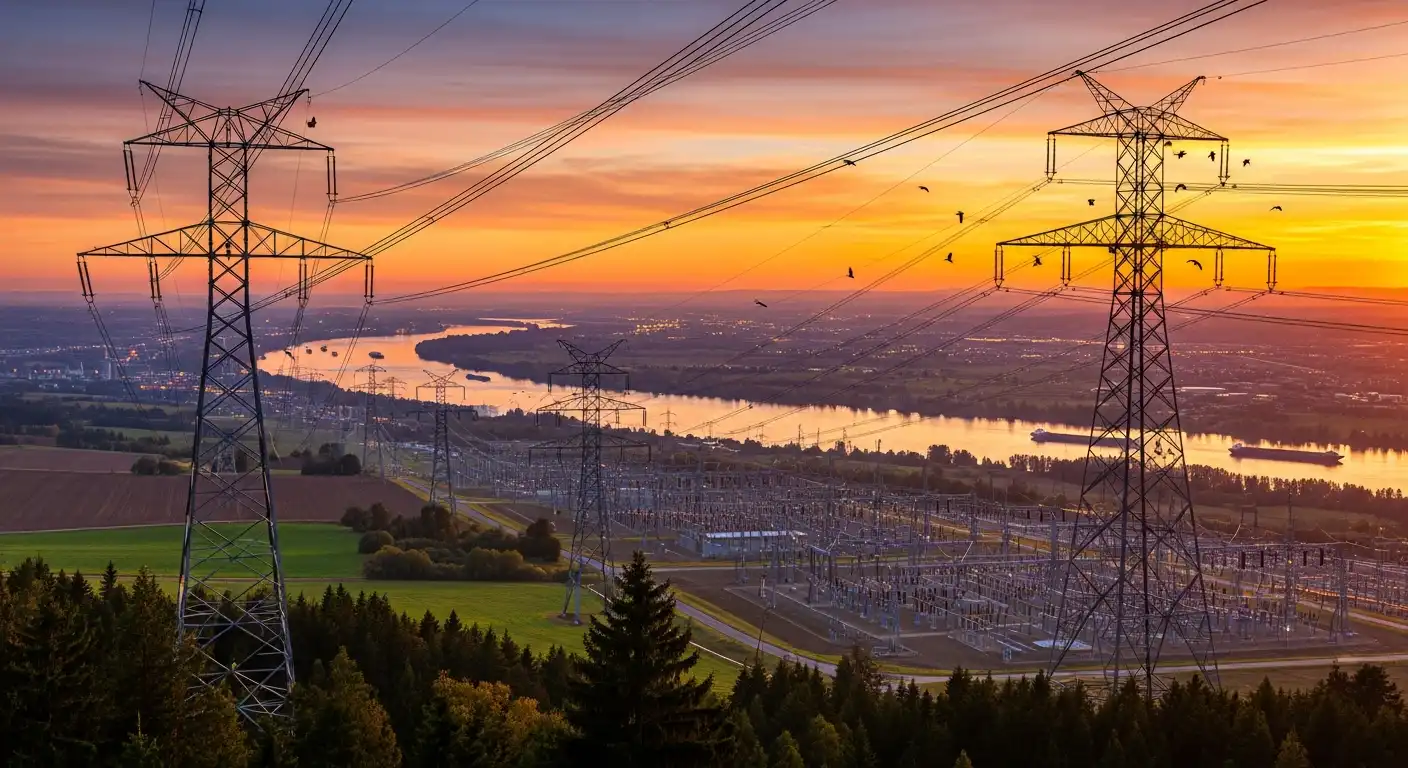
The American energy sector is standing at a critical and highly contentious crossroads. Facing a massive surge in electricity demand and a hostile private financing environment, leaders in the United States coal industry have formally asked the federal government for a financial lifeline. In a direct appeal to the Trump administration, top coal executives and industry lobbying groups are urging Washington to provide federal financing and loan guarantees to keep aging coal power plants operational and to fund the construction of newly designed facilities.
This aggressive lobbying effort represents a significant shift in industrial strategy. For years, fossil fuel advocates championed free-market economics and criticized federal intervention in the energy sector. Now, completely cut off from traditional Wall Street capital, the coal industry views the federal government as its lender of last resort. Industry leaders argue that without immediate government funding, the United States faces a catastrophic shortage of baseload electricity. They point directly to the explosive growth of artificial intelligence data centers, the reshoring of heavy manufacturing, and the rapid electrification of the transportation sector as demand drivers that the current grid simply cannot handle without coal.
The request places the White House in a complex position. The administration campaigned heavily on achieving absolute American energy dominance and removing regulatory burdens for fossil fuel producers. However, utilizing taxpayer dollars to directly finance coal plants puts the government in the business of picking winners and losers in the energy market. It also sets up a fierce battle with environmental groups, natural gas producers, and fiscal conservatives who argue that propping up an economically uncompetitive industry will ultimately leave taxpayers on the hook for billions of dollars in stranded assets.
The Financial Deep Freeze Plaguing the Coal Industry
To understand why the coal sector is begging Washington for cash, one must examine the profound changes that have swept through global capital markets over the past decade. The coal industry is not suffering from a lack of physical resources; the United States holds the largest recoverable coal reserves on the planet, totaling roughly 250 billion tons. The crisis stems entirely from a lack of access to affordable capital.
Running a power generation company is a highly capital-intensive business. Power plant operators rely on commercial banks and institutional bond markets to secure the hundreds of millions of dollars needed to perform routine maintenance, upgrade emission controls, and build new infrastructure. That financial pipeline has completely dried up for coal operators.
ESG Mandates and the Exodus of Private Capital
The primary driver of this capital starvation is the widespread adoption of Environmental, Social, and Governance (ESG) investing criteria across the global financial system. Driven by pressure from institutional shareholders, climate activists, and European regulators, nearly every major commercial bank in the United States and Europe has instituted strict internal policies regarding fossil fuels.
The top six American commercial banks have publicly committed to phasing out corporate lending and underwriting services for companies that generate the majority of their revenue from thermal coal extraction or coal-fired power generation. When a coal operator approaches a traditional bank for a $500 million loan to upgrade a turbine or extend the life of a facility, the bank simply refuses to underwrite the debt.
This financial blockade forces coal companies to seek funding from alternative, unregulated private credit markets. Shadow lenders and private equity firms will provide cash, but they demand exorbitant, double-digit interest rates to compensate for the perceived long-term risk of the asset. Paying 12% to 15% interest on a capital loan destroys the profit margins of a power plant, making it economically impossible for private companies to finance major coal projects on their own.
The Cost of Keeping Legacy Plants Online
The lack of cheap capital is accelerating the retirement of the existing fleet. The average age of a coal-fired power plant in the United States exceeds 45 years. These aging facilities require constant, expensive maintenance to replace degrading boilers, repair cooling towers, and meet baseline safety standards.
When operators calculate the multi-million-dollar cost of these necessary repairs against the high cost of private credit, the math breaks down. Utility executives invariably choose the cheapest path forward, which usually involves decommissioning the coal plant entirely and replacing it with a natural gas facility or a utility-scale solar farm, both of which easily attract low-interest financing from green-focused investment funds. The coal industry argues that federal loans are the only mechanism capable of breaking this financial death spiral and keeping these legacy plants connected to the grid.
Artificial Intelligence and the Unexpected Power Deficit
The coal industry’s request for federal funds relies on a powerful new economic narrative: the artificial intelligence power crunch. For the last twenty years, electricity demand in the United States remained remarkably flat. Energy efficiency improvements in household appliances and commercial buildings offset the nation’s population growth. Utility planners built their entire grid-transition models around this assumption of stagnant demand, confidently scheduling the retirement of massive coal plants.
The generative artificial intelligence boom completely shattered those forecasting models. Technology giants are currently engaged in a massive infrastructure arms race, building sprawling, gigawatt-scale data center campuses across the country to train and run complex language models.
Tech Giants Strain Regional Electrical Grids
The physical power requirements of these new data centers are unprecedented. A traditional cloud computing facility required roughly 10 to 20 megawatts of power. A modern artificial intelligence training campus easily demands between 300 and 1,000 megawatts. This is equivalent to the power consumption of a mid-sized American city.
Grid operators are panicking. PJM Interconnection, the massive regional transmission organization that coordinates the movement of wholesale electricity across 13 states and the District of Columbia, recently issued stark warnings about impending power shortfalls. Northern Virginia, often referred to as “Data Center Alley,” is completely maxed out. Utility companies in Ohio, Texas, and Georgia are turning away commercial tech developers because they simply cannot generate or transmit enough electricity to power the requested facilities.
The coal sector is leveraging this panic. Lobbyists argue that retiring reliable coal plants while the technology sector demands thousands of new megawatts is an act of economic suicide that will permanently surrender American tech supremacy to overseas rivals.
Why Solar and Wind Fall Short for Baseload Demand
Proponents of renewable energy argue that wind and solar farms can easily meet the new demand generated by the technology sector. Coal executives strongly dispute this claim, pointing to the fundamental physical limitations of renewable generation.
Wind and solar power are inherently intermittent. Solar panels produce nothing at night, and wind turbines sit idle during calm weather. Artificial intelligence data centers, however, operate continuously. They run complex computational workloads 24 hours a day, 7 days a week, demanding an absolutely flawless, uninterrupted flow of electricity. A drop in voltage lasting even a few milliseconds can ruin months of expensive algorithmic training data.
While massive lithium-ion battery installations can store excess solar power for use after dark, current grid-scale batteries typically offer only four hours of discharge capacity. They cannot sustain a gigawatt-scale data center through a prolonged, multi-day winter storm or a cloudy week. Coal-fired power plants provide firm, dispatchable baseload power. The operators store months of fuel directly on-site in massive coal piles, completely immunizing the facility against pipeline disruptions or weather anomalies. The industry argues that without federal financing to preserve this baseload capacity, the American electrical grid will face catastrophic, cascading blackouts during extreme weather events.
The Lobbying Blueprint: How Coal Wants Federal Dollars
The coal industry has presented the Trump administration with a highly specific, multi-layered financial blueprint. They are not asking for a vague policy endorsement; they want direct access to the massive pools of federal capital currently controlled by executive branch agencies.
Repurposing the Department of Energy Loan Programs
The primary target of the coal industry’s lobbying effort is the Department of Energy’s Loan Programs Office. The LPO holds tens of billions of dollars in lending authority, granted by Congress to finance highly innovative, large-scale energy infrastructure projects. Over the past several years, the LPO functioned as the primary financial engine for the green energy transition, directing low-interest federal loans to electric vehicle battery manufacturers, advanced solar panel factories, and geothermal energy startups.
Coal executives want the administration to radically repurpose this office. They are asking the Department of Energy to reinterpret its lending mandate to include the preservation and modernization of the fossil fuel fleet. By securing federal loan guarantees through the LPO, coal operators can bypass the hostile private banking sector entirely. A federal loan guarantee transfers the risk of default from private lenders to the American taxpayer. Armed with this government backing, a coal company can secure the capital needed to upgrade a 50-year-old power plant at highly favorable, sub-market interest rates.
The industry also wants access to these funds to construct a new generation of high-efficiency, low-emissions (HELE) coal plants. These advanced facilities operate at much higher temperatures and pressures than legacy plants, extracting significantly more electricity from every ton of coal burned while reducing conventional pollutants. Building a new HELE plant costs upwards of $2 billion, a price tag that is impossible to meet without massive, direct federal underwriting.
National Security and the Defense Production Act
To justify bypassing traditional market economics, the coal sector is framing grid reliability as a matter of absolute national security. Lobbyists are pushing the administration to invoke the Defense Production Act to force the continued operation of critical coal facilities.
The Defense Production Act grants the President broad emergency powers to direct private industrial capacity to support national defense. The industry argues that a reliable electrical grid is the ultimate national security asset. Without continuous power, military installations, financial clearinghouses, and telecommunication networks fail. By declaring a grid emergency under the DPA, the administration could legally mandate that certain coal plants remain online, overriding state-level environmental regulations and forcing regional grid operators to compensate the plants for their vital reliability services.
Environmental and Economic Pushback
The push for federal coal financing faces monumental opposition. Environmental organizations, free-market economists, and natural gas producers are fiercely resisting the initiative, arguing that subsidizing coal is a massive step backward for the country.
Opponents point out that the free market has already spoken on the viability of coal. Over the past 15 years, the United States has retired roughly a third of its coal-fired generation capacity. This shift did not happen strictly because of environmental regulations; it happened because natural gas and renewable energy became significantly cheaper.
Advancements in hydraulic fracturing and horizontal drilling unlocked massive reserves of cheap, domestic natural gas. A modern combined-cycle natural gas plant is cheaper to build, requires fewer staff to operate, and burns much cleaner than a comparable coal facility. Critics argue that forcing taxpayers to subsidize expensive coal plants while the country sits on an ocean of cheap natural gas defies basic economic logic.
The Carbon Capture Cost Barrier
Any attempt to build new coal plants in the United States runs into a massive technological and financial barrier: carbon capture and sequestration. Legal frameworks and public pressure require new fossil fuel facilities to severely limit their greenhouse gas emissions.
Installing carbon capture equipment on a coal plant is a monumentally complex engineering task. The equipment strips carbon dioxide from the exhaust flue before it enters the atmosphere, compresses the gas into a liquid, and pumps it deep underground into permanent geological storage formations.
The financial cost of this technology is staggering. Adding a carbon capture system to a standard commercial power plant adds approximately $1 billion to the total construction cost. It also creates a massive “parasitic load,” meaning the carbon capture equipment consumes up to 20% of the electricity generated by the plant just to run the compression pumps. This ruins the economic efficiency of the facility. Critics argue that asking the federal government to finance this unproven, highly expensive technology at a commercial scale is a reckless gamble with public funds.
Stranded Assets and the Risk to Taxpayers
Fiscal conservatives raise serious concerns about the threat of stranded assets. A stranded asset occurs when a massive infrastructure project loses its economic value long before it pays off its construction debt.
If the federal government loans a coal consortium $2 billion to build a new power plant, that loan requires a 30-year repayment schedule. The energy landscape is changing at a breakneck pace. Battery storage costs drop by double digits every year. Small modular nuclear reactors are advancing rapidly toward commercial deployment. Deep geothermal energy startups are unlocking new, limitless sources of clean baseload power.
If these alternative technologies achieve full commercial scale over the next decade, the power generated by a newly built coal plant will become completely uncompetitive on the wholesale market. The coal plant will fail to generate enough revenue to service its federal debt, leading to a massive corporate default. The American taxpayer will be forced to absorb the loss, paying off billions of dollars in debt for an empty, obsolete power plant.
Global Geopolitics and the American Energy Strategy
The coal industry counters these economic arguments by pointing to the aggressive actions of global geopolitical rivals. Industry leaders argue that the United States is unilaterally disarming its industrial base while competitors rapidly expand their own fossil fuel fleets to dominate the global manufacturing sector.
Watching China and India Build New Coal
The numbers coming out of Asia provide powerful ammunition for the coal lobby. China and India are executing massive, unprecedented expansions of their coal-fired power capacity. Last year alone, the Chinese government approved the construction of over 100 gigawatts of new coal power, initiating construction on dozens of massive new facilities. India is similarly extending the lifespan of its legacy plants and commissioning new builds to support its booming population and industrial output.
These nations recognize that cheap, reliable, and abundant electricity is the absolute prerequisite for rapid economic growth. By building out their coal fleets, China and India ensure that their domestic factories have access to the cheapest possible power, allowing them to underprice American manufacturers on the global export market. The U.S. coal sector argues that the Trump administration must match this aggressive energy buildout or accept a permanent decline in American industrial competitiveness.
Competing in the Heavy Manufacturing Renaissance
The United States is currently attempting a massive industrial renaissance. The federal government has pushed aggressively to reshore semiconductor manufacturing, electric vehicle battery production, and heavy steel forging. Building microchips and smelting steel require immense, continuous volumes of electricity.
If the United States relies entirely on fragile renewable energy networks and unpredictable supply chains to power these new factories, the reshoring effort will fail. Factory owners simply will not invest billions of dollars to build plants in regions where power costs are exorbitant, or grid blackouts are a regular occurrence. The coal industry argues that federal financing for reliable, domestic coal power is the only way to guarantee the cheap electricity required to successfully pull global manufacturing supply chains back within American borders.
The Trump administration faces a defining, highly complex decision. Providing direct federal financing to the coal sector would deliver a massive victory to a loyal political constituency and ensure a short-term abundance of firm baseload power to support the explosive growth of artificial intelligence. However, executing this bailout requires the government to intervene heavily in free-market dynamics, assume billions of dollars in default risk, and ignore the massive technological advancements reshaping the broader energy sector. As grid operators warn of impending power shortages and technology giants demand more electricity, the administration must decide whether the path to American energy dominance requires resurrecting the heavy industry of the past or trusting the market to invent the grid of the future.