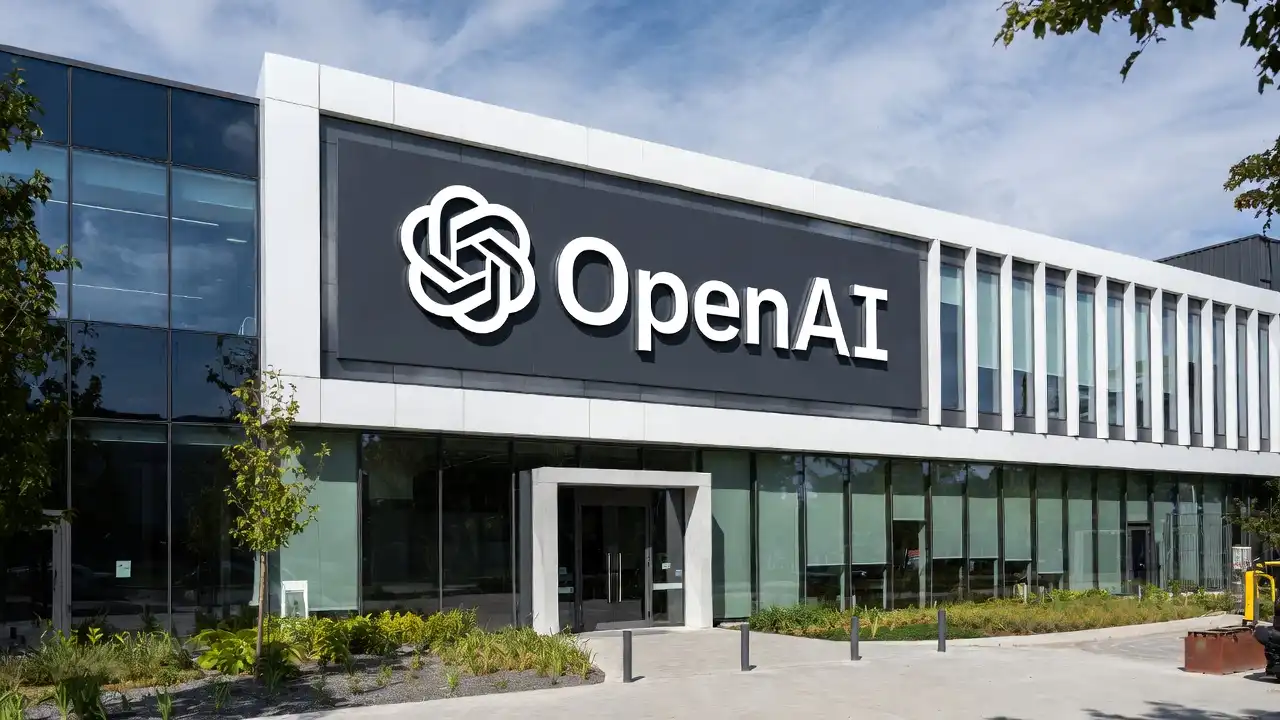
Artificial intelligence research firm OpenAI is executing a major expansion of its European operations, announcing plans to triple its headcount at its designated European Union headquarters in Dublin, Ireland. Under the corporate expansion plan, the San Francisco-based developer will scale its Dublin workforce from approximately 110 employees to over 350 full-time specialists. The rapid hiring drive solidifies Ireland as OpenAI’s operational command center for Europe, the Middle East, and Africa, positioning the company to manage complex regulatory requirements and capture expanding enterprise demand across European commercial markets.
The decision to triple its Dublin footprint arrives as the European Union begins full enforcement of its landmark European Union Artificial Intelligence Act alongside strict oversight under the General Data Protection Regulation and the Digital Services Act. Operating from Dublin places OpenAI in direct proximity to Ireland’s Data Protection Commission, the lead European supervisory authority regulating major multinational technology platforms. By building a robust local workforce composed of regulatory attorneys, data privacy officers, policy experts, trust and safety engineers, and commercial sales executives, OpenAI aims to build a compliant operational foundation across the 27 member states of the European Union.
Beyond regulatory compliance, the expansion reflects rapid commercial growth across European corporate markets. European enterprises, research universities, and public sector institutions are rapidly integrating ChatGPT Enterprise, Team subscriptions, and developer API endpoints into daily operations. Major European corporations—including Spotify, Volvo, BBVA, Sanofi, and Siemens—are deploying OpenAI’s foundation models to automate customer service, accelerate scientific drug discovery, and streamline software engineering workflows. Expanding the Dublin campus ensures OpenAI can deliver localized technical support and enterprise solutions architecture to European clients.
TechGolly provides a detailed analysis of OpenAI’s Dublin expansion, evaluating European Union regulatory compliance frameworks, General Data Protection Regulation enforcement, enterprise software sales strategies, localized trust and safety engineering, Ireland’s technology ecosystem, and the long-term outlook for global artificial intelligence governance.
Unpacking the Dublin Expansion and Core Operational Functions
OpenAI’s decision to scale its Dublin team to 350 employees marks a dramatic acceleration since the company established its initial European footprint. When OpenAI selected Dublin as its first international office outside the United States, the location began with a modest team of 10 employees focused primarily on regional government relations and initial market exploratory work. Expanding the site to 350 positions transforms Dublin into a core operational hub operating alongside OpenAI’s secondary international offices in London, Tokyo, and Singapore.
The expanded workforce in Dublin will cover six primary operational domains:
First, legal compliance and regulatory affairs. A dedicated team of European privacy attorneys and regulatory strategists will manage ongoing dialogue with European Union officials, ensuring that pre-training data curation, model alignment, and API delivery mechanisms comply fully with European statutory laws.
Second, trust and safety engineering. Local safety teams will design, test, and deploy automated content moderation filters and adversarial red-teaming protocols tailored specifically to the cultural, linguistic, and political nuances of European member states.
Third, enterprise commercial sales and account management. Corporate sales directors will partner with European Chief Information Officers to manage multi-million-dollar software licensing agreements and support large-scale enterprise rollouts of ChatGPT Enterprise.
Fourth, developer relations and ecosystem support. Technical solutions architects will assist European software developers, early-stage startups, and independent software vendors in building custom applications on top of OpenAI’s API platform.
Fifth, software engineering and infrastructure support. Software teams will optimize local cloud network latency and manage secure data routing across European data center infrastructure.
Sixth, corporate administrative operations, human resources, and local community engagement initiatives designed to integrate OpenAI deeply into the Irish technology ecosystem.
Navigating the EU AI Act and GDPR Privacy Mandates
The primary operational imperative driving OpenAI’s expansion in Dublin is navigating the most stringent digital governance framework in the world. The European Union has established itself as the global pioneer in technology regulation, enacting comprehensive laws that impose strict legal duties on artificial intelligence developers.
The European Union Artificial Intelligence Act establishes a risk-based classification system for artificial intelligence models, imposing special mandatory obligations on General-Purpose AI models that exceed specific floating-point computation thresholds during pre-training. Developers of systemic-risk foundation models must maintain detailed technical documentation, publish comprehensive summaries of copyright-protected training data, provide proof of continuous safety testing, and report serious cybersecurity incidents to the European AI Office within strict statutory timelines.
The financial liabilities for non-compliance under European digital laws are staggering. Violations of the European Union AI Act carry administrative fines reaching up to 35 million euros ($38 million USD) or 7% of a parent company’s total annual worldwide turnover, whichever figure is higher. For an organization operating on a multi-billion-dollar annual recurring revenue trajectory, maximum potential fines represent severe balance sheet exposure, making proactive regulatory compliance an absolute corporate priority.
Simultaneously, OpenAI must maintain strict compliance with the General Data Protection Regulation (GDPR), enforced primarily by Ireland’s Data Protection Commission. European data protection authorities have raised complex legal questions regarding how generative language models collect, store, and process personal data scraped from the public internet.
To satisfy European privacy regulators, OpenAI’s Dublin legal team must enforce technical safeguards that guarantee European citizens can exercise their statutory data rights. This includes building automated mechanisms that allow individuals to object to personal data processing, opt out of having their private data used for future model training runs, and request the correction or deletion of inaccurate personal information generated by artificial intelligence models.
Enterprise AI Monetization Across European Corporate Markets
While regulatory compliance forms a defensive motivation for the expansion, commercial software monetization provides an equally compelling offensive driver. European enterprise demand for advanced reasoning models and automated software tools has reached historic levels.
Commercial adoption metrics confirm that over 1 million individual business seats have been deployed across European enterprise organizations utilizing ChatGPT Enterprise, Team, and Edu subscription tiers. European business leaders are moving rapidly past initial experimental testing, integrating artificial intelligence endpoints directly into core operational software stacks.
Major European corporate accounts showcase the diversity of enterprise deployment across the continent:
In the financial services sector, Spanish banking giant BBVA deployed thousands of ChatGPT Enterprise licenses across its global workforce. Bank employees utilize specialized AI assistants to analyze financial market trends, execute automated compliance documentation audits, and process complex commercial loan applications, cutting administrative processing times by up to 50%.
In the healthcare and pharmaceutical sector, French healthcare giant Sanofi integrated OpenAI’s frontier reasoning models directly into its research and development laboratories. Pharmaceutical research scientists utilize custom AI workflows to analyze biomedical literature, predict molecular interactions, and accelerate the identification of candidate chemical compounds for early-stage drug trials.
In the industrial automotive sector, Sweden’s Volvo Cars partnered with OpenAI to build next-generation, in-cabin voice interfaces and customer service platforms, enabling drivers to interact with vehicle systems using natural, conversational language.
Establishing a 350-person operational team in Dublin allows OpenAI to deploy dedicated enterprise account management, technical solutions architects, and specialized security engineering teams directly to European client sites. Providing localized support helps corporate technology leaders resolve complex data residency questions, configure single sign-on security protocols, and ensure that enterprise workflows comply with local European labor union regulations.
Trust and Safety Engineering: Localized Red-Teaming and Content Moderation
Deploying generative artificial intelligence systems across 27 European member states presenting 24 official languages requires highly specialized trust and safety infrastructure. A safety filter or content moderation layer that functions effectively in English may fail to detect subtle hate speech, political disinformation, or cultural slurs when translated into Hungarian, Finnish, or Greek.
OpenAI’s expanded Dublin facility will house a dedicated Trust and Safety Engineering Center focused specifically on multilingual safety alignment and localized adversarial red-teaming. Safety engineers will collaborate with European academic research institutions, linguistic experts, and cybersecurity organizations to subject pre-release models to rigorous stress testing across all official European languages.
A primary focus for the Dublin trust and safety team is mitigating election interference and digital deepfakes. With European democratic processes under continuous threat from state-sponsored disinformation campaigns, OpenAI enforces strict policy guardrails that prevent its generative models from being used to create deceptive political deepfakes, build automated propaganda bots, or impersonate political candidates.
Furthermore, the Dublin safety team will manage compliance with the European Union Digital Services Act, which requires digital service providers to implement robust notice-and-action mechanisms for reporting illegal online content, provide transparent algorithmic auditing tools to independent researchers, and execute mandatory risk assessments covering systemic societal harms.
Why Ireland Remains the Tech Capital of Europe
OpenAI’s decision to select Dublin for its expanded European headquarters reinforces Ireland’s long-standing position as the undisputed technological and digital capital of Europe. For over four decades, the Republic of Ireland has successfully executed an international industrial strategy designed to attract global technology, pharmaceutical, and financial services leaders.
Dublin’s Silicon Docks district hosts the European headquarters for nearly every major American technology titan, including Google, Meta, Apple, Microsoft, TikTok, Stripe, and Salesforce. Co-locating inside an established global technology hub delivers immediate operational advantages for OpenAI:
First, access to an experienced, highly educated, and multilingual international talent pool. Decades of corporate investment by global tech firms have created a dense ecosystem of experienced software engineers, sales directors, data privacy attorneys, and compliance managers fluent in multiple European languages.
Second, Ireland’s strategic position as the primary English-speaking, common-law jurisdiction within the European Union following the United Kingdom’s exit from the European trade bloc. Operating inside an English-speaking country operating under a familiar common-law legal tradition simplifies corporate governance for American management teams while retaining unrestricted commercial access to the European Single Market.
Third, a stable, business-friendly tax and regulatory environment. Ireland maintains a 15% corporate tax rate for large multinational enterprises, operating in full compliance with the OECD international tax agreement, while providing long-term fiscal predictability for corporate capital investments.
Fourth, the active support provided by IDA Ireland, the state agency responsible for attracting foreign direct investment. IDA Ireland works closely with expanding technology companies, streamlining corporate registration processes, assisting with commercial real estate selection, and facilitating strategic partnerships with local Irish universities.
The Competitive Battle against European AI Champions: Mistral and Aleph Alpha
OpenAI’s aggressive expansion in Dublin occurs amidst an intensifying competitive battle for dominance in the European software market. As American tech companies expand across Europe, domestic European artificial intelligence developers are mounting a determined challenge, advocating for European digital sovereignty and open-weights technology.
Leading domestic European competitors—most notably France’s Mistral AI and Germany’s Aleph Alpha—have captured significant market share and institutional backing by offering high-performance open-weights models and specialized sovereign cloud solutions. European competitors emphasize that storing data locally on domestic European servers and utilizing open model weights protects European businesses from foreign jurisdiction oversight and cloud vendor lock-in.
European national governments, led by France and Germany, have championed “Sovereign AI” initiatives, encouraging state agencies and domestic enterprises to prioritize European-developed technology platforms for critical national infrastructure projects.
To counter these sovereign data arguments, OpenAI is leveraging its deep strategic partnership with Microsoft. OpenAI provides European enterprise customers with the option to run ChatGPT Enterprise and API workloads through Microsoft Azure’s local European data center regions located in Ireland, Germany, France, and Sweden. Storing customer data at rest within European Union borders ensures that European businesses can deploy OpenAI’s state-of-the-art models while maintaining strict compliance with national data localization mandates.
Strategic Outlook for Global AI Operations into the Late 2020s
OpenAI’s decision to triple its Dublin workforce to 350 employees marks the beginning of a mature, globally distributed corporate operational structure. As artificial intelligence transitions from early scientific discovery into a ubiquitous utility powering global commerce, major AI laboratories must operate as complex multinational enterprises with deep operational roots across major global economic regions.
Looking forward through the late 2020s, OpenAI’s Dublin facility will likely evolve beyond administrative, legal, and sales functions to become a primary research and development hub for artificial general intelligence. Building dedicated software engineering teams in Dublin allows OpenAI to tap into European scientific talent in mathematics, physics, and computer science, building a 24-hour global research and development cycle that connects San Francisco, Dublin, and Tokyo.
From a corporate governance perspective, the Dublin expansion establishes a permanent institutional bridge between Silicon Valley technology innovation and European regulatory philosophy. By embedding hundreds of compliance officers, ethics researchers, and safety engineers inside the European legal regulatory heartland, OpenAI ensures that its future model architectures will be engineered with privacy, transparency, and safety integrated directly into base code weights.
Ultimately, OpenAI’s $1 billion-plus revenue expansion across Europe proves that strict digital regulation and rapid commercial growth can coexist successfully. By committing the financial resources needed to build localized trust, enforce strict data privacy safeguards, and deliver verifiable business value to European enterprises, OpenAI is constructing the physical and legal infrastructure required to power the global artificial intelligence economy for decades to come.
Key Takeaways for Tech Executives, Regulators, and Investors
The tripling of OpenAI’s Dublin headquarters offers vital strategic lessons for corporate decision-makers, software architects, legal counsel, and technology investors worldwide.
First, regulatory compliance must be treated as a core growth strategy. Technology enterprises expanding globally cannot view international regulations as secondary hurdles; establishing dedicated legal, privacy, and safety teams directly inside target regulatory jurisdictions is essential for insulating operations against crippling administrative fines.
Second, localized enterprise support is necessary for enterprise SaaS scaling. To convert major international corporations into multi-million-dollar software subscribers, artificial intelligence providers must deploy localized solutions architects, enterprise sales directors, and technical support teams capable of addressing regional compliance and language requirements.
Third, trust and safety engineering requires deep cultural and linguistic localization. Safety layers and alignment models must be stress-tested by native-speaking red-teamers to detect localized disinformation, cultural sensitivities, and security vulnerabilities across international markets.
Finally, Ireland’s position as the premier European technology hub remains unshakable. Organizations seeking a stable, talent-rich, and compliant operational gateway to the European Union market will continue to select Dublin as their primary strategic launchpad for European, Middle Eastern, and African expansion.