

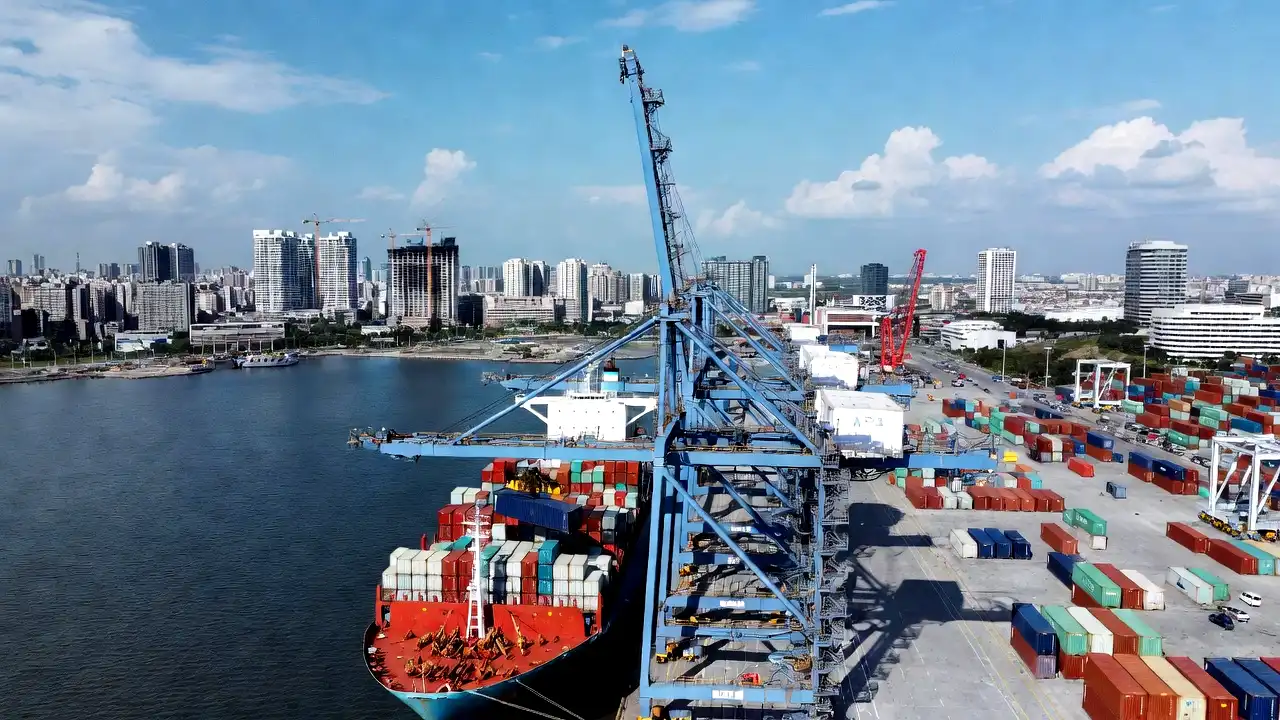
Brazil and South Korea have formally agreed to advance negotiations on a landmark free trade agreement between South Korea and the Mercosur economic bloc, marking a major step forward in establishing a high-volume commercial corridor across the Pacific. The diplomatic breakthrough, championed by Brazilian President Luiz Inacio Lula da Silva and South Korean leadership, aims to connect South Korea’s high-tech manufacturing economy directly with Mercosur’s $3.2 trillion economic bloc comprising Brazil, Argentina, Uruguay, Paraguay, and Bolivia.
The decision to fast-track trade talks comes at a crucial moment for global commerce. As rising import tariffs, supply chain fragmentation, and protectionist trade walls in North America and Western Europe create friction for international business, major emerging economies are actively building alternative multi-polar trade partnerships. Annual bilateral trade between Brazil and South Korea currently hovers near $12 billion, but economic trade modeling suggests that a comprehensive trade deal could expand total trade volumes past $20 billion over the next five years.
The strategic alignment between South Korea and Mercosur rests on complementary economic strengths. South Korea requires secure, long-term access to critical energy transition minerals—specifically lithium, nickel, cobalt, and high-grade iron ore—alongside stable agricultural food imports to support its domestic industrial base. In return, South American nations seek high-tech foreign direct investment, semiconductor technology transfers, advanced automotive manufacturing facilities, and affordable digital electronics to modernize regional industrial infrastructure.
TechGolly provides a detailed trade and technology analysis of the Mercosur and South Korea trade deal, evaluating critical mineral supply chains, electric vehicle manufacturing expansions, semiconductor packaging investments, agricultural tariff reductions, and global trade realignments.
Unpacking the Mercosur-South Korea Trade Architecture
The agreement to advance negotiations revives an ambitious trade framework that previously faced delays due to changing political administrations and domestic sector resistance. By leveraging Brazil’s rotating presidency of Mercosur, President Lula da Silva has prioritized finalizing trade agreements with major Asian manufacturing powers, positioning Latin America as an indispensable trade partner in the global green energy transition.
The proposed free trade agreement establishes a comprehensive legal framework covering tariff elimination on physical goods, intellectual property protections, service sector liberalizations, government procurement access, and streamlined customs clearance protocols. Under the proposed tariff schedule, Mercosur member states will gradually eliminate or reduce import duties—which currently reach up to 25%—on South Korean high-tech imports, including microprocessors, telecommunications equipment, precision industrial machinery, and automotive components.
In exchange, South Korea will reduce import tariffs and quota restrictions on South American agricultural commodities, industrial raw materials, and refined metals. Phasing out trade barriers will lower landing costs for South Korean industrial exporters seeking market share across South America’s 300 million consumers, while providing Mercosur producers with preferred access to Asia’s fourth-largest economy.
Furthermore, the trade architecture incorporates explicit bilateral investment protection mechanisms. By establishing transparent legal standards and dispute resolution systems, the agreement provides South Korean conglomerates with the corporate confidence required to commit billions of dollars in long-term greenfield industrial investments across Brazil, Argentina, and regional member states.
Critical Minerals and the EV Battery Supply Chain
The primary strategic imperative driving South Korea’s eager participation in the Mercosur trade deal is securing an uninterrupted supply of critical minerals essential for its global battery and electric vehicle industries.
South Korea hosts three of the world’s largest lithium-ion battery manufacturers: LG Energy Solution, Samsung SDI, and SK On. Together, these battery giants supply a substantial share of global electric vehicle battery cells to major automakers in North America, Europe, and Asia. However, South Korean battery makers face severe vulnerability due to their heavy reliance on foreign critical mineral refining, making supply chain diversification an urgent national security priority.
The Mercosur economic bloc encompasses some of the richest critical mineral reserves on Earth. Argentina and Bolivia form a core part of the South American “Lithium Triangle,” which holds over 50% of the world’s known salt-brine lithium resources. Simultaneously, Brazil possesses vast, unexploited deposits of battery-grade nickel, rare earth elements, manganese, and high-purity iron ore required for green steel production and permanent magnet manufacturing.
Securing direct off-take agreements and joint-venture mining concessions inside Mercosur nations allows South Korean battery manufacturers to bypass foreign refining bottlenecks. South Korean firms are committing over $2.5 billion in direct investments to construct localized lithium extraction facilities and chemical refining plants in Argentina and Brazil. Refining battery-grade chemical salts locally ensures that South Korean battery makers satisfy international sourcing mandates while securing low-cost raw materials for future battery cell production.
Automotive Expansion: Hyundai and Advanced Mobility in Latin America
Beyond raw critical minerals, the Mercosur-South Korea trade deal will transform South America’s automotive and advanced mobility ecosystem, accelerating the transition from traditional internal combustion engines toward electric and hybrid vehicles.
South Korean automotive titan Hyundai Motor Group has identified Brazil as its operational launchpad for South American expansion. Hyundai announced a massive $1.1 billion strategic investment program in Brazil through 2032, focused on expanding its primary manufacturing complex in Piracicaba, Sao Paulo. The investment directs capital toward developing localized green hydrogen technologies, flexible-fuel hybrid engines, and pure electric vehicle assembly lines tailored for Latin American driving conditions.
The reduction of import tariffs on advanced automotive sub-assemblies and microcontrollers under the Mercosur trade framework delivers immediate operational benefits for Hyundai and its tier-one supplier network. Importing specialized electric drive units, battery management systems, and power semiconductors at zero or reduced tariff rates lowers total vehicle assembly costs, allowing Hyundai to price electric and hybrid models competitively against traditional gasoline vehicles.
This strategic expansion is particularly timely as Chinese electric vehicle giants, led by BYD and Great Wall Motor, execute aggressive manufacturing expansions across Brazil. BYD acquired a massive industrial complex in Bahia, spending over $600 million to build local electric vehicle assembly lines, battery processing facilities, and electric bus factories.
The competition between South Korean and Chinese automakers is triggering an industrial modernization wave across South America. As global auto giants build local manufacturing supply chains, South America is evolving from a passive consumer of imported vehicles into an active regional manufacturing hub capable of exporting affordable clean mobility vehicles across Latin America and Africa.
Semiconductor Technology Transfer and Local High-Tech Manufacturing
A secondary, highly transformative component of the bilateral trade talks involves expanding South Korea’s semiconductor footprint and technology transfer programs across Mercosur nations.
South Korea is universally recognized as a global semiconductor powerhouse, commanding over 60% of the global high-bandwidth memory (HBM) chip market through Samsung Electronics and SK Hynix. In contrast, Latin American nations have historically functioned as net importers of finished microchips, leaving regional electronics assembly plants vulnerable to global semiconductor supply shortages.
Under the framework of the trade negotiations, South Korea and Brazil are establishing joint semiconductor research centers and technical training programs. South Korean tech firms are evaluating joint-venture investments in local semiconductor packaging, memory module assembly, and testing facilities in Brazil’s technology hubs in Sao Paulo and the Manaus Free Trade Zone.
Establishing local semiconductor testing and packaging facilities provides Mercosur with foundational microelectronics processing capability. Localizing memory module assembly ensures a steady supply of microcontrollers and memory chips for domestic automotive plants, consumer electronics factories, and 5G telecommunications infrastructure, reducing regional vulnerability to transpacific shipping disruptions.
Agricultural Security: Food Commodities and Tariff Deductions
While critical minerals and semiconductors dominate high-tech headlines, the agricultural trade dimension represents the foundational economic balance holding the Mercosur-South Korea deal together.
South Korea operates one of the most resource-constrained agricultural sectors in the developed world. Due to mountainous geography and limited arable land, South Korea relies on foreign imports for over 70% of its total food and agricultural requirements to feed its 51 million citizens. Ensuring a stable, affordable, and geographically diversified supply of food commodities is a top national priority for government policy makers in Seoul.
Mercosur stands as the premier agricultural export power on the planet. Brazil is the world’s largest exporter of soybeans, green coffee, sugar, beef, and commercial poultry, while Argentina ranks among the top global exporters of corn, wheat, and processed agricultural oils.
Under the trade agreement, South Korea will systematically lower high import tariffs and expand tariff-rate quotas on Mercosur agricultural products. Lowering import duties on South American beef, poultry, pork, and grains delivers an immediate financial benefit to South Korean consumers, lowering retail grocery prices and mitigating food price inflation caused by global climate volatility and shipping disruptions.
To overcome historic opposition from domestic South Korean farming associations, trade negotiators structured agricultural tariff reductions across extended 10-to-15-year implementation windows. Phasing in tariff reductions gradually provides domestic farmers with time to adapt, while guaranteeing Mercosur exporters a growing, long-term market share in East Asia.
Diversifying Beyond Western Trade Barriers and Tariff Walls
The acceleration of the Mercosur-South Korea trade deal reflects a deliberate strategic calculation by South American leadership to insulate their export-driven economies from rising Western trade protectionism.
Over recent years, Latin American exporters faced mounting commercial friction in traditional Western markets. In the United States, permanent statutory tariffs under Section 301 and Section 232 trade rules imposed baseline import duties of 10% to 12.5% on physical merchandise, alongside 25% to 50% tariffs on steel and industrial components. Simultaneously, the European Union introduced complex environmental trade regulations, including the Corporate Sustainability Due Diligence Directive and anti-deforestation import rules, creating severe administrative compliance hurdles for South American agricultural and forestry exporters.
In response to Western trade barriers, President Lula da Silva’s administration deployed aggressive economic diplomacy to expand commercial access across Asia, the Middle East, and Africa. To defend domestic exporters against international trade shocks, Brazil also launched a massive 18.5 billion reais ($3.66 billion) state credit package under its “Brasil Soberano” initiative, supplying low-interest working capital and debt refinancing to tariff-impacted manufacturing and agricultural firms.
Advancing the Mercosur-South Korea trade deal complements these domestic economic defense programs. By securing preferential trade access to South Korea’s affluent consumer market and advanced industrial supply chains, Mercosur establishes a reliable commercial anchor that compensates for declining access to traditional Western export markets.
Strategic Outlook for Global Trade Realignment and Multi-Polar Commerce
The formal advancement of the Mercosur-South Korea free trade agreement marks a pivotal milestone in the permanent realignment of global trade architecture.
Looking forward through the late 2020s and into the 2030s, the international trading system is moving away from single-region, Western-dominated trade loops toward a multi-polar network of high-volume transpacific and South-South commercial alliances.
The successful execution of the Mercosur-South Korea deal will establish a powerful precedent for regional trade integration. Observing the commercial benefits of the South Korean agreement, other major Asian economies—including Japan, India, and the United Arab Emirates—are accelerating their own bilateral trade negotiations with Mercosur member states.
This transpacific trade integration fundamentally alters global industrial geography:
First, critical energy transition minerals extracted in South America will flow directly to Asian processing hubs, powering global electric vehicle and clean technology manufacturing.
Second, advanced Asian microelectronics, industrial robotics, and clean mobility vehicles will enter South American markets at low tariff rates, driving digital transformation across Latin American agriculture, mining, and manufacturing sectors.
Third, high-volume agricultural trade between Mercosur and Asia will establish a stable global food security network, insulating developing nations from localized weather shocks and geopolitical conflicts.
By linking South American natural resource wealth with Asian technological capabilities, Brazil, South Korea, and their regional partners are constructing the physical and digital trade infrastructure that will define global commerce for decades to come.
Key Takeaways for Tech Executives, Auto Leaders, and Commodity Traders
The advancement of the Brazil-South Korea Mercosur trade deal delivers vital strategic insights for corporate decision-makers, automotive executives, technology architects, and international commodity investors.
First, global supply chain resilience requires active geographic diversification. Corporate leadership can no longer rely exclusively on North American or European trade corridors; building direct commercial ties with emerging transpacific trade networks is essential for securing critical raw materials and expanding market share.
Second, critical mineral security dictates electric vehicle manufacturing leadership. Automotive and battery executives must secure long-term equity partnerships and off-take agreements in resource-rich nations like Argentina, Brazil, and Bolivia to guarantee access to high-purity lithium, nickel, and iron ore.
Third, regional manufacturing hubs deliver essential competitive advantages. Automakers and electronics manufacturers that invest in local assembly facilities inside major economic blocs like Mercosur eliminate import tariff friction, satisfy local content requirements, and capture dominant market share across expanding consumer economies.
Finally, multi-polar trade alliances are creating new avenues for economic growth. Organizations that proactively align capital allocation with emerging transpacific trade corridors will navigate global protectionist headwinds and capture sustained commercial success in the evolving global economy.






