

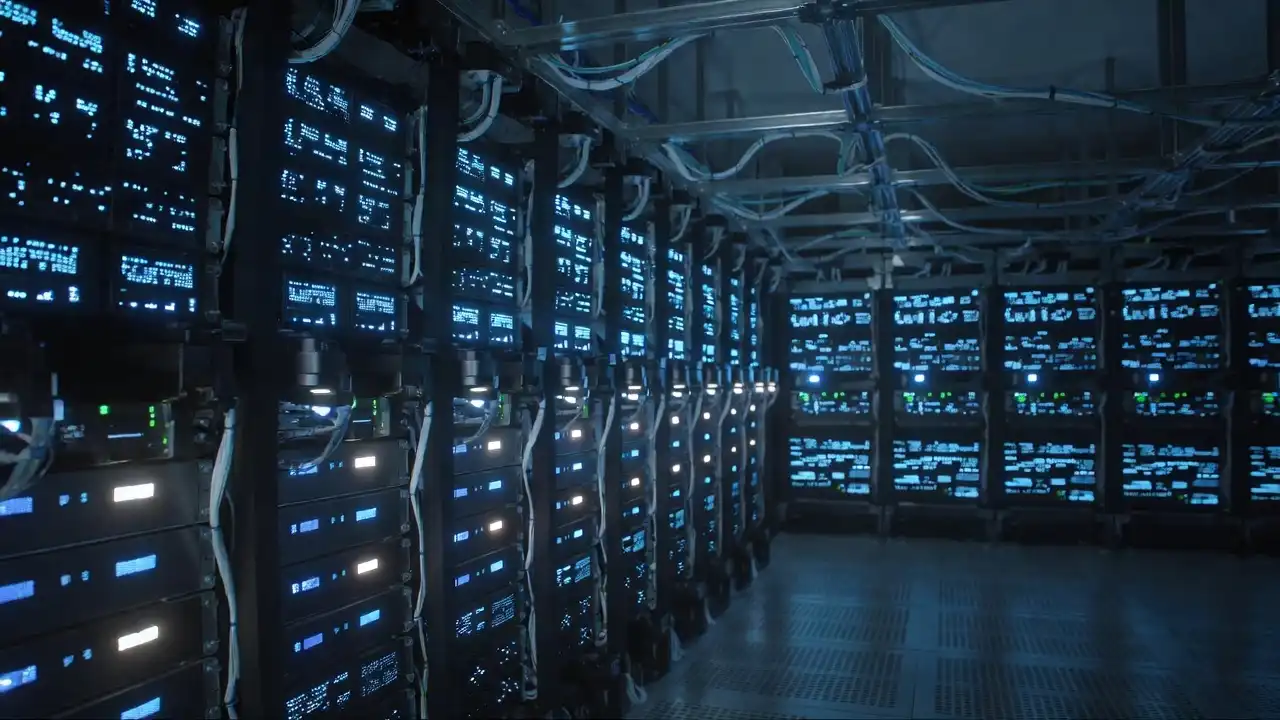
In an unprecedented regulatory move that underscores the physical crisis facing North American electrical infrastructure, PJM Interconnection—the nation’s largest electrical grid operator, serving 65 million people across 13 states and Washington, D.C.—is preparing to launch an emergency power auction to secure urgent electricity reserves. The emergency capacity procurement strategy is designed to prevent widespread grid instability and localized blackouts caused by the explosive power demand of gigawatt-scale artificial intelligence data centers overlapping with extreme summer heatwaves featuring temperatures exceeding 100°F.
The decision to execute a special, out-of-cycle emergency power auction reflects the total breakdown of traditional long-term utility planning models under the weight of the artificial intelligence supercycle. In its standard annual capacity auction, PJM experienced a historic financial shock as clearing prices exploded by over 800% to hit $269.92 per megawatt-day, surging from $28.92 per megawatt-day in the prior auction cycle. In heavily constrained data center corridors in Northern Virginia and central Ohio, capacity prices hit statutory maximum caps, signaling that regional power reserves have been exhausted.
To address the immediate capacity deficit, PJM is filing emergency regulatory motions with the Federal Energy Regulatory Commission to execute a specialized reliability auction. The emergency framework will allow the grid operator to procure non-traditional power capacity, pay industrial manufacturers to voluntarily curtail electricity usage, issue Reliability Must-Run contracts to keep aging fossil fuel plants online past scheduled retirement dates, and fast-track behind-the-meter power generation partnerships with Big Tech hyperscalers including Microsoft, Amazon Web Services, Alphabet, and Meta Platforms.
TechGolly provides a detailed analysis of PJM’s emergency power auction, evaluating regional grid capacity deficits, capacity market price spikes, data center power density requirements, heavy equipment supply chain shortages, behind-the-meter nuclear deals, and the long-term economic impact on American utility ratepayers.
Unpacking PJM’s Emergency Power Auction Framework
To understand why PJM Interconnection is deploying an emergency capacity auction, energy strategists and corporate executives must examine the operational mechanics of wholesale capacity markets. PJM operates the high-voltage transmission grid spanning Delaware, Illinois, Indiana, Kentucky, Maryland, Michigan, New Jersey, North Carolina, Ohio, Pennsylvania, Tennessee, Virginia, West Virginia, and the District of Columbia.
Under its standard Reliability Pricing Model, PJM conducts annual capacity auctions three years in advance to guarantee that power generation companies maintain sufficient reserve margins to satisfy projected regional electricity demand. Power plant operators submit competitive bids specifying the price per megawatt-day required to keep their facilities operational and ready to generate power on demand.
However, PJM’s traditional three-year planning window was completely overwhelmed by the unprecedented construction speed of artificial intelligence data centers. A major technology enterprise can acquire real estate, construct a liquid-cooled server hall, and install thousands of specialized processing chips in 18 to 24 months. In contrast, electric utilities require 4 to 7 years to execute regional grid impact studies, build new high-voltage transmission lines, and construct replacement baseload power plants.
This timeline mismatch created an immediate, multi-gigawatt physical deficit in PJM’s capacity reserve margins. Under the emergency auction proposal submitted to federal regulators, PJM will establish short-term procurement mechanisms to incentivize power producers to bring dormant generating units back online, install modular natural gas peaking turbines, and deploy utility-scale battery energy storage systems within compressed 12-to-18-month execution windows.
Furthermore, the emergency auction allows PJM to offer lucrative Reliability Must-Run financial contracts to power generation companies that had previously announced plans to decommission older coal and natural gas facilities. By guaranteeing fixed monthly capacity payments to plant operators, PJM can legally compel aging fossil-fuel power plants to continue operating, providing vital baseload electricity until permanent transmission lines and next-generation power plants are completed.
The Northern Virginia and Ohio Data Center Power Concentration
The geographic epicenter driving PJM’s emergency power auction is an intense concentration of artificial intelligence data center development in Northern Virginia and central Ohio.
Northern Virginia’s “Data Center Alley”—spanning Loudoun, Prince William, and Fairfax counties—serves as the world’s highest-density data center market, handling an estimated 70% of global daily internet traffic. Regional electric utility Dominion Energy Virginia projects that data center power demand in its service territory will expand by over 15,000 megawatts over the next decade, effectively doubling the utility’s total peak historical electricity load.
Simultaneously, central Ohio around Columbus has emerged as a major secondary data center hub, with technology hyperscalers purchasing thousands of acres of industrial real estate. Regional utility AEP Ohio informed state utility regulators that data center electricity demand in central Ohio is projected to surge from 1,000 megawatts to over 5,000 megawatts by 2030.
The electrical power draw demanded by artificial intelligence training clusters differs fundamentally from traditional commercial real estate. A single gigawatt-scale artificial intelligence data center campus draws 1,000 megawatts of continuous, non-interruptible electricity 24 hours a day, 365 days a year—an electricity load equivalent to powering 800,000 residential homes. Superimposing continuous 1,000-megawatt data center draws over extreme 100°F+ summer residential air conditioning peaks exhausts local transmission line capacity, forcing grid operators to deploy emergency intervention measures.
The Financial Fallout: 800 Percent Price Hikes and Ratepayer Impact
The severe physical capacity shortage inside PJM’s footprint is generating immediate, multi-billion-dollar financial repercussions across regional wholesale and retail electricity markets.
In PJM’s recent base residual capacity auction, total clearing costs surged from $2.2 billion in the previous auction up to $14.7 billion. The 800% increase in capacity clearing prices means that regional electric utilities must pay billions of dollars in additional capacity reservation fees to power plant operators to guarantee grid reliability for upcoming operating years.
Under established state public utility regulations, electric utilities pass capacity auction expenses directly through to end-use electricity consumers. Financial modeling published by consumer advocacy organizations indicates that residential homeowners, small business owners, and non-tech industrial factories across PJM’s 13-state region face monthly utility bill increases of 15% to 30% starting in upcoming billing cycles.
The prospect of massive utility bill increases is triggering severe political and regulatory backlash across state capitols in Virginia, Ohio, Maryland, and Pennsylvania. State Public Utility Commissions and state attorneys general are organizing formal legal challenges before the Federal Energy Regulatory Commission, demanding investigations into capacity market rules and arguing that private technology corporations should bear 100% of the cost of dedicated electrical infrastructure rather than shifting expenses onto household ratepayers.
To prevent cost-shifting, state utility regulators are adopting protective utility contracting rules. Utility commissions in Virginia and Ohio are ordering utilities to create specialized high-density load customer classes for data centers. These special utility contracts require technology companies to pay upfront capital guarantees, commit to long-term 10-to-15-year minimum-take power purchases, and cover the full construction cost of dedicated substations and high-voltage transmission lines.
Big Tech’s Response: Behind-the-Meter Power and Nuclear Off-Take Agreements
Recognizing that public utility grid transmission queues cannot deliver electricity fast enough to support artificial intelligence expansion, major technology hyperscalers are deploying corporate capital to build private, off-grid power infrastructure and secure dedicated zero-carbon baseload energy.
A rapidly growing trend among data center developers inside PJM territory is behind-the-meter generation. Rather than waiting 5 years to connect to PJM’s public transmission grid, technology companies are constructing dedicated natural gas power plants or utility-scale battery microgrids co-located directly beside server hall buildings. Operating behind the meter allows data centers to generate electricity locally, bypassing regional utility study queues and beginning server operations years faster.
Simultaneously, Big Tech’s binding corporate sustainability commitments are driving a historic commercial renaissance in nuclear power across PJM’s operating region. Because technology giants operate under strict carbon-reduction mandates targeting 100% clean energy coverage by 2030 or 2040, they are providing the private capital required to restart closed nuclear plants and co-locate server halls adjacent to active nuclear reactors.
In a landmark corporate energy transaction inside PJM, Constellation Energy contracted to restart the 835-megawatt Three Mile Island Unit 1 nuclear reactor in Pennsylvania—renamed the Crane Clean Energy Center—under a 20-year Power Purchase Agreement with Microsoft. The deal will deliver 100% of the plant’s electricity directly to power Microsoft data centers across the Mid-Atlantic region.
Amazon Web Services executed a similar strategic move in Pennsylvania, acquiring a 960-megawatt nuclear-powered data center campus located adjacent to Talen Energy’s Susquehanna nuclear station. The acquisition allows Amazon to connect its server halls directly to the nuclear power plant’s high-voltage busbar, drawing clean nuclear electricity without loading PJM’s public transmission networks.
Google joined the nuclear movement by signing a corporate agreement with Kairos Power to construct a portfolio of advanced fluoride salt-cooled Small Modular Reactors delivering 500 megawatts of clean power by 2035. These multi-billion-dollar corporate commitments provide advanced reactor developers with guaranteed long-term revenue streams, satisfying institutional bank underwriting requirements and unlocking private debt capital for greenfield reactor construction.
Supply Chain Equipment Bottlenecks: Transformers and Turbines
Even with emergency power auctions and multi-billion-dollar corporate commitments, expanding electrical grid capacity across PJM’s territory is constrained by severe physical manufacturing bottlenecks for specialized heavy electrical equipment.
High-voltage step-up transformers—essential industrial units that step up power plant voltages to 500-kilovolt transmission levels—currently face order-to-delivery lead times of 3 to 4 years from major global manufacturers including Siemens Energy, GE Vernova, and Hitachi Energy. Prices for large power transformers have increased by over 80% since 2020 due to global shortages of specialized raw materials, specifically high-grade grain-oriented electrical steel and heavy copper windings.
Similarly, heavy-duty industrial gas turbines used in combined-cycle natural gas power plants are virtually sold out through the late 2020s. Global turbine manufacturers are running production lines at maximum capacity, with backlog order books extending past 2028.
These physical manufacturing constraints mean that emergency regulatory orders cannot instantly produce new physical grid capacity. Expanding global factory capacity to manufacture heavy electrical machinery requires billions of dollars in capital investments and specialized labor training, setting physical limits on the speed at which PJM and regional utilities can energize new server clusters.
Advanced Transmission Technologies and FERC Order 1920
To expand grid throughput without waiting a decade for new high-voltage transmission corridors, electric utilities across PJM are deploying advanced grid-enhancing technologies.
Replacing legacy steel-reinforced aluminum conductor cables with advanced composite core conductors allows utilities to double the electrical current capacity of existing transmission towers without requiring new land rights-of-way or lengthy environmental reviews. Composite core conductors resist thermal sag under high temperatures, enabling transmission lines to operate at full power during extreme 100°F+ heatwaves.
Simultaneously, the Federal Energy Regulatory Commission is executing FERC Order 1920, a landmark regulatory mandate that requires regional grid operators like PJM to execute long-term, 20-year transmission planning that accounts for changing generation mixes, extreme weather trends, and surging industrial technology loads.
By combining long-term transmission planning with advanced grid conductors and dynamic line rating software, PJM aims to unlock gigawatts of hidden transmission capacity along existing utility rights-of-way, providing near-term relief for power-starved data center corridors.
Strategic Outlook for United States Energy Policy and the AI Economy
The emergency power auction launched by PJM Interconnection marks a defining moment in the evolution of the global digital economy, proving that the expansion of artificial intelligence is fundamentally bound to physical energy infrastructure.
Looking forward through the late 2020s, energy availability will replace microprocessor access as the primary competitive battleground in technology leadership. The United States cannot maintain its global lead in frontier artificial intelligence research if its largest electrical grid operators cannot supply electricity to power high-density computing clusters.
Resolving the power grid crisis requires a pragmatic, multi-technology energy strategy:
First, accelerating the construction of new combined-cycle natural gas power plants equipped with carbon capture systems to supply immediate, low-emission baseload power.
Second, streamlining federal environmental permitting under the National Environmental Policy Act to reduce transmission line construction timelines from 10 years down to 3 years.
Third, scaling domestic High-Assay Low-Enriched Uranium enrichment and modernizing Nuclear Regulatory Commission licensing to enable the rapid mass production of factory-built Small Modular Reactors.
Fourth, enforcing transparent utility cost allocation rules that protect residential ratepayers while providing clear, predictable grid interconnection pathways for technology hyperscalers.
By uniting federal regulatory reforms, private venture capital, and multi-billion-dollar corporate commitments from technology leaders, the United States can build a resilient, high-capacity electrical grid capable of powering both its industrial economy and the future of artificial intelligence.
Key Takeaways for Tech Executives, Utilities, and Investors
The emergency capacity auction launched by PJM Interconnection offers vital strategic insights for corporate decision-makers, technology architects, utility managers, and institutional investors.
First, energy procurement must precede technology deployment. Cloud architects and technology executives must secure firm grid interconnection agreements and power purchase contracts before acquiring real estate or placing hardware orders for high-density AI server clusters.
Second, behind-the-meter power generation and nuclear co-location represent high-conviction investment sectors. Technology hyperscalers will pay premium prices to secure dedicated, zero-carbon off-grid electricity, unlocking massive commercial opportunities for advanced nuclear developers and clean energy infrastructure funds.
Third, electrical equipment manufacturing lead times require long-term procurement planning. Utility executives and data center developers must place advance orders for large power transformers, circuit breakers, and industrial gas turbines years ahead of physical building construction.
Finally, public-private collaboration is essential for long-term growth. Technology corporations that partner transparently with regional utilities, invest directly in power grid modernization, and protect local ratepayers from cost shifting will secure community support and build the resilient physical foundation required to power the digital economy of tomorrow.






