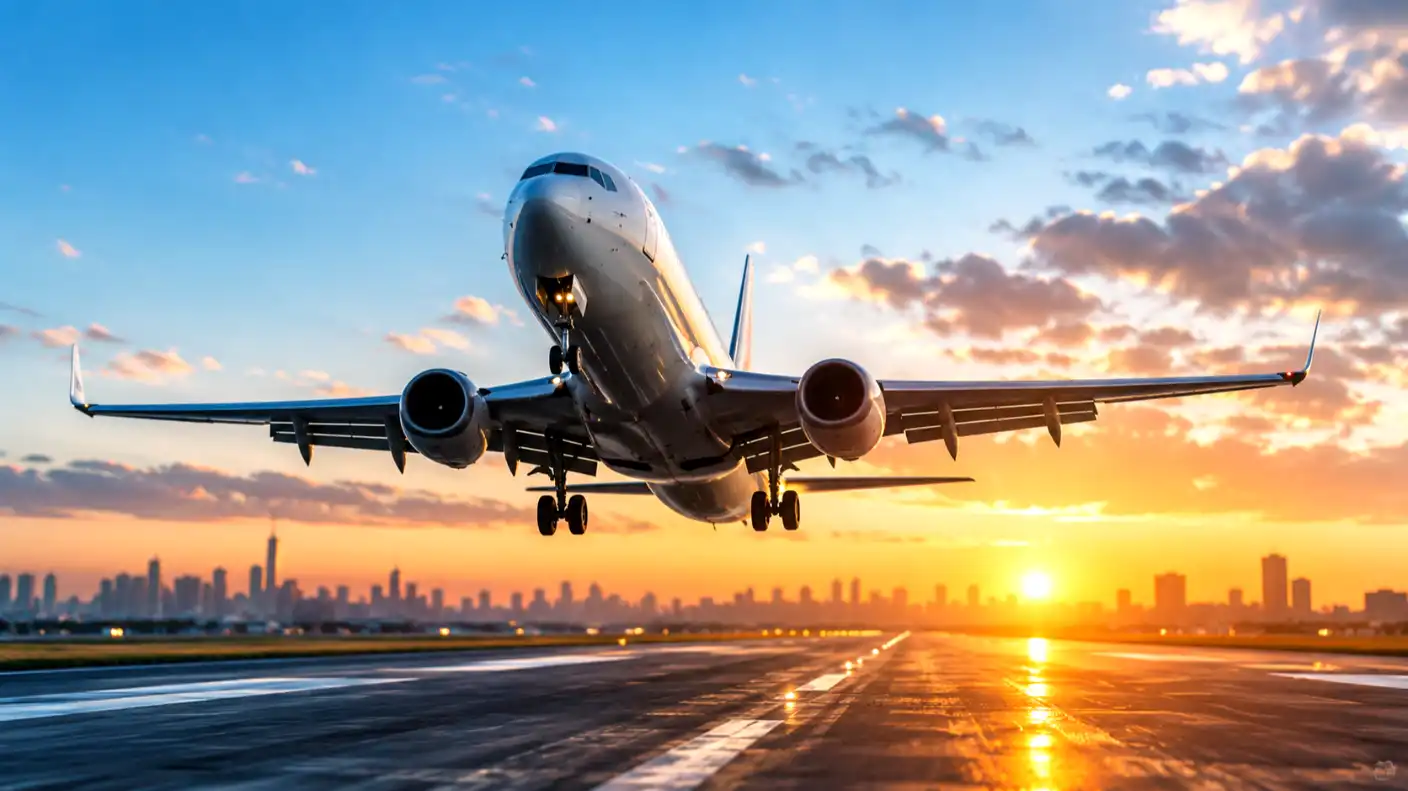
A fundamental structural shift is redrawing global trade lanes as the artificial intelligence race transforms the economics of international air cargo. High-value, heavy artificial intelligence hardware—including liquid-cooled server racks, Nvidia Blackwell GPUs, high-bandwidth memory chips, and optical transceivers—has replaced cross-border fast-fashion e-commerce as the primary growth engine for transpacific air freight. As technology hyperscalers accelerate data center construction across North America, air cargo carriers across Asia are reallocating freighter fleets to move high-density server hardware, generating record cargo yields.
For the past three years, Asian air freight growth was driven by cheap consumer e-commerce parcels shipped directly from Chinese distribution hubs by platforms like Shein, Temu, and AliExpress. However, a combination of tightening international customs regulations, the rollback of duty-free de minimis tax exemptions, and an explosive demand for artificial intelligence infrastructure has altered airline priorities. Air carriers in Taiwan, South Korea, Japan, and Singapore are prioritizing high-tech hardware shipments over consumer apparel, securing premium spot rates that far exceed standard air cargo pricing.
The physical weight and immense commercial value of modern artificial intelligence hardware make air transport the only viable logistics option for global technology companies. A single liquid-cooled 72-GPU server cabinet weighs up to 3.0 metric tonnes and carries a commercial valuation exceeding $3.0 million. Delivering these high-density computing systems via ocean freight would lock up hundreds of millions of dollars in inventory during a 30-day sea voyage, delaying multi-billion-dollar data center activations. Air freight allows server manufacturers in Taipei and Seoul to deliver fully assembled server racks to North American data center sites within 24 hours.
TechGolly provides a detailed logistics and technology analysis of the Asian air cargo boom, evaluating transpacific spot rate premiums, server rack payload physics, high-bandwidth memory supply chains, e-commerce regulatory shifts, and long-term air freighter capacity strategies.
Unpacking the Physics and Economics of AI Hardware Air Freight
The logistics metrics governing artificial intelligence hardware transport differ fundamentally from traditional consumer electronics like laptops or smartphones. A laptop is light, compact, and easily palletized on standard air cargo sheets. In contrast, an artificial intelligence supercomputing server rack is a massive, heavy, and extremely delicate piece of industrial equipment that requires specialized handling throughout its transit journey.
A modern liquid-cooled server cabinet—such as an Nvidia GB200 NVL72 rack—houses 36 central processing units, 72 graphics processing units, direct-to-chip liquid cooling manifolds, and high-speed NVLink interconnect fabrics within a single steel frame. Fully assembled, an individual server cabinet weighs between 1.5 and 3.0 metric tonnes (3,300 to 6,600 pounds). Transporting dozens of these ultra-heavy cabinets requires dedicated main-deck freighter aircraft equipped with reinforced floor structures, specialized hydraulic loading systems, and custom shock-absorptive transport pallets.
From an economic perspective, time-to-market urgency justifies high air transport expenses. Big Tech hyperscalers including Microsoft, Amazon Web Services, Alphabet, and Meta Platforms are spending over $200 billion collectively in annual capital expenditures to build artificial intelligence infrastructure. Every day an AI data center sits idle waiting for server rack deliveries represents millions of dollars in lost cloud subscription and API token revenues.
Consequently, technology companies treat air freight expenses as a minor operational cost compared to the revenue lost from delayed data center commissioning. A server manufacturer willing to pay $30,000 in air freight fees to fly a $3.0 million server rack from Taipei to San Jose recovers that transport expense within hours of the server rack connecting to the cloud network and executing live artificial intelligence inference workloads.
The Transpacific Freight Rate Premium: $12 per Kilogram Mechanics
The surge in high-tech cargo demand has triggered a dramatic shift in transpacific air freight spot rates, boosting yields for major Asian cargo airlines including China Airlines, EVA Air, Korean Air, Asiana Airlines, and Cathay Pacific.
During normal summer shipping cycles, transpacific air cargo spot rates for general consumer merchandise and fast-fashion apparel typically range between $4.00 and $5.50 per kilogram. However, high-priority technology hardware—specifically GPU server cabinets, semiconductor wafers, and high-density memory modules—is commanding premium spot rates ranging from $8.00 to $12.00 per kilogram on key export corridors connecting East Asia to West Coast logistics hubs in Los Angeles, San Francisco, Seattle, and Dallas.
Air freight operators are capitalizing on this pricing power by offering guaranteed “express charter” slots for technology manufacturers. By allocating main-deck space on dedicated freighter aircraft to server makers, airlines achieve high load factors and maximize revenue per available ton-kilometer.
For air cargo executives, hosting high-density server hardware is far more profitable than carrying lightweight, high-volume e-commerce packages. A freighter loaded with heavy, high-value server racks reaches its maximum takeoff weight efficiency quickly, maximizing the revenue earned per cubic meter of cargo space.
Regional Air Cargo Hubs: Taiwan, South Korea, and Japan Lead the Charge
The geographic epicenter of the AI hardware cargo boom is concentrated across three primary East Asian technology manufacturing hubs: Taiwan, South Korea, and Japan.
Taiwan Taoyuan International Airport has emerged as the world’s premier export hub for fully integrated artificial intelligence server cabinets. Taiwan is home to the world’s leading contract server manufacturers—including Foxconn, Quanta Computer, Wistron, Inventec, and Wiwynn—which assemble over 80% of the world’s artificial intelligence servers.
Every day, fleet trucks carry fully assembled, liquid-cooled server racks from manufacturing campuses in Hsinchu and Taoyuan directly to Taiwan Taoyuan Airport. Taiwanese air carriers China Airlines Cargo and EVA Air Cargo operate daily long-haul freighter flights using Boeing 777F and 747-8F aircraft, flying server cargo directly to North American logistics centers serving Data Center Alley in Virginia, central Ohio, and Texas.
South Korea’s Incheon International Airport functions as the critical supply node for advanced semiconductor memory. SK Hynix and Samsung Electronics produce over 85% of the world’s high-bandwidth memory (HBM3e and HBM4), which is essential for artificial intelligence accelerators.
Because HBM chips are temperature-sensitive, high-value components that must be integrated directly alongside GPU processing dies inside advanced packaging facilities, SK Hynix and Samsung rely entirely on temperature-controlled air freight. Millions of HBM chips are flown daily from Incheon to advanced packaging foundries in Taiwan and North America, feeding continuous semiconductor assembly lines.
Japan’s Narita and Haneda airports handle high-value component exports that feed the global hardware supply chain. Japanese technology suppliers ship specialized semiconductor manufacturing equipment components, high-purity chemical photoresists, synthetic quartz optics, and specialized liquid-cooling pumps directly to server assembly plants across Asia and the Americas.
The E-Commerce Shift: Customs Crackdowns and Capacity Reallocation
The surge in high-margin technology hardware shipments coincides with a notable cooling in growth rates for low-cost, cross-border e-commerce parcels originating from mainland China.
For the past three years, fast-fashion platforms like Shein and Temu consumed massive amounts of air cargo capacity, booking up to 4,000 to 5,000 tonnes of air freight daily out of Guangzhou, Shenzhen, and Hong Kong. E-commerce platforms relied heavily on the “de minimis” customs exemption in the United States and similar low-value tax thresholds in the European Union, which allowed packages valued under $800 to enter overseas markets duty-free and with minimal customs inspection.
However, international regulatory authorities have executed aggressive crackdowns on de minimis abuse. In the United States, federal trade agencies tightened customs documentation rules, increased physical parcel inspections, and introduced legislative proposals to eliminate de minimis eligibility for textile and apparel imports. In the European Union, policymakers announced plans to eliminate the 150-euro duty-free threshold for cross-border e-commerce parcels, imposing standard customs tariffs and value-added taxes on all incoming parcels.
Regulatory crackdowns have increased shipping costs and extended customs clearance lead times for cross-border e-commerce sellers, causing small-parcel air freight growth to normalize. Air cargo carriers have responded by reallocating freighter main-deck capacity away from low-margin e-commerce routes toward high-margin technology supply chains in Taiwan and South Korea, where demand for AI server hardware continues to surge.
Hyperscaler Supply Chain Pressure and Data Center Commissioning Deadlines
The driving force behind the air cargo transformation is the extreme schedule pressure facing cloud hyperscalers and data center operators.
Building a modern artificial intelligence data center requires coordinating hundreds of complex physical supply chains simultaneously: acquiring land, securing high-voltage power grid connections, installing cooling towers, and deploying thousands of server racks. If a server rack delivery is delayed by two weeks due to slow shipping, the entire data center activation schedule stalls, leaving expensive power substations and facility infrastructure unutilized.
To prevent project delays, Big Tech technology firms and their tier-one server manufacturing partners are increasingly bypassing standard commercial freight schedules, opting instead to charter entire Boeing 777F and 747-8F cargo aircraft.
A dedicated Boeing 777F charter flight carrying 100 tonnes of high-density server racks from Taipei to San Francisco costs between $600,000 and $900,000 per flight. However, for a cloud provider deploying a multi-billion-dollar computing cluster, paying a $900,000 charter fee is a minor operational expense compared to the revenue earned by bringing an AI supercomputer online ahead of schedule.
Logistics providers report that charter bookings for technology hardware have reached levels typically seen only during peak holiday shopping seasons, providing air carriers with multi-month revenue visibility.
Advanced Packaging and Multi-Country Sub-Assembly Logistics
The complexity of modern semiconductor manufacturing has created a multi-stop, highly interconnected air freight supply chain across Asia before final server racks ever board a transpacific flight.
An advanced artificial intelligence processor is no longer built in a single factory. Instead, the manufacturing journey involves a complex international air cargo relay:
- First, raw silicon wafers are manufactured and exposed using advanced lithography tools at TSMC foundries in Taiwan.
- Second, exposed logic wafers are air-freighted to specialized advanced packaging facilities, where they are joined with High-Bandwidth Memory chips flown in from SK Hynix facilities in South Korea.
- Third, the completed multi-chip modules are flown to electronics sub-assembly plants in Vietnam, Malaysia, or Mexico, where they are mounted onto circuit boards alongside power management units and cooling plates.
- Fourth, assembled server boards are air-freighted back to master integration centers in Taiwan, where automated assembly lines install the boards into full 72-GPU liquid-cooled server cabinets.
- Fifth, fully tested server cabinets board heavy freighter aircraft for final transpacific transport to North American data center sites.
This multi-country sub-assembly supply chain relies on seamless, time-critical air freight. Any disruption in regional air cargo capacity—whether caused by typhoons, air traffic congestion, or sudden trade policy shifts—instantly ripples across the entire global semiconductor supply chain, underscoring the vital role air cargo plays in modern technology manufacturing.
Strategic Outlook for Global Air Freight and Technology Supply Chains
Looking forward through the late 2020s, the alliance between the artificial intelligence hardware industry and the global air cargo sector will continue to deepen, permanently altering international logistics economics.
As artificial intelligence models scale toward multi-gigawatt compute clusters and hardware manufacturers transition to next-generation chip architectures, the volume of high-density server hardware requiring rapid air transport will expand continuously.
To capture this sustained demand, major cargo airlines and logistics operators are expanding their dedicated freighter fleets:
Air carriers are placing advance orders for next-generation, high-efficiency cargo aircraft, including the Boeing 777-8F and the Airbus A350F. These modern freighters offer higher payload capacities, longer flight ranges, and improved fuel efficiency, allowing airlines to transport heavy server cabinets across transpacific routes with lower carbon emissions per ton-kilometer.
Simultaneously, air cargo terminals in Taiwan, South Korea, and West Coast United States airports are constructing specialized heavy-cargo infrastructure. Logistics hubs are investing in high-capacity floor hoists, temperature-controlled storage vaults, and automated security scanning lanes designed specifically to handle multi-tonne server cabinets and sensitive semiconductor shipments safely.
While cross-border e-commerce will remain a substantial baseline volume driver for global logistics, high-tech artificial intelligence hardware has established itself as the undisputed premium cargo segment for the global aviation industry.
Key Takeaways for Air Cargo Executives, Tech Leaders, and Logistics Strategists
The rapid transformation of Asian air cargo trade lanes delivers crucial strategic lessons for airline executives, technology supply chain directors, cloud architects, and global logistics investors.
First, high-density technology hardware is the premier yield generator in air freight. Airline cargo directors must reallocate freighter capacity toward technology manufacturing hubs in Taiwan and South Korea to maximize revenue per available ton-kilometer.
Second, time-to-market speed is the ultimate competitive advantage for hyperscalers. Cloud infrastructure teams must secure dedicated air cargo charter capacity early in project planning, ensuring that physical server rack deliveries align perfectly with data center power activation schedules.
Third, regulatory changes in e-commerce create high-value opportunities. As customs authorities eliminate de minimis tax exemptions on low-value parcels, logistics operators that pivot capacity toward high-tech industrial hardware will protect their operating margins against consumer trade slowdowns.
Finally, the artificial intelligence revolution is an infrastructure-heavy physical buildout. From deep-sea silicon foundries and high-voltage power grids to transpacific freighter fleets, the companies that build, operate, and supply the physical logistics pipelines for advanced hardware will drive global economic growth and control the digital future.