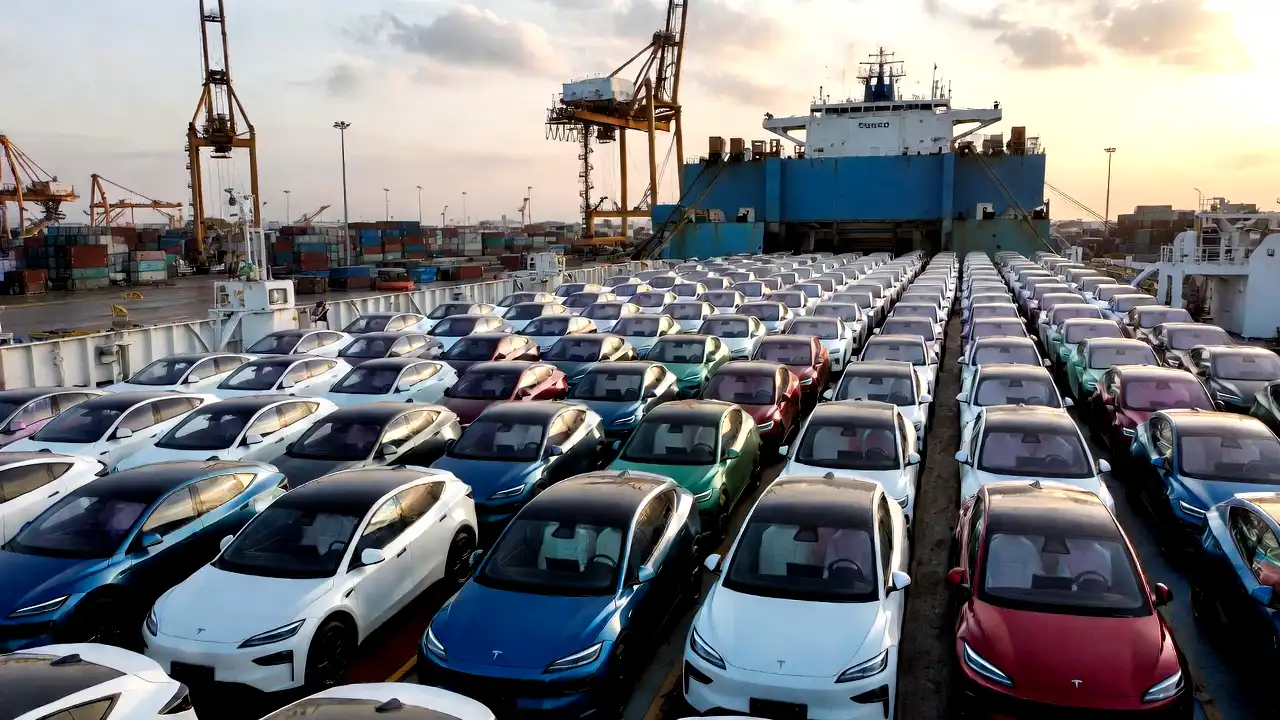
Consumer demand for electric vehicles expanded rapidly across Western Europe, Eastern Europe, and Southern Africa during the first half of the year, driven by a dramatic surge in buyer interest for affordable electric models. Extensive market data tracking online buyer activity across France, Romania, Portugal, Poland, and South Africa reveals that consumer engagement with electric mobility achieved double- and triple-digit year-over-year growth. The widespread acceleration indicates that global electric vehicle markets are transitioning away from temporary, policy-driven demand spikes toward a permanent, structural phase of mass-market expansion.
A primary catalyst accelerating this international shift is the expanding market presence of Chinese automakers. Car manufacturers from China are introducing feature-rich, low-cost electric vehicles that directly address the primary barrier holding back mass EV adoption: high purchase prices. As legacy European and international automakers struggle to deliver affordable battery-powered cars, Chinese brands are capturing substantial consumer market share across diverse economic regions, expanding the total size of the global electric vehicle market in the process.
The growth metrics across individual test markets showcase extraordinary momentum. France recorded the most explosive growth in electric vehicle consumer leads, posting a 206% year-over-year increase. South Africa followed with a 154.6% surge in consumer interest, while Romania registered a 66% gain, Portugal recorded a 60% increase, and Poland posted a 34.3% rise. While early-year geopolitical friction in the Middle East and spiking oil prices contributed to initial consumer interest in electric cars, buyer activity has remained elevated well above historical baselines, proving that consumer preference for electric mobility is becoming deeply ingrained.
TechGolly provides an in-depth analysis of this global mobility acceleration, evaluating regional consumer lead trends, Chinese brand market penetration, battery cost parity engineering, South Africa’s unique hybrid market dynamics, European trade tariff responses, and the future of the global automotive industry.
Unpacking the Regional Growth Surge Across European Markets
The rapid expansion of consumer interest in electric vehicles across European markets highlights how different economic environments are embracing zero-emission transportation. While Western European nations have benefited from mature charging infrastructure and state purchase incentives for years, Eastern and Southern European countries are now experiencing their own rapid electric mobility acceleration as lower-cost vehicle options enter local showrooms.
France established itself as the undisputed growth leader among the surveyed European nations, recording a 206% surge in overall electric vehicle consumer leads alongside a massive 276% year-over-year jump in demand specifically for Chinese automotive brands. France’s explosive growth stems from a combination of targeted government policy initiatives—such as social leasing programs that offer low-income households access to compact electric cars for under 100 euros per month—and a dense network of urban low-emission zones that restrict older internal combustion engine vehicles.
In Eastern and Southern Europe, consumer lead data reveals that electric vehicle adoption is breaking out of niche, high-income urban demographics into mainstream consumer markets. Romania recorded a 66% increase in overall electric vehicle leads, accompanied by a 119.2% surge in demand for Chinese brands. Poland registered a 34.3% rise in overall EV leads paired with a 94.6% increase in Chinese brand interest, while Portugal posted a 60% increase in general EV leads and a 74% gain for Chinese manufacturers.
These Eastern and Southern European markets have historically been price-sensitive, relying heavily on imported pre-owned internal combustion vehicles from Western Europe. The entry of affordable new and used Chinese electric models has created an accessible entry point for middle-income buyers in these regions, allowing consumers to bypass aging gasoline vehicles and adopt modern electric mobility at accessible price points.
The Rise of Chinese Automakers in European Retail Showrooms
The dramatic surge in European consumer demand for Chinese automotive brands—led by gains of 276% in France, 119.2% in Romania, 94.6% in Poland, and 74% in Portugal—reflects a fundamental shift in consumer perception across the continent.
Historically, European car buyers demonstrated intense loyalty to heritage domestic brands, often viewing foreign imports with skepticism. However, Chinese vehicle manufacturers—including SAIC Motor’s MG brand, BYD, Geely’s sub-brands, Chery, and Great Wall Motor—have successfully overcome historical brand resistance by delivering vehicles that combine high build quality, advanced digital infotainment systems, long battery warranties, and competitive pricing.
European shoppers visiting online classifieds and dealership showrooms are finding that Chinese electric models deliver battery ranges and technical features comparable to Western models costing 8,000 to 12,000 euros more. By offering compact electric hatchbacks and family crossovers at retail prices below 25,000 to 30,000 euros, Chinese automakers are filling a vacant market segment that legacy European manufacturers neglected for years.
Furthermore, Chinese automakers are rapidly expanding physical dealership and service networks across Europe. Rather than relying exclusively on digital direct-to-consumer sales, Chinese brands are partnering with established European auto retail groups, ensuring that buyers have access to local maintenance bays, spare parts warehouses, and reliable warranty support, which builds long-term consumer trust.
South Africa’s Unique Market Dynamic: Hybrid Dominance vs Pure EV Interest
While European markets are rapidly adopting fully electric battery vehicles, South Africa presents a distinct, highly complex automotive market dynamic where consumer enthusiasm for electric mobility is growing fast, but actual purchasing behavior remains anchored to internal combustion and hybrid engines.
Consumer lead metrics in South Africa recorded a dramatic 154.6% year-over-year surge in overall electric vehicle interest. This triple-digit growth confirms that South African motorists are actively exploring zero-emission alternatives to escape high domestic fuel prices and rising vehicle operating expenses. Furthermore, Chinese automotive brands achieved their highest market share of overall consumer demand in South Africa among all five surveyed international markets, capturing 7.31% of total consumer vehicle inquiries.
However, despite surging consumer curiosity, fully electric vehicles currently represent just 0.3% of total vehicle demand in South Africa. The vast majority of South African automotive buyers continue to focus their purchases on gasoline-powered and hybrid sport utility vehicles (SUVs).
Several structural factors explain this sharp divergence between consumer interest and actual fully electric vehicle purchases in South Africa:
- First, severe infrastructure constraints. South Africa’s national power grid has experienced periodic electricity rationing and load-shedding events over recent years, creating consumer anxiety regarding the reliability of home and public electric vehicle charging networks.
- Second, long travel distances and tough terrain. South African motorists frequently travel long distances between major urban centers like Johannesburg, Cape Town, and Durban across vast rural stretches where public fast-charging stations remain rare, making high-clearance gasoline or hybrid SUVs far more practical for daily life.
- Third, high import tariffs. The South African government imposes a 25% import duty on fully electric vehicles, compared to an 18% import duty on traditional internal combustion engine vehicles. This tax disparity increases the retail price of imported electric cars, placing pure EVs out of reach for the vast majority of local car buyers.
Overcoming Infrastructure Deficits in Emerging Mobility Markets
To capture market share in South Africa’s challenging economic environment, Chinese automakers have deployed a flexible, multi-powertrain product strategy that matches local consumer needs.
Instead of pushing pure battery electric vehicles exclusively, Chinese manufacturers like Haval (Great Wall Motor), Chery, and BYD introduced lineup options that include high-efficiency gasoline SUVs, mild hybrids, and plug-in hybrid electric vehicles (PHEVs). These vehicles feature rugged suspensions, high ground clearance, and modern interior technology tailored for South African driving conditions, while selling at prices significantly lower than competing Japanese or European SUVs.
Chinese brands are also addressing local energy reliability concerns by partnering with private solar energy installers. In South Africa, several Chinese EV distributors offer bundled home solar charging packages, allowing electric vehicle buyers to install rooftop solar panels and battery storage units alongside their home EV chargers. This off-grid charging solution insulates car owners from national power grid load-shedding while providing truly zero-carbon transportation.
As public fast-charging networks expand along major South African highway corridors and government officials evaluate potential EV tariff reductions, the massive 154.6% surge in consumer leads indicates that South Africa is preparing for a rapid secondary transition toward fully electric vehicles over the coming decade.
Economic Engineering: How Chinese Manufacturers Achieved Cost Parity
The ability of Chinese automakers to drive global electric vehicle adoption rests on an extraordinary industrial manufacturing advantage developed through two decades of state-backed research, supply chain integration, and battery scale.
At the technical core of China’s cost competitiveness is absolute dominance over the global battery supply chain. Chinese chemical and battery companies control over 75% of global lithium refining capacity, 85% of synthetic graphite production, and 90% of global permanent magnet manufacturing. Controlling raw material processing allows Chinese automakers to procure battery cells at costs that are 30% to 40% lower than those paid by Western automotive competitors.
Furthermore, Chinese automakers have standardized low-cost, high-safety battery chemistries, specifically Lithium Iron Phosphate (LFP) and Lithium Manganese Iron Phosphate (LMFP). LFP batteries eliminate expensive, volatile raw materials like nickel and cobalt, replacing them with abundant, low-cost iron and phosphate. By combining LFP chemistry with advanced Cell-to-Pack (CTP) structural engineering, Chinese manufacturers produce durable, high-density battery packs that deliver 300 to 400 kilometers of driving range at a fraction of the cost of traditional nickel-based batteries.
Vertical integration provides a secondary cost advantage. Major Chinese automakers like BYD manufacture nearly 100% of their vehicle components internally—including electric motors, power electronics, microcontrollers, thermal management systems, and interior digital displays. In-house manufacturing eliminates middleman supplier markups and allows engineering teams to optimize vehicle designs for rapid, automated factory assembly.
These structural manufacturing advantages allow Chinese automakers to export electric vehicles to Europe and Africa at attractive retail prices while maintaining healthy gross operating profit margins, providing them with the financial runway needed to invest in global distribution and after-sales service networks.
EU Countervailing Tariffs and European Legacy Automaker Responses
The rapid rise of Chinese electric vehicles across European markets has triggered intense trade and industrial responses from European policymakers and legacy car manufacturers.
Concerned by the rapid loss of market share among domestic brands, the European Commission executed an anti-subsidy investigation into Chinese state support for its electric vehicle sector. Following the inquiry, European trade authorities imposed provisional countervailing duties ranging from 17% to 38% on imports of battery electric vehicles manufactured in China, stacking these new duties on top of Europe’s existing 10% baseline automotive import tariff.
However, consumer lead data confirms that European import tariffs have failed to halt the momentum of Chinese electric vehicles. Because Chinese automakers maintain a 30% to 40% manufacturing cost advantage over European competitors, many Chinese brands are simply absorbing a portion of the tariff expense within their gross profit margins or making minor adjustments to European retail prices, keeping their vehicles highly competitive against European models.
To permanently bypass European trade tariffs, major Chinese automakers are executing localized manufacturing strategies across Europe:
- BYD is constructing a multi-billion-dollar electric vehicle assembly plant in Hungary, designed to produce up to 200,000 vehicles annually inside the European Union’s single market.
- Chery Auto partnered with Spanish EV maker EV Motors to restart production at a former Nissan factory in Barcelona, Spain, assembling electric vehicles locally.
- Leapmotor formed a strategic joint venture with European automotive giant Stellantis, utilizing Stellantis’s existing Tychy manufacturing plant in Poland to assemble low-cost Chinese electric cars directly inside the European Union.
Simultaneously, legacy European automakers including Volkswagen, Renault, and Stellantis are accelerating their own low-cost EV development programs. European carmakers are launching compact electric models priced under 25,000 euros, partnering with Chinese battery suppliers, and adopting simplified LFP battery architectures to compete directly against incoming Chinese imports.
Strategic Outlook for the Global Electric Mobility Transition
The market findings across Europe and South Africa signal that the global transition toward electric mobility has crossed a critical maturity threshold, shifting from a volatile, early-adopter phase into a permanent, structural growth trend.
Over the coming five years, the global automotive market will be defined by three key structural shifts:
First, price parity between electric vehicles and internal combustion engine cars. As global battery cell costs continue to drop toward $60 to $70 per kilowatt-hour, electric vehicles will achieve equal or lower upfront purchase prices compared to equivalent gasoline cars without requiring government subsidies.
Second, the rapid expansion of the pre-owned (used) electric vehicle market. As millions of leased electric vehicles enter second-hand sales channels across Europe, lower resale prices will allow lower-income households to adopt electric mobility, accelerating zero-emission vehicle adoption across suburban and rural communities.
Third, the globalization of multi-polar automotive manufacturing. The global car industry will no longer be dominated exclusively by traditional industrial hubs in Germany, Japan, and the United States. Chinese automakers will operate localized manufacturing plants across Europe, Southeast Asia, South America, and Africa, creating a highly competitive, globally distributed electric mobility ecosystem.
By lowering price barriers and delivering technology-rich vehicles, the expansion of Chinese automakers is accelerating the global phase-out of fossil-fuel transportation, establishing the physical foundation for a sustainable, electrified global economy.
Key Takeaways for Auto Executives, Retailers, and Policy Analysts
The rapid growth of consumer demand for electric vehicles across Europe and South Africa delivers vital strategic lessons for automotive corporate executives, dealership networks, clean energy policymakers, and international trade analysts.
First, purchase price accessibility is the primary determinant of mass EV adoption. Automakers cannot build sustainable market share relying solely on high-margin luxury electric vehicles; mastering low-cost battery chemistry and efficient vehicle manufacturing is mandatory for long-term commercial survival.
Second, Chinese automakers are permanent global competitors. Legacy carmakers must adapt quickly to the cost and speed benchmarks set by Chinese manufacturers, forming strategic joint ventures, localizing battery supply chains, and streamlining software development to maintain market share.
Third, trade tariffs cannot block consumer demand for affordable technology. Imposing import tariffs on foreign electric vehicles provides only temporary protection for domestic industries; long-term competitiveness requires building efficient, low-cost local production capacity that delivers affordable products to consumers.
Finally, emerging mobility markets require flexible product strategies. Automakers expanding into developing regions with less reliable electrical infrastructure must offer a range of electrified options—including high-efficiency hybrids and solar-supported charging ecosystems—to bridge the gap toward full electric mobility.