

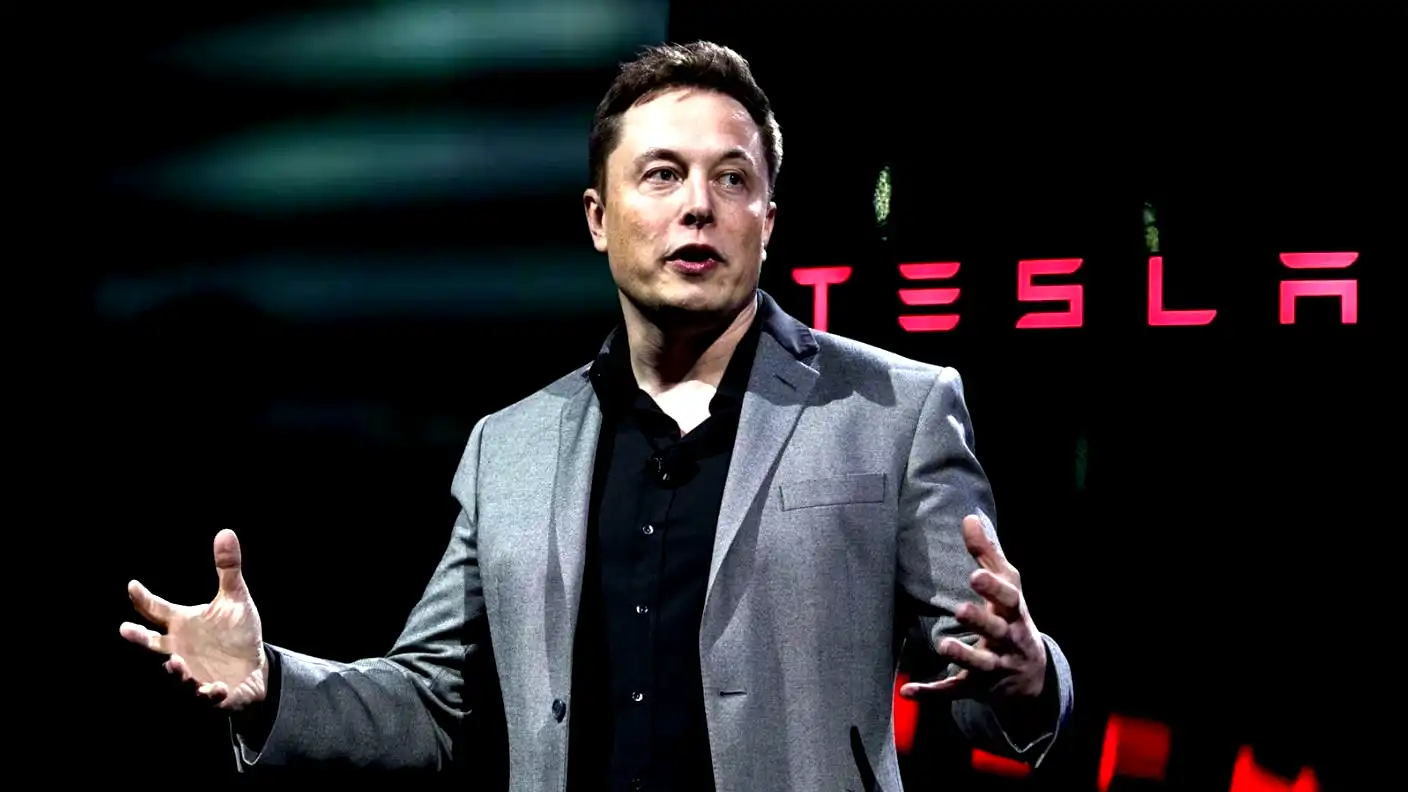
Elon Musk’s personal net worth experienced a multi-billion-dollar contraction following a sharp technology stock market selloff and a post-earnings margin miss at Tesla. Driven by an extended slide in Tesla shares, Musk’s net worth declined back toward $220 billion to $235 billion levels on global billionaire index tracking charts, erasing recent wealth gains. The fortune slump highlights the extreme wealth volatility tied to public technology equities as Wall Street penalizes companies experiencing high capital expenditure cash burn and compressing operating margins.
The primary catalyst behind the wealth contraction was Tesla’s second-quarter financial report. While the electric vehicle giant reported record top-line revenue of $28.24 billion and record global deliveries of 480,126 vehicles, underlying operating margins collapsed to just 1.4%, down from 4.1% in the prior-year period. Furthermore, Tesla reported a negative quarterly free cash flow of -$1.09 billion, driven by $5.79 billion in quarterly capital expenditures on artificial intelligence compute, data center construction, and humanoid robotics. The profit miss caused Tesla shares to drop between 5% and 8% in post-earnings trading, stripping billions of dollars in paper equity value from Musk’s personal holdings in a single trading session.
Despite the public equity selloff, Musk’s net worth remains heavily supported by his massive private equity holdings. His controlling equity stake in aerospace leader SpaceX—which holds a private market valuation exceeding $210 billion to $250 billion—functions as a multi-billion-dollar wealth anchor that prevents a deeper fortune decline. Additionally, his artificial intelligence startup, xAI, has scaled its corporate valuation past $50 billion following private funding rounds, demonstrating that Musk’s private technology ventures continue to command high valuation multiples even as public automotive equities face market headwinds.
TechGolly provides a detailed financial and economic analysis of Elon Musk’s net worth slump, evaluating Tesla’s second-quarter operating margins, Big Tech capital expenditure cash burn, SpaceX private equity valuations, xAI supercomputing growth, and the broader outlook for global tech wealth.
Unpacking the Tesla Earnings Shock and Stock Price Pullback
To understand the mechanics behind Elon Musk’s personal fortune contraction, financial analysts must examine the underlying accounting details inside Tesla’s second-quarter financial disclosure.
Tesla delivered a complex financial report defined by a sharp divergence between top-line sales volume and bottom-line profitability. Total quarterly revenue expanded by 26% year-over-year to hit $28.24 billion, beating Wall Street consensus forecasts of $25.99 billion. Vehicle deliveries reached a second-quarter record of 480,126 units, up 25% compared to the same period in the prior year, as global sales incentives and promotional financing packages sustained delivery momentum across North America, Europe, and Asia.
However, bottom-line profitability suffered severe compression. GAAP operating income fell 57% year-over-year to $398 million, dropping Tesla’s operating margin to 1.4%. Adjusted earnings per share landed at $0.33, missing consensus analyst estimates of $0.52 by a wide margin.
A primary factor driving operating income lower was a 47% surge in operating expenses to $4.35 billion. The expenditure surge was driven by massive research and development outlays for artificial intelligence models, Full Self-Driving software iterations, custom Dojo chip design, and factory modifications for the Optimus humanoid robot.
When public stock exchanges opened following the earnings call, institutional investors responded to the profit miss by selling Tesla shares. The stock price declined from around $374 per share down toward $355 per share in extended trading. Because Musk holds approximately 13% of Tesla’s outstanding common stock alongside millions of exercisable stock options, a $20 per share decline in Tesla’s stock price automatically erases more than $8 billion from his personal paper wealth.
The SpaceX Valuation Anchor: Holding $210 Billion in Private Capital
While public automotive shares experienced volatility, Musk’s private aerospace enterprise, SpaceX, provided an irreplaceable financial anchor that stabilized his overall fortune.
SpaceX has established an undisputed commercial monopoly over North American space launch logistics and low-Earth-orbit satellite internet. In recent secondary market tender offers, institutional investors valued SpaceX at $210 billion to $250 billion, making it one of the most valuable private technology enterprises in human history. Musk holds an estimated 42% equity stake in SpaceX, representing over $90 billion in personal wealth that remains completely isolated from public stock market trading volatility.
Tesla’s financial statements confirm the deep financial relationship between the two companies. In its second-quarter report, Tesla disclosed a $1.005 billion pre-tax unrealized paper gain on its balance sheet holdings of private SpaceX equity.
Because Tesla’s core automotive operating profit fell to $398 million during the quarter, the $1.005 billion paper gain on SpaceX stock supplied nearly two-thirds of Tesla’s reported $1.11 billion in GAAP net income. The cross-corporate gain demonstrated that private equity appreciation at SpaceX is actively supporting Tesla’s consolidated balance sheet, reassuring institutional investors that Musk’s corporate empire maintains deep underlying asset value.
The AI Capex Cash Burn Dilemma: $5.79 Billion Quarterly Outlays
The primary driver behind Tesla’s negative free cash flow and subsequent stock selloff is an unprecedented capital expenditure program aimed at building physical artificial intelligence infrastructure.
During the second quarter, Tesla spent $5.79 billion on capital expenditures, driving quarterly free cash flow into negative territory at -$1.09 billion. The heavy cash outlays reduced Tesla’s total cash, cash equivalents, and short-term investments by $1.2 billion, leaving corporate cash reserves at $43.5 billion at quarter-end.
Executive management characterized the current spending cycle as the largest investment phase in company history. Capital outlays are flowing into three primary technology domains:
- First, high-density data center construction. Tesla is building liquid-cooled server halls housing tens of thousands of Nvidia GPUs and custom chips to train neural networks for Full Self-Driving and Cybercab autonomous vehicles.
- Second, humanoid robotics manufacturing. At its Fremont factory in California, Tesla decommissioned legacy Model S and Model X assembly lines to construct dedicated manufacturing facilities for the Optimus humanoid robot.
- Third, utility energy storage expansion. Construction on Megafactory Texas neared completion, designed to double global production capacity for Megapack utility energy storage batteries.
Wall Street equity analysts remain divided over Tesla’s aggressive capital spending. Short-term traders penalized the stock for cash burn, arguing that spending $5.79 billion quarterly during a period of thinning automotive margins creates unnecessary balance sheet risk.
Conversely, technology bulls agree with Musk’s core thesis: under-investing in physical artificial intelligence infrastructure poses a far greater existential threat than near-term cash burn. Technology executives maintain that securing data center compute capacity and building manufacturing facilities today builds physical competitive moats that will yield high-margin recurring software revenues as autonomous Cybercabs and Optimus robots reach commercial deployment.
The xAI Colossus Factor: Scaling Past a $50 Billion Valuation
Complementing his equity holdings in Tesla and SpaceX, Musk’s artificial intelligence startup, xAI, has emerged as a major contributor to his multi-billion-dollar net worth.
Founded to develop advanced artificial general intelligence, xAI executed a rapid infrastructure buildout, constructing its Colossus supercomputer in Memphis, Tennessee, in just 122 days. Colossus operates as the world’s largest liquid-cooled AI data center campus, housing 200,000 Nvidia GPUs dedicated to training the Grok model family.
Investors have flooded xAI with private capital. Following a $6 billion Series B funding round at a $24 billion valuation, xAI completed subsequent private equity rounds that elevated its corporate valuation past $50 billion to $60 billion.
Musk holds a dominant equity stake in xAI, adding over $25 billion to his personal net worth. The rapid appreciation of xAI demonstrates that private venture capital markets continue to award multi-billion-dollar valuations to high-density compute infrastructure, helping offset public market paper losses in traditional automotive equities.
Global Automotive Headwinds: Chinese EV Competition and Price Wars
To evaluate the long-term outlook for Tesla stock and Musk’s net worth, financial analysts must examine the intense commercial pressures facing Tesla’s core vehicle manufacturing business.
The primary international headwind is an ongoing price war in China, the world’s largest electric vehicle market. Domestic Chinese automotive giants—led by BYD, Xiaomi Auto, Geely, and Nio—are launching low-cost, feature-packed electric vehicles priced significantly below Tesla’s Model 3 and Model Y. Chinese automakers update vehicle models rapidly, introducing advanced digital cockpits and localized autonomous driving software that appeal strongly to Chinese consumers.
To maintain vehicle delivery volumes in China and North America, Tesla deployed aggressive sales incentives, promotional financing rates, and price reductions. While promotional financing supported record quarterly deliveries of 480,126 units, it drove automotive gross margins excluding regulatory credits down to 16.3%, compressing core vehicle profitability.
Furthermore, Tesla faced domestic sales softness in the United States following the expiration of federal electric vehicle tax credits for certain model variants. To offset domestic market friction, Tesla increased production output at Gigafactory Berlin, shipping European-built Model Y crossovers to fulfill expanding regional demand across Western Europe.
Managing these global trade headwinds requires Tesla to continuously lower vehicle manufacturing costs. By deploying un-boxed assembly techniques, expanding gigacasting structural designs, and utilizing low-cost Lithium Iron Phosphate battery cells, Tesla aims to lower production expenses and restore automotive gross margins toward 20% in upcoming manufacturing cycles.
Billionaire Index Dynamics: The Battle with Bezos and Zuckerberg
The contraction in Musk’s personal net worth has tightened the competitive standings at the top of global billionaire wealth tracking charts.
Billionaire index metrics show Musk’s net worth hovering near $225 billion, placing him in a close, fluctuating race with Amazon founder Jeff Bezos (holding an estimated $205 billion) and Meta CEO Mark Zuckerberg (holding an estimated $185 billion).
The wealth rankings among mega-cap tech founders have become exceptionally sensitive to single-day stock market swings:
- When Meta Platforms reported a 22% quarterly revenue jump that sent its stock surging 8%, Mark Zuckerberg’s personal wealth expanded by over $10 billion in a single afternoon.
- When Tesla reported its operating margin compression, sending its stock down 6%, Musk’s paper fortune contracted by over $8 billion in 24 hours.
Because public technology stocks experience sharp price fluctuations around quarterly earnings reports, top billionaire wealth rankings will continue to shuffle based on short-term market sentiment toward artificial intelligence capital expenditures and cloud revenue growth.
Strategic Outlook for Elon Musk’s Corporate Empire and Capital Markets
Looking forward through the late 2020s, the long-term trajectory of Elon Musk’s personal net worth will be determined by his ability to execute the transition from low-margin electric vehicle assembly to high-margin artificial intelligence products.
Wall Street analysts outline two distinct future scenarios for Musk’s corporate empire:
- In the conservative scenario, intense international price competition in electric vehicles will continue to compress automotive gross margins, while full commercial deployment of unsupervised Cybercabs and Optimus robots encounters regulatory delays. Under this scenario, Tesla stock remains range-bound, keeping Musk’s net worth anchored near $200 billion to $250 billion.
- In the bullish scenario, Tesla successfully launches commercial Cybercab ride-hailing networks across major US cities, scales Optimus production at its Fremont facility, and formalizes an overarching “X Holdings” parent company merger combining Tesla, SpaceX, and xAI. Under a consolidated holding structure valued at $1.5 trillion to $2.0 trillion, Musk’s personal net worth could easily surpass $400 billion, establishing a new record for individual wealth accumulation.
With $43.5 billion in liquid balance sheet reserves at Tesla, $210 billion in private market value at SpaceX, and 200,000 GPUs running at xAI, Musk possesses the physical and financial resources required to absorb short-term stock market routs while executing his long-term vision for the digital economy.
Key Takeaways for Financial Analysts, Tech Leaders, and Investors
The fortune slump experienced by Elon Musk amid the technology stock market rout delivers vital strategic lessons for corporate decision-makers, technology analysts, and institutional investors.
First, public equity markets demand short-term margin discipline. While long-term technology investments are essential, public companies that experience severe operating margin compression and negative free cash flow will face immediate stock price penalties from short-term traders.
Second, private equity assets offer essential balance sheet insulation. Owning non-public, high-valuation technology companies like SpaceX provides mega-cap founders and corporate balance sheets with a stable financial cushion that remains immune to public stock market panics.
Third, physical compute infrastructure represents a permanent asset class. Capital deployed into high-density data centers, custom silicon, liquid cooling, and power substations builds real, physical infrastructure that retains high commercial value regardless of short-term stock price swings.
Finally, long-term wealth creation requires surviving short-term volatility. Visionary founders and institutional investors who build resilient balance sheets and stay committed to physical technology execution will navigate market routs successfully and capture massive value as the global economy automates over the decade ahead.






