The aerospace industry is currently defined by a tale of two realities. For years, Boeing operated under the shadow of a near-constant barrage of manufacturing defects, production halts, and regulatory interventions. Wall Street’s most persistent bear on the stock, an analyst who spent several years predicting a continued downward spiral for the aviation giant, recently executed a stunning, 180-degree reversal. This move signaled a definitive turning point for the company. The analyst now argues that the worst of the manufacturing crisis is firmly in the rearview mirror and that the company has established a clear, credible path for its share price to double by 2030.
This shift in institutional sentiment reflects a broader, highly consequential stabilization within the global aviation supply chain. After the Federal Aviation Administration effectively seized control of Boeing’s quality-assurance processes, the company underwent a radical, top-down cultural and operational overhaul. Under new leadership, Boeing has transitioned from an era of desperate firefighting to a phase of slow, methodical recovery. By stabilizing its production rates, clearing its parked inventory of 737 MAX and 787 Dreamliner aircraft, and restoring its internal airworthiness certification authority, the company is finally demonstrating that it can deliver the volume and quality that its airline clients demand.
The bullish outlook for Boeing is not built on the hope for a sudden, miraculous recovery. Instead, it is built on the cold, hard mathematics of the aerospace backlog. With more than 6,000 commercial aircraft orders on its books, the company possesses the largest, most secure revenue pipeline in industrial history. If Boeing can maintain its production pace and avoid further large-scale manufacturing failures, its financial transformation will be driven by sheer, high-volume delivery capacity. This analysis explores why Wall Street’s most famous skeptic has pivoted, the operational milestones that triggered this change, and the multi-billion-dollar path toward a vastly higher market valuation by the end of the decade.
Dismantling the Bearish Case: Operational Milestones and Cultural Reform
For years, the bearish case against Boeing was built on an inescapable, structural foundation: the company had lost the ability to build safe planes at the speed the market required. The repeated manufacturing lapses, including door-plug blowouts and fuselage gap defects, created a cycle of regulatory distrust that prevented the company from scaling its output. Every time the company attempted to increase its production cadence, a new safety issue emerged, forcing the FAA to intervene and slap fresh manufacturing caps on the company’s Renton and Everett assembly lines.
The pivotal change in this narrative occurred in mid-2026, when the FAA restored Boeing’s delegated airworthiness certification authority. This restoration was not a bureaucratic favor; it was a reward for months of highly transparent cooperation. Boeing’s new leadership team implemented a “Quality-First” manufacturing framework, which deliberately slowed down factory output to ensure every single fastener, seal, and electrical component was inspected and validated before an aircraft moved to the next station. This sacrifice of short-term volume for long-term reliability convinced the FAA that the company’s internal safety culture had been permanently repaired.
With this newfound regulatory credibility, the company moved quickly to activate its fourth final assembly line in Everett, Washington. This facility, internally known as the “North Line,” provides the additional physical floor space needed to reach a production target of 52 aircraft per month by early 2027. By systematically clearing the backlog of over 200 parked jets that had been sitting on runways due to certification delays, the company began unlocking billions of dollars in deferred payments. This cash infusion is the primary fuel for the stock’s potential doubling, as it allows the firm to pay down its $58 billion debt load and stabilize its long-term financial health.
The Financial Mathematics of the Aerospace Supercycle
To achieve a 100 percent return on investment by 2030, Boeing does not need to reinvent the wheel. It simply needs to execute on the order backlog that it already holds. The aerospace industry is currently enjoying the strongest demand cycle in history. Global air travel demand has surged to 110 percent of pre-pandemic levels, and carriers from Dublin to Dubai are frantically trying to expand their fleets to capitalize on this passenger traffic. They are not waiting for new aircraft designs; they are desperate for the current generation of narrowbody and widebody jets that Boeing already produces.
The financial upside is rooted in the transition from manufacturing to delivery. Historically, aerospace companies spent the bulk of their capital during the build phase of a program. Once the design is proven and the production line is optimized, the marginal cost of building each additional jet drops significantly, while the profit margin for the airline increases. Boeing is currently at the tail end of this expensive, cash-heavy buildout phase. As the 737 MAX and 787 Dreamliner programs enter a steady, high-volume production state, the company will witness an explosion in free cash flow, providing the capital necessary to fuel stock buybacks and dividend growth.
Clearing the Inventory Overhang and Unlocking Deferred Cash
The most immediate financial catalyst for the company is the conversion of its parked inventory into delivered aircraft. Every undelivered jet represents a massive drain on the balance sheet, requiring millions of dollars in storage costs, maintenance, and capital interest. When an airline takes delivery, the balance sheet reverses: the deferred payment is collected, and the revenue is recognized.
With the FAA now allowing Boeing to handle its own certification, the company can deliver these 220 stored aircraft at a rate of roughly 10 to 15 units per month above the standard production cadence. This accelerated delivery process provides an estimated $15 billion to $20 billion in total revenue that is effectively ready to be realized. As this capital hits the bank account, the company can systematically deleverage its balance sheet, reducing its interest expense by an estimated $1.2 billion annually. This massive reduction in debt-service costs flows directly to the bottom line, significantly boosting earnings per share and providing a powerful, fundamental justification for a higher valuation multiple.
The Margin Expansion from Production Stabilization
Stabilizing the assembly line is the key to expanding operating margins. When a factory experiences a “stop-start” production cycle due to manufacturing defects or regulatory intervention, the costs of inefficiency are staggering. Engineers are pulled off productive work to fix existing problems, raw materials are wasted, and assembly line workers are often left idle while waiting for inspections.
Boeing’s current strategy is to prioritize a “flow-state” assembly line, where aircraft move forward at a predictable, constant pace. By hitting a steady production rate of 52 aircraft per month, the company can better negotiate bulk material discounts, utilize its workforce more efficiently, and minimize the waste that historically eroded its margins. Wall Street analysts expect this focus on production flow to drive operating margins from the current low single-digit percentage toward a much healthier 10 to 12 percent by 2028. This move toward mid-teens margins is a prerequisite for a stock price doubling, as it demonstrates that the firm has finally regained the operational excellence required to compete with Airbus.
Managing the Supply Chain and the Triple-Constraint Burden
While the path toward a 2030 valuation target looks clear, the company remains subject to three massive, persistent operational constraints. The success of the current turnaround relies entirely on the management of its complex, globalized supplier network.
Stabilizing the Spirit AeroSystems Integration
The most visible risk factor involves the re-integration of Spirit AeroSystems. After years of poor quality control and financial instability, Boeing made the strategic decision to buy back its primary fuselage supplier. Integrating these massive, multi-billion-dollar manufacturing hubs is a major industrial project. It requires aligning quality standards, payroll systems, and supply chain logistics across two massive corporate structures.
If Boeing fails to execute this integration smoothly, it will face a fresh wave of production delays and quality issues. The success of the 737 MAX ramp-up depends on Spirit’s ability to deliver flawless fuselages on time, every time. Any hiccup in this integration process would immediately trigger a new FAA audit, stalling the company’s production targets and delaying the delivery of the parked inventory, acting as an immediate, hard brake on the stock’s growth potential.
The Engine Supply Bottleneck
Even if the fuselage and wings are perfectly assembled, a jet is useless without engines. The global supply of LEAP-1B engines, produced by the CFM International joint venture between GE Aerospace and Safran, remains incredibly tight. Because the demand for these engines is so high across both narrowbody aircraft lines, Boeing faces a continuous, high-pressure fight to secure enough powerplants for its production lines.
The engine shortage is a structural constraint that no amount of internal corporate reform can instantly solve.
It is a global, resource-based problem.
As GE Aerospace and Safran expand their own manufacturing capacity, Boeing’s production rates will be limited by the availability of engines, creating a “speed limit” on how quickly the company can grow its cash flow.
Investors must monitor the engine delivery rates as closely as the aircraft delivery rates; until the engine supply chain achieves a surplus, Boeing’s growth will remain physically capped by the output of its engine partners.
Geopolitical Realignment and the 777X Ambition
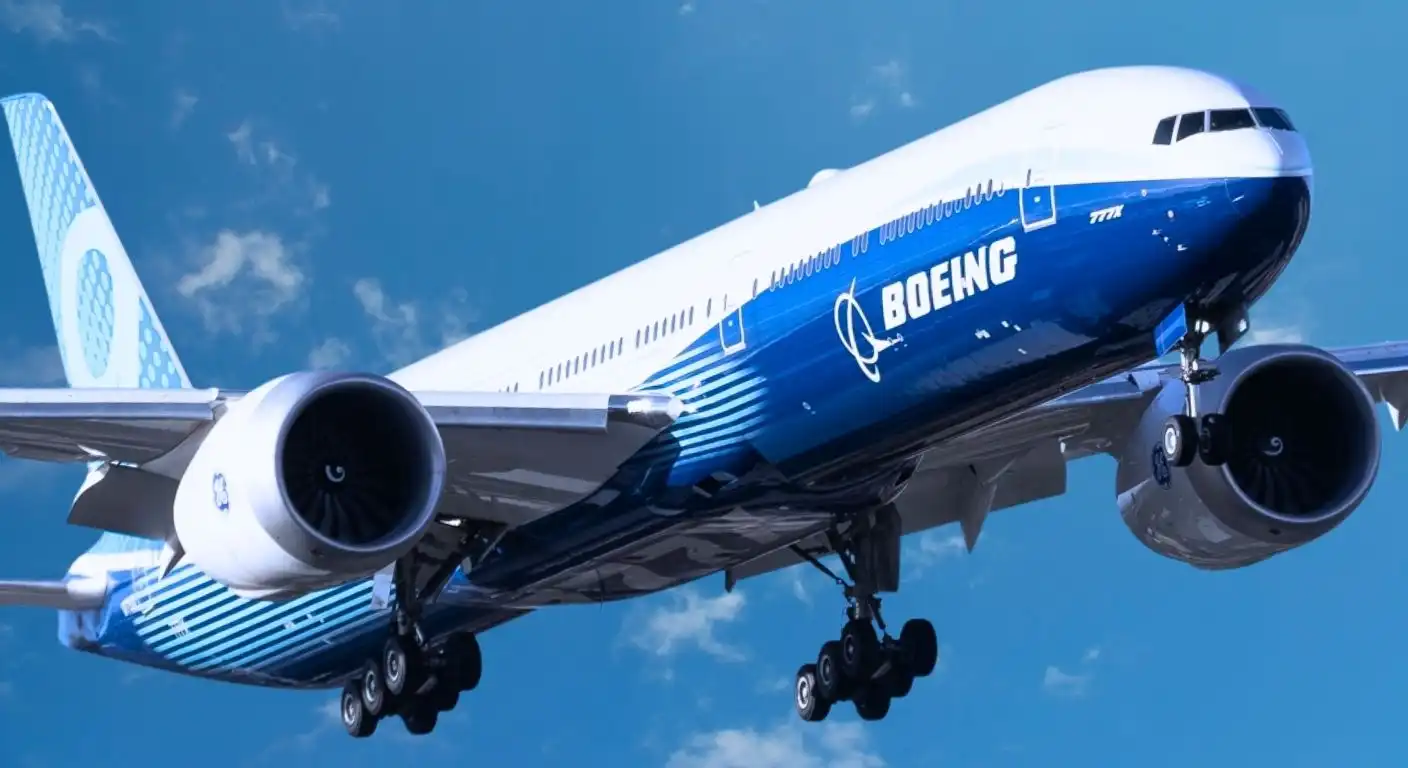
The long-term path to a 2030 valuation double also hinges on the company’s ability to maintain its dominance in the widebody, long-haul segment. The 777X, the massive, next-generation successor to the iconic 777, is the most important product in the company’s current pipeline. The widebody jet is designed to offer the lowest cost-per-seat of any twin-engine airplane in history, making it an essential purchase for international airlines trying to reduce their long-haul operating expenses.
However, the 777X has been plagued by its own cycle of testing setbacks. In late 2024, the company discovered a structural flaw in a critical engine-thrust link component, forcing it to ground the test fleet and take a $4.9 billion pre-tax charge. This delay pushed the first major customer delivery into 2027. If the company can successfully bring the 777X to market and begin full-scale production, it will secure a massive, 20-year revenue stream from the world’s most premium international carriers. If the program faces further, multi-year delays, it would be a major blow to the company’s financial future and a significant, permanent drag on its stock price.
The China Market Breakthrough
Geopolitics remains the most unpredictable variable in the company’s long-term outlook. The relationship between the United States and China has been highly volatile, with both nations using technology and aerospace as pawns in a wider, systemic trade war. For several years, Boeing was effectively frozen out of the Chinese commercial market, which accounts for nearly 20% of the global narrowbody aircraft demand.
In a significant, surprising breakthrough late last year, the company secured a major order for 200 aircraft from Chinese carriers. This order signifies that the company has successfully navigated the trade-related regulatory hurdles and that its aircraft are back on the active list for domestic Chinese aviation growth.
Securing this massive market presence is vital for the company’s goal of reaching 100 aircraft per month in total production across all lines by 2030.
Aviation growth in China is expected to outpace most of the developed world over the next twenty years, and maintaining a foothold in this market is the only way for Boeing to secure its place as a true, global aerospace leader.
The Financial Roadmap to 2030
Achieving a valuation double by 2030 requires the company to deliver on three specific financial benchmarks. First, it must reach and sustain a production rate of 52 aircraft per month for the 737 MAX and increase its widebody 787 production rate to 10 per month. Achieving these rates will move the company into a cash-flow-positive position that can easily fund its own research and development costs.
Second, the company must bring its debt load down to manageable levels. By using the cash proceeds from the parked inventory clearance, Boeing needs to eliminate at least $25 billion in total debt over the next three years. This deleveraging will drastically improve the company’s interest-service costs and provide the necessary balance-sheet flexibility to fund its next-generation flight technology.
Third, the company must successfully transition its engineering focus from troubleshooting and fire-fighting to innovation. This means investing in new research projects that will define the next 30 years of aviation, including hydrogen-fuel-cell propulsion, advanced aerodynamic flight, and autonomous air traffic control software.
By achieving these three goals, Boeing will shift from being a company focused on regulatory survival to one that defines the future of transportation.
The stock market loves certainty, and for the first time in a decade, the path ahead for Boeing is beginning to look predictable. The manufacturing lines are moving, the FAA has restored its certification trust, and the demand for new aircraft is at an all-time high. If the current leadership team maintains its focus on engineering excellence and manufacturing precision, the goal of doubling the share price by 2030 is not just an optimistic prediction; it is a direct, achievable outcome of industrial execution.