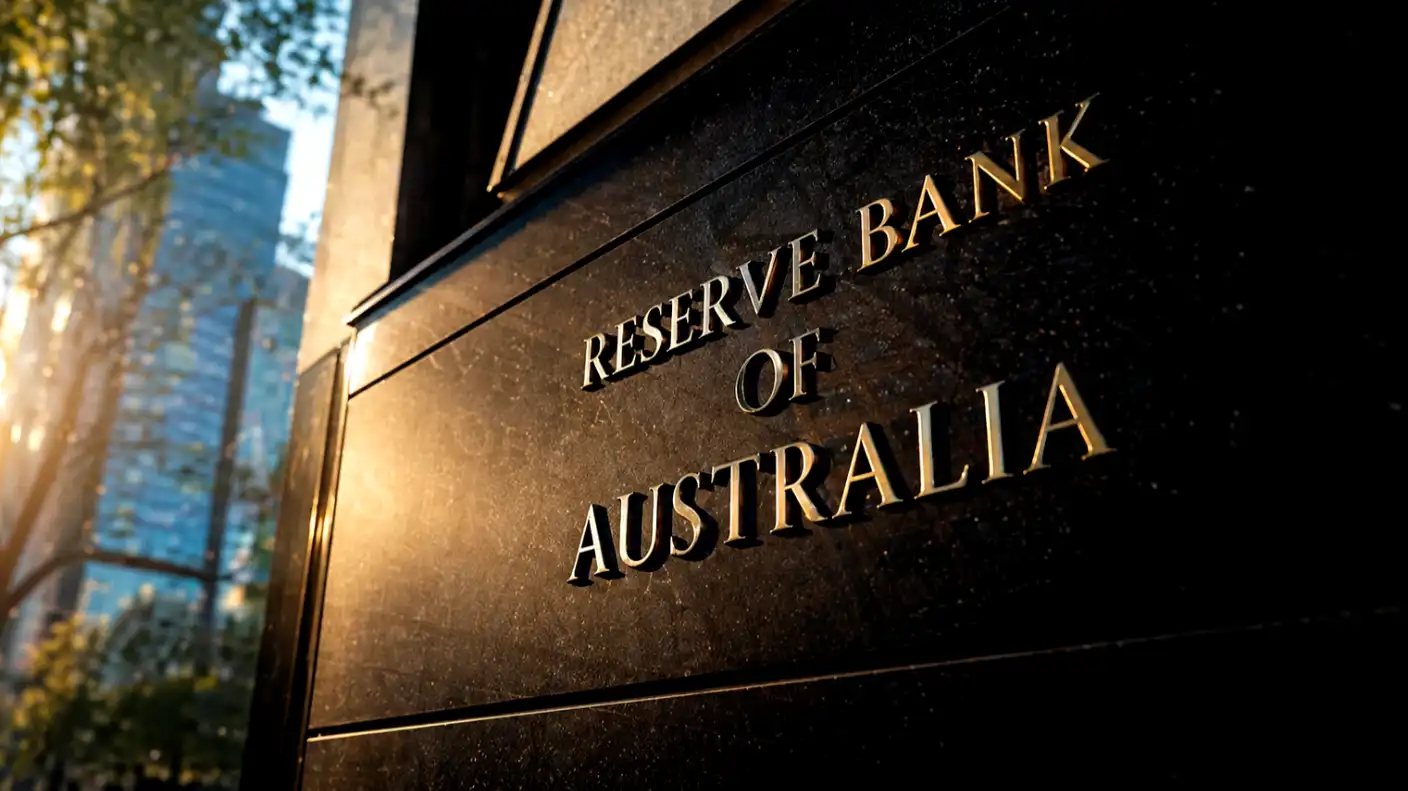
The Australian economy is currently navigating an exceptionally difficult, highly contradictory financial landscape. Contrary to widespread expectations that persistent inflation and high interest rates would force households to tighten their belts, the latest retail and consumption data reveals a surprising trend: Australian spending is not just holding steady—it is accelerating. This unexpected burst of economic activity has pushed household consumption levels well above the forecasts maintained by major investment banks, presenting the Reserve Bank of Australia with a major, structural challenge as it meets to discuss its next policy moves.
For months, economists argued that the Reserve Bank of Australia’s restrictive, high-interest-rate campaign would eventually crush discretionary spending and push the country toward a soft landing. Instead, the domestic economy is proving to be remarkably resilient. A combination of rising housing wealth, a stable labor market, and a recent, government-led boost to tax-return payouts has provided millions of households with the extra capital needed to continue their shopping habits. This resilient consumer behavior is forcing the central bank to reconsider its potential easing cycle, as policymakers worry that premature interest rate cuts could reignite the very inflation they spent the last two years fighting to contain.
The central question now facing investors and policymakers is whether this spending surge represents a sustainable economic expansion or a final, debt-fueled “last hurrah” before a sharper correction. Financial analysts are carefully dissecting the latest data, looking for signs that the consumer may finally be reaching a breaking point. As global commodity prices face renewed pressure and the domestic housing market grapples with a severe, structural supply-side shortage, the Reserve Bank of Australia must decide if it has the patience to stay the course or if it must risk an even tighter monetary stance to finally force the national inflation rate back into its preferred 2% to 3% target band.
The Consumer Spending Paradox: Why Australian Households Defy Rate Hikes
To understand why the Australian consumer continues to defy high borrowing costs, one must look at the unique, highly favorable balance sheet conditions that currently define the nation’s economy. While households in other developed nations like the United Kingdom and Canada are struggling under the weight of variable-rate mortgage resets and declining real wages, many Australian families are currently benefiting from the cumulative wealth effect generated by the country’s housing market.
Real estate serves as the primary engine of Australian household wealth. Despite the Reserve Bank of Australia’s aggressive, 18-month interest rate hike campaign, home prices in major urban centers like Sydney, Melbourne, and Brisbane have not only held their ground but are actually trending toward new, record-breaking highs. This asset appreciation has provided homeowners with a significant psychological and financial buffer. When individuals see their primary asset—their home—gaining value, they feel significantly more comfortable spending their monthly paychecks on discretionary items, travel, and dining, effectively offsetting the pain of high interest rates with the comfort of growing paper wealth.
The Role of Fiscal Policy and Tax Return Windfalls
The resilience of the Australian consumer is also heavily linked to government fiscal policy. In an effort to mitigate the financial stress of the cost-of-living crisis, the federal government recently pushed through a comprehensive, highly generous package of tax relief measures and one-time cost-of-living credits. These payments, which started landing in millions of Australian bank accounts just as the mid-year shopping season began, acted as a direct, high-velocity injection of liquid capital into the retail economy.
While the central bank is attempting to drain liquidity from the economy to lower inflation, the government’s fiscal support is doing the exact opposite. This tension between monetary tightening and fiscal stimulus has created a highly confusing environment for retail executives. Major department store chains and local retailers reported that the timing of these government payments perfectly aligned with a surge in mid-year sales, proving that when the government puts cash directly into the hands of households, they will spend it immediately, bypassing any desire to boost their personal savings rates.
Labor Market Stability and Wage Growth
The final piece of the economic puzzle is the continued, surprising strength of the Australian labor market. Despite the high-interest-rate headwinds, the unemployment rate remains at a historically low 4.1 percent. This stability is the ultimate foundation for consumer spending. As long as households feel secure in their jobs and have the ability to demand annual salary increases to keep pace with inflation, they will continue to participate in the retail market.
Wage growth in the private sector has finally begun to catch up to the cost-of-living surge, with average weekly earnings expanding by 3.8 percent year-over-year. This growth in take-home pay allows households to cover their essential expenses and still have a modest margin for discretionary spending. The fact that the labor market has not experienced a significant wave of layoffs suggests that businesses are still confident in their ability to maintain demand, despite the high cost of borrowing, which continues to keep the economy moving and complicates the Reserve Bank of Australia’s efforts to reach its inflation targets.
The Reserve Bank of Australia’s Policy Dilemma: To Cut or to Hold?
The Reserve Bank of Australia’s Governing Council is currently stuck in one of the most difficult policy debates of the year. On one hand, the bank faces clear, undeniable evidence that the economy is cooling in specific areas. Residential construction starts are down, and several retail-facing businesses have reported a decline in foot traffic as the cost of borrowing for home equity lines of credit reaches painful levels. If the bank maintains its restrictive stance for too long, it risks pushing the economy into an unnecessary, deep recession.
On the other hand, the latest retail spending report proves that consumer demand is far too strong to allow for an immediate pivot toward easing. If the central bank cuts interest rates now, it risks providing a massive, unintended stimulatory shock to the economy, potentially triggering an uncontrolled surge in home prices and consumer spending that would push inflation back toward the 4% or 5% range. For Governor Michele Bullock, the priority remains laser-focused: the bank must prove to the markets that it will keep interest rates high until the inflation trajectory is undeniably, permanently broken.
Analyzing the Hawkish Messaging in Official Communications
The official statement from the Reserve Bank of Australia after its most recent policy meeting was surprisingly, highly hawkish. The bank explicitly noted that core inflation remains “uncomfortably high” and that the recent retail spending strength has only strengthened the case for a cautious, wait-and-see approach. By removing any hints of an impending rate cut, the central bank effectively shut down the market’s enthusiasm for a near-term pivot, forcing bond yields to stay elevated and signaling to commercial banks that the cost of capital will not be decreasing anytime soon.
Market analysts suggest that this hawkish tone is designed to manage the “inflation expectations” of the Australian public. Central bank research consistently shows that if consumers expect prices to rise indefinitely, they will behave in ways that make that inflation a reality, such as demanding higher wages and pre-emptively raising prices. By signaling that it is willing to keep rates at restrictive levels even if the economy stutters, the bank is attempting to break this inflationary psychology, forcing households and businesses to adjust their long-term spending plans to reflect a future of stable, lower price growth.
The Divergence Between RBA Policy and Market Expectations
A growing gap exists between the hawkish narrative of the Reserve Bank of Australia and the optimistic pricing currently seen in the interest rate derivatives market. While the central bank refuses to offer any timeline for easing, traders continue to bet on a late-2026 interest rate cut, pricing in at least a 30 percent probability of a quarter-point reduction by the end of December. This divergence in opinion is a major source of market volatility.
If the Reserve Bank of Australia continues to hold rates steady while the market anticipates a cut, the volatility in the bond market will likely increase significantly. Every upcoming inflation, labor, and retail sales report will act as a major, high-stakes catalyst for the Australian dollar, with traders aggressively moving in and out of positions as they adjust their guesses about the bank’s next move. This environment of uncertainty makes it incredibly difficult for companies to hedge their currency risks, secure long-term loans, or plan their capital expenditures, proving that the central bank’s refusal to provide clear forward guidance comes at a high economic cost.
The Housing Market Bottleneck: Supply Shortages Amid Rising Costs
While retail spending remains robust, the housing market serves as the most critical, highly sensitive sector in the Australian economy. Australia faces a severe, structural shortage of new housing supply, a crisis that has been years in the making and cannot be resolved through monetary policy alone. As interest rates remain high, the cost of constructing new homes has surged, while the number of new groundbreakings has dropped to the lowest levels since 2012.
This imbalance between supply and demand has created a permanent, upward pressure on housing costs, which represent one of the most critical, difficult-to-control components of the national inflation basket. Because the country simply isn’t building enough homes to keep up with current population growth, rental rates and home prices remain elevated even as the broader economy slows. This structural housing inflation acts as a powerful, permanent headwind for the central bank, as it keeps the CPI readings artificially high and makes the 2% target look like an increasingly distant, difficult-to-achieve goal.
The Impact of Record Immigration on Housing Demand
The recent, highly significant migration of talent into the Australian economy has significantly exacerbated the housing shortage. While the government’s policy to attract skilled workers has provided a vital boost to the labor market, filling critical roles in healthcare, technology, and engineering, the influx of nearly 500,000 new arrivals over the last year has completely overwhelmed the capacity of the national housing stock.
This rapid population growth has placed intense, multi-dimensional pressure on the residential rental market.
With vacancy rates sitting at historic lows of below 1%, competition for available housing is incredibly fierce, driving rental price inflation to double-digit levels in major capital cities.
This surge in shelter costs is the primary factor preventing the inflation rate from falling further, leaving the central bank with no choice but to maintain its restrictive stance, even as the growth in other, non-housing retail sectors begins to cool off.
Balancing Housing Affordability and Inflationary Pressure
The central bank faces a highly unique and incredibly difficult policy trap regarding housing affordability. If the bank keeps interest rates high to fight inflation, it increases the borrowing costs for homebuilders, making it even more expensive to build the new homes that the country desperately needs. This leads to an unintended, long-term consequence: higher interest rates to fight inflation are effectively making the supply shortage worse, which in turn leads to even higher housing costs.
This “housing-inflation trap” is a major concern for the federal government. The Prime Minister’s office has launched an aggressive, multi-billion-dollar initiative to cut zoning red tape and provide direct grants to developers who specialize in high-density, affordable residential construction.
The goal is to increase the housing supply, reduce rental costs, and provide a path to homeownership for younger generations, but these structural supply-side reforms require years of consistent effort.
Until the national housing supply reaches a level that can actually balance the market demand, the central bank’s inflation-fighting strategy will remain heavily compromised by the rising cost of residential shelter.
Macroeconomic Outlook: Navigating the Global Trade and Commodity Squeeze
The Australian economy also remains highly vulnerable to external macroeconomic shocks, particularly the ongoing geopolitical instability affecting global commodity markets. As a major exporter of iron ore, coal, and natural gas, Australia is uniquely sensitive to the economic health of its largest trade partner: China. Recent signals regarding China’s industrial output and infrastructure investment plans have created a high degree of uncertainty regarding future demand for Australian commodities.
If China’s industrial sector experiences a significant, structural slowdown, the resulting decline in commodity prices would have a catastrophic impact on the Australian dollar, the federal tax revenue base, and the broader, growth-dependent outlook of the national economy.
This commodity risk means that the central bank must not only manage domestic inflation, but must also maintain a highly flexible, international-focused policy strategy that can absorb the potential shocks from Asia’s volatile industrial cycle.
Managing Commodity Price Volatility
The Reserve Bank of Australia’s monetary policy is inextricably linked to the performance of the mining sector. When global iron ore prices trade near $100 per ton, the Australian economy generates massive, high-margin export revenues, supporting the national currency and providing the government with surplus cash to fund public infrastructure. When prices drop below $75 per ton, however, the entire economic landscape changes.
The sensitivity to commodity price moves makes the bank’s job incredibly difficult.
The central bank must maintain a monetary policy that is tight enough to control domestic inflation without being so restrictive that it cripples the mining sector’s ability to remain competitive in a highly volatile, globally priced commodity market.
This requires the bank to constantly monitor global steel production, Chinese industrial demand, and maritime logistics costs, proving that managing an economy in a commodity-dependent nation requires a level of international expertise that few other central banks are forced to cultivate.
The Currency Transmission and Import-Led Inflation
The value of the Australian dollar serves as the final, critical mechanism through which global volatility flows into the domestic economy. As the yield differential between U.S. and Australian bonds widens, the Australian dollar faces consistent, structural depreciation pressure. A weaker currency is an automatic, non-discretionary tax on the entire nation. Because Australia imports almost all of its high-tech hardware, advanced medical equipment, and consumer electronics, a lower dollar directly translates into higher prices for these essential goods.
The central bank monitors this currency-led inflation very closely.
If the dollar continues to slide, it may force the central bank to maintain higher interest rates, not to fight domestic consumer demand, but simply to protect the purchasing power of the national currency.
This creates a highly complex situation for the consumer, who now faces the double threat of high energy-driven inflation and an import-tax-driven rise in the cost of everything from technology to daily necessities.
The Economic Road Ahead: Toward a Sustainable Soft Landing
The resilience of the Australian consumer, in the face of 2.25% interest rates and persistent, energy-driven inflation, is a profound testament to the strength and adaptability of the national economic framework. By utilizing targeted fiscal support for households, maintaining a stable labor market, and managing the commodity-linked currency fluctuations with extreme precision, the central bank has built a highly durable, adaptable system that has successfully navigated the most challenging macro environment in a generation.
However, the path toward a permanent soft landing remains steep. The country must resolve its structural housing supply deficit, modernize its energy infrastructure to support the next generation of industrial growth, and continue to manage the volatile trade relationship with its largest international partners.
The successful navigation of these structural issues will require a sustained, multi-year commitment from both the central bank and the federal government.
If they can balance these priorities, Australia will prove that it can secure long-term, stable, and inflation-protected growth even in a world characterized by geopolitical instability, trade protectionism, and structural technological change, ensuring a prosperous and resilient future for its citizens for generations to come.