

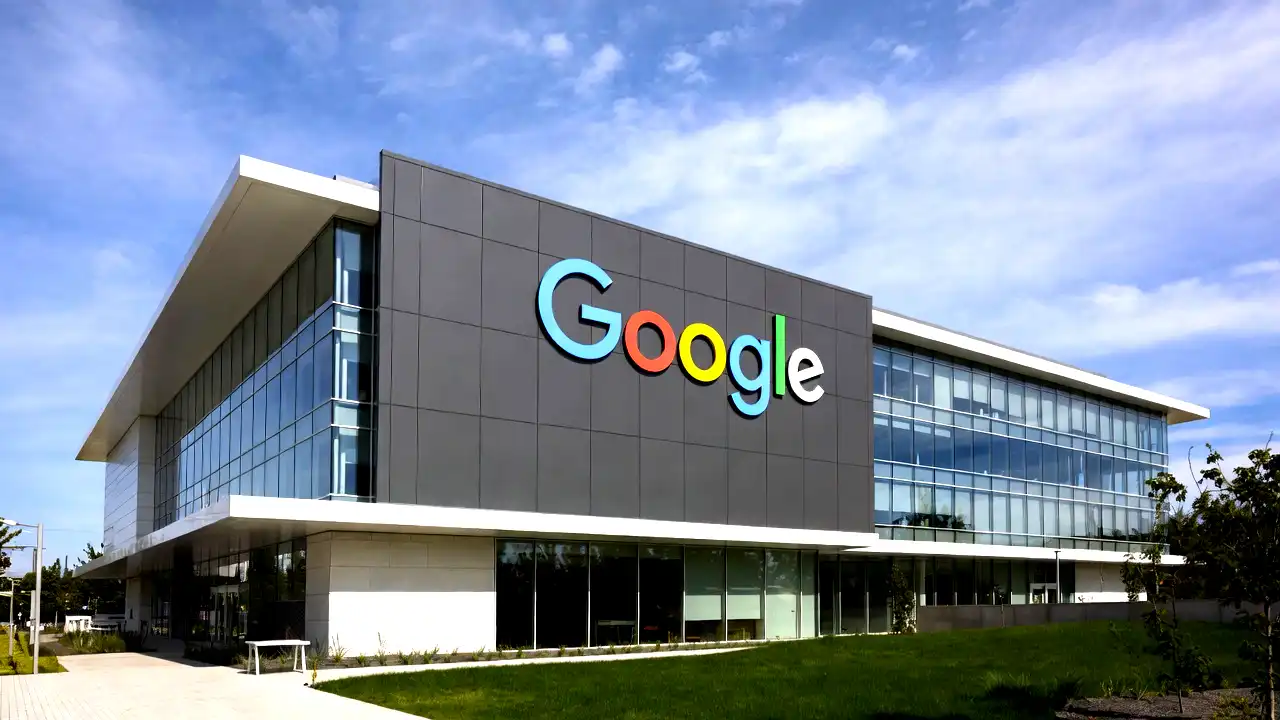
The artificial intelligence hardware race has entered a highly intensive capital-raising phase. In August 2026, technology giant Alphabet Inc. returned to the United States corporate debt market with a massive 10-part investment-grade bond offering. The Google and YouTube parent company is seeking to raise between $20 billion and $25 billion, capitalizing on its top-tier credit ratings to lock in long-term capital as the tech industry races to expand its physical computing infrastructure.
This latest bond sale represents a major shift in corporate finance for Silicon Valley’s cash-rich elite. For decades, companies like Alphabet, Apple, and Microsoft relied almost exclusively on their massive domestic cash reserves to fund capital expenditures, research, and acquisitions. However, the sheer scale of the infrastructure required to support generative artificial intelligence has forced these companies to preserve their immediate cash and tap the corporate debt markets instead.
As Alphabet launches its multi-billion-dollar offering, fixed-income markets are closely analyzing the transaction. The bond sale represents a critical test of investor appetite for AI-related corporate debt, arriving just weeks after a broader tech stock selloff sparked by investor anxieties over the high cost of artificial intelligence infrastructure.
Navigating the Cash-Rich Paradox: Why Alphabet is Tapping Corporate Debt
At first glance, Alphabet’s decision to borrow up to $25 billion in the debt market might seem counterintuitive. The company regularly reports massive revenues and holds a substantial cash position on its balance sheet. However, the financial dynamics of the generative AI era require a completely different approach to liquidity management and capital structure optimization.
The Growing Reality of Capital-Intensive Artificial Intelligence
The primary driver behind Alphabet’s recent debt campaign is the immense cost of building, powering, and maintaining modern data centers. To support its Gemini AI models and expand its high-growth Google Cloud services, the company must purchase hundreds of thousands of specialized, expensive graphics processing units. In addition, the firm must secure massive amounts of electrical power, construct specialized cooling infrastructure, and build high-speed optical networking systems.
In its recent second-quarter earnings report, Alphabet raised its full-year capital expenditure forecast for 2026 to a massive range of $195 billion to $205 billion. This updated projection represents a significant increase from its earlier capital expenditure outlook of $180 billion to $190 billion.
Faced with an annual capital spending bill that could easily surpass $200 billion, even a company with Alphabet’s massive cash flows must look to external financing. By utilizing the corporate bond market, the tech giant can spread the immense costs of these long-term physical assets over several decades, matching the useful life of its data centers with the maturity profiles of its debt liabilities.
Managing the Impact on Free Cash Flow
The heavy capital expenditures required for AI infrastructure have already begun to impact Alphabet’s operational liquidity metrics. In its second-quarter report, the company posted its first-ever negative free cash flow figure. While operational revenues across Google Search and Google Cloud remained highly robust, the immense capital outlays required for AI hardware purchases temporarily dragged its net cash flow into negative territory.
To protect its cash reserves and maintain its operational flexibility, Alphabet is utilizing debt as a strategic financial cushion. Borrowing up to $25 billion allows the company to bridge the gap between its record-breaking physical infrastructure investments and its ongoing cash needs.
Furthermore, because Alphabet possesses pristine credit ratings of Aa2 from Moody’s and AA+ from S&P, it can borrow money at highly favorable interest rates. This low cost of debt allows the company to optimize its overall cost of capital, ensuring that it can fund its ambitious technology expansion plans without diluting its existing equity shareholders.
Inside the Ten-Part Bond Offering: Yields, Maturities, and Market Pricing
The SEC-registered, senior unsecured bond offering is structured to appeal to a broad spectrum of fixed-income investors, spanning short-term cash managers, long-term pension funds, and major insurance companies.
Multi-Tranche Structure Appealing to Diverse Bond Investors
To maximize investor participation and secure the most favorable pricing terms, Alphabet is offering the senior unsecured notes in as many as 10 distinct parts. The maturities on the proposed notes range from short-term two-year instruments up to long-term 40-year bonds.
This multi-tranche approach allows Alphabet to target different segments of the debt market simultaneously. Short-term corporate treasurers and mutual funds can park their excess cash in the two-year and five-year notes, which offer high liquidity and low interest-rate risk.
On the other hand, long-duration investors like pension funds and life insurance companies, which require steady, reliable income streams to match their long-term liabilities, are targeting the 30-year and 40-year tranches. By carving the $25 billion offering into ten different parts, Alphabet has created a highly efficient distribution system that maximizes demand across the entire yield curve.
Concessions and Pricing Yields Amid Softening Debt Demand
Despite Alphabet’s pristine credit status, the immense supply of tech-related bonds hitting the market has forced the company to offer slightly more generous terms to secure investor commitments. According to market sources, initial price talk for the longest-tenured 40-year tranche involved a yield premium of about 1.55 percentage points (155 basis points) above benchmark United States Treasury bonds.
In addition, initial discussions for the various tranches involved yield premiums of up to 0.4 percentage points (40 basis points) above existing Alphabet debt. This premium represents a more generous concession than is typically seen in the high-grade corporate bond market.
Fixed-income analysts note that these higher concessions are necessary because investor appetite for corporate debt has softened slightly. High-grade bond deals typically see pricing tighten as the order book builds, but the initial pricing talk shows that even the world’s largest tech companies must occasionally sweeten their terms to attract large blocks of institutional capital.
The transaction is being managed by a formidable syndicate of Wall Street banks, including Bank of America Corporation, Citigroup Incorporated, Goldman Sachs Group Incorporated, JPMorgan Chase & Company, Morgan Stanley, and Wells Fargo & Company.
The Giant AI Debt Wave: Big Tech’s Multi-Billion Dollar Borrowing Spree
Alphabet is not the only technology giant returning to the debt markets to fund its capital ambitions. The corporate bond market is experiencing an unprecedented wave of high-grade issuance from the world’s leading technology and cloud infrastructure providers.
The Rising Borrowing Stats of Hyperscalers
The leading artificial intelligence “hyperscalers”—consisting of Amazon, Alphabet, Meta, Microsoft, and Oracle—are borrowing at a record-breaking pace. According to market data, these five tech giants issued approximately $194 billion worth of bonds in 2026 through July 7. This represents a massive 79% increase compared to the roughly $108 billion in debt they issued during the same period in 2025.
This unprecedented debt wave is being driven entirely by the global AI infrastructure land grab. The five major hyperscalers are projected to spend more than $730 billion collectively in 2026, with the vast majority of that capital going directly toward artificial intelligence data centers, chip procurement, and fiber-optic networking.
As the capital demands of the AI race stretch even the immense cash flows generated by digital advertising and enterprise software, these firms are increasingly relying on the corporate bond market to finance their long-term growth stories.
Alphabet’s Multi-Stage Capital Strategy
Alphabet has become the clearest example of this aggressive new financing playbook. The company is returning to the bond market for the third time in just nine months, executing a highly active, multi-stage capital strategy to support its technology roadmap.
The company’s fundraising timeline over the past year has been historic:
- In November 2025, Alphabet returned to the debt market with a $25 billion bond issuance.
- In February 2026, the company followed up with a massive $30 billion debt offering, which famously included a rare 100-year sterling-denominated note aimed at European institutional buyers.
- In June 2026, the tech giant completed a highly successful equity financing campaign, raising nearly $85 billion in fresh capital.
- In August 2026, the company launched its latest proposed bond sale, seeking to raise up to $25 billion.
If the latest bond offering prices in full, Alphabet will have successfully raised roughly $170 billion in fresh debt and equity capital in less than twelve months. This rapid succession of massive capital raises proves that the artificial intelligence arms race has shifted from a software battle into a high-stakes corporate finance campaign, where success depends on a company’s ability to raise and deploy massive amounts of capital faster than its competitors.
Market Sentiment: Balancing Stock Volatility with Massive Institutional Demand
The public markets are currently exhibiting a unique divergence in how they view the massive capital spending plans of big tech companies. While equity investors have expressed growing anxiety over the high costs of AI, debt investors are showing immense enthusiasm for the sector’s high-grade bonds.
Equity Market Anxiety vs. Bond Market Enthusiasm
In late July 2026, the stock market experienced a sharp selloff after several major tech companies published their quarterly earnings reports. Equity investors expressed concern that while capital expenditures were soaring to historic heights, the near-term financial returns from generative AI software were not yet large enough to justify the spending.
This anxiety caused Alphabet’s stock to experience a volatile slide, dragging down other prominent tech names in the process.
In sharp contrast to this equity market skepticism, the corporate bond market has embraced Alphabet’s latest debt offering with open arms. Despite the softening of the broader bond market, Alphabet’s latest $25 billion offering drew an overwhelming $115 billion in total order book demand during the book-building process.
This massive oversubscription shows that fixed-income investors view the cash-generating power of Alphabet’s core businesses as incredibly secure. While stock investors worry about quarterly profit margins and near-term AI monetization, bond buyers are focusing on the company’s massive economic moat, its dominant positions in global search and digital advertising, and the recurring, high-margin revenues of its enterprise cloud division.
To a bondholder, Alphabet remains one of the safest credit profiles on Earth, and the opportunity to lock in yields on a highly secure 40-year corporate bond from a technology leader is highly attractive.
Shaping the Financial Future of the Digital Age
The pricing of Alphabet’s latest $25 billion bond offering represents a landmark moment in the financial evolution of the technology sector. By returning to the debt markets for the third time in nine months, the Google parent company has demonstrated that the capital demands of the artificial intelligence era are too large to be funded by cash reserves alone.
Through the use of a highly structured, 10-part bond offering, Alphabet has successfully optimized its capital structure, protecting its operational cash flows while securing the massive financial resources required to build the physical infrastructure of the digital age.
As the leading tech giants continue to issue hundreds of billions of dollars in corporate debt to fund their data centers, the global tech industry is transitioning into a mature, capital-intensive industrial sector, where financial strength and market access will determine the leaders of the next technological frontier.






