

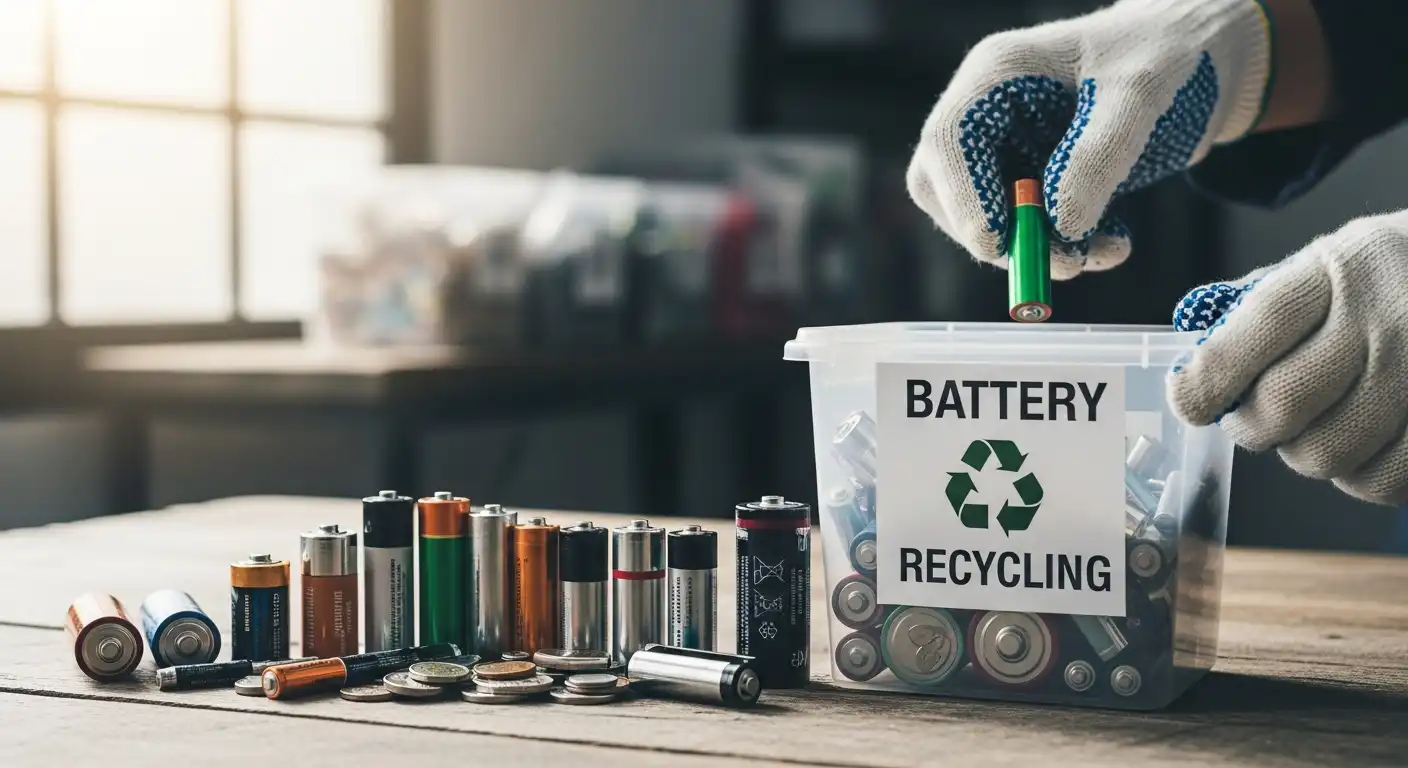
The United States has taken its most aggressive step yet to secure the raw materials of the modern economy. In August 2026, the federal government officially published a temporary final rule banning the export of key industrial waste streams, specifically tungsten scrap and lithium-ion battery recycling materials. This decisive policy represents a major intervention in global trade, requiring suppliers to reserve their entire monthly output of these materials for domestic buyers.
The new rules, published by the Commerce Department’s Bureau of Industry and Security, are set to take effect on August 27, 2026, and will remain in place for one year. The move follows a directive signed by President Donald Trump on July 30, 2026, which invoked the Cold War-era Defense Production Act of 1950 to block the outflow of recoverable critical minerals and materials. By forcing domestic suppliers to sell exclusively to United States-based buyers, the administration wants to bolster national defense supply chains and reduce the country’s heavy dependence on foreign competitors.
This sudden export block highlights a growing consensus in Washington that electronic waste and industrial scrap are no longer trash, but highly valuable strategic assets. As the global race for clean energy technology and advanced military hardware intensifies, securing these recoverable materials has become a matter of national survival.
The Strategic Pivot: Securing Recoverable Critical Minerals
For decades, the United States operated on a globalized trade model, exporting massive quantities of raw scrap and industrial waste to overseas processing hubs. However, the rapid concentration of mineral refining capacity in Asia has left Western defense and technology industries highly vulnerable to supply disruptions. The new export restrictions represent a fundamental shift toward resource nationalism.
Expanding Executive Power Through the Defense Production Act
To implement this sweeping ban, the administration relied on the Defense Production Act of 1950. Originally enacted during the Korean War to help the government direct industrial production for national defense, the statute has been broadened over the decades to cover emergency preparedness, critical infrastructure protection, and energy security.
Under the presidential determination signed in late July, the administration declared that the inadequate domestic supply of recoverable critical minerals poses an increasing threat to national security.
This determination officially authorized the Secretary of Commerce to impose strict allocation orders on industrial waste. By utilizing this emergency authority, the government can bypass lengthy legislative processes and implement immediate trade barriers to keep strategic materials within the country.
The Legal Mandate of One-Hundred-Percent Domestic Allocation
The Bureau of Industry and Security designed the temporary final rule to be exceptionally comprehensive. Starting on August 27, 2026, the regulation requires U.S. sellers to allocate 100% of their monthly sales of covered materials to U.S. persons. The covered items must physically remain within the United States, effectively freezing the standard export pipelines that have carried American scrap abroad for decades.
The rule targets two primary categories of industrial waste. The first is tungsten waste and scrap, classified under Schedule B code 8101.97.00.00. The second is shredded lithium-ion battery scrap, commonly referred to in the industry as black mass, covered under three distinct Schedule B classifications.
Crucially, the government’s definition of a sale includes deliveries to corporate affiliates, subsidiaries, and joint-venture divisions under common ownership. This prevents multinational corporations from bypassing the restrictions by simply shipping materials to their own overseas processing plants. While companies can apply to send materials abroad for refining, the Bureau of Industry and Security will only grant permission if the resulting recovered minerals are guaranteed to return directly to the United States.
The Financial Crisis of North American Recyclers
The decision to block scrap exports comes at a time of severe financial distress for the domestic recycling industry. Over the past several years, the United States government has poured billions of dollars into supporting domestic battery recycling startups, aiming to build a closed-loop supply chain for electric vehicle batteries. However, these startups have struggled to survive in a highly competitive global market.
Corporate Failures in the American Recycling Sector
Building and operating advanced recycling facilities requires immense capital. North American recycling firms have faced severe operational and financial headwinds, with several prominent players running out of cash before their commercial-scale factories could achieve profitability.
In April 2026, Massachusetts-based battery recycling startup Ascend Elements Inc. officially filed for bankruptcy, shocking the industry. Ascend Elements had previously secured substantial federal support, yet it could not overcome rising operational costs and a severe shortage of affordable local feedstock.
Similarly, Canada-based Li-Cycle Holdings has faced immense financial strain, pausing construction on its key processing facility due to skyrocketing costs.
A primary driver of these corporate failures was the inability of domestic recyclers to compete with foreign buyers. Recyclers in South Korea, China, and Southeast Asia routinely paid above-market rates for raw American battery scrap, outbidding local processors and shipping the valuable materials overseas. By cutting off these export channels, the Trump administration wants to lower the cost of raw scrap for domestic processors, providing them with a steady, affordable supply of feedstock to help them rebuild their businesses.
Stemming the Massive Flow of Monthly Electronic Waste
The volume of valuable materials leaving the United States before this ban was substantial. According to data tracked by environmental advocacy organizations, the United States has exported nearly 33,000 metric tons of electronic waste and industrial scrap per month.
Much of this material contains high concentrations of lithium, cobalt, nickel, and manganese.
By keeping these 33,000 metric tons of material at home every month, the government is creating an artificial raw material windfall for surviving domestic processors. Instead of sending these minerals to be refined in Asia, American companies must now process them domestically. This mandated retention is expected to accelerate the development of advanced recycling technologies, helping the country meet its domestic mineral production goals without requiring the immediate opening of unpopular new mines.
Geopolitical Retaliation and the January 2027 Defense Deadline
The export ban is also a direct countermeasure in the ongoing technological and trade conflict between the United States and China. China currently dominates the global processing and refining capacity for almost every major critical mineral, giving Beijing immense leverage over Western industrial supply chains.
Bypassing Chinese Monopolies and Export Restrictions
The Chinese government has increasingly utilized its market dominance as a diplomatic weapon. Beijing has implemented strict export controls on critical minerals like gallium, germanium, antimony, and superhard materials, specifically targeting shipments to the United States. These restrictions have made it exceptionally difficult for American defense contractors and high-tech manufacturers to secure the raw inputs they need for military hardware, advanced radar systems, and consumer electronics.
By blocking the export of tungsten and battery waste, the United States is implementing its own version of resource preservation. Tungsten is a dense, incredibly hard metal that is absolutely vital for manufacturing military armor, armor-piercing ammunition, turbine blades, and precision machine tooling.
The United States has not commercially mined tungsten since 2015, relying entirely on imports and scrap recycling. Because China controls the vast majority of the global tungsten supply, keeping every pound of domestic tungsten scrap inside the country is an absolute national defense priority.
Meeting the Imminent Defense Acquisition Deadline
The urgency behind the export ban is further intensified by an upcoming statutory deadline. Under existing federal law, United States defense contractors face a strict deadline of January 1, 2027, to stop purchasing certain critical materials of Chinese, Russian, Iranian, or North Korean origin.
With the deadline less than six months away, defense manufacturers are scrambling to find alternative, compliant sources of strategic metals.
The domestic recycling sector represents the fastest and most secure way to generate these compliant materials. While opening a new lithium or tungsten mine can take anywhere from seven to fifteen years due to regulatory permits and environmental challenges, a recycling facility can process scrap and deliver high-purity metals within weeks. The export ban ensures that this critical recycling feedstock remains in the country, helping defense contractors comply with the 2027 sourcing restrictions without disrupting military production schedules.
Global Market Friction: The Impact on Asian Recyclers
The decision to keep all American critical mineral scrap within domestic borders is expected to cause significant friction in global metal markets, particularly in Asia, where advanced recycling facilities rely heavily on importing raw American waste.
Squeezing the Supply Chain for Asian Technology Recyclers
The United States is a major producer of battery scrap. According to market analysts at pricing agency Fastmarkets, the United States accounted for approximately 9% of global black mass production capacity from battery scrap during the first quarter of 2026.
For years, the vast majority of this shredded battery material was exported to high-tech recycling hubs in South Korea, Taiwan, Vietnam, and other Southeast Asian nations. These countries possess highly advanced hydrometallurgical refining plants capable of extracting battery-grade lithium, nickel, and cobalt from black mass.
The sudden implementation of the United States export ban will significantly tighten the availability of black mass for these Asian processors. South Korean battery recyclers, who rely on steady imports of American scrap to feed their highly automated factories, face an immediate supply squeeze. This reduction in raw material availability could drive up the global price of recycled battery metals, making it more expensive for Asian manufacturers to produce the battery cells that power electric vehicles and consumer electronics.
Navigating the Hardship Waiver and Exemption Process
To prevent complete industrial paralysis, the Commerce Department’s Bureau of Industry and Security has built a strict waiver and exemption process into the temporary final rule. Companies can apply for special authorization to export covered materials under highly specific circumstances.
The government may grant relief in cases of exceptional hardship, irreparable financial harm, or if a company can demonstrate that domestic buyers have absolutely no capacity to process the specific material. Furthermore, companies can seek permission to send scrap abroad for specialized processing, provided they sign legally binding agreements guaranteeing that 100% of the recovered critical minerals will be returned directly to the United States.
However, filing an application does not suspend the domestic-sales requirement, and Customs and Border Protection has been authorized to detain any attempted exports while the Bureau of Industry and Security reviews compliance. This ensures that the default destination for all American critical mineral scrap remains strictly domestic.
Establishing a Resilient Resource Baseline
The implementation of the one-year export ban on tungsten and battery waste marks a historic turning point in United States trade and industrial policy. By utilizing the Defense Production Act to block the outflow of industrial scrap, the federal government is asserting that the recycling bin is a vital frontier of national security.
While the export ban will cause short-term friction for international traders and squeeze the supply chains of Asian recycling hubs, it provides a vital financial lifeline to struggling domestic recyclers like Ascend Elements and Li-Cycle. By keeping 33,000 metric tons of electronic waste at home every month, the policy secures a reliable, domestic source of the strategic metals required to support advanced defense systems, clean energy technologies, and high-tech manufacturing. As the January 1, 2027, defense purchasing deadline approaches, this aggressive resource preservation strategy will determine whether the United States can successfully build a self-reliant, resilient industrial base for the high-tech challenges of the future.






