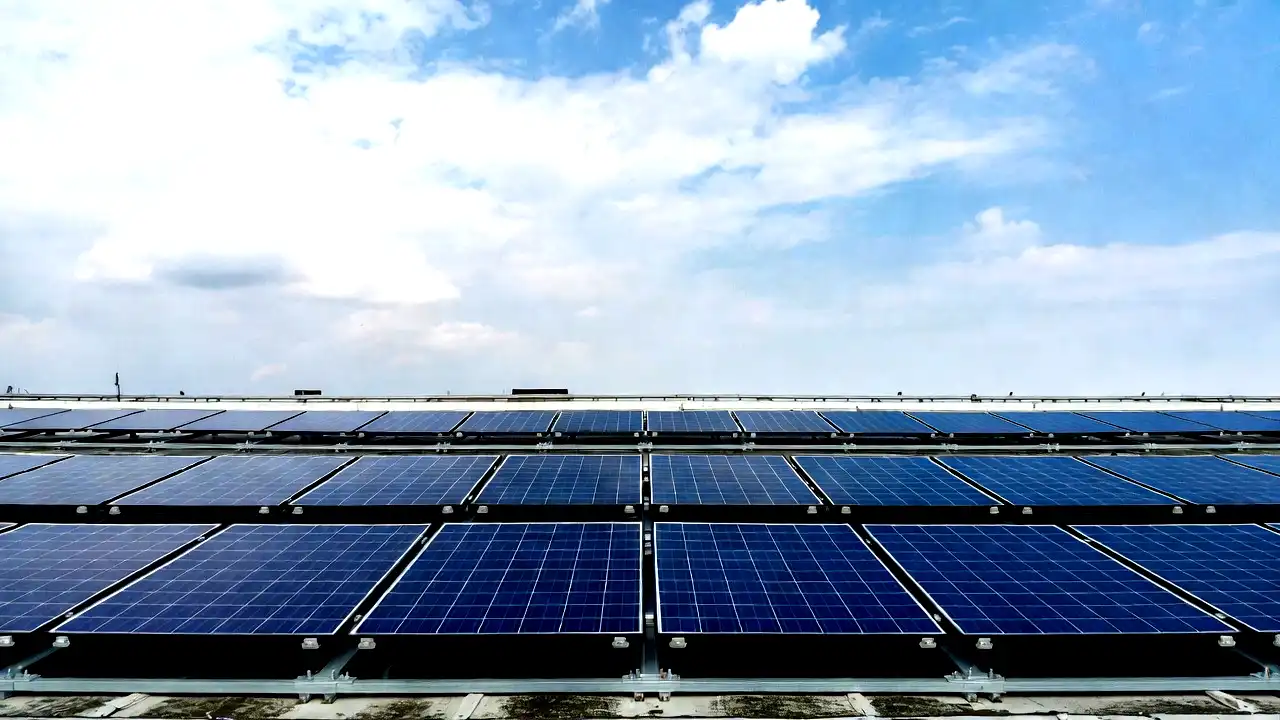
A decentralized revolution is quietly rolling across the global energy landscape, and its primary testing ground is the southern continent. In August 2026, industry reports confirmed that Australia had established a major milestone in home renewables, with approximately 415,000 household battery units now connected to the national grid. This means that roughly one in every 25 Australian homes has installed a home battery system, a historic ratio that outpaces every other major economy in the world on a per-capita basis.
The primary catalyst for this massive energy shift is the federal government’s Cheaper Home Batteries Program. Originally launched as a $2.3 billion initiative, the program was expanded in late 2025 to a massive $7.2 billion (approximately $5.17 billion USD) over four years. By offering direct subsidies that cut up to 30% off the upfront cost of installing small-scale batteries, the government has strapped a rocket to home energy storage, aiming to connect over 2 million household batteries by 2030 and add 40 gigawatt-hours of decentralized storage capacity to the national network.
However, as these small-scale power stations multiply across suburban rooftops, a significant operational bottleneck has emerged. Recent data from the Australian Competition and Consumer Commission reveals that only 24% of these home battery owners have agreed to link their systems into a Virtual Power Plant. This widespread reluctance to share stored energy represents a major weak link in the clean energy transition, creating a multi-billion-dollar gap in avoidable grid investment and preventing the nation’s grid from achieving its full, stabilizing potential.
The Mechanics of the Household Energy Gold Rush
The scale of Australia’s domestic energy boom is a direct result of a highly enthusiastic, consumer-driven push for energy independence and lower utility bills.
The Unprecedented Surge of the Late 2025 Battery Wave
According to reports from the Clean Energy Council, the pace of battery installations has experienced a dramatic, exponential acceleration over the past year. During the second half of 2025 alone, Australian households installed more than 180,000 home battery units, representing a massive volume that matched the total number of installations recorded over the preceding five years combined. This represents a 41% increase in total residential battery capacity in just six months, completely eclipsing previous international benchmarks.
This rapid acceleration was driven directly by the launch of the federal subsidy program. While Australia was already a global leader in domestic solar power, with solar panels installed on nearly one-third of all homes, the lack of affordable battery storage meant that households had to sell their excess solar energy back to the grid at low, depreciating feed-in tariffs, while still paying high retail prices for electricity consumed after sunset. The introduction of the $7.2 billion battery rebate solved this economic bottleneck, making energy storage highly accessible to middle-class and regional families.
Driving Down Electricity Bills with Home Storage
For a typical suburban household, adding a home battery to an existing rooftop solar system represents the most logical and effective way to lower energy costs. The Clean Energy Council estimates that by storing excess solar power generated during the sunny midday hours and discharging it at night, a household can reduce its reliance on the main electrical grid by up to 80%, insulating itself from volatile, high retail utility prices.
Furthermore, this clean energy shift is not confined to wealthy, inner-city metropolitan areas. New postcode-level data from the federal energy department reveals that approximately 77% of all home battery installations are coming from outer suburban developments and regional communities, where families face the highest energy bills and the most frequent risk of localized power outages. By taking control of their own power generation and storage, these regional communities are successfully building their own local energy security, turning the home battery into an essential tool for domestic financial survival.
The Virtual Power Plant Bottleneck: Why Homeowners Avoid the Grid
While the rapid deployment of home batteries represents a major success story for consumer-level green energy, the reluctance of households to connect their systems to Virtual Power Plants is creating a severe coordination problem for the national grid.
The ACCC Findings and the Twenty-Four Percent Participation Rate
A Virtual Power Plant, or VPP, is a digitally connected network of decentralized energy assets—primarily rooftop solar panels and home batteries—that are managed collectively by a central software system. During periods of peak demand, when regional electricity prices spike and the main grid faces supply shortages, the VPP operator can remotely discharge power from thousands of connected home batteries simultaneously, injecting fresh, clean energy back into the grid to stabilize the system.
Despite the obvious benefits of this technology, the Australian Competition and Consumer Commission reported recently that only 24% of battery-owning households have chosen to participate in a VPP.
This low participation rate represents a massive missed opportunity for both consumers and grid planners.
The ACCC study showed that households participating in a VPP enjoyed some of the lowest electricity bills in the entire country, with some members cutting their ongoing power bills by up to 63% through a combination of solar generation, battery storage, and VPP participation credits.
The Seven Billion Dollar Gap in Avoidable Grid Investment
The consequences of this 24% participation rate are highly significant for the wider energy transition. Grid analysts estimate that if the 415,000 distributed home batteries currently operating across Australia were linked into a unified, digital VPP, they could act as a massive virtual power station, delivering grid-stabilizing electricity comparable to a traditional, centralized facility without requiring the construction of a single new physical power line.
By refusing to join these digital networks, the remaining 76% of battery owners are creating a $7.2 billion gap in avoidable grid investment.
Because the grid operator cannot rely on these privately owned batteries to stabilize the network during periods of peak demand, the state must continue to invest billions of dollars to build traditional, capital-intensive transmission lines, gas-fired backup plants, and grid-scale storage facilities to prevent blackouts.
This redundant spending drives up network charges, increasing electricity bills for all consumers and slowing down the transition to a modern, low-carbon energy grid.
The primary barrier preventing homeowners from joining VPPs is a deep-seated, psychological unease regarding corporate control. Many consumers installed batteries specifically to achieve energy independence, and they remain highly skeptical of energy companies.
They express concern that letting a utility company remotely manage their private battery will lead to accelerated equipment wear, void their manufacturer warranties, or leave them with empty batteries during an unexpected blackout.
To overcome this trust gap, VPP operators must design far more transparent, user-friendly contracts that guarantee a minimum backup reserve for the household, proving that the digital integration of energy assets can be mutually beneficial for both the individual homeowner and the national grid.
The Physics Trap: Why Storage Cannot Fix an Inefficient House
As the residential battery boom continues to scale up, building scientists and energy researchers are raising another critical warning: larger battery storage cannot fix the thermal inefficiencies of a poorly designed house.
The Limit of Battery Capacity Against Wasteful Energy Design
A comprehensive study analyzing off-grid and self-sufficient housing designs across 97 different academic projects revealed a significant, systematic bias in how consumers approach home energy planning. The research showed that homeowners consistently over-invest in high-capacity solar panels and expensive, large-scale battery storage while completely ignoring the basic passive design features of their homes, such as insulation, shading, ventilation, and window glazing.
This lopsided approach creates a highly inefficient, expensive loop. If a home possesses weak wall insulation, single-pane glass windows, or unshaded west-facing windows that absorb massive heat during the summer, its heating and cooling systems must work twice as hard to maintain a comfortable indoor temperature.
This thermal inefficiency drives up the household’s energy consumption, forcing the air conditioner or heater to run at maximum power long after the sun has set and the solar panels have stopped generating electricity.
Slicing Upfront Costs by Integrating Insulation and Shading
To cover this wasteful, post-sunset energy demand, homeowners are forced to buy much larger, more expensive battery units than they actually need.
For example, a study of a newly built, off-grid home near Armidale in New South Wales showed that by integrating energy planning with passive architectural design, the home’s developers successfully cut its required battery storage capacity by 19%, reducing the necessary storage from 56 kilowatt-hours to 45.6 kilowatt-hours.
This 19% reduction in battery capacity had an immediate, dramatic impact on the project’s upfront construction costs. It trimmed approximately A$11,000 (roughly 15%) off the initial price of the solar and battery system, proving that investing in high-quality insulation, double-pane glazing, and external window shading is far more cost-effective than buying a massive battery to power an energy-inefficient house.
By prioritizing energy efficiency first, homeowners can significantly lower their upfront hardware costs, making sustainable living far more affordable and achievable for the broader public, where even a 1.5% improvement in thermal efficiency can reduce required battery sizes.
The Structural Decline of Fossil Fuels on the Australian Grid
The rapid expansion of rooftop solar and household batteries is already delivering a devastating blow to the traditional, fossil-fuel-dependent energy companies that have dominated the Australian market for over a century.
Squeezing Out Coal and Natural Gas
According to the latest Quarterly Energy Dynamics report published by the Australian Energy Market Operator, the massive surge in consumer energy resources has fundamentally reshaped the national electricity market. The combined output of the country’s 28.3 gigawatts of rooftop solar and its rapidly expanding fleet of household batteries has successfully driven wholesale electricity prices down to their lowest levels since 2020.
This low-cost, decentralized energy has placed immense financial pressure on traditional coal and natural gas generators.
During the second quarter of the year, coal-fired power generation on the national grid fell by 5%, while natural gas generation plummeted by an extraordinary 30%, with both fuel sources reaching their lowest second-quarter averages since 2003.
Because cheap, clean solar and battery power can easily satisfy consumer demand during peak daylight hours, the expensive fossil-fuel plants are being systematically pushed out of the market, accelerating the planned retirement of the country’s aging coal fleet by 2040.
The Expansion of Grid-Scale Storage to Nine Gigawatts
The clean energy transition is also being supported by a parallel, massive expansion of grid-scale battery storage.
According to the market operator, 14 new generation and storage projects totaling 3.9 gigawatts of capacity were successfully commissioned during the second quarter, while the national grid-scale battery capacity more than doubled over the past year to exceed 9 gigawatts.
This massive grid-scale battery network, combined with the 415,000 home batteries currently operating across the country, provides the national grid with an unparalleled level of storage capacity.
By storing excess clean energy during the day and discharging it during peak evening hours, these batteries are successfully smoothing out the national power supply, lowering wholesale energy prices for all consumers, and proving that an advanced economy can successfully transition away from fossil fuels without risking grid instability or blackouts.
Building a Resilient, Decentralized Power Grid
The completed expansion of Australia’s home battery network to over 415,000 connected units is a landmark milestone in the global transition to renewable energy. By demonstrating that approximately one in 25 Australian homes has successfully installed a household battery, the country has proven that a decentralized, consumer-driven energy model can successfully reshape a national power grid.
While the low participation rate in Virtual Power Plants and the physical inefficiencies of poorly insulated houses continue to present significant operational challenges, the massive, state-sponsored support provided under the $7.2 billion Cheaper Home Batteries Program has established a resilient, self-sustaining foundation for the clean energy transition.
As the government continues to expand its battery rebate programs, and as VPP operators work to design more transparent, trustworthy contracts to win over skeptical homeowners, this decentralized energy revolution will ensure that Australia remains the undisputed global leader in residential renewables.
The success of this program proves that the ultimate winners of the net-zero era will be the nations that can successfully integrate advanced intelligence with the physical, decentralized building blocks of household power, securing a cleaner, more affordable, and highly resilient energy future for decades to come.