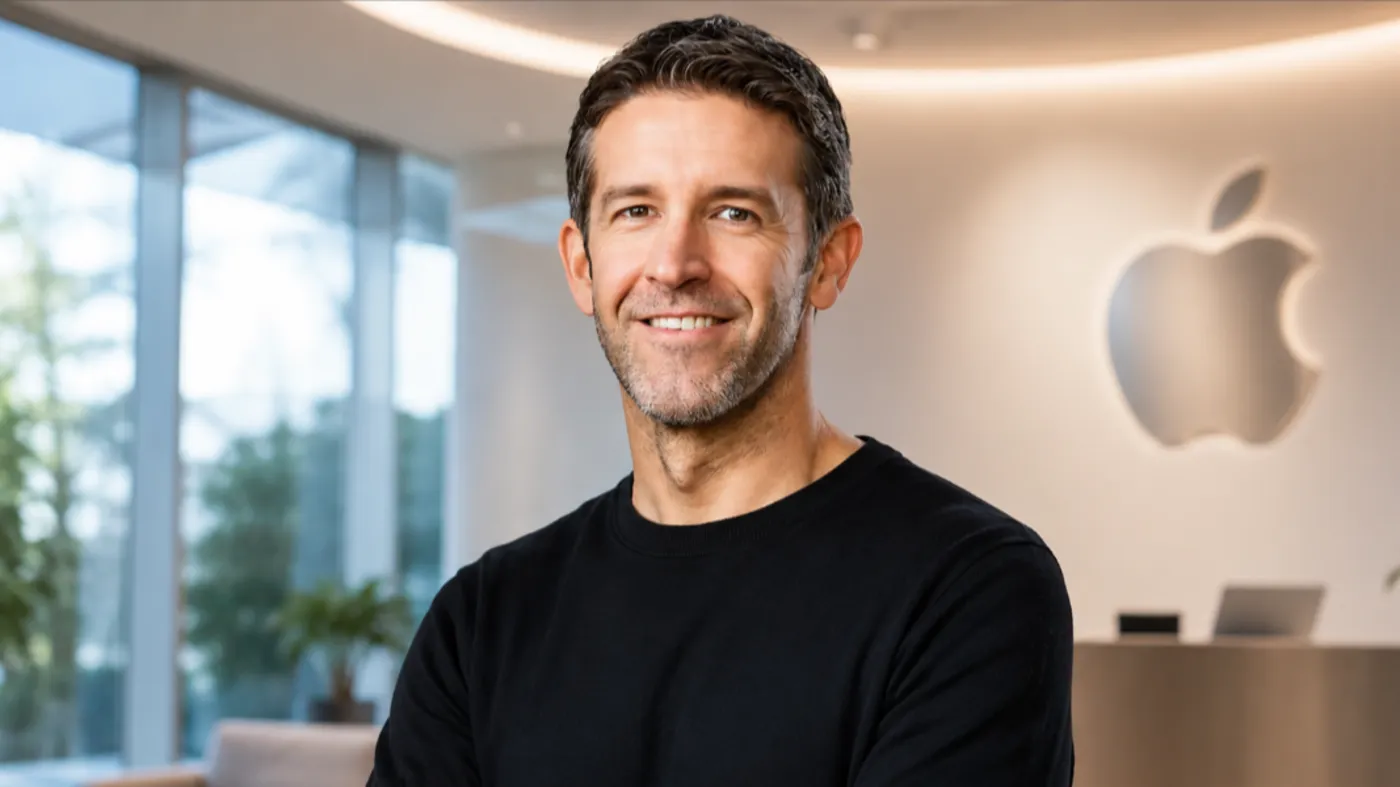
Technology titan Apple has officially detailed the comprehensive executive compensation structure for incoming Chief Executive Officer John Ternus and outgoing leader Tim Cook in a formal regulatory filing with the United States Securities and Exchange Commission. The disclosure marks the formal completion of a meticulously planned leadership succession, transferring operational control of the world’s most valuable enterprise to its long-standing hardware engineering chief while cementing Cook’s transition into the role of Executive Chairman of the Board of Directors.
Under the updated compensation agreements approved by the Board’s People and Compensation Committee, John Ternus will receive an annual base salary of $3 million as he assumes the chief executive role. To align executive pay with long-term shareholder returns, Apple granted Ternus a prorated restricted stock unit award with a target value of $2.5 million for the current fiscal period, alongside an annual equity award with a target value of $55 million for the upcoming fiscal year. In total, the performance-weighted compensation package ensures that the new chief executive’s earnings will track directly with Apple’s equity performance against broad market benchmarks.
Meanwhile, Tim Cook will transition from daily executive duties to lead corporate governance and international policy engagement as Executive Chair. The filing outlines that Cook will receive an annual base salary of $2 million, alongside a target fiscal equity award valued at $45 million. The leadership transfer concludes Cook’s extraordinary 15-year tenure as chief executive, during which Apple expanded its market capitalization from approximately $350 billion to more than $4.6 trillion. As Ternus takes the helm of a corporation generating over $416 billion in annual revenues, the new executive compensation structure establishes a predictable governance framework to guide Apple through the rapid rise of artificial intelligence, global supply chain diversification, and next-generation consumer hardware categories.
A Historic Leadership Succession at the World’s Most Valuable Enterprise
The leadership transition at Apple represents one of the most consequential corporate successions in modern corporate history. Following a comprehensive, multi-year internal planning process, the board of directors unanimously approved the appointment of John Ternus to succeed Tim Cook.
Ternus becomes only the fifth chief executive officer in Apple’s 50-year corporate history, following Steve Jobs, John Sculley, Michael Spindler, Gil Amelio, and Tim Cook.
The transition process was engineered to ensure total organizational stability. Rather than orchestrating an abrupt departure, Cook worked closely with Ternus throughout the summer months to ensure a seamless operational handoff across hardware engineering, software services, enterprise sales, and global logistics.
By promoting an internal veteran who has spent a quarter of a century designing Apple’s signature consumer hardware products, the board of directors signaled its commitment to preserving the company’s engineering-first culture and design excellence.
Unpacking John Ternus’ $3 Million Salary and $55 Million Equity Package
The regulatory Form 8-K/A filed by Apple provides granular transparency regarding John Ternus’ executive compensation. The package balances a fixed cash salary with heavily weighted long-term equity incentives designed to reward outperformance across the broader technology market.
The primary financial components of Ternus’ compensation package include:
- A base annual cash salary of $3 million, matching the standard baseline executive salary paid to Tim Cook during his tenure as chief executive.
- A prorated restricted stock unit award carrying a target economic value of $2.5 million to cover his initial period of executive service during the current fiscal year.
- A comprehensive annual equity award for the upcoming fiscal year with a target value of $55 million.
- A performance-weighted structure where 75% of the $55 million annual equity grant is tied directly to Apple’s total shareholder return relative to the S&P 500 index over a three-year evaluation period.
- A time-based vesting schedule for the remaining 25% of the equity award, which vests in equal quarterly installments over a four-year duration to encourage long-term retention.
Tying 75% of the equity package to relative stock market performance ensures that Ternus will only realize the maximum $55 million target value if Apple continues to outperform the majority of large-cap corporate enterprises on Wall Street.
Tim Cook’s Transition to Executive Chair with a $45 Million Stock Award
The filing also defines the compensation and governance responsibilities for Tim Cook as he moves into the Executive Chair position. Cook’s revised pay package reflects his continued strategic importance to the enterprise while recognizing his transition away from daily operational management.
The compensation parameters for the Executive Chair role establish a clear structure:
- An annual base cash salary of $2 million, representing an effective 33% reduction from his previous $3 million chief executive salary.
- An approved target equity award for the upcoming fiscal year valued at $45 million.
- An equal split in equity design, with 50% of the award structured as performance-based stock units and 50% structured as time-based restricted stock units vesting over four years.
- Ongoing executive benefits, including dedicated personal security details and access to private corporate air travel for business and personal logistics.
As Executive Chair, Cook will preside over regular meetings of the Board of Directors, mentor senior executive leadership, and manage critical global government relationships, allowing Ternus to focus his full attention on product engineering, operational execution, and software integration.
Comparing Executive Pay Packages Against Cook’s $74.3 Million Payout
The newly disclosed compensation figures highlight a measured, disciplined recalibration of executive pay at Apple. While John Ternus’ target compensation of approximately $58 million annually represents a substantial pay increase from his previous role as Senior Vice President of Hardware Engineering, it sits below the realized compensation collected by Tim Cook during his peak executive years.
Historical compensation records illustrate the evolution of executive earnings at Cupertino:
- In the previous fiscal year, Tim Cook received total realized compensation of approximately $74.3 million to $74.6 million, ranking him among the top-earning chief executives in the world.
- Cook’s previous compensation comprised a $3 million base salary, $57.5 million in performance-vested stock awards, $12 million in non-equity performance incentives, and roughly $1.8 million in security and travel expenses.
- In 2021, Cook received a historic decennial equity grant that lifted his single-year total compensation to an extraordinary $98.7 million.
- Ternus’ initial $58 million target compensation package reflects a standard corporate practice of starting a newly appointed chief executive at a lower baseline before scaling equity grants based on proven multi-year performance.
The structured moderation in initial executive pay aligns with shareholder advisory guidelines, ensuring strong alignment between executive compensation and tangible corporate performance.
The Fifteen-Year Legacy of Tim Cook: Transforming Apple into a $4.6 Trillion Titan
Tim Cook’s 15-year tenure as chief executive stands as one of the most financially successful leadership eras in global corporate history. When Cook assumed the chief executive role in August 2011 following the resignation of co-founder Steve Jobs, industry skeptics questioned whether an operations-focused executive could maintain Apple’s innovative momentum without Jobs’ charismatic design vision.
Cook answered those doubts by executing an industrial transformation of unprecedented scale. He built the most efficient, resilient, and profitable consumer electronics supply chain in the world, expanding Apple from a successful hardware manufacturer into a dominant global technology ecosystem.
Under Cook’s leadership, Apple transformed the iPhone from a luxury smartphone into an indispensable daily utility for more than 1.5 billion active users, while expanding into entirely new product categories and building a multi-billion-dollar recurring services empire.
Growing Market Capitalization from $350 Billion to $4.6 Trillion
The financial appreciation generated during Cook’s leadership redefined global capital markets. Apple evolved from a mid-sized large-cap enterprise into the world’s most valuable publicly traded corporation, repeatedly setting historical valuation benchmarks.
The financial data highlights the staggering scale of value creation:
- Apple’s equity market capitalization expanded from approximately $350 billion in August 2011 to more than $4.6 trillion, representing an astonishing value increase of more than 1,200%.
- Apple shares delivered a cumulative total return exceeding 2,275% over Cook’s 15-year tenure, outperforming the S&P 500 index by a wide margin.
- The company became the first publicly traded corporation in history to cross the $1 trillion, $2 trillion, $3 trillion, and $4 trillion market capitalization thresholds.
- Apple returned over $650 billion to shareholders through disciplined share repurchases and regular quarterly dividend distributions.
This immense financial growth cemented Apple as the cornerstone holding of global pension funds, mutual funds, and institutional investment portfolios worldwide.
Quadrupling Annual Revenue from $108 Billion to $416 Billion
Alongside stock market valuation, Apple’s fundamental commercial engine expanded at a blistering pace. Cook scaled the company’s manufacturing footprint to deliver hundreds of millions of premium hardware units to global consumers every single quarter.
The revenue growth delivered across Cook’s tenure demonstrates massive operational leverage:
- Total annual corporate revenues quadrupled, climbing from $108 billion in fiscal 2011 to more than $416 billion in fiscal 2025.
- Annual net profits surged from roughly $26 billion in 2011 to more than $100 billion, generating extraordinary operating cash flows that funded massive internal research and development budgets.
- The company built an international retail footprint comprising more than 530 flagship Apple Store locations across 26 countries and territories.
- International sales expanded to account for more than 60% of total company revenues, driven by rapid consumer adoption across Greater China, Europe, and emerging Asian economies.
Cook’s mastery of high-volume manufacturing, inventory management, and supplier pricing established an operational moat that competitors could not match.
Expanding Product Categories from Apple Watch to Services and Vision Pro
While critics occasionally characterized Cook’s era as focused primarily on optimizing existing products, Apple introduced transformative new hardware categories and software platforms that generated hundreds of billions of dollars in new economic value.
Key product categories commercialized under Cook’s leadership include:
- The Apple Watch: Launched in 2015, has grown into the best-selling wristwatch in the world and has established Apple as a dominant global leader in digital healthcare and biometric fitness tracking.
- AirPods: Introduced in 2016, creating a multi-billion-dollar wireless audio category that generates more annual revenue than standalone Fortune 500 technology companies.
- Services Ecosystem: Expanding the App Store, iCloud, Apple Music, Apple Pay, Apple TV+, and Apple Card into a high-margin recurring services division generating over $90 billion in annual revenue.
- Apple Silicon: Orchestrating the historic architectural transition from Intel processors to custom M-series chips, delivering industry-leading performance-per-watt efficiency across MacBooks and desktop computers.
- Apple Vision Pro: Launching Apple’s spatial computing platform, establishing early technological leadership in high-resolution spatial displays and micro-OLED optical systems.
These diversified hardware and services platforms insulated Apple from cyclical fluctuations in smartphone sales, building a resilient, multi-layered consumer ecosystem.
The Engineering Architect: John Ternus’ Quarter-Century at Apple
In selecting John Ternus as chief executive, Apple’s board of directors chose an authentic engineering architect whose entire professional career was forged inside Cupertino’s design studios. Ternus joined Apple in 2001 as an engineer on the product design team, meaning his tenure predates the launch of the original iPhone, the iPad, the Apple Watch, and Apple Silicon.
Over 25 years of continuous service, Ternus earned a reputation as a brilliant mechanical engineer, a pragmatic problem-solver, and a collaborative team leader who understands the intricate intersection of hardware design, software optimization, and global manufacturing.
Ternus worked closely under the mentorship of both Steve Jobs and Tim Cook, embodying the unique corporate philosophy that prioritizes user experience, aesthetic elegance, and uncompromising hardware build quality above all else.
Rising from Product Design in 2001 to Head of Hardware Engineering
John Ternus’ career progression tracks the modern development of Apple’s most iconic consumer products. After demonstrating technical excellence on early Mac desktop systems, Ternus earned steady promotions through the engineering hierarchy:
- Promoted to Vice President of Hardware Engineering in 2013, taking responsibility for the engineering and industrial design execution of the iPad lineup.
- Led the hardware development of every generation of iPad from the original model through the iPad Pro, overseeing the introduction of the Apple Pencil and the Magic Keyboard.
- Managed the engineering development of the groundbreaking AirPods product family, solving complex micro-acoustic and wireless synchronization challenges.
- Elevated to Apple’s executive leadership team in 2021 as Senior Vice President of Hardware Engineering, reporting directly to Tim Cook.
- Assumed oversight of all hardware engineering across the entire product ecosystem, including every generation of iPhone, Mac, Apple Watch, and Apple Vision Pro.
Ternus’ hands-on involvement in assembling the physical components of Apple’s product lineup provides him with unmatched technical credibility among Cupertino’s thousands of hardware and software engineers.
Guiding Apple Silicon M-Series Transitions and Flagship Hardware Lines
The signature engineering achievement that cemented Ternus’ executive candidacy was his leadership during the historic Mac transition to Apple Silicon. Transitioning millions of commercial computers away from legacy x86 Intel architectures to custom ARM-based M-series processors was a high-risk operational gamble that could have disrupted Apple’s computing division.
Ternus coordinated the multi-year engineering execution with precision:
- Working in close collaboration with Johny Srouji’s custom silicon teams to design thermal architectures that maximized the performance of M1, M2, M3, M4, and next-generation M5 chips.
- Redesigning the physical chassis of the MacBook Pro, MacBook Air, iMac, and Mac Studio to deliver fanless designs, multi-day battery life, and high computing power.
- Driving double-digit market share expansion across the global personal computer industry as corporate enterprises and creative professionals migrated to Apple Silicon.
- Leading the hardware design and structural integration of the iPhone 15 Pro, iPhone 16, and iPhone 17 series, introducing aerospace-grade titanium enclosures and periscope optical zoom camera systems.
Ternus’ proven ability to coordinate complex, multidisciplinary engineering programs across hardware, software, and silicon makes him uniquely qualified to lead Apple into its next computing era.
Critical Strategic Challenges Confronting the New Chief Executive
While John Ternus inherits one of the most profitable corporate empires in history, he takes the helm at a moment of profound technological upheaval. The rapid emergence of generative artificial intelligence, intensifying geopolitical trade frictions, and high stock market valuation multiples present formidable strategic challenges that will test his executive leadership.
Unlike the software transitions of previous decades, artificial intelligence is reshaping the fundamental user interface of personal computing.
Ternus must guide Apple through this technological shift while managing complex international supply chains and defending corporate margins against rising semiconductor component costs.
Navigating these overlapping challenges will require Ternus to expand beyond his traditional comfort zone in hardware engineering, mastering global diplomacy, regulatory compliance, and cloud software infrastructure.
Accelerating the Apple Intelligence Roadmap to Catch Rival AI Titans
The most urgent operational priority confronting John Ternus is accelerating Apple’s artificial intelligence capabilities. While competitors Microsoft, Alphabet, Meta, and OpenAI raced ahead in deploying multi-trillion-parameter foundation models and cloud-based reasoning agents, Apple experienced initial delays in rolling out its suite of Apple Intelligence features.
Ternus must execute an aggressive artificial intelligence catch-up roadmap:
- Modernizing the Siri voice assistant with advanced semantic reasoning and on-device natural language understanding to enable fluid conversational interactions.
- Expanding localized on-device neural network processing to execute image generation, text summarization, and automated photo editing without compromising user privacy.
- Building high-security private cloud compute infrastructure powered by custom M-series server clusters to handle complex cloud-based reasoning workloads.
- Deepening partnerships with external foundation model providers, integrating specialized third-party artificial intelligence engines like OpenAI’s ChatGPT and Google’s Gemini directly into iOS and macOS.
- Preparing hardware architectures to support next-generation multimodal artificial intelligence across upcoming product categories, including smart audio glasses and home robotics.
Ternus must prove to consumers and Wall Street that Apple can deliver an artificial intelligence user experience that matches the polish, speed, and privacy protections of its iconic hardware.
Managing Supply Chain Diversification Beyond China Across India and Vietnam
A secondary, high-stakes operational challenge is the geographic diversification of Apple’s global manufacturing footprint. For two decades, Apple relied on mainland China for more than 90% of its final hardware assembly and precision component fabrication, creating deep operational dependencies on specialized contract manufacturing mega-plants.
Rising geopolitical tensions, international trade tariffs, and cross-border regulatory restrictions have made supply chain diversification an urgent operational necessity:
- Accelerating iPhone manufacturing expansions in India, targeting the production of 25% or more of global iPhone units within Indian factories.
- Scaling assembly hubs across Vietnam, transitioning manufacturing of AirPods, iPads, Apple Watches, and MacBooks to Southeast Asian supplier parks.
- Building regional component supplier networks across North America, Europe, and Latin America to support localized manufacturing.
- Managing the multi-billion-dollar capital expenditures required to train foreign workforces, construct cleanrooms, and replicate the tooling precision of Chinese factories.
Ternus’ deep relationships with Asian contract manufacturers and component vendors will be critical to executing this geographic migration without degrading product yields or delaying new product launches.
Navigating High Valuation Multiples at 33 Times Forward Earnings
From a capital markets perspective, John Ternus begins his tenure facing a significantly higher valuation bar than Tim Cook encountered in 2011. When Cook became chief executive, Apple traded at a modest forward price-to-earnings multiple of roughly 12 times earnings, reflecting investor skepticism regarding life after Steve Jobs.
Today, Apple trades at an elevated forward valuation multiple exceeding 33 times anticipated earnings:
- A 33-times valuation multiple sits well above Apple’s historical 10-year average of roughly 23 times earnings, leaving zero room for operational execution missteps.
- Sustaining a $4.6 trillion market capitalization requires delivering consistent, double-digit earnings-per-share growth quarter after quarter.
- Slowing hardware replacement cycles in saturated smartphone markets require expanding high-margin recurring services revenues to defend corporate margins.
- Institutional investors are demanding new multi-billion-dollar product categories, such as foldable display devices and augmented reality eyewear, to justify premium equity valuations.
Ternus must balance long-term research and development spending with disciplined capital returns, ensuring that Apple continues to generate the massive free cash flows that Wall Street expects.
Governance Continuity and Tim Cook’s Ongoing Diplomatic Role
The decision to retain Tim Cook as Executive Chairman ensures vital corporate continuity during this period of technological transition. The corporate model mirrors successful leadership transitions executed by other technology champions, such as Microsoft’s transition from Bill Gates to Steve Ballmer and Alphabet’s evolution under Larry Page and Sundar Pichai.
By dividing executive responsibilities, Apple establishes a balanced leadership structure that leverages the distinct strengths of both corporate leaders.
Ternus will drive internal product development, engineering execution, and software design, while Cook manages external corporate diplomacy, board governance, and global public policy.
Serving as Global Policy Liaison and Managing Government Relations
In an era defined by international trade conflicts, antitrust investigations, and digital regulations, managing relationships with sovereign governments is a full-time executive responsibility. Tim Cook built unmatched diplomatic relationships with heads of state and political leaders worldwide, navigating complex trade negotiations across the United States, Europe, China, and India.
Cook’s ongoing role as Executive Chair provides Apple with essential diplomatic protections:
- Serving as Apple’s primary government liaison in Washington, maintaining direct communication with political administrations and congressional oversight committees.
- Navigating complex antitrust litigation and European Union compliance mandates under the Digital Markets Act and the EU AI Act.
- Managing sensitive trade diplomacy in Beijing, ensuring that Apple’s commercial retail presence and local manufacturing supply lines remain stable.
- Leading corporate philanthropic initiatives, environmental sustainability programs, and national educational partnerships.
Cook’s diplomatic presence allows Apple to defend its commercial interests in regulatory capitals worldwide, shielding John Ternus from political distractions as he leads product engineering.
The Long-Term Horizon for Apple’s Hardware and Services Expansion
Looking toward the end of the decade, the leadership pairing of John Ternus and Tim Cook positions Apple to capitalize on major technological transformations. As spatial computing, artificial intelligence, and autonomous robotics converge, Apple’s integrated hardware-and-software ecosystem provides an extraordinary foundation for long-term growth.
Key technological horizons that will define the John Ternus era include:
- The Launch of Foldable Devices: Commercializing ultra-thin, crease-free foldable display architectures across future iPhone and iPad product lines.
- Next-Generation Spatial Computing: Refining Apple Vision Pro into lightweight, all-day augmented reality smart glasses powered by high-efficiency custom micro-silicon.
- Autonomous Home and Personal Robotics: Developing intelligent consumer robotics platforms that utilize physical artificial intelligence and embodied vision models to assist with household tasks.
- Advanced Health Sensors: Integrating non-invasive blood glucose monitoring and continuous cardiovascular telemetry into future Apple Watch models.
- The 2-Nanometer and Sub-2-Nanometer Silicon Era: Partnering with advanced foundries to fabricate next-generation M6 and A20 processors that deliver desktop supercomputing performance inside mobile devices.
By maintaining its core focus on user experience, hardware perfection, and privacy-preserving software, Apple is ensuring that it remains the world’s premier consumer technology innovator for decades to come.
Apple’s formal disclosure of executive compensation for incoming Chief Executive Officer John Ternus and Executive Chair Tim Cook marks the successful execution of one of the most significant leadership successions in corporate history. By establishing a performance-weighted $58 million target package for Ternus and a $47 million package for Cook, Apple’s Board of Directors has created a balanced, accountable governance framework. As John Ternus steps forward after 25 years of engineering leadership to guide a $4.6 trillion titan through the artificial intelligence revolution, supply chain diversification, and next-generation spatial computing, Tim Cook’s ongoing presence as Executive Chair guarantees strategic continuity. Grounded in quarter-century engineering excellence and supported by the world’s most profitable consumer ecosystem, the John Ternus era begins with a clear mandate to innovate, inspire, and define the future of global technology.