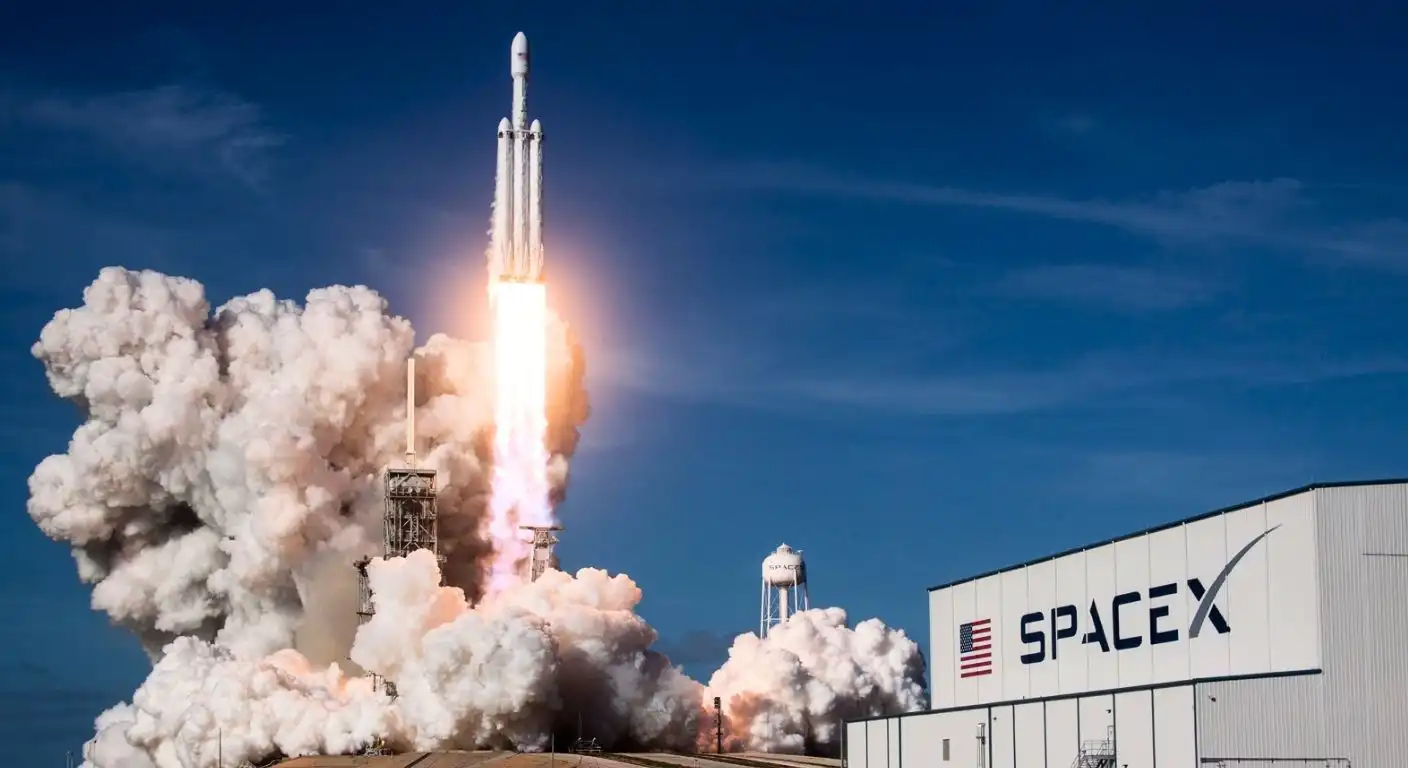
A legendary venture investment is permanently re-engineering the balance sheet of the world’s largest digital search company. In August 2026, regulatory filings and financial disclosures revealed that Alphabet Inc.’s early-stage investment in Elon Musk’s rocket company, SpaceX, has multiplied more than 100-fold over a decade. The Google parent company’s disclosed stake in the space exploration leader was valued at an extraordinary $94.2 billion at the end of the second quarter, marking one of the most successful venture investments in technology history.
Following SpaceX’s blockbuster initial public offering in June, which raised $85.7 billion and pushed its valuation past $2 trillion, Alphabet has emerged as the rocket manufacturer’s largest individual institutional shareholder by a wide margin. According to a comprehensive analysis of the latest 13F filings, Alphabet’s 551.2 million Class A shares represent a massive portion of the newly listed space giant, putting the tech giant ahead of other prominent global investors who have begun disclosing their holdings.
However, this massive paper windfall has also created a unique corporate paradox for Alphabet. While the mark-to-market adjustment of its SpaceX holdings technically pushed its second-quarter net income up by 298% to $112.1 billion, the gains remain entirely on paper. Because of standard post-IPO lockup agreements and long-term regulatory restrictions, Alphabet is currently legally barred from selling a single share of its SpaceX holdings. This liquidity lockup has forced Wall Street investors to ignore the headline paper wealth and focus instead on the firm’s massive, cash-burning artificial intelligence capital expenditures.
The Anatomy of a Hundred-Fold Return: Deconstructing the 2015 Bet
The spectacular $94.2 billion valuation did not happen overnight. It represents a highly disciplined, decade-long corporate holding strategy that began when the commercial space industry was still in its infancy.
A Strategic Bet on Satellite Internet, Not Just Rockets
In January 2015, Google and prominent mutual fund manager Fidelity Investments together poured $1 billion into SpaceX, securing a combined equity stake of just under 10% in the young company. Out of this combined investment pool, Google contributed approximately $900 million. At the time of the transaction, SpaceX was valued at a modest $12 billion to $15 billion, which is a fraction of its current multi-trillion-dollar scale.
For Google, the investment was not a random moonshot or a speculative gamble. At the time, the search giant was actively exploring satellite-based internet connectivity projects to expand global internet access, hoping to bring online millions of new users in remote and developing regions who would eventually use Google’s search and advertising services.
Because SpaceX’s embryonic Starlink satellite broadband program aligned perfectly with this long-term digital strategy, Google chose to invest heavily.
By backing Musk’s company, Google secured front-row exposure to the physical launch infrastructure of the future, without needing to take on the immense, risky engineering challenges of building and launching its own rockets.
Emerging as the Largest Institutional Shareholder
Following SpaceX’s June listing, where shares were priced at $135 each, the company’s valuation fluctuated, with the stock closing at $170.86 at the end of the second quarter. This elevated closing price is what Alphabet utilized to calculate the $94.2 billion valuation of its 551.2 million Class A shares.
This massive holding dwarfs the positions disclosed by other prominent global investors during the post-IPO filing window.
While early backers like Fidelity, Saudi Arabia’s sovereign wealth fund (the Public Investment Fund), and Hancock Prospecting—the holding company controlled by Australian mining magnate Gina Rinehart—disclosed significant multi-billion-dollar stakes, Alphabet remains the largest institutional holder of SpaceX by a wide margin.
This prominent shareholder status grants the search giant immense influence, cementing a highly strategic partnership between the world’s leading search engine and the undisputed king of space commercialization.
The Illusion of Wealth: Why Alphabet Can’t Spend a Single Dollar of its Windfall
While a $94.2 billion holding represents a massive addition to Alphabet’s asset portfolio, the corporate reality is that paper gains cannot be used to fund the high daily expenses of the modern technology sector.
The Double-Tranche Lockup Restrictions
According to Alphabet’s quarterly SEC filings, the company’s entire 551.2 million share block is subject to strict, non-negotiable liquidity restrictions that prevent the company from converting its paper holdings into liquid cash. The stake is split into two distinct, highly restricted tranches:
- Approximately $80 billion of the position sits under standard, short-term post-IPO lockup restrictions, which prevent early backers and company insiders from selling their shares during the initial months following a public listing.
- The remaining $14.1 billion is locked up under a separate, long-term restriction that will remain active through the third quarter of 2027.
Because these lockup agreements are legally binding, Alphabet cannot liquidate even a small fraction of its SpaceX shares to fund its daily operations.
While the mark-to-market adjustment has successfully inflated the company’s paper assets, the actual value of the holding remains completely illiquid, forcing the company to look elsewhere to secure the cash needed to fund its ongoing business operations.
Paper Windfalls vs. Real-World Capital Expenditures
The illiquid nature of the SpaceX holding explains why Wall Street investors mostly ignored the historic $94 billion paper windfall during the recent earnings season, focusing their attention instead on the company’s soaring capital expenditures.
The corporate sector has entered a highly intensive, capital-heavy AI buildout phase, requiring companies to spend billions of dollars in physical cash to purchase high-end chips and construct massive data center networks.
To fund this expansion, Alphabet raised its full-year capital expenditure forecast to a massive range of $195 billion to $205 billion.
Because locked-up paper gains do not fund data centers, the company’s free cash flow swung to a negative $5.9 billion for the quarter, down from a positive $10.1 billion in the first quarter.
To bridge this cash deficit and maintain its liquidity, Alphabet had to raise $49.6 billion in June by selling new corporate stock, proving that in the high-stakes world of modern technology, possessing a $94 billion paper asset is no substitute for having physical, liquid cash on hand.
The Microeconomic Impact: Shaking Up the Corporate Ledger
Despite its illiquid nature, the revaluation of the SpaceX stake has had a massive, highly disruptive impact on Alphabet’s financial reporting, distorting its net income and creating an unusual reporting landscape.
Driving a Three-Hundred-Percent Surge in Reported Net Income
The revaluation of the SpaceX shares was the primary driver behind a massive, record-breaking surge in Alphabet’s reported profitability. For the second quarter, the company reported a net income of $112.1 billion, representing an extraordinary 298% increase compared to the same period in the prior year.
At the same time, the company’s reported earnings per share climbed by 294% to reach a historic $9.11.
This massive earnings spike did not occur because the company’s core digital advertising or cloud divisions experienced a sudden, unexpected growth wave.
Instead, the surge was driven entirely by a massive $99.0 billion paper gain on equity securities, which primarily reflected the mark-to-market adjustment of its SpaceX shares and its private investment in artificial intelligence startup Anthropic.
While these paper gains make the company’s reported net income appear historically high, financial analysts must carefully strip out these non-cash adjustments to understand the true, underlying operational performance of Google’s search and cloud businesses.
The Looming IPO of Anthropic and the Secondary Windfall
The complexity of Alphabet’s investment ledger is set to increase further as another of its high-profile venture bets prepares to transition to the public markets.
Alphabet holds an estimated 14% stake in AI research pioneer Anthropic, backed by a cumulative investment of less than $13 billion.
With Anthropic’s highly anticipated initial public offering expected as early as September 2026, the potential valuation of this stake could easily exceed $120 billion, providing Alphabet with another massive, multi-billion-dollar paper windfall.
While these successful venture investments prove that Alphabet’s corporate development teams possess an exceptional eye for identifying disruptive technologies, the resulting paper gains will continue to distort the company’s earnings reports, forcing analysts to navigate a highly complex corporate ledger to understand the firm’s core operational health.
Elon Musk’s Unshakeable Grip on the SpaceX Empire
While global technology corporations and institutional funds are accumulating massive, multi-billion-dollar stakes in SpaceX, control of the company remains concentrated entirely in the hands of its founder.
Controlling Forty-Eight Percent of the Two-Trillion-Dollar Giant
In a separate regulatory filing submitted to the SEC on Thursday, August 13, 2026, Elon Musk disclosed his personal holdings in the rocket company he founded in 2002.
The filing showed that Musk personally holds a dominant 48.4% equity stake in SpaceX, comprising approximately 6.42 billion shares.
This personal holding carries an astronomical valuation of over $900 billion based on current market prices.
Musk’s holdings are distributed across several personal trusts and investment vehicles, including 849.5 million Class A shares and a massive block of 3.92 billion high-voting Class B shares.
This vast personal wealth establishes Musk as one of the wealthiest individuals in human history, proving that his early-stage bets on space exploration and satellite communications have delivered unprecedented financial returns.
Absolute Voting Control and the Class B Share Super-Structure
The primary mechanism allowing Musk to maintain absolute control over his rocket empire is the company’s dual-class share structure. While institutional investors like Alphabet hold Class A shares, which carry standard voting rights, Musk holds the vast majority of the company’s high-voting Class B shares.
Under this dual-class structure, each Class B share carries ten times the voting power of a standard Class A share.
As a result, Musk controls over 82% of the total voting power at SpaceX, ensuring that even as global technology giants, sovereign wealth funds, and private equity firms accumulate multi-billion-dollar stakes, a minor shift in corporate control is impossible.
This absolute voting control allows Musk to direct the company’s long-term research, Mars colonization plans, and national security satellite programs with complete autonomy, ensuring that the company’s mission remains completely unified under his personal leadership.
Restoring American Space Leadership
The completed disclosure of Alphabet’s $94.2 billion stake in SpaceX represents a landmark milestone in the corporate history of the technology and aerospace sectors. By demonstrating a massive, 100-fold return on its initial $900 million investment, the Google parent company has proven that its early, visionary bet on Elon Musk’s rocket program was one of the most successful venture investments ever executed.
While the illiquid nature of the holding means that Alphabet cannot yet convert its paper gains into the liquid cash required to fund its massive AI data center buildouts, the long-term strategic value of the holding remains immense.
As SpaceX continues to dominate the global launch market, expand its Starlink broadband constellation, and prepare for future exploration missions, Alphabet’s dominant institutional shareholder status provides the company with a highly resilient, multi-billion-dollar asset that will support its corporate balance sheet for decades to come, proving that the ultimate winners of the digital age are the companies that can successfully bridge the virtual world of search with the physical infrastructure of the future.