

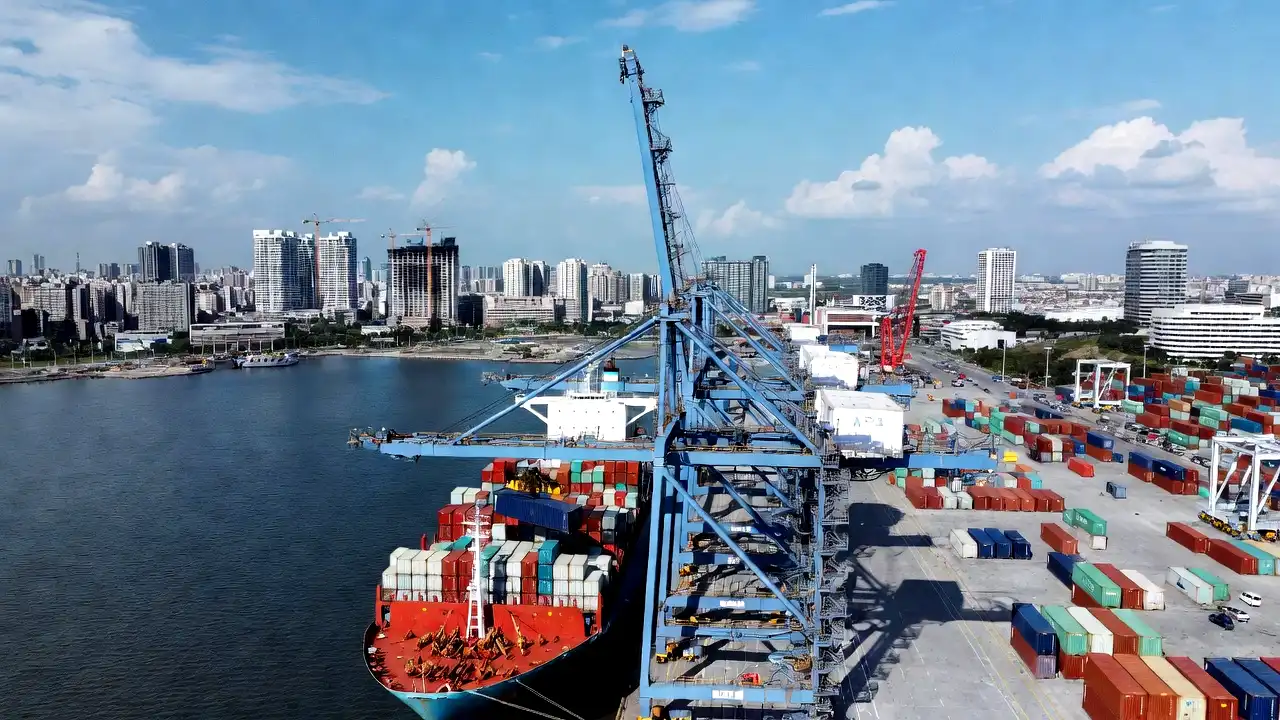
Brazil’s export economy has demonstrated extraordinary resilience against international trade barriers, posting a bigger-than-expected trade surplus of $7.4 billion in August as outbound shipments to the United States expanded by double digits despite a full month of punitive 25% import tariffs enacted by Washington. Official trade statistics released by the Ministry of Development, Industry, Commerce and Services in Brasília confirm that total Brazilian exports surged 12.2% year-over-year to reach $33.2 billion, easily surpassing consensus Wall Street forecasts of a $7.1 billion surplus.
The robust trade performance highlights the structural strength of South America’s largest economy in navigating aggressive protectionist measures. In mid-July, United States President Donald Trump levied sweeping 25% tariffs on billions of dollars of Brazilian goods under Section 301 of the Trade Act of 1974, citing grievances over digital payment systems, ethanol market access, and environmental deforestation. However, strong American corporate demand for irreplaceable raw materials, strategic tariff carve-outs for aerospace parts and specialty agricultural goods, and aggressive trade diversification toward Asian markets allowed Brazilian exporters to bypass trade friction and capture record global revenues.
The trade surplus figures provide a major political and economic boost for Brazilian President Luiz Inácio Lula da Silva, who has resisted unilateral trade demands and triggered national economic reciprocity mechanisms. While United States trade policy aimed to reduce bilateral trade imbalances and pressure Brasília, total imports into Brazil grew at a more modest 9.2% rate to reach $25.8 billion, keeping the national current account heavily in surplus. With independent foreign trade associations raising full-year trade surplus projections toward $94 billion, Brazil’s export boom proves that global commodity supply chains cannot easily be dismantled by unilateral border taxes.
A Historic $7.4 Billion Trade Surplus Defies Trade Barriers
The achievement of a $7.4 billion monthly trade surplus represents a decisive repudiation of market predictions that warned American tariffs would trigger an immediate export contraction across South America. When the White House announced new border levies in July, financial analysts projected that trade tensions would compress Brazilian corporate profit margins and slow factory production across industrial states like São Paulo and Minas Gerais.
Instead, the trade balance expanded at an accelerating pace. Total export revenue of $33.2 billion generated in August stands among the highest monthly totals ever recorded in Brazilian commercial history, outpacing the $30.9 billion generated during previous peak commodity cycles.
The trade expansion was supported by synchronized volume growth across agriculture, mineral extraction, and specialized manufacturing.
Brazilian exporters demonstrated agility by rerouting flexible bulk commodities to alternative international trading hubs while leveraging long-term commercial supply contracts with American industrial buyers.
The result is a widening trade buffer that strengthens Brazil’s foreign exchange reserves, supports domestic currency stability, and provides the central bank with essential macroeconomic insulation as global central banks adjust monetary policies.
Unpacking the 12.2% Export Expansion to $33.2 Billion
The statistical drivers behind the 12.2% export expansion reveal broad-based operational strength across Brazil’s primary export sectors. Rather than relying on a price spike in a single commodity, Brazilian producers increased physical shipment volumes across diverse global trade corridors.
Official customs tracking data details significant sectoral contributions:
- Agricultural exports expanded by 9.3% year-over-year, driven by record harvest yields in soybeans, raw cotton, and commercial livestock shipments.
- Mineral and hydrocarbon extractive industries surged by 10.8%, propelled by strong overseas demand for crude petroleum, iron ore, and base metal concentrates.
- Industrial manufacturing exports climbed by 2.4%, supported by shipments of paper pulp, specialty fuel oils, and transport equipment.
- Cumulative trade surplus for the first eight months of the year crossed $56.4 billion, positioning the country to challenge its historical annual surplus record of $98.9 billion set in 2023.
This diversified export performance proves that Brazil has evolved into a multi-commodity agricultural and energy powerhouse capable of sustaining high-volume trade flows across changing geopolitical cycles.
Overcoming a Full Month of 25% United States Section 301 Tariffs
The double-digit surge in shipments to the United States occurred during the first full monthly operational window following the implementation of Washington’s Section 301 trade penalties. The United States government imposed 25% tariffs across hundreds of Brazilian product lines, threatening between $7.0 billion and $11.0 billion in annual bilateral commerce.
The tariff package targeted prominent commercial categories, including farm machinery, engineered wood products, industrial ethanol, footwear, and apparel.
Furthermore, United States trade officials warned of potential secondary investigations that could stack an additional 12.5% tariff on specific imports, raising potential trade barriers toward 37.5%.
Despite these punitive border fees, American commercial buyers continued purchasing Brazilian goods at elevated volumes:
- American industrial manufacturers absorbed higher tariff costs to secure specialized Brazilian wood pulp, pig iron, and chemical precursors that domestic suppliers could not provide.
- Brazilian exporters utilized flexible foreign exchange pricing to offer modest discounts, partially offsetting the impact of the 25% import duty for long-standing American clients.
- Bilateral trade momentum remained strong because the United States economy has persistently maintained a goods trade surplus with Brazil, exporting billions of dollars of refined fuels, aircraft engines, and industrial machinery to Brazilian buyers.
- Trade analysts noted the economic irony that the United States levied tariffs against an economy with which it already enjoyed a multi-billion-dollar trade surplus.
The ability of Brazilian exporters to maintain export momentum proves that established commercial relationships and deep supply chain integration can withstand substantial tariff shocks.
Commodity Resilience: Oil, Soybeans, and Exempted Industrial Goods
The cornerstone of Brazil’s export resilience is the extraordinary productivity of its agricultural and energy sectors. Brazil operates as the world’s largest exporter of soybeans, raw sugar, green coffee, beef, and poultry, alongside its rapid rise as a top-tier global crude oil producer.
The sheer physical necessity of these basic commodities provides Brazilian exporters with immense pricing power. While manufactured consumer gadgets can easily be substituted or delayed, global populations must purchase food and energy regardless of trade policy disputes.
Furthermore, United States trade negotiators were forced to design strategic tariff exemptions to prevent domestic inflation, shielding high-volume Brazilian export commodities from border surcharges.
Crude Oil and Soybean Shipments Approaching $50 Billion Each
For the first time in the history of Brazilian foreign trade, two distinct commodity products—crude petroleum and soybeans—are on track to each generate more than $50 billion in annual export revenues. The simultaneous expansion of energy and agricultural exports has created a powerful dual-revenue engine for the national economy.
The financial metrics driving this commodity boom include:
- Crude oil maintained its position as Brazil’s number-one export product for the second consecutive year, accounting for more than 13% of total national export revenues.
- Deep-water pre-salt offshore oilfields operated by Petrobras in the Santos and Campos basins achieved record daily extraction rates, providing light-to-medium sweet crude to international refiners.
- Global crude price volatility, driven by military conflicts in the Middle East and shipping disruptions in the Strait of Hormuz, pushed realized oil export earnings significantly higher.
- Soybean exports expanded strongly, capturing rising demand from Asian crushers who favored Brazilian grain over American supplies due to competitive pricing and high protein content.
The Brazilian Foreign Trade Association confirmed that the combined strength of oil and soybeans has elevated national export projections toward $380 billion for the full calendar year.
Critical Exemptions for Aircraft Parts, Specialty Coffee, and Beef
A primary reason Brazilian export volumes to the United States remained strong following the Section 301 ruling is that the White House granted strategic exemptions for Brazil’s most critical export categories. To prevent severe cost spikes for American airlines, food processors, and consumers, United States trade officials excluded key products from the 25% tariff schedule.
The exempted categories protect foundational bilateral trade lanes:
- Commercial Aircraft and Aviation Parts: Aerospace pioneer Embraer continues to ship regional commercial passenger jets and executive aircraft to American airline carriers duty-free.
- Green and Roasted Coffee: As the supplier of more than one-third of all coffee beans consumed in the United States, Brazilian coffee exports were exempted to prevent severe retail price inflation across American grocery chains.
- Fresh and Frozen Beef: American meat processors facing historical domestic cattle herd shortages relied on exempted Brazilian beef imports to maintain domestic ground beef production.
- Civil Aviation Components: Precision airframe assemblies and avionics sub-assemblies crossing international borders avoided customs surcharges.
By preserving duty-free access for high-value aircraft and non-substitutable food staples, the tariff package spared the vast majority of Brazil’s high-volume export earnings from punitive border fees.
Currency Depreciation and Real-Term Price Competitiveness
An important macroeconomic mechanism supporting Brazilian export volumes has been the competitive valuation of the Brazilian real. Facing domestic fiscal debates and international interest rate adjustments, the real has traded in a favorable band between 5.40 and 5.65 reais per United States dollar.
A weaker domestic currency delivers immediate commercial advantages to Brazilian exporters:
- Lower Production Costs in Dollar Terms: Brazilian farmers and mining houses pay local labor, transport, and land expenses in reais while selling exported commodities for United States dollars, generating wide corporate profit margins.
- Competitive Pricing Power: Exporters can offer modest dollar price reductions on international markets while still realizing record revenues when converting earnings back into domestic currency.
- Reinvestment in Agricultural Technology: Expanding cash profits are being deployed into precision farming machinery, automated grain storage silos, and biological fertilizer technologies.
- Logistics Upgrades: Export logistics operators are investing hundreds of millions of dollars to expand railway corridors connecting agricultural belts in Mato Grosso directly to northern arc shipping ports.
The favorable exchange rate functions as a natural shock absorber, neutralizing the restrictive impact of foreign tariffs and enhancing the global price competitiveness of Brazilian goods.
The Section 301 Dispute: Pix Digital Payments and Reciprocity Clashes
The legal and political confrontation between Washington and Brasília is rooted in an expansive Section 301 investigation initiated by the Office of the United States Trade Representative. The investigation charged Brazil with engaging in unfair trade practices across digital commerce, financial payment services, ethanol import tariffs, and environmental enforcement.
A primary target of American regulatory scrutiny is Brazil’s wildly successful instant payment network, Pix. Launched by the Central Bank of Brazil in late 2020, Pix operates as a public, zero-fee digital payment platform used by over 170 million citizens.
United States trade officials and private credit card networks alleged that by mandating commercial bank participation in Pix and keeping peer-to-peer transfers free of charge, the Brazilian government established an unfair competitive advantage that disadvantaged American payment processors like Visa and Mastercard.
The dispute escalated into a major sovereignty clash, with Brazilian leaders defending public digital infrastructure as a vital national right.
Washington’s Scrutiny of the Pix Instant Payment Network
The inclusion of Pix in a United States Section 301 trade investigation marked an unprecedented attempt to challenge a sovereign nation’s domestic public payment infrastructure. United States trade representatives argued that Brazil’s digital financial regulations created structural market barriers:
- Alleging that the Central Bank of Brazil’s governance of Pix restricted American electronic payment corporations from competing freely in the domestic merchant settlement market.
- Challenging preferential tariff treatments granted by Brazil to regional trading partners under partial-scope developing nation agreements.
- Raising compliance complaints regarding anti-corruption enforcement and intellectual property protections for foreign digital platforms.
- Demanding that Brazil eliminate import tariffs on American agricultural ethanol, which had climbed to 18% to protect domestic sugarcane producers.
Trade analysts and international legal scholars widely criticized the United States investigation, pointing out that Pix is an open, non-discriminatory public utility that operates fully within international World Trade Organization guidelines.
President Lula Triggers the Economic Reciprocity Mechanism
In response to the imposition of the 25% tariffs, President Luiz Inácio Lula da Silva took a firm, public diplomatic stand. Rather than offering immediate unilateral concessions, President Lula announced that his administration formally triggered the statutory mechanisms of Brazil’s Economic Reciprocity Law.
The reciprocity framework provides the Brazilian government with structured legal options:
- Requesting formal bilateral diplomatic consultations with United States trade counterparts to challenge the legal basis of Section 301 penalties.
- Initiating dispute settlement proceedings before the World Trade Organization to challenge unilateral American tariffs.
- Authorizing the Ministry of Foreign Affairs to draft retaliatory tariff schedules targeting high-value American exports, including agricultural machinery, refined chemicals, and digital services.
- Reaffirming national sovereignty, with President Lula publicly declaring that Brazil must be respected and will not accept foreign interference in domestic public policy.
While Brasília initiated formal reciprocity proceedings, President Lula emphasized that his government prioritizes diplomatic dialogue over destructive trade wars, keeping retaliatory counter-tariffs on hold while negotiations proceed.
Political Friction and the October Electoral Backdrop in Brasilia
The trade dispute between the United States and Brazil is deeply intertwined with intense domestic political cycles in both nations. The timing of the American tariff announcement coincided with preparations for high-stakes presidential elections in Brazil, transforming trade policy into a central campaign issue.
The political dynamics surrounding the dispute include:
- Opposition leaders, led by Senator Flávio Bolsonaro—the son of former President Jair Bolsonaro and a close political ally of Donald Trump—visited Washington weeks before the tariffs were finalized, meeting with United States officials.
- President Lula publicly condemned the tariff decision as politically motivated, accusing political opponents of lobbying foreign officials to inflict economic damage on the Brazilian economy.
- The United States administration faced domestic criticism from congressional lawmakers, including Senator Tim Kaine, who questioned why the White House levied tariffs on a democratic ally with which the United States maintains a massive trade surplus.
- Brazilian public opinion is unified behind the defense of domestic institutions, viewing the protection of Pix and agricultural sovereignty as vital national priorities.
The politicization of trade policy highlights how domestic electoral rivalries can influence international commerce, creating unpredictable regulatory hurdles for multinational businesses.
Global Diversification: China Partnership and the Mercosur-EU Accord
The primary strategic consequence of United States protectionism has been the accelerated diversification of Brazilian trade toward Asia and Europe. Recognizing the risks of maintaining high export exposure to an unpredictable American market, Brazilian corporate leaders and trade negotiators have deepened commercial partnerships across the globe.
Brazil’s trade architecture has evolved into a diversified, multipolar matrix.
While the United States accounts for roughly 10% to 12% of total Brazilian exports, China has grown into Brazil’s dominant commercial partner, purchasing more than double the volume of goods exported to North America.
Simultaneously, the revitalization of historic trade agreements with the European Union is opening massive new markets for Brazilian agricultural and industrial goods.
China Sourcing Over $100 Billion in Brazilian Agricultural Commodities
The commercial partnership between Brazil and China has expanded into one of the largest bilateral trade corridors in the world. As geopolitical trade tensions between Washington and Beijing prompted Chinese state buyers to reduce purchases of American agricultural products, China systematically shifted its procurement to Brazil.
Bilateral trade data illustrates the scale of Chinese demand:
- Total Brazilian exports to China reached an astounding $100 billion over the past annual cycle, setting a new historical milestone.
- Soybeans accounted for roughly one-third of total shipments, with Chinese crushers importing over 70% of their total annual soybean needs directly from Brazilian ports.
- China expanded direct purchases of Brazilian crude petroleum, becoming the largest international buyer of pre-salt oil.
- Chinese industrial conglomerates increased direct foreign investment in Brazilian infrastructure, constructing high-voltage transmission lines, deep-water port terminals, and electric vehicle manufacturing gigafactories in Bahia.
This deep commercial integration ensures that Brazilian producers maintain vast, reliable export demand that easily offsets localized reductions in American purchasing.
Ratifying the Mercosur-EU Trade Pact Across 700 Million Consumers
A major diplomatic breakthrough accelerating Brazil’s global trade expansion is the conclusion and advancing ratification of the landmark Mercosur-European Union trade agreement. Following twenty-five years of protracted negotiations, the historic accord unites Brazil, Argentina, Uruguay, and Paraguay with the 27 member states of the European Union.
The trade agreement establishes one of the world’s largest free-trade zones:
- Connecting an integrated market encompassing more than 700 million consumers and over $22 trillion in combined gross domestic product.
- Eliminating import tariffs on more than 91% of goods traded between Mercosur and European Union member states over a phased transition period.
- Granting Brazilian agricultural exporters expanded, low-tariff quota access for specialty beef, poultry, ethanol, and sugar into European markets.
- Removing European tariffs on Brazilian industrial manufactured goods, encouraging domestic aerospace and automotive component exports.
The opening of the European market provides Brazilian exporters with an expansive, legally protected trading zone that reduces national vulnerability to unilateral American trade actions.
Strategic Implications for Hemispheric Trade and Supply Chains
Brazil’s ability to deliver a $7.4 billion trade surplus in the face of 25% tariffs carries profound strategic lessons for international trade policy and Western Hemisphere supply chains. The global economy is completing a structural transition from the post-Cold War era of unconstrained globalization into a fragmented, multipolar trading landscape.
The resilience of the Brazilian export engine proves that raw material abundance, agricultural efficiency, and strategic geographic diversification provide durable economic moats against trade protectionism.
As multinational corporations redesign global logistics networks, Brazil is cementing its position as an indispensable agricultural and energy powerhouse that global markets cannot afford to exclude.
The Failure of Unilateral Tariffs to Eliminate Agricultural Dependencies
The fundamental economic lesson emerging from the United States-Brazil tariff dispute is that unilateral import tariffs cannot overcome natural resource scarcity. In an interconnected global economy, attempting to block foreign agricultural commodities when domestic production cannot satisfy demand inevitably harms domestic consumers.
The structural limitations of agricultural protectionism include:
- Supply Inelasticity: The United States cannot easily expand domestic coffee production or rapidly rebuild cattle herds, forcing American consumers to pay higher retail prices for imported goods.
- Tariff Absorption: When foreign suppliers provide irreplaceable raw materials, the financial burden of customs tariffs falls predominantly on domestic importing businesses rather than foreign producers.
- Trade Diversion Friction: Banning agricultural imports from one nation merely reroutes trade flows, with Asian buyers purchasing Brazilian crops while American buyers source expensive alternatives from smaller secondary producers.
- Retaliatory Exposure: Unilateral trade measures invite reciprocal countermeasures that jeopardize American manufacturing and agricultural exports in fast-growing emerging markets.
Trade economists emphasize that effective trade policy must distinguish between subsidized non-market manufacturing overcapacity and essential, market-driven agricultural trade among friendly democratic allies.
The Long-Term Horizon for South American Trade Dominance
Looking toward 2030 and beyond, Brazil is positioned to capture an expanding share of global commodity commerce. As global populations grow, urbanization accelerates across the Global South, and the clean energy transition demands immense volumes of battery metals and biofuels, South America’s natural resource wealth will become increasingly valuable.
Key structural trends that will define the future of Brazilian trade include:
- Agricultural Super-Power Scaling: Brazilian grain and meat production will expand by an additional 25% over the next decade through sustainable pasture recovery and high-yield double-cropping techniques.
- Pre-Salt Petroleum Expansion: Offshore crude oil extraction is expanding toward 4.5 million barrels per day, elevating Brazil into the top tier of non-OPEC energy exporters.
- Green Hydrogen and Biofuel Leadership: Utilizing abundant sugarcane ethanol and renewable hydroelectricity to establish world-leading export hubs for sustainable aviation fuels and green ammonia.
- Sustainable Supply Chain Certification: Implementing national digital tracking systems that verify deforestation-free agricultural production, ensuring full compliance with European and North American environmental import standards.
By pairing natural resource wealth with advanced agricultural technology, open international diplomacy, and diversified global trade corridors, Brazil is constructing an enduring foundation for national prosperity.
Brazil’s achievement of a stronger-than-expected $7.4 billion trade surplus in August, propelled by a 12.2% surge in total exports to $33.2 billion despite a full month of 25% United States tariffs, marks a definitive triumph for the South American nation’s export economy. By leveraging irreplaceable commodity strengths in crude oil and soybeans, securing vital exemptions for aerospace parts and specialty coffee, and expanding trade ties with China and the European Union, Brazil has proven that its economic momentum cannot be derailed by unilateral trade barriers. As President Luiz Inácio Lula da Silva navigates delicate diplomatic reciprocity and independent trade associations raise annual surplus forecasts toward $94 billion, Brazil stands as an unstoppable agricultural and energy titan, leading the Global South into a prosperous, multi-polar trading future.






