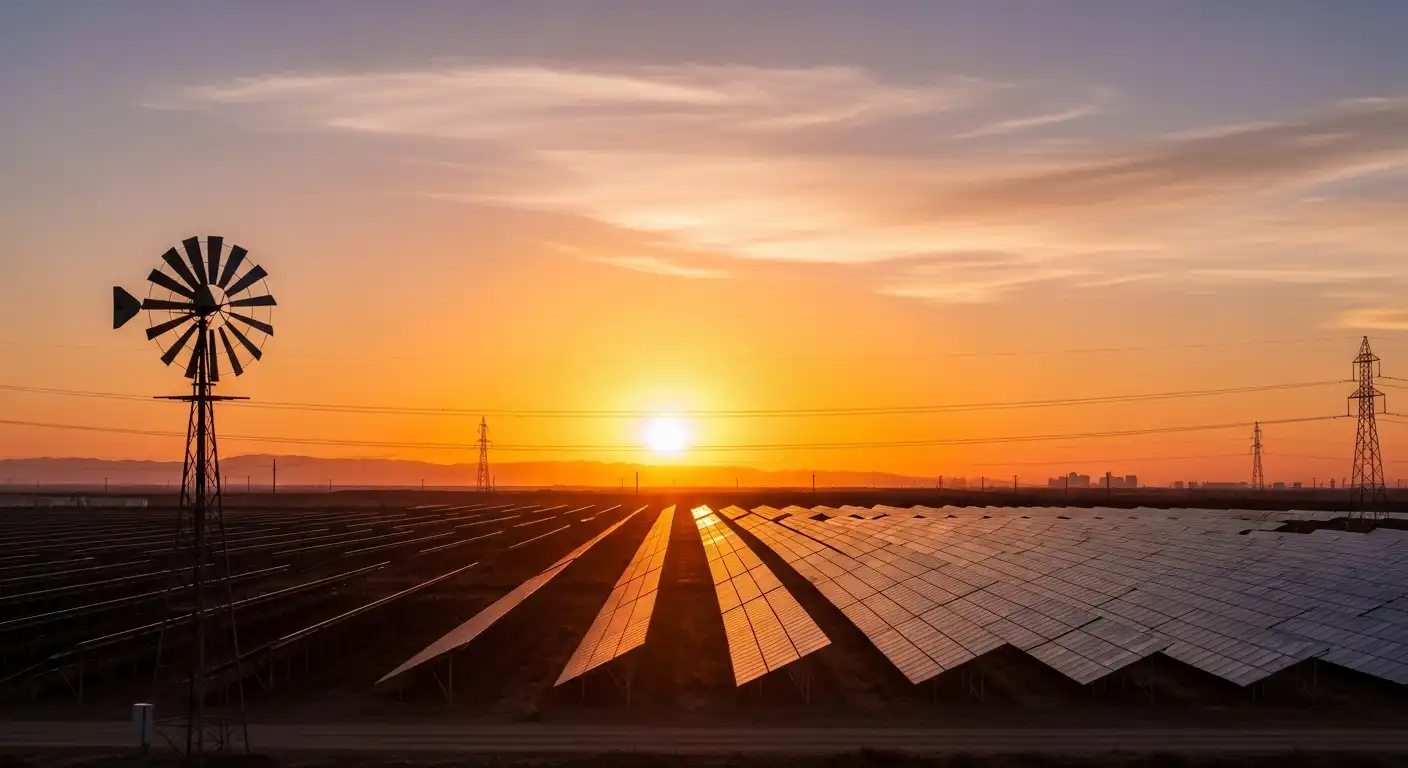
The global clean energy market is experiencing a profound, highly significant structural realignment. While the world’s most dominant solar technology manufacturer, China, is facing an overall decline in its global solar export revenues, its shipments to fast-growing emerging markets across Asia and Africa are surging at an extraordinary pace. This shifting trade pattern represents a major geopolitical pivot, as Chinese clean energy giants adapt to rising protectionist walls in the United States and Europe by redirecting their low-cost, highly advanced hardware to the developing economies of the global South.
According to a comprehensive export report published by financial market monitors, the overall value of China’s solar exports—which includes solar panels, silicon wafers, and photovoltaic cells—fell by 15.2 percent year-on-year in the first half of the year to reach $18.4 billion. This decline, down from $21.7 billion in the same period last year, was driven primarily by a massive contraction in European orders, which plummeted by nearly 30 percent. However, this Western slump was partially offset by spectacular, double-digit growth in alternative markets. Chinese solar exports to Africa jumped by 38.4 percent to reach $1.8 billion, while shipments to other Asian nations surged by 24.1 percent to hit $4.9 billion, completely redrawing the global energy map.
This geographic trade shift has profound implications for the global transition to clean energy. By building high tariff walls and implementing strict supply chain regulations, Western nations are effectively walling themselves off from the world’s cheapest, most advanced solar technology, creating a high-cost domestic market. Meanwhile, the developing nations of Asia and Africa are taking full advantage of the global solar price war, purchasing high-efficiency Chinese hardware at record-low prices to bypass traditional electrical grids, power their industrial growth, and reduce their reliance on expensive, highly polluting fossil fuels.
The Western Blockade: Tariffs, Overcapacity, and the European Warehouse Glut
The sudden, steep decline in China’s solar exports to Western nations is the direct result of a highly coordinated, bipartisan campaign by the United States and the European Union to protect their domestic manufacturers from Chinese competition. For years, policymakers warned that China’s state-supported solar gigafactories were producing far more panels than the global market could naturally consume, leading to a massive overcapacity crisis that threatened to wipe out Western clean energy competitors.
To combat this trend, the United States government implemented strict new tariffs under Section 301 of the Trade Act, effectively doubling the cost of imported Chinese solar cells and panels.
At the same time, the European Union has steadily tightened its regulatory screw.
While the EU stopped short of implementing flat import tariffs on solar panels to avoid slowing down its own climate targets, it has enacted strict forced labor and environmental regulations that require importers to prove their products contain absolutely no components sourced from high-risk regions, creating a massive administrative and legal hurdle for European buyers.
The European Warehouse Glut and the Stalled Market
The primary driver behind the 29.3% collapse in European exports was a massive, highly disruptive inventory glut on the continent. During the peak of the post-pandemic energy crisis, European utility companies and retail distributors panicked over potential energy shortages, over-purchasing Chinese solar panels at an unprecedented rate.
By the start of the year, this speculative buying had left European warehouses packed with more than 40 gigawatts of uninstalled solar panels—enough capacity to power the entire annual electricity needs of Poland.
As developers struggled to find enough skilled electrical workers and secure high-voltage grid connections to install these stored panels, the demand for new imports collapsed.
Faced with massive, stagnant stockpiles, European distributors halted their orders, forcing Chinese manufacturers to look elsewhere to keep their factories running.
The Brutal Price War and the Squeeze on Manufacturer Margins
The global overcapacity crisis has triggered a relentless, highly destructive price war among China’s largest solar manufacturers, including LONGi Green Energy Technology, JinkoSolar, and Trina Solar.
With too many factories producing the same hardware, the average price of a solar module has plummeted to an all-time low of approximately $0.11 per watt, a price point that is near or even below the actual cost of production for many mid-tier manufacturers.
While this pricing squeeze has severely damaged the profit margins and stock valuations of Chinese manufacturers, forcing several smaller players into bankruptcy and triggering corporate consolidations, it has made their products incredibly attractive to developing nations.
For a country in Africa or South Asia that is struggling to fund its own energy transition, being able to purchase world-class, high-efficiency solar modules at a 50% discount compared to previous years is an opportunity too lucrative to ignore, driving the massive export pivot to the global South.
The African Boom: Bypassing the Grid to Power the Continent
The extraordinary 38.4% surge in Chinese solar exports to Africa is a direct response to a profound, long-standing infrastructure crisis. Sub-Saharan Africa remains the most energy-poor region in the world, with over 600 million people—representing nearly 60% of the population—lacking access to a reliable, domestic electrical grid.
Traditional electricity systems in countries like South Africa, Nigeria, and Kenya are highly fragile, characterized by chronic underinvestment, aging coal and gas plants, and constant rolling blackouts that disrupt daily life and restrict economic growth.
Faced with a public grid system that is fundamentally broken, businesses, farmers, and households are choosing to bypass the central utility network entirely, using cheap Chinese solar hardware to build their own, decentralized energy systems.
Off-Grid Solar and the Decentralized Energy Revolution
The primary driver of the African solar boom is the rapid deployment of decentralized, off-grid solar systems, commonly known as “pay-as-you-go” solar. These small-scale installations, which typically combine a single, high-efficiency solar panel with a compact lithium-iron-phosphate battery and highly efficient LED appliances, offer a highly affordable, life-saving alternative to traditional kerosene lamps and diesel generators.
By partnering with local micro-finance companies, rural households can purchase these systems through small, daily mobile money payments.
This model has proved to be highly successful, bringing clean, reliable electricity to millions of people for the very first time.
For Chinese solar manufacturers, these off-grid projects represent a massive, highly diversified new market that is completely insulated from the trade wars of Washington and Brussels, allowing them to maintain high-volume sales even as their Western orders decline.
Mining and Industrial Underwriting of Clean Power
The demand for cheap Chinese solar panels is also being driven by Africa’s massive, energy-intensive mining and industrial sectors. To extract and process the continent’s vast reserves of copper, cobalt, gold, and lithium, multinational mining corporations require an extraordinary, continuous supply of electricity.
Historically, these remote mining sites relied exclusively on highly expensive, polluting diesel generators to run their operations, exposing them to the volatile swings of the international oil market.
Today, these corporations are investing billions of dollars to build their own massive, on-site solar farms.
By purchasing cheap, high-efficiency Chinese solar modules and pairing them with utility-scale battery storage, mining companies can reduce their fuel expenses significantly, lower their operating costs, and improve their environmental sustainability metrics, turning the resource-extraction industry into a primary underwriter of the African solar boom.
The Asian Expansion: Building the Regional Infrastructure
While Africa represents the fastest-growing market in percentage terms, other Asian nations remain the largest buyers of Chinese solar hardware in absolute volume, with shipments to the region surging by 24.1 percent to reach $4.9 billion in the first half of the year.
This regional expansion is being driven by a massive, highly coordinated push by governments across South and Southeast Asia to modernize their industrial infrastructure, reduce their reliance on imported fossil fuels, and meet their national carbon-reduction targets.
By utilizing cheap Chinese technology, these nations are rapidly scaling their renewable energy generation, establishing themselves as key manufacturing and logistics hubs for the global clean tech economy.
Pakistan’s Consumer-Led Residential Solar Boom
The standout performer in the Asian market is Pakistan, where domestic solar imports from China surged by more than 45 percent during the first half of the year. This growth was driven by a massive, highly unusual consumer-led residential solar boom.
Confronted by skyrocketing electricity tariffs imposed by a heavily indebted government, middle-class households and small business owners in cities like Karachi, Lahore, and Islamabad decided to take matters into their own hands.
They began purchasing cheap Chinese solar panels in bulk, installing them on their roofs to drastically reduce their reliance on the expensive, highly unreliable national grid.
This grassroots consumer movement has been so successful that it has actually caused a significant decline in the overall demand for grid electricity during peak sun hours, forcing local utility companies to re-evaluate their long-term pricing models.
The Strategic Move Toward Local Manufacturing Alliances
To protect their long-term access to global markets and bypass the threat of rising trade barriers, leading Chinese solar companies are systematically transitioning away from a pure-export model toward establishing local manufacturing alliances across Southeast Asia.
Firms like JinkoSolar and Trina Solar are investing billions of dollars to construct state-of-the-art solar cell and module assembly plants in countries like Vietnam, Malaysia, Thailand, and Cambodia.
By manufacturing their products locally in these neutral countries, Chinese companies can legally export their hardware to the United States and Europe under more favorable tariff rates.
Furthermore, these regional manufacturing hubs allow Chinese firms to build deep, highly resilient partnerships with local governments and supply chain partners, ensuring they remain the indispensable, primary providers of clean technology to the global market, regardless of how international trade policies shift.
The Geopolitical Weaponization of the Periodic Table
The rapid, state-supported shift of Chinese clean energy exports to the global South represents a major, highly significant trend in international relations: the strategic weaponization of the periodic table.
As the technological rivalry between major global powers intensifies, the European Union and the United States are realizing that they have fallen dangerously behind China in controlling the supply chains of the green transition.
China does not just dominate the manufacturing of completed solar panels; it controls every single stage of the underlying supply chain, from the raw mining and refinement of high-purity polysilicon to the advanced machinery used to cut silicon wafers.
By offering this highly advanced, vertically integrated technology to developing nations at prices that Western companies cannot hope to match, China is building a powerful, long-term geopolitical moat.
The nations of the global South are increasingly aligning their economic and infrastructure models with Beijing, realizing that cooperation with China is the only viable, affordable path to securing their own energy independence.
The successful realignment of China’s solar export network is a powerful, highly instructive lesson in the limits of protectionist trade policy. By attempting to wall off their markets through punitive tariffs, Western nations have not succeeded in slowing down China’s clean energy expansion.
Instead, they have simply accelerated the redirection of this highly advanced, low-cost technology to the rapidly growing economies of Asia and Africa, creating a deeply fractured global market.
As the world continues to navigate this green industrial transition, the nations that will succeed are those that can successfully balance domestic industrial protection with the absolute, non-negotiable requirement of deploying clean technology rapidly, ensuring a faster, safer, and infinitely more sustainable future for generations to come.