

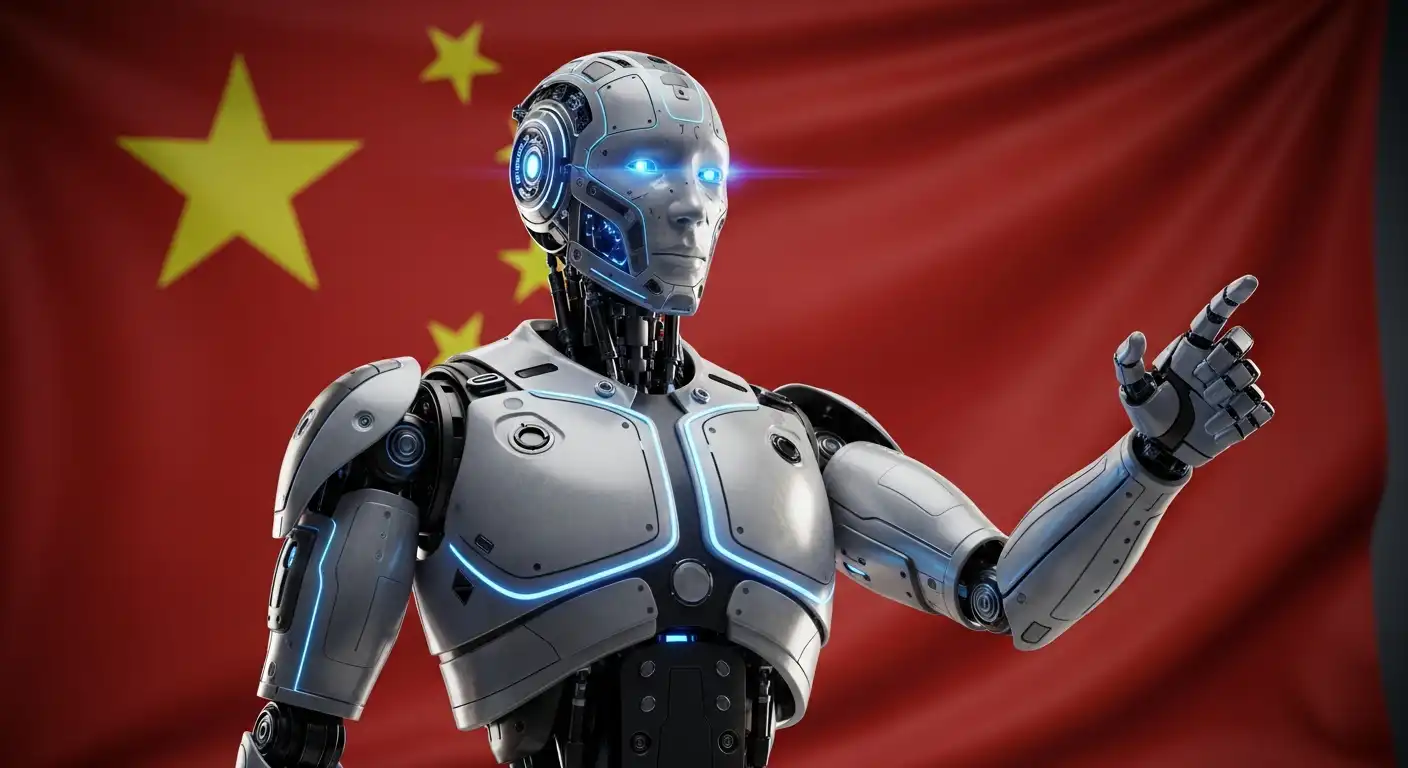
A transformative technological shift is sweeping across China’s energy sector as autonomous artificial intelligence agents, neural operating systems, and high-capacity battery networks converge to modernize the nation’s electrical infrastructure. Rather than relying on rigid, pre-programmed rule sets and manual human dispatch, industrial facilities and power plants are deploying intelligent systems that respond directly to conversational natural language, executing complex multi-megawatt energy strategies within seconds.
The digital transition touches every link of the modern power value chain. In research and development laboratories, predictive machine learning models are cutting battery design cycles from years down to months. On factory floors, intelligent safety platforms like Contemporary Amperex Technology Co. Limited’s TENER smart storage system predict battery thermal faults up to seven days in advance, pinpointing internal defects within five minutes. Across commercial wholesale power markets, automated trading algorithms developed by clean technology pioneers like Envision Group are predicting peak-valley price spreads with an astonishing 95% accuracy, turning variable clean energy into predictable corporate profit.
This algorithmic revolution arrives as Chinese policymakers execute an unprecedented coordination strategy between computing power and green electricity. With national data center electricity consumption projected to surge from 170 billion kilowatt-hours in 2025 to past 700 billion kilowatt-hours by 2030, state planners are connecting massive western solar and wind mega-bases directly to high-density artificial intelligence computing hubs. Following a historic milestone in which national installed solar capacity officially surpassed coal-fired generation for the first time, China is leveraging its renewable energy supremacy to build an unshakeable competitive foundation for the global artificial intelligence economy.
A Digital Awakening Across China’s Power and Storage Infrastructure
The modernization of China’s electrical grid represents a historic transition from mechanical automation to cognitive intelligence. For decades, industrial energy management systems operated on rigid, deterministic logic. If a plant manager wanted to adjust battery charging schedules or shift heavy manufacturing loads to avoid expensive peak electricity tariffs, software engineers had to write complex scripts, set static parameter thresholds, and reconfigure local control networks manually.
Modern artificial intelligence agents have eliminated this technical friction. By integrating large language models equipped with intent understanding directly into industrial energy operating systems, software platforms can interpret broad operational goals, analyze real-time grid constraints, and execute optimized dispatch strategies autonomously.
The technology transforms energy storage assets from passive backup batteries into dynamic, revenue-generating economic actors. Instead of sitting idle waiting for power outages, battery systems continuously interact with wholesale power exchanges, local rooftop solar arrays, and factory production lines to minimize energy expenses and maximize grid stability.
This software evolution is accelerating across thousands of commercial and industrial enterprises, creating an agile, decentralized power network capable of adapting to shifting economic and meteorological conditions in real time.
Natural Language Energy Management and the WHES Operating System
A prominent example of this cognitive transformation is WHES OS, an artificial intelligence-native energy operating system developed by Weheng Intelligent Technology Co., Ltd. The software functions as an autonomous energy copilot, allowing facility managers with zero programming experience to control multi-megawatt energy assets through everyday language.
When a plant manager submits an operational instruction—such as prioritizing an urgent manufacturing run the following afternoon while charging on-site battery storage during low-cost morning hours—the system executes a synchronized optimization loop:
- Parsing natural language instructions to extract operational intent, equipment load constraints, and time horizons within milliseconds.
- Ingesting real-time weather forecasts, local rooftop solar generation projections, and provincial electricity market pricing curves.
- Formulating an optimized, second-by-second charging, discharging, and load-shedding schedule that minimizes total facility power expenses.
- Transmitting automated actuation commands directly to battery power inverters, factory transformers, and industrial machinery controllers.
By eliminating manual programming, the operating system democratizes advanced energy optimization, allowing small and medium-sized industrial factories to capture sophisticated power market savings previously accessible only to giant utility operators.
Transforming Storage R&D from Trial-and-Error to Predictive Modeling
Beyond real-time facility management, artificial intelligence is revolutionizing the research and development pipelines of leading energy storage hardware manufacturers. Historically, developing a next-generation lithium battery cell required years of physical trial-and-error chemistry experiments, environmental stress testing, and destructive teardown analyses.
Beijing HyperStrong Technology Co., Ltd., a leading Chinese energy storage system integrator, has replaced traditional empirical testing with advanced predictive neural simulations:
- Utilizing machine learning models to simulate microscopic ion transport, dendrite growth, and electrode degradation across millions of virtual battery chemistry formulations.
- Compressing physical hardware development timelines from three to four years down to six to eight months.
- Deploying physics-informed neural networks to predict the multi-year degradation curves of commercial battery packs with 98% accuracy.
- Utilizing predictive analytics during active operations to optimize thermal cooling fluid flow, extending the operational lifespan of commercial battery installations by 15% to 20%.
Lyu Zhe, vice president of HyperStrong, emphasized that artificial intelligence is delivering dual commercial benefits: accelerating scientific discovery in the laboratory while boosting commercial revenue in the field by preventing unplanned facility outages.
Next-Generation Safety Monitoring and Automated Electricity Trading
The integration of artificial intelligence is resolving two of the most critical operational challenges facing large-scale energy storage: catastrophic thermal runaway risks and wholesale market price volatility. As battery storage installations scale from small megawatt-hour pilots into massive multi-gigawatt-hour utility stations, ensuring physical safety and financial profitability is essential for industry expansion.
Traditional safety systems relied on static threshold alarms that triggered only after smoke, extreme heat, or toxic off-gassing had already developed inside battery enclosures, giving operators very little time to prevent fires.
Simultaneously, liberalizing provincial electricity spot markets created dynamic, rapidly fluctuating price curves that human trading desks could not navigate effectively.
Deploying deep learning safety models and automated trading agents has transformed both domains, establishing unprecedented standards of physical safety and algorithmic trading returns.
CATL’s TENER Platform Delivering Seven-Day Preemptive Fault Warnings
The industry benchmark for predictive safety monitoring is the TENER Smart Storage platform, developed by global battery manufacturing titan Contemporary Amperex Technology Co. Limited (CATL). The platform monitors thousands of individual battery cells simultaneously, analyzing subtle electrical and thermal anomalies that precede physical hardware failures.
The system’s predictive capabilities provide an extraordinary safety buffer:
- Detecting microscopic internal short circuits, lithium plating anomalies, and cell insulation breakdown up to seven days before thermal runaway can occur.
- Pinpointing the exact root cause of a detected anomaly and isolating the specific compromised battery module within five minutes.
- Ingesting continuous high-frequency telemetry covering cell voltage, internal resistance, temperature differentials, and structural vibration across millions of operational battery packs.
- Automatically adjusting charging currents and activating localized liquid-cooling loops to neutralize overheating cells before chemical runaway initiates.
Providing a seven-day advance warning window allows facility maintenance teams to inspect and replace compromised battery modules during scheduled maintenance windows, eliminating the risk of catastrophic fires and protecting surrounding industrial infrastructure.
Envision Group’s 95% Accuracy in Peak-Valley Price Spread Arbitrage
On the commercial trading front, artificial intelligence is delivering exceptional financial returns across liberalized wholesale power markets. In eastern China’s Shandong Province, clean technology conglomerate Envision Group deployed an autonomous trading agent to manage its smart battery storage station in Binzhou.
The algorithmic trading system operates with remarkable financial precision:
- Achieving a verified 95% forecasting accuracy when predicting daily peak and valley electricity price spreads across the regional power exchange.
- Processing hundreds of dynamic variables simultaneously, including real-time wind turbine output, regional cloud cover movements, transmission grid congestion bottlenecks, and competitor bidding quotes.
- Automatically executing thousands of micro-transactions daily, buying electricity when local solar generation creates negative or near-zero wholesale prices and discharging power during evening peak demand hours.
- Generating double-digit annual returns on invested capital, proving that utility-scale battery storage can operate as an independent, highly profitable merchant asset without government subsidies.
The success of the Binzhou smart station proves that autonomous trading agents can optimize grid-scale energy storage, providing essential frequency regulation while capturing lucrative market arbitrage opportunities.
Real-Time Dynamic Balancing Across High-Voltage Substations
The deployment of intelligent energy software extends beyond individual battery enclosures into the wider transmission grid. Operating a high-voltage electrical substation with high renewable energy penetration requires continuous, millisecond-level balancing to prevent line tripping and equipment overloads.
Artificial intelligence models deployed across provincial utility substations execute automated grid-stabilization workflows:
- Monitoring phase angles, reactive power flows, and line frequencies across interconnected 500-kilovolt transmission corridors.
- Triggering sub-second synthetic inertia responses from connected battery arrays to arrest sudden frequency drops caused by cloud cover passing over solar farms.
- Automating power routing across regional microgrids to prevent thermal overloads on aging high-voltage transformers.
- Re-routing power flows automatically during transmission line faults, restoring electricity to critical municipal industrial circuits within milliseconds.
These real-time balancing capabilities ensure that the physical power grid can safely manage the rapid growth of distributed renewable generation without sacrificing baseline reliability.
The Computing-Electricity Coordination Policy and the 15th Five-Year Plan
The algorithmic transformation of the energy sector is backed by decisive national policy coordination. Recognizing that the explosive expansion of artificial intelligence computing creates immense electrical power demands, Chinese policymakers are executing a synchronized national strategy that links digital infrastructure directly with clean energy deployment.
In this year’s government work report, state leadership formally called for launching new national infrastructure projects centered on hyperscale intelligent computing clusters and mandated the coordinated development of computing capacity and electricity supply.
This marked the very first time that the coordinated planning of computing power and electrical energy appeared as a priority in the central government’s work agenda.
The strategic vision was reinforced in the outline of the 15th Five-Year Plan spanning 2026 to 2030, which establishes the coordinated deployment of green electricity and computing power as a foundational pillar of national modernization.
Data Center Power Demand Surging from 170 Billion to 700 Billion kWh
The urgency driving national policy coordination is the staggering energy consumption required to power modern artificial intelligence models. Training massive foundation models, running high-throughput reasoning clusters, and serving real-time conversational agents require vast computing campuses packed with thousands of high-density graphics processors.
National energy data and economic research highlight an explosive demand trajectory:
- In 2025, data centers across China consumed 170 billion kilowatt-hours of electricity, accounting for roughly 1.6% of the nation’s total electricity consumption.
- A research report from China Galaxy Securities projects that data center power consumption will more than quadruple, surpassing 700 billion kilowatt-hours annually by 2030.
- Data center energy use is forecast to breach the 5.0% mark of total national electricity demand, rivaling the power consumption of entire heavy industrial manufacturing sectors.
- Artificial intelligence computing clusters generate highly volatile power loads, with sudden, multi-megawatt demand spikes that strain traditional utility substations.
State energy planners recognized that attempting to power 700 billion kilowatt-hours of computing demand with legacy coal-fired generation would derail national carbon commitments, making the direct integration of renewable energy an existential priority.
Solar Installed Capacity Overtakes Coal-Fired Power for the First Time
China’s ability to satisfy soaring computing power demand is supported by unmatched clean energy manufacturing and deployment scale. The National Energy Administration announced a historic milestone: national installed photovoltaic solar capacity officially surpassed total coal-fired power capacity for the first time in history.
This milestone confirms that solar has become China’s largest electrical power source by installed nameplate capacity:
- National installed solar capacity exceeded 710 gigawatts, driven by massive installations across desert mega-bases and urban rooftop programs.
- Total non-fossil energy generation capacity—combining solar, wind, hydro, and nuclear power—surpassed 55% of the national total.
- Domestic clean energy equipment manufacturing produces over 80% of the world’s solar panels, wind turbines, and lithium battery cells.
- Clean energy additions are deploying at a rate exceeding 250 gigawatts annually, providing an abundant supply of low-cost green electricity.
Ding Zhaohao, a prominent energy engineering professor at North China Electric Power University, emphasized that by combining domestically developed artificial intelligence models with the world’s largest renewable energy system, China can transform its clean power abundance into an unbeatable competitive advantage in the global artificial intelligence race.
Off-Grid Renewable Compute Campuses: The Ulanqab Pilot Blueprint
To translate policy blueprints into physical reality, Chinese energy authorities and technology developers are constructing integrated computing campuses in energy-rich interior regions. Under the national “Eastern Data, Western Computing” strategy, non-latency-sensitive model training workloads are routed away from crowded coastal cities to northern and western provinces with abundant wind, solar, and land resources.
A pioneering operational showcase of this integrated vision is operating in Ulanqab, located in the northern Inner Mongolia Autonomous Region.
Known across China as the “Grassland Cloud Valley,” Ulanqab possesses cold average annual temperatures that provide natural air cooling alongside vast wind and solar resources.
In July 2025, Ulanqab commissioned the nation’s first operational data center project that completely integrates on-site renewable energy generation, battery storage, and high-density computing loads into a self-sustaining microgrid.
Integrating Wind, Solar, Battery Storage, and Server Loads in Inner Mongolia
The Ulanqab computing campus establishes an innovative engineering template for the global technology industry. Rather than relying on distant coal power plants or straining public utility transmission lines, the facility functions as an autonomous, green-powered computing island.
The physical architecture of the integrated campus operates through a closed-loop system:
- On-site utility-scale wind turbines and solar photovoltaic arrays generate 100% of the daily electricity consumed by high-density server halls.
- A multi-megawatt-hour lithium iron phosphate battery energy storage system absorbs surplus generation during peak wind and solar hours.
- Stored battery power discharges during low-generation windows, ensuring that server racks receive uninterrupted, flat baseload electricity around the clock.
- The public electrical transmission grid remains connected strictly as a secondary, emergency backup option, drawing zero power during normal operations.
Operating on self-generated clean electricity lowers computing costs to less than 3.5 cents per kilowatt-hour, providing artificial intelligence startups with affordable, zero-carbon compute capacity.
Overcoming Data Silos and Industry-Specific Model Deficits
While the physical integration of green power and computing infrastructure has achieved early success, scaling the ecosystem nationwide requires overcoming significant software, data, and regulatory bottlenecks.
Industry leaders highlight several critical operational challenges:
- Shortage of Industry-Specific Models: The domestic market possesses advanced general-purpose chatbots but lacks specialized foundational models trained on deep electrical engineering, thermodynamics, and power market trading.
- High-Quality Industrial Data Scarcity: High-resolution telemetry covering battery cell degradation, substation component wear, and grid power flows is fragmented across proprietary corporate databases.
- Cross-Enterprise Data Silos: Power grid operators, battery manufacturers, and cloud computing companies maintain rigid data-sharing barriers, preventing artificial intelligence algorithms from accessing holistic national energy data.
- Standardized Technical Protocols: Incompatible communication standards between competing battery management systems, power inverters, and cloud computing APIs create integration delays.
Yuan Jun, vice president of the National Data Development Research Institute, emphasized that unlocking the full potential of the intelligent energy transition requires coordinated national reforms spanning data-sharing frameworks, technical standards, and cross-industry market mechanisms.
Strategic Implications for the Global High-Tech and Clean Energy Economy
The convergence of artificial intelligence and renewable energy infrastructure in China carries profound strategic implications for the global technological and industrial balance of power. In Western economies, the artificial intelligence infrastructure boom is encountering severe physical headwinds, with data center developers facing four-to-eight-year electrical grid connection backlogs and rising utility tariffs.
By contrast, China’s synchronized national strategy unites the world’s largest clean-energy manufacturing engine with cutting-edge computing infrastructure, eliminating the power bottlenecks that threaten to constrain Western computing growth.
This integrated approach will shape global trade competitiveness, industrial decarbonization roadmaps, and the future development of artificial intelligence for decades to come.
Turning Green Energy Abundance into a Decisive AI Advantage
In the modern digital economy, the ultimate cost of running an artificial intelligence foundation model is the cost of the electricity required to power server racks and cooling chillers. If a nation possesses abundant, low-cost clean electricity, its domestic technology enterprises can train larger models, process more tokens, and deploy autonomous agents at lower price points than foreign competitors.
China’s energy-compute synergy delivers formidable competitive advantages:
- Lower Marginal Token Costs: Access to green electricity priced below 4 cents per kilowatt-hour allows domestic artificial intelligence cloud providers to slash API token pricing by 90%, driving rapid enterprise adoption.
- Grid-Relieved Infrastructure: Siting computing clusters in renewable-rich western hubs ensures that artificial intelligence expansion does not drive up electricity bills for residential urban consumers.
- Export-Resilient Manufacturing: Products manufactured in automated smart factories powered by verified green electricity comply fully with international carbon border adjustment taxes.
- Rapid Infrastructure Scaling: Coordinating national land-use approvals, ultra-high-voltage transmission lines, and data center zoning allows China to construct gigawatt-scale computing parks in 12 to 18 months.
Combining energy abundance with algorithmic intelligence creates an economic flywheel that accelerates industrial modernization across the entire national economy.
The Long-Term Horizon for Synchronized National Computing Grids
Looking toward 2030 and beyond, the integration of artificial intelligence and electrical power will evolve into a unified, national cyber-physical operating system. The power grid and the computing network will no longer operate as separate industrial systems; they will function as a single, synchronized infrastructure matrix.
Key structural trends that will define the future of the intelligent energy economy include:
- Spatial Compute Load Shifting: Artificial intelligence scheduling algorithms dynamically route non-urgent model training jobs across the national computing network to follow real-time sunshine and wind patterns.
- Direct Hydrogen-Electricity-Compute Megabases: Constructing massive industrial complexes that combine gigawatt-scale solar farms, green hydrogen electrolyzers, battery storage, and artificial intelligence supercomputers on contiguous land tracts.
- Universal Self-Healing Microgrids: Automated artificial intelligence agents managing millions of decentralized industrial and residential microgrids, achieving 100% clean-energy penetration with zero human intervention.
- Global Export of Intelligent Energy Infrastructure: Chinese engineering consortiums exporting integrated green-compute packages—including solar panels, TENER battery storage, and WHES operating software—to emerging economies across the Global South.
By pioneering the deep coordination of computing power and clean electricity today, China is building the sovereign, sustainable, and intelligent infrastructure foundation that will power the global economy of the twenty-first century.
China’s aggressive push to unite artificial intelligence with its world-leading renewable energy infrastructure marks a historic milestone in the evolution of modern industrial systems. From natural language energy operating systems like WHES OS that turn plant managers into autonomous dispatchers to CATL’s TENER platform delivering seven-day preemptive safety warnings and Envision’s 95% trading accuracy, artificial intelligence is transforming the physical power grid into an intelligent, self-optimizing network. As national electricity demand expands at 5.0% annually and data center power use surges toward 700 billion kilowatt-hours by 2030, the coordination of green energy bases with national computing clusters under the 15th Five-Year Plan provides the physical foundation required to power the digital future. By turning solar abundance into an insurmountable computing advantage, China is demonstrating that the race for artificial intelligence supremacy will ultimately be won not in digital isolation, but through the mastery of the clean, physical power that drives the modern world.






