

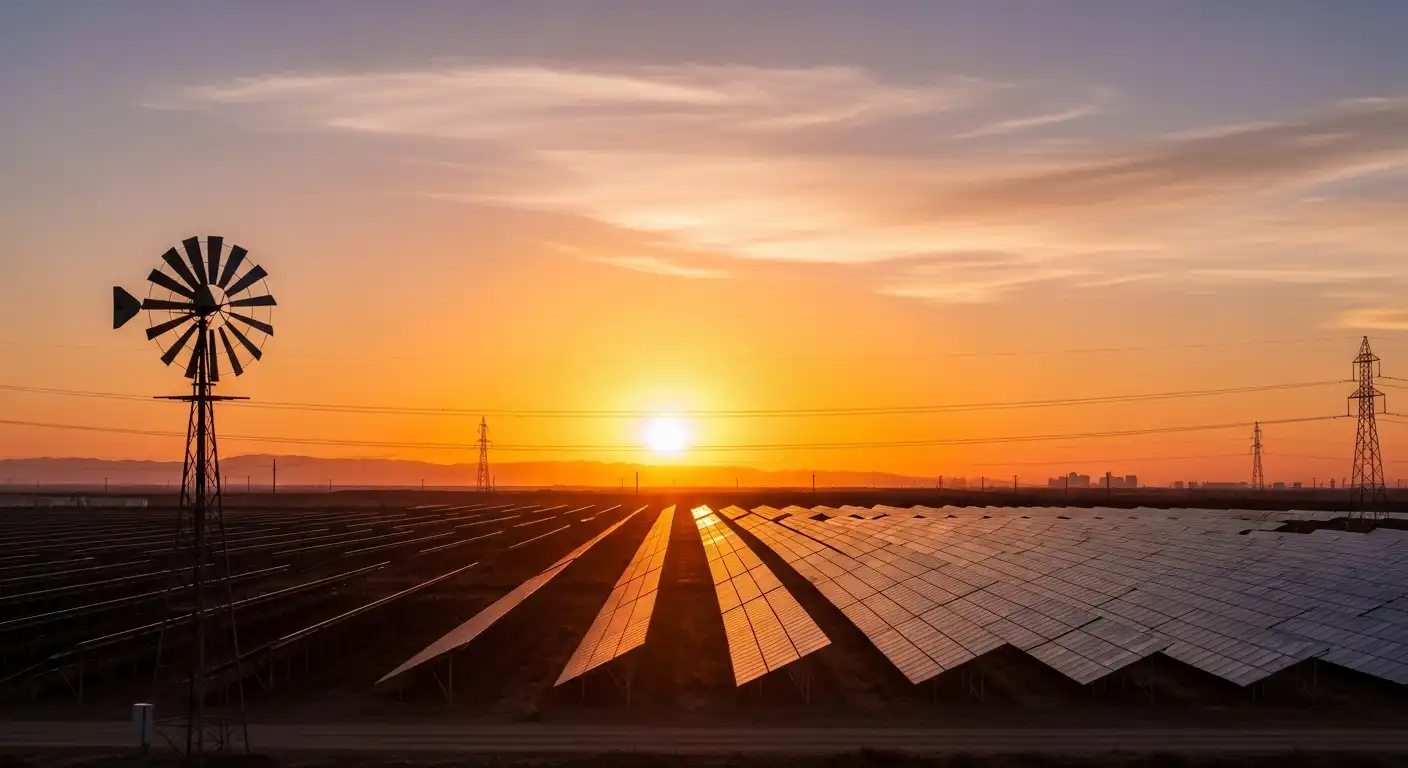
The global clean energy industry is witnessing a brutal war of attrition as the world’s largest solar manufacturers grapple with an unprecedented supply-demand imbalance. In August 2026, data compiled by the China Photovoltaic Industry Association revealed a stark operational paradox. Despite executing its first-ever coordinated production cut—slashing solar panel output by a massive 35% year-on-year during the first half of the year—the Chinese solar panel price slump refuses to break, leaving panel prices stuck at less than half of their 202 peak.
This persistent price slump highlights the limits of voluntary, temporary production cuts in a highly competitive, over-allocated market. Over the past several years, Chinese solar giants poured billions of dollars into constructing massive, high-volume factories, rapidly expanding the country’s total manufacturing capacity to twice the global demand. When the inevitable supply glut arrived, driving prices down to record lows, major corporate boards realized that permanently shutting down facilities would mean ceding their hard-won market share to rivals.
Instead of executing permanent structural closures, leading manufacturers have opted for cautious, temporary output adjustments. Because the underlying physical factories remain fully intact and ready to ramp up production at a moment’s notice, the market continues to operate under the shadow of massive oversupply. As a result, the industry remains locked in a costly, margin-destroying price war, proving that the transition to a sustainable green energy economy has permanent, painful consequences for the corporate balance sheets of the companies building the future of technology.
The Brutal Economics of the Thirty-Five Percent Production Cut
The decision by China’s solar giants to cut their output during the first half of the year was a historic milestone for an industry that has traditionally prioritized volume and market share over pricing discipline.
A Giant Drop to Two Hundred and One Gigawatts
According to the industry association, China’s total output of solar panels fell to 201 gigawatts during the first six months of the year. This represents a substantial 35% contraction compared to the record-breaking production volumes recorded during the same period in the previous year, marking the first meaningful output contraction since the explosive capacity build-out began several years ago.
This massive production cut was made possible by an unprecedented level of coordination among the country’s leading manufacturers. In a series of high-level meetings coordinated by the China Photovoltaic Industry Association, over 30 of the largest solar players—including global leaders like LONGi Green Energy Technology, Tongwei, JinkoSolar, Trina Solar, and JA Solar—agreed to adhere to future production quotas and halt aggressive price discounting to stem industry-wide losses.
However, while these agreements succeeded in reducing immediate factory output, it has failed to restore pricing power, as the fundamental structural capacity of the industry remains untouched.
Why Cautious Output Adjustments Fail to Revive Prices
The primary reason why the 35% output cut has failed to reverse the price slump is that the industry’s total installed manufacturing capacity remains massive. Swiss investment bank UBS estimates that China possesses approximately 1,200 gigawatts of active solar photovoltaic manufacturing capacity, which is roughly twice the total global installation demand.
Because the underlying factories, assembly lines, and supply networks remain fully operational, the market continues to face a massive “phantom supply” threat.
If a specific type of solar cell or module experiences a minor 1.5% price increase, manufacturers can immediately ramp their idled assembly lines back up to full capacity in a matter of days, flooding the market with fresh supply and pushing prices back down.
This hyper-reactive capacity means that temporary production pauses can never serve as a true equivalent to permanent closures.
Until the leading companies take the painful step of permanently dismantling their factories and exiting the market, the global supply-demand imbalance will persist, keeping prices stuck near or below the cash cost of production.
The Multi-Billion Dollar Crisis: Chinese Solar Giants Sink into Deep Losses
The prolonged price slump has pushed China’s solar panel industry into its worst financial crisis on record, erasing the massive paper profits generated during the early years of the renewable energy boom.
Sizing up the Massive Forty-Five Billion Dollar Deficit
The financial disclosures published by China’s leading listed solar companies reveal a devastating picture of capital destruction. According to the state-run financial daily Securities Times, the combined losses for nine of China’s largest solar manufacturers recently exceeded a staggering $45 billion.
This massive deficit represents a major financial crisis for the sector.
For years, these companies relied heavily on local government subsidies, state-backed bank loans, and cheap capital to build out their manufacturing empires.
Now, with prices falling below the actual cost of production, these firms are losing money on every single solar module they ship, leading to a rapid depletion of their cash reserves and forcing weaker players into bankruptcy.
Deconstructing the Losses of Tongwei and LONGi Green Energy
The financial pain is particularly severe for the industry’s top-tier players, who built the largest manufacturing capacities and currently face the highest ongoing overhead costs:
- Tongwei, the world’s largest producer of high-purity polysilicon, projected a massive full-year net loss of between $13.5 billion and $15 billion. The company attributed the deficit to a pronounced slowdown in domestic installations and a simultaneous surge in the price of key raw materials like silver paste.
- LONGi Green Energy Technology, the global leader in monocrystalline silicon wafers and modules, forecasts a net loss of $9 billion to $9.8 billion, citing prolonged weakness in selling prices and high depreciation costs on its newly built facilities.
- Aiko Solar, a pioneer in advanced back-contact solar cell technology, reported similar multi-billion-dollar losses, proving that even companies with a significant technological lead cannot escape the gravity of a systemic price collapse.
This industry-wide financial distress is forcing corporate boards to implement strict cost-saving measures, including delaying new factory projects, reducing executive pay, and laying off thousands of factory workers.
However, with credit conditions tightening and local governments scaling back their financial support, many mid-sized and smaller manufacturers are running out of options, setting the stage for a brutal, highly consolidated industry shakeout.
Beijing’s Regulatory Intervention: Culling Inefficient Capacity
Recognizing that voluntary industry agreements are not enough to resolve the crisis, the Chinese central government has begun to deploy its powerful regulatory machinery to force consolidation and cull inefficient manufacturing capacity.
The Mandatory GB 47834-2026 Energy Efficiency Standards
The primary regulatory weapon being deployed by Beijing is a strict, new national standard known as GB 47834-2026, which establishes mandatory energy efficiency requirements for crystalline silicon solar modules and grid-connected inverters.
The new rules introduce a strict three-tier grading system to classify solar modules based on their conversion efficiency and energy consumption during manufacturing:
- Grade 1: Represents the absolute highest level of efficiency and the lowest energy consumption under the new classification system.
- Grade 3: Establishes the minimum legal efficiency and energy performance standard for finished solar products, set at approximately 23.2% for TOPCon modules and 23.5% for back-contact (BC) designs.
- Any manufacturing facility or product line that fails to meet the Grade 3 baseline is legally barred from operating, forcing the immediate retirement of older, inefficient production systems.
These mandatory standards are designed to target and eliminate older, high-energy-consumption manufacturing lines.
Specifically, legacy Passivated Emitter and Rear Cell (PERC) module facilities, early-stage TOPCon capacity, and high-energy-consumption polysilicon plants will experience the strongest impact.
By forcing the closure of these older, inefficient lines, the government wants to reduce the industry’s total capacity by up to 25%, shifting the market away from endless price wars toward higher-quality, efficiency-focused competition.
Squeezing Exports with Tax Rebate Rollbacks
At the same time, the central government is utilizing fiscal policy to increase the financial pressure on weaker exporters, hoping to accelerate consolidation and ease rising trade tensions with Western nations.
The Ministry of Finance in Beijing recently announced a major adjustment to its export tax rebate policy, reducing the value-added tax rebate on exported solar products to 9% from the previous 13%.
For a major exporter operating on razor-thin margins, this 4 percentage point rollback represents a significant financial hit, directly increasing their international shipping and compliance costs.
By making exports more expensive, the policy is designed to discourage weaker, low-margin companies from dumping cheap panels on the global market, forcing them to either merge with larger, more efficient domestic competitors or exit the industry entirely.
The Global Backlash: Tariffs, Price Floors, and Trade Barriers
The massive volume of cheap Chinese solar panels flooding the global market has triggered a powerful wave of political anger and protectionist pushback from Western governments, which argue that China is using state subsidies to destroy their domestic clean energy supply chains.
The Western Counter-Offensive and the Threat of Trade Barriers
The European Union and the United States have implemented a series of strict trade barriers designed to protect their local manufacturers from what they call artificial, subsidized competition.
In the United States, the Biden administration has enforced steep tariffs on Chinese-made solar cells and modules, while also launching comprehensive investigations into whether Chinese firms are bypassing these tariffs by routing their products through third-country assembly hubs in Southeast Asia.
These trade barriers have significantly restricted China’s access to major Western markets, forcing manufacturers to compete even more aggressively for market share in non-aligned, developing economies.
The resulting domestic oversupply has kept prices depressed, proving that protectionist policies in the West are directly contributing to the financial distress of Chinese solar giants.
The US Polysilicon Price Floor Proposal and BNEF’s Global Slowdown Projections
To further counter China’s dominance, the United States government is weighing a series of radical new trade measures, including the potential implementation of a mandatory price floor for imported polysilicon and solar wafers under Section 301 of the Trade Act of 1974.
If Washington implements a strict price floor, it will establish a legal baseline price below which foreign solar components cannot be imported, completely neutralizing the advantage of cheap Chinese manufacturing.
However, industry groups representing U.S. solar developers have warned that these aggressive tariffs could backfire, driving up the capital costs of constructing solar power plants and slowing down the transition to renewable energy.
This regulatory uncertainty is already having a measurable impact on global energy development.
According to data from BloombergNEF, global solar capacity installations are projected to slow down to 649 gigawatts, representing the first annual contraction in global solar growth in two decades.
This slowdown is being driven by a combination of grid capacity constraints, rising equipment costs, and political attacks on renewable energy subsidies, creating a highly challenging market environment where Chinese manufacturers must adapt to a shrinking global pipeline.
Navigating the Squeeze of the Modern Solar Market
The continued price slump in China’s solar industry despite a historic 35% output cut represents a landmark moment in the global transition to renewable energy. It is an admission that the era of unchecked, subsidy-driven capacity expansion has reached its physical and financial limits, forcing the industry into a painful, long-term consolidation phase.
While the new mandatory energy efficiency standards and the rollback of export tax rebates are necessary and responsible measures to cull inefficient capacity, the road to market recovery will be slow and difficult.
As long as major manufacturers refuse to execute permanent factory closures for fear of losing their market share, the global supply-demand imbalance will persist, keeping prices near record lows.
To survive in this highly competitive, low-margin environment, Chinese solar giants must transition away from endless price-cutting campaigns, focusing instead on technical innovation, operational resilience, and the development of next-generation, high-efficiency solar modules, ensuring they can continue to deliver clean, affordable energy to the global marketplace while rebuilding their corporate profitability for the digital age.






