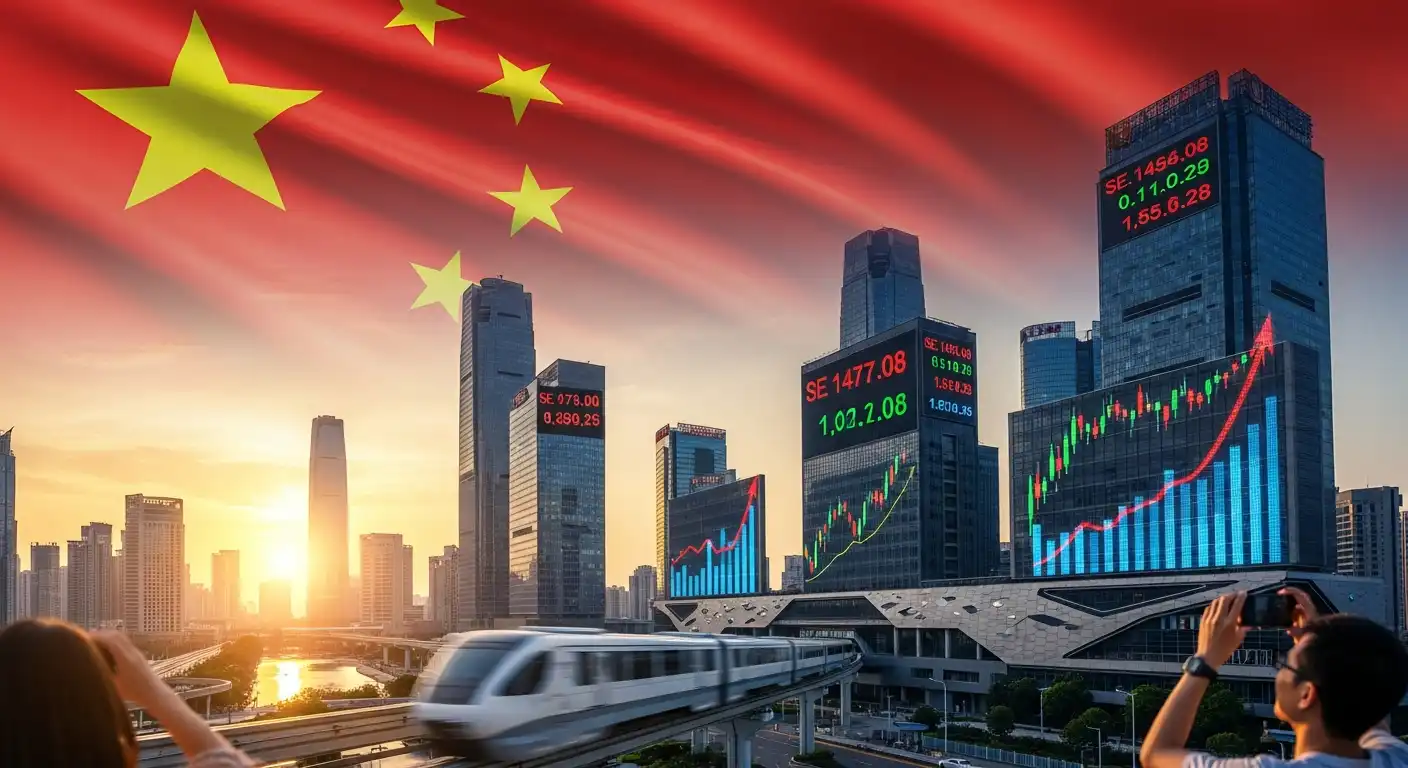
The global technology and manufacturing sectors are experiencing a profound, highly unusual paradox. For years, the United States government has steadily expanded its campaign of economic containment, utilizing blacklists, investment bans, and strict export controls to isolate Beijing’s high-tech industry. Yet, in August 2026, commercial data and corporate announcements revealed that Chinese Tech Global Appeal has reached an all-time high. Instead of decoupling, several of the world’s most prominent multinational corporations are embedding Chinese hardware, software, and battery technologies deeper into their core business operations.
This deep integration is being driven by the hard realities of the global marketplace. While politicians in Washington debate national security risks, corporate executives at companies like Apple, Ford, and Volkswagen must prioritize cost-efficiency, manufacturing depth, supply chain resilience, and rapid innovation. In vital, high-growth sectors like electric vehicle batteries, consumer electronics, and open-weights artificial intelligence, Chinese developers have established a level of scale and technological sophistication that Western competitors simply cannot match, turning decoupling into an incredibly expensive business handicap.
The resulting corporate behavior has created a major rift between political rhetoric and commercial reality. From the streets of Shanghai to the factory floors of Michigan, global business leaders are choosing pragmatic adoption over ideological isolation. By partnering directly with Chinese champions like CATL, Alibaba, and DeepSeek, these global brands are proving that the physical and digital systems of the modern age cannot be easily divided by trade sanctions, establishing a highly integrated, multilateral technology landscape that defies the borders of the Cold War.
The Apple-Alibaba Alliance: Integrating Qwen AI into the iPhone
Nowhere is the pragmatic necessity of adopting Chinese technology more visible than in the strategic maneuvers of consumer electronics giant Apple Inc. The Cupertino, California-based company has spent years building a premium, highly profitable brand, but its continued success in the vital Chinese consumer market now depends on its ability to integrate local technology.
Bypassing Political Pressures for Local Market Survival
Apple’s Chief Executive Officer, Tim Cook, has spent significant diplomatic capital navigating the rising tensions between Washington and Beijing. Recently, reports surfaced that Cook personally appealed to Trump administration officials, pleading with them to soften the political and regulatory fallout as Apple negotiates to purchase memory chips from two blacklisted Chinese semiconductor firms to use in its global device production.
For Apple, securing these local supply chains is not an optional cost-saving measure; it is a vital prerequisite for remaining competitive.
By purchasing advanced, low-cost memory chips from domestic Chinese suppliers, Apple can lower its device production expenses, allowing the company to maintain its high gross profit margins during a period of rising global component inflation.
This corporate lobbying shows that even the most valuable consumer brand on Earth must occasionally push back against Washington’s national security red lines to protect its global manufacturing pipelines.
Connecting Qwen to Siri and Writing Tools in China
The integration of Chinese technology into the Apple ecosystem is also occurring at the software level. Apple officially announced that Mac, iPad, and iPhone users in China will be able to connect Alibaba’s advanced Qwen large language model directly to Siri and iOS Writing Tools.
This software partnership is a direct response to strict, localized Chinese regulations. Under Beijing’s artificial intelligence laws, any generative AI system operating within the country must be formally reviewed and approved by the Cyberspace Administration of China.
Because Apple’s proprietary Apple Intelligence framework relies on closed-source Western servers that lack Chinese regulatory clearances, the company could not deploy its AI features in China without partnering with a local, approved provider.
By integrating Alibaba’s highly capable Qwen model, Apple can deliver advanced, localized AI capabilities to its Chinese customers, ensuring that its flagship iPhone models remain highly attractive to tech-savvy consumers in the world’s largest smartphone market.
The Automotive Decoupling Failure: Ford, CATL, and the Michigan Battery Factory
The automotive industry is experiencing a highly similar, high-stakes battle over technological integration, particularly in the critical market for electric vehicle batteries, where China’s manufacturing dominance is virtually absolute.
Ford’s $3.5 Billion Investment in LFP Technology
The most prominent example of this automotive integration is the ongoing collaboration between Ford Motor Company and Contemporary Amperex Technology Co. Limited, commonly known as CATL. CATL is the undisputed king of the global electric vehicle battery market, controlling over 37% of the industry’s total revenue and supplying batteries to almost every major automaker, including Tesla, BMW, and Toyota.
Despite intense political criticism and congressional investigations, Ford has moved forward with its plans to construct a massive $3.5 billion lithium-iron-phosphate battery factory in Marshall, Michigan.
The gigafactory, which represents one of the largest domestic manufacturing investments in Ford’s history, will utilize licensed technology, specialized manufacturing equipment, and technical expertise directly from CATL to produce low-cost, highly durable LFP batteries.
By partnering with the Chinese giant, Ford wants to slash the production costs of its electric vehicles, allowing the company to offer affordable, high-volume EVs that can successfully compete with cheap, imported models.
Why Switching Battery Suppliers is Exceptionally Complex
The political pushback against the Ford-CATL partnership highlights a deep, systemic misunderstanding among Western policymakers regarding the complexity of modern industrial supply chains.
China currently controls over 80% of the global supply chain for EV batteries, spanning raw lithium and cobalt refining, anode and cathode manufacturing, and advanced cell packaging.
Attempting to build a fully independent, domestic battery gigafactory without Chinese partners or licensed technology is an exceptionally slow, high-risk, and expensive process.
A company attempting to do so must spend billions of dollars in upfront capital and wait five to ten years to develop the necessary engineering expertise and supply connections.
For a company like Ford, which must manage tight quarterly profit margins, waiting a decade to build an independent supply chain is a recipe for commercial suicide.
By partnering with CATL today, Ford can bypass these developmental bottlenecks, ensuring it can deliver competitive EVs to American consumers while protecting its corporate balance sheet from the catastrophic capital losses of a failed technology transition.
The Rise of DeepSeek: The Low-Cost AI Champion Eyeing a Seventy-Four Billion Valuation
The global appeal of Chinese technology is also reshaping the rapidly growing market for generative artificial intelligence software, where independent, high-growth Chinese startups are successfully challenging the established order of Silicon Valley.
DeepSeek’s Massive Price Hike Ahead of the Shanghai IPO
Hangzhou-based artificial intelligence star DeepSeek has emerged as the most important software dark horse of the year. The company gained global attention after releasing its highly advanced R1 reasoning model, which proved that a developer could train a frontier-level AI system at only a fraction of the computing cost of its massive, closed-source US rivals.
In a major strategic update announced on August 13, 2026, DeepSeek revealed that it is implementing a massive, 4-fold price hike on its flagship V4 models, including V4 Pro and V4 Flash.
The price adjustment, scheduled to take effect on August 16, will increase the peak-hour rate for its V4 Flash model to $1.32 per million output tokens, up from $0.28 previously.
According to financial analysts, this pricing pivot is a highly strategic move designed to improve corporate profitability as the company prepares for a high-profile initial public offering on Shanghai’s tech-heavy STAR Market, which could value the frontier AI lab at a massive $74 billion.
The Multi-Billion Dollar Investment Rush
Despite the steep price increases, DeepSeek’s software remains exceptionally competitive compared to Western proprietary models. At $1.32 per million tokens, the model is still significantly cheaper than Moonshot AI’s Kimi K3, which is priced at $15 per million tokens, and Anthropic’s flagship Fable 5, which charges a premium of $50 per million tokens.
This superior cost-efficiency has triggered a massive, multi-billion-dollar investment rush among China’s largest corporate and financial groups.
Chinese battery giant CATL, e-commerce leader JD.com, and internet pioneer NetEase are reportedly in advanced negotiations to participate in DeepSeek’s ongoing, massive funding round, which targets raising up to 50 billion yuan ($7.36 billion).
The potential investment by CATL is particularly strategic, as the battery maker wants to diversify its business into AI infrastructure, exploring plans to supply specialized, high-capacity power equipment to massive, gigawatt-scale data centers.
By securing the backing of these industrial giants and state-supported semiconductor funds, DeepSeek is building a formidable, highly resilient software platform that can challenge the global dominance of OpenAI and Google, proving that Chinese software innovation can successfully scale and compete on the global stage.
The “Android vs. Apple” Geopolitical Paradigm Shift
The growing global appeal of Chinese technology is creating a significant, long-term paradigm shift in how international trade and technology standards are governed, splitting the global market into two distinct, competing philosophies.
The Contrast Between US Closed Systems and China’s Open Strategy
Technology policy analysts describe this emerging global technology divide using a highly intuitive mobile operating system analogy: “America is Apple, China is Android.”
This comparison highlights a fundamental difference in strategic approach:
- The United States offers a highly centralized, closed “Apple” system. Silicon Valley and Washington design the proprietary algorithms, control the data centers, and dictate the security rules, ensuring that the massive profits and technological standards of the digital age flow directly back to American corporations and U.S. Treasury markets.
- In sharp contrast, China is presenting itself as the open “Android” alternative. By releasing powerful open-weight AI models like Qwen and DeepSeek, licensing its advanced battery technologies to foreign partners like Ford, and sharing industrial benefits with the Global South, Beijing is building a decentralized, highly collaborative technology network.
This open strategy is highly appealing to developing nations, regional economies, and independent businesses, which do not want to be locked into expensive, highly regulated U.S. proprietary ecosystems.
By positioning itself as a generous, open partner, China is successfully building a massive global developer base, ensuring that the next generation of digital infrastructure, smart devices, and clean energy systems is built around Chinese standards, APIs, and protocols, permanently reducing the influence of Washington’s financial and trade monopolies.
The Limits of Washington’s Cybersecurity and Defense Redlines
While China’s strategic open-source push is experiencing massive success in the consumer and commercial markets, Western governments have drawn hard, non-negotiable red lines in high-stakes sectors.
Washington’s regulatory resistance remains incredibly strong in areas directly linked to national security, including advanced semiconductor lithography, military cybersecurity, defense systems, and critical telecommunications infrastructure.
However, these national security redlines cannot easily stop the pragmatic, commercial adoption of Chinese technology in the wider consumer, automotive, and open-source AI markets.
As long as Chinese companies maintain their decisive leads in cost-efficiency, manufacturing scale, and rapid, agile innovation, global corporations will continue to find creative legal pathways to embed Chinese tech into their businesses, proving that in a highly connected, capital-driven world, the hard rules of commercial survival will almost always out-navigate the political barriers of trade protectionism.
Reforming the Global Tech Ecosystem
The rising global appeal of Chinese technology represents a landmark watershed moment in the history of the modern digital economy. By demonstrating that several of the world’s most prominent multinational corporations—including Apple, Ford, and Volkswagen—are actively embedding Chinese software, batteries, and chips into their core business operations, the market has proven that the global technology stack cannot be easily divided by unilateral trade sanctions.
While Washington’s national security redlines will continue to protect critical military and advanced semiconductor sectors from foreign influence, the unmatched cost-efficiency, manufacturing depth, and rapid innovation of Chinese companies will ensure they remain dominant players in the commercial marketplace.
As the global tech ecosystem continues to evolve into a multipolar, hybrid landscape, the companies and countries that embrace open collaboration, strategic partnerships, and pragmatic technology integration will lead the digital age, proving that the ultimate strength of the modern economy lies in its ability to connect, innovate, and grow across international borders.