

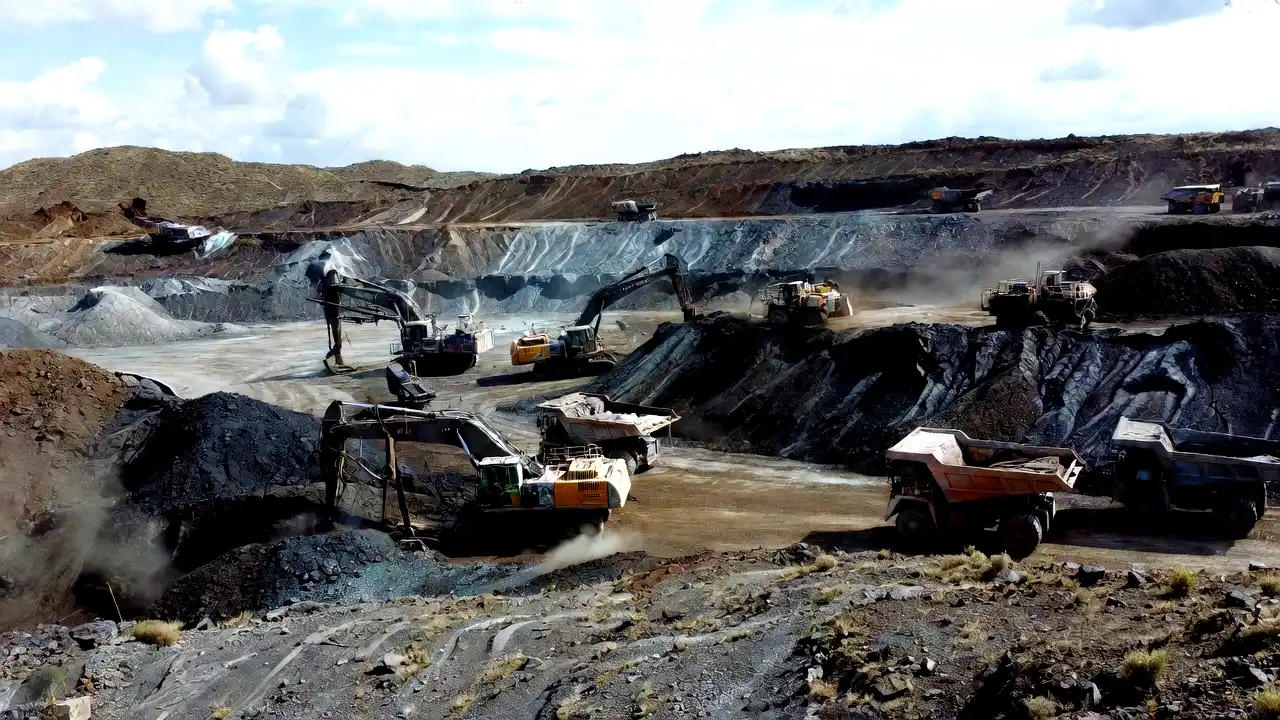
Chinese mining giant CMOC Group has executed a major strategic move into the global bulk commodity market, securing a multi-billion-dollar mine financing and off-take agreement for high-grade iron ore development in Brazil. Under the landmark deal, CMOC is committing over $1.5 billion in structured project debt, equity co-investments, and long-term off-take prepayments to accelerate the construction of large-scale iron ore extraction and logistics infrastructure. The investment expands CMOC’s global footprint beyond its dominant market positions in battery metals, securing a long-term supply of premium, low-impurity iron ore for China’s steelmaking industry.
The transaction marks a significant evolution in CMOC’s corporate strategy. Already established as the world’s largest cobalt producer and a top-tier copper miner through its massive Tenke Fungurume and Kisanfu mines in the Democratic Republic of Congo, CMOC is deploying its cash reserves to secure high-grade bulk steelmaking raw materials in South America. The Brazilian financing deal supports mine and logistics expansions targeted to deliver between 18 million and 26 million tonnes of high-grade iron ore per year, integrated with dedicated heavy-haul railway lines and deepwater port terminals.
The central driver behind the investment is the global steel industry’s transition toward low-carbon manufacturing. The Brazilian deposit contains premium iron ore featuring an iron content exceeding 65%, placing it among the highest-purity iron ore reserves on Earth. High-grade 65% iron ore is essential for green steelmaking technologies, including Direct Reduced Iron and Electric Arc Furnaces, which drastically reduce carbon dioxide emissions compared to traditional coal-fired blast furnaces. By securing multi-decade off-take rights for 65% iron ore, CMOC provides Chinese steelmakers with the premium feedstock required to satisfy decarbonization mandates while reducing China’s heavy reliance on Australian iron ore imports.
TechGolly provides a detailed analysis of CMOC’s Brazil iron ore deal, evaluating mine financing structures, high-grade iron ore metallurgy, green steelmaking economics, integrated rail-and-port logistics, Chinese national resource security policies, and the broader outlook for global commodity markets.
Unpacking CMOC’s $2.5 Billion Brazil Financing Structure and Off-Take Terms
The financial architecture supporting CMOC’s entry into Brazilian iron ore utilizes a hybrid capital model designed to minimize project development risk while guaranteeing physical commodity delivery. The total financial package, which combines direct project equity, syndicated bank facilities, and advance off-take prepayments, is expected to reach $2.5 billion as construction phases expand.
Under the negotiated off-take agreement, CMOC secures exclusive long-term purchasing rights for a substantial percentage of the mine’s annual output over a 15-to-20-year period. Off-take prepayments allow the mine developer to fund capital-intensive construction without diluting corporate equity or incurring high commercial bank debt. In exchange, CMOC receives physical iron ore shipments at predetermined benchmark discount formulas, providing the Chinese mining group with predictable, high-margin trading volumes.
The mine development plan centers on unlocking high-grade hematite deposits in northeastern Brazil. The project involves constructing open-pit mining faces, high-throughput crushing and screening plants, magnetic separation facilities, and tailings management systems. The processing plants will produce both high-grade lump ore and premium iron ore fines suitable for direct sintering and pelletization.
A critical requirement of the financing agreement is the completion of integrated transport infrastructure. To move tens of millions of tonnes of dense iron ore from inland pit sites to ocean transport vessels, the project is allocating substantial capital toward the FIOL (East-West Integration) heavy-haul railway and the deepwater Porto Sul port complex in Bahia state. Establishing a dedicated pit-to-port logistics corridor ensures that transport costs per tonne remain low, keeping the Brazilian operation cost-competitive against major Australian producers.
The Green Steelmaking Imperative: Why 65 Percent High-Grade Iron Ore Commands a Premium
The strategic value of CMOC’s Brazilian investment is rooted in the changing chemical requirements of global steelmaking. Steel production accounts for roughly 7% to 9% of total global greenhouse gas emissions, making decarbonization an urgent priority for major steel-producing nations.
Traditional steelmaking relies on blast furnaces fueled by metallurgical coking coal to reduce standard 62% iron content ore into molten iron. Burning coal in blast furnaces releases massive volumes of carbon dioxide, generating roughly 1.8 to 2.2 tonnes of carbon dioxide for every single tonne of crude steel produced. To lower carbon emissions, global steelmakers are attempting to blend higher-grade iron ore into existing blast furnaces or transition entirely to low-emission production technologies.
High-grade 65% iron ore delivers significant operational and environmental advantages over standard 62% benchmark ore:
First, higher iron purity means less silica, alumina, and phosphorus slag waste inside the furnace. Processing 65% iron ore requires less energy and burns less coking coal per tonne of hot metal produced, reducing blast furnace carbon emissions by up to 15%.
Second, 65% iron ore is the essential feedstock required for Direct Reduced Iron (DRI) processes. In a DRI plant, green hydrogen or natural gas is used instead of coal to remove oxygen from iron ore, producing “sponge iron” that is subsequently melted in Electric Arc Furnaces (EAF). When powered by renewable electricity, the DRI-EAF process reduces carbon dioxide emissions by over 80% compared to traditional coal-based steelmaking.
Because high-grade 65% iron ore is geographically rare—with major high-purity reserves concentrated primarily in Brazil, Canada, and select West African deposits—steelmakers worldwide are competing aggressively to secure long-term supply agreements. The high demand has created a permanent structural price premium for 65% iron ore, which routinely trades at a $15 to $35 per tonne markup over standard 62% benchmark pricing, guaranteeing high operating margins for producers.
China’s National Resource Strategy: Breaking Dependence on Australian Mining Majors
CMOC’s multi-billion-dollar iron ore investment aligns directly with Beijing’s national security strategy to diversify China’s raw material import supply chains and reduce its vulnerability to geopolitical trade disruptions.
China operates the largest steel industry in human history, producing over 1.0 billion tonnes of crude steel annually, representing more than 50% of total world steel output. To feed its massive network of steel mills, China imports over 1.2 billion tonnes of iron ore per year, making iron ore the single largest bulk commodity imported by the Chinese economy.
However, China’s iron ore supply chain suffers from extreme geographic concentration. Australia supplies over 60% of China’s total iron ore imports through three major mining conglomerates: Rio Tinto, BHP, and Fortescue. Brazil represents the second-largest supplier, accounting for roughly 20% to 22% of Chinese imports, primarily supplied by Brazilian mining giant Vale.
Chinese policy makers view this heavy reliance on Australian mining majors as a major strategic vulnerability, particularly during periods of diplomatic tension or maritime trade friction. To counter this concentration, Beijing established the state-backed China Mineral Resources Group (CMRG), a centralized purchasing and investment agency tasked with consolidating China’s iron ore import negotiations and funding foreign mining projects to increase the proportion of Chinese-controlled “equity ore.”
By backing CMOC’s expansion into Brazilian high-grade iron ore alongside Chinese equity investments in Guinea’s massive Simandou iron ore project in West Africa, Beijing is constructing a diversified global supply network. Increasing the global supply of Chinese-controlled high-grade iron ore from South America and Africa weakens the pricing power of Australian producers, providing Chinese steelmakers with greater cost stability and geopolitical security.
CMOC’s Global Mining Empire: From Congolese Copper-Cobalt to Brazilian Bulk Commodities
CMOC Group’s expansion into Brazilian iron ore reinforces its position as one of the fastest-growing and most aggressive mining conglomerates in the global natural resources sector.
Headquartered in Luoyang, China, CMOC transformed itself from a domestic molybdenum and tungsten producer into an international mining giant through a series of bold cross-border acquisitions. In 2016, CMOC acquired the Tenke Fungurume copper-cobalt mine in the Democratic Republic of Congo from Freeport-McMoRan for $2.65 billion, followed by the acquisition of the adjacent Kisanfu copper-cobalt deposit.
Through multi-billion-dollar capital expansions at Tenke Fungurume and Kisanfu, CMOC surpassed Glencore to become the world’s largest cobalt producer and a top-five global copper producer. In 2026, CMOC’s Congolese operations produced over 55,000 tonnes of cobalt and more than 450,000 tonnes of copper, generating massive cash flows that now fund the company’s expansion into bulk commodities.
CMOC’s operational strategy in Brazil mirrors its successful playbook in Africa: partnering with local infrastructure developers, deploying state-backed Chinese project finance, and bringing disciplined Chinese engineering execution to unlock stranded, capital-starved mineral assets. By adding high-grade iron ore to its existing portfolio of copper, cobalt, molybdenum, tungsten, and niobium, CMOC has built a diversified commodity empire capable of generating high profits across both the green energy transition and traditional heavy industrial manufacturing.
Logistics and Infrastructure Engineering: Rail, Deepwater Ports, and Transport Physics
The commercial feasibility of bulk commodity mining depends entirely on low-cost, high-volume logistics. Unlike high-value metals like copper or cobalt—which are shipped in concentrated bags or cathode sheets inside standard shipping containers—iron ore is a low-margin bulk material that must be moved in millions of tonnes.
The primary physical obstacle holding back high-grade iron ore development in northeastern Brazil has been the lack of completed transport infrastructure connecting inland mining deposits in Bahia state to ocean-going vessels.
To solve this physical logistics bottleneck, CMOC’s financing package is directly supporting the completion of two integrated infrastructure megaprojects:
First, the FIOL (Ferrovia de Integracao Oeste-Leste) East-West Integration Railway. The heavy-haul electric railway line spans over 500 kilometers, connecting inland mining towns directly to coastal port terminals. The railway is engineered to support heavy freight trains capable of pulling thousands of tonnes of iron ore per transit, drastically reducing inland transport costs compared to trucking.
Second, the Porto Sul deepwater port facility in Ilheus. Constructing a dedicated deepwater port is critical because bulk shipping economics depend on ship size. Standard shallow-water ports can only accommodate smaller Supramax or Panamax vessels, which carry 50,000 to 75,000 tonnes of cargo.
Porto Sul is engineered with deep-draft mooring channels capable of docking Very Large Ore Carriers (VLOCs) and Valemax vessels carrying between 250,000 and 400,000 deadweight tonnes. Loading fully laden VLOC super-carriers reduces maritime freight expenses from Brazil to China by $8.00 to $12.00 per tonne, making Brazilian high-grade iron ore fully competitive with shorter-distance Australian shipments delivered to East Asian ports.
Brazil’s Emerging Role in the Sino-Latin American Trade Axis
CMOC’s multi-billion-dollar mine financing deal highlights the deepening economic and geopolitical alliance between Brazil and China under President Luiz Inacio Lula da Silva.
Brazil stands as China’s largest trading partner in Latin America, with annual bilateral trade crossing $150 billion. Brazil supplies China with massive volumes of agricultural commodities—including soybeans, beef, and sugar—alongside crude oil, pulp, and iron ore. In return, China supplies Brazil with industrial machinery, solar panels, electric vehicles, and high-tech electronics.
During recent high-level bilateral summits in Brasilia and Beijing, President Lula and Chinese leadership signed dozens of trade and investment agreements aimed at expanding Chinese infrastructure investment in South America. Chinese state enterprises and private conglomerates are investing heavily in Brazilian electrical transmission grids, deepwater port expansions, agricultural logistics, and electric vehicle manufacturing facilities, such as BYD’s complex in Bahia.
By financing major rail and port projects like FIOL and Porto Sul, Chinese capital is helping Brazil modernize its regional infrastructure, creating thousands of local construction jobs and generating long-term tax revenues for regional municipalities in northeastern Brazil.
Strategic Outlook for Global Iron Ore Markets and Commodity Pricing
CMOC’s expansion into Brazilian iron ore occurs at a critical juncture for the $150 billion global iron ore market, as supply and demand dynamics undergo a permanent structural shift.
On the demand side, China’s total steel consumption is stabilizing as its domestic real estate sector matures. However, Chinese demand is shifting rapidly toward higher-grade, low-impurity iron ore as steelmakers face strict carbon emission caps under national environmental trading systems. Steel mills that fail to meet emissions targets face production limits, driving continuous demand for 65% iron ore and high-density pellets.
On the supply side, the entry of major new high-grade iron ore projects over the next five years will alter global pricing dynamics:
When CMOC’s Brazilian project reaches its full 26-million-tonne annual capacity, alongside the 60-million-tonne expansion at West Africa’s Simandou deposit, the global market for premium 65%+ iron ore will experience a significant volume increase.
This influx of high-grade supply will create a widening price gap between premium and low-grade iron ores. Standard 62% Fe and low-grade 58% Fe ores will face persistent market discounts, while high-grade 65% Fe ore will maintain strong price floors driven by green steelmaker demand.
For major global mining houses like Rio Tinto, BHP, Vale, and Fortescue, CMOC’s aggressive expansion represents an intense commercial threat. Chinese mining companies are no longer passive buyers of foreign raw materials; they are active global operators capable of funding, constructing, and managing multi-billion-dollar bulk commodity projects independently.
Key Takeaways for Mining Executives, Steelmakers, and Investors
The multi-billion-dollar mine financing agreement between CMOC and its Brazilian partners delivers vital strategic lessons for executive decision-makers, commodity traders, steelmaker procurement directors, and global institutional investors.
First, high-grade, low-carbon raw materials represent the premier growth domain in bulk commodities. As the global steel industry decarbonizes, demand for 65%+ iron ore and direct-reduction grade feedstock will expand continuously, commanding high price premiums over standard benchmark ores.
Second, pit-to-port infrastructure ownership is essential for bulk commodity success. Developing high-grade mineral deposits is economically unviable without integrated heavy-haul rail and deepwater port infrastructure capable of handling Very Large Ore Carriers.
Third, Chinese state and private mining capital will continue expanding across Latin America and Africa. Chinese mining conglomerates backed by state finance will remain the primary drivers of global greenfield mining development, securing physical commodity off-take to feed domestic industrial supply chains.
Finally, global commodity markets are adjusting to a multi-polar, resource-conscious economic order. Companies and investors that position capital to capture the green steel transition, secure high-grade mineral assets, and build resilient, multi-region logistics networks will achieve sustained commercial success in the global commodity economy.






