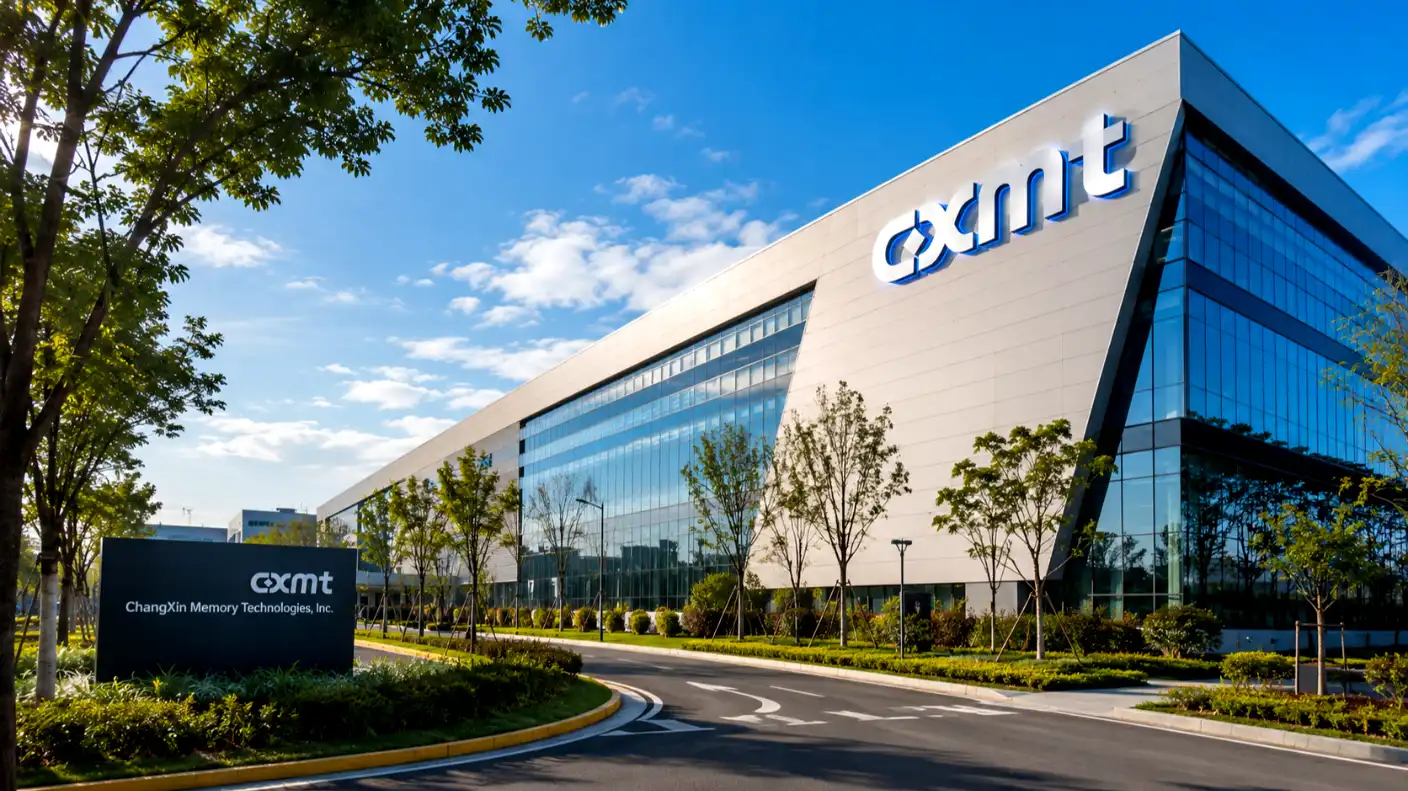
The global technology sector has officially entered a new era, defined by the physical limits of hardware production and the strategic push for national self-sufficiency. In August 2026, a historic corporate crossover occurred that permanently altered the hierarchy of the Chinese digital economy. Memory chipmaker ChangXin Memory Technologies, widely known as CXMT, officially overtook social media and gaming giant Tencent Holdings Ltd. to become the most valuable Chinese company in the world.
According to financial market data compiled on August 13, 2026, CXMT’s market capitalization reached an extraordinary $524 billion (approximately 3.58 trillion yuan), surpassing Tencent’s valuation of $510 billion (HK$4.01 trillion). This momentous crossover occurred just 17 days after CXMT’s blockbuster initial public offering on Shanghai’s sci-tech innovation board, the STAR Market. The transaction marks the largest mainland Chinese semiconductor offering on record, representing a profound, structural shift in how the global investment community values, finances, and builds the technologies of the digital age.
This valuation flipping represents more than just a standard shift in market capitalization; it is a clear message that the digital economy is prioritizing hardware over software. For nearly a decade, the giants of the consumer mobile era—including Tencent, Alibaba, and Baidu—dominated the headlines and captured the vast majority of global investment capital. Today, however, the rapid rise of generative artificial intelligence and the massive physical requirements of the machine economy have turned advanced semiconductors into the primary engine of wealth creation, proving that “chips are the new clicks.”
The Seventeen-Day Ascent: Sizing up the Five-Hundred-Billion-Dollar Giant
The speed at which CXMT has climbed to the pinnacle of the global corporate rankings is almost unprecedented in financial history, highlighting the intense, speculative frenzy currently driving the memory chip market.
Breaking the Record for Onshore-Listed Listings
On July 27, 2026, CXMT officially launched its initial public offering on Shanghai’s STAR Market, selling shares at an initial offering price of 8.66 yuan each. The company raised an extraordinary 57.92 billion yuan ($8.6 billion) in gross proceeds, making it the largest semiconductor offering in the history of mainland China’s capital markets.
The public response to the listing was immediate and overwhelming. On its first day of trading, CXMT’s shares closed at 49.00 yuan, representing a spectacular 466% surge above its initial offering price.
The stock continued to experience buying pressure over the following days, trading above 55.00 yuan and briefly pushing the company’s valuation close to 3.70 trillion yuan.
This historic market debut instantly established the Hefei-based memory maker as the most valuable onshore-listed company in China, proving that local investors maintain deep confidence in the country’s domestic semiconductor industry.
Emerging as the Fourth-Largest Global DRAM Powerhouse
The massive market capitalization has propelled CXMT into the elite ranks of the global semiconductor industry. The company currently ranks as the world’s fourth-largest manufacturer of dynamic random-access memory (DRAM), trailing only South Korea’s Samsung Electronics, SK Hynix, and the United States-based Micron Technology.
To support this rapid expansion, the company has built massive, highly automated fabrication plants in Hefei, Anhui province. Ramping up these facilities requires an immense capital expenditure program, and the $8.6 billion raised in the IPO provides the company with a massive, highly liquid war chest to fund its ongoing technology development.
Market research analysts at Nomura project that CXMT’s share of global DRAM production will rise from approximately 10% in 2024 to a robust 18% by the end of 2028, establishing the Chinese firm as a dominant, indispensable force in the global memory market.
The Crossover Paradox: Why Chips Are Replacing Clicks
The shifting valuations of Tencent and CXMT highlight a fundamental divergence in how the financial markets view the growth prospects of software platforms and hardware providers.
Tencent’s Soaring AI Capex and the Squeeze on Software
While CXMT’s valuation remained elevated, Tencent’s Hong Kong-listed shares fell by 4.5% on August 13 alone, contributing to a broader 26% decline in the company’s stock value over the past year.
This downturn was driven directly by investor anxiety over the massive, margin-squeezing capital expenditures required to fund the company’s own artificial intelligence programs.
In its recent second-quarter financial reports, Tencent revealed that its quarterly AI-related capital expenditures had surged by an extraordinary 176% year-over-year.
Like many other software and internet giants, the WeChat creator is facing intense, competitive pressure to build its own proprietary large language models and integrate AI agents into its daily operations.
Because these advanced models require massive amounts of memory and processing power to run, Tencent’s hardware procurement costs have skyrocketed, severely squeezing its short-term profit margins and forcing the company to buy back its own shares to protect its valuation.
The Ultimate Message: Chips are the New Clicks
This stark performance gap has forced portfolio managers to re-evaluate their investment strategies. Gary Tan, a portfolio manager at Allspring Global Investments, noted that the valuation flip represents a profound, permanent shift in market priorities, stating that CXMT exceeding Tencent is a message from the market—chips are the new clicks.
Tan explained that as “agentic AI” and autonomous software systems take on an increasing share of internet traffic, the economic value of traditional, consumer-facing internet platforms will inevitably compress.
In the near future, corporate and consumer transactions will no longer be executed through manual clicks on a web browser, but through automated, high-frequency queries handled by digital agents.
Because these automated systems require immense physical memory to operate, the wealth of the digital age is shifting away from the companies that own the platforms and directly to the companies that manufacture the physical hardware, ensuring that the gap between hardware and software valuations will continue to widen as the machine economy matures.
The Geopolitical Shield: Self-Sufficiency and the Apple Connection
The historic success of CXMT’s IPO is also deeply connected to an escalating, high-stakes trade war between the United States and China over advanced technology.
Securing the Domestic Supply Chain Amid the US-China Tech War
The Chinese government has designated the semiconductor and memory sectors as critical national security priorities, viewing them as essential defense mechanisms against foreign economic coercion.
As Washington continues to implement strict export controls to restrict Chinese access to advanced Western chips, Beijing is actively using its massive capital markets to fund its domestic technology industry, redirecting a portion of its $28 trillion stock and bond markets to support local innovators.
This state-supported capital allocation provides CXMT with a powerful, protective moat.
In the event that the United States or its allies impose further restrictive sanctions on foreign memory suppliers like Samsung or SK Hynix, CXMT would instantly become the sole, near-monopoly provider of DRAM in the Chinese market.
Because the company’s chips are already utilized across millions of domestic smartphones, consumer electronics, and high-performance AI data servers—including major local platforms like Tencent, which signed a massive $3 billion server DRAM supply contract with CXMT in June 2026—the memory maker is uniquely positioned to insulate China’s digital economy from foreign trade shocks.
Apple’s Search for Special Permission to Source CXMT DRAM
The strategic importance and high quality of CXMT’s memory chips are also reflected in its growing appeal to Western technology giants. According to supply chain disclosures, consumer electronics giant Apple Inc. has been actively testing CXMT’s DRAM chips for use in its premium MacBook and iPhone manufacturing lines.
However, actually implementing this partnership requires navigating a highly complex, politically charged regulatory minefield.
Because the U.S. government has placed strict limits on American corporations doing business with designated Chinese technology firms, Apple’s legal and procurement teams have had to seek “special permission” from the U.S. Treasury Department and the Bureau of Industry and Security to source memory from CXMT.
This corporate lobbying highlights a sobering reality: even the world’s most powerful technology companies cannot easily escape China’s manufacturing scale and cost-efficiency.
Where even a 1.5% improvement in component margins can save a hardware maker millions of dollars in annual production expenses, securing access to CXMT’s low-cost memory remains an absolute priority for global brands, regardless of the political boundaries of the trade war.
The Preliminary Review Pilot: Accelerating the Path to Market
The rapid execution of CXMT’s public listing also highlights a major, highly coordinated reform of China’s regulatory system, designed specifically to fast-track the funding of national technology champions.
To bypass the lengthy, bureaucratic delays that historically stalled public listings on mainland exchanges, Chinese regulators implemented a new “preliminary review” pilot program on the Shanghai Stock Exchange.
This innovative regulatory system allowed CXMT’s legal and financial teams to work directly with regulators to resolve key disclosure, auditing, and compliance issues ahead of submitting any formal public filings.
This streamlined pilot program was an extraordinary success.
By utilizing the preliminary review, the company cut the time from its initial filing to its official trading debut to under eight months—a process that routinely stretches for several years on other major exchanges.
This rapid acceleration ensured that the company could secure its $8.6 billion in fresh capital at the absolute peak of the global AI investment cycle, demonstrating how successfully Beijing is aligning its state regulators with the financial needs of its critical hardware champions.
Reforming the Wealth of the Nation
The completed crossover of ChangXin Memory Technologies surpassing Tencent Holdings Ltd. to become the world’s most valuable Chinese company is a historic milestone in the modern history of global finance. By demonstrating a massive $524 billion valuation just 17 days after its record-breaking Shanghai IPO, the memory giant has proven that the global investment community is willing to place an immense premium on the physical infrastructure of the AI age.
While traditional software platforms like Tencent struggle to manage their soaring AI capital expenditures and declining operating margins, CXMT has successfully capitalized on the global memory supply crunch to generate historic cash flows.
As the company continues to utilize its $8.6 billion IPO proceeds to scale its domestic manufacturing facilities, expand its global DRAM market share, and secure landmark customers like Apple, this massive capital accumulation will ensure that the firm remains the undisputed, central architect of the Asian technology sector.
This high-growth, hardware-led transition has permanently reshaped how the world values, finances, and builds the technologies of the digital age, proving that the ultimate winners of the machine era will be the nations that can successfully control, protect, and manufacture their own physical computing infrastructure.