

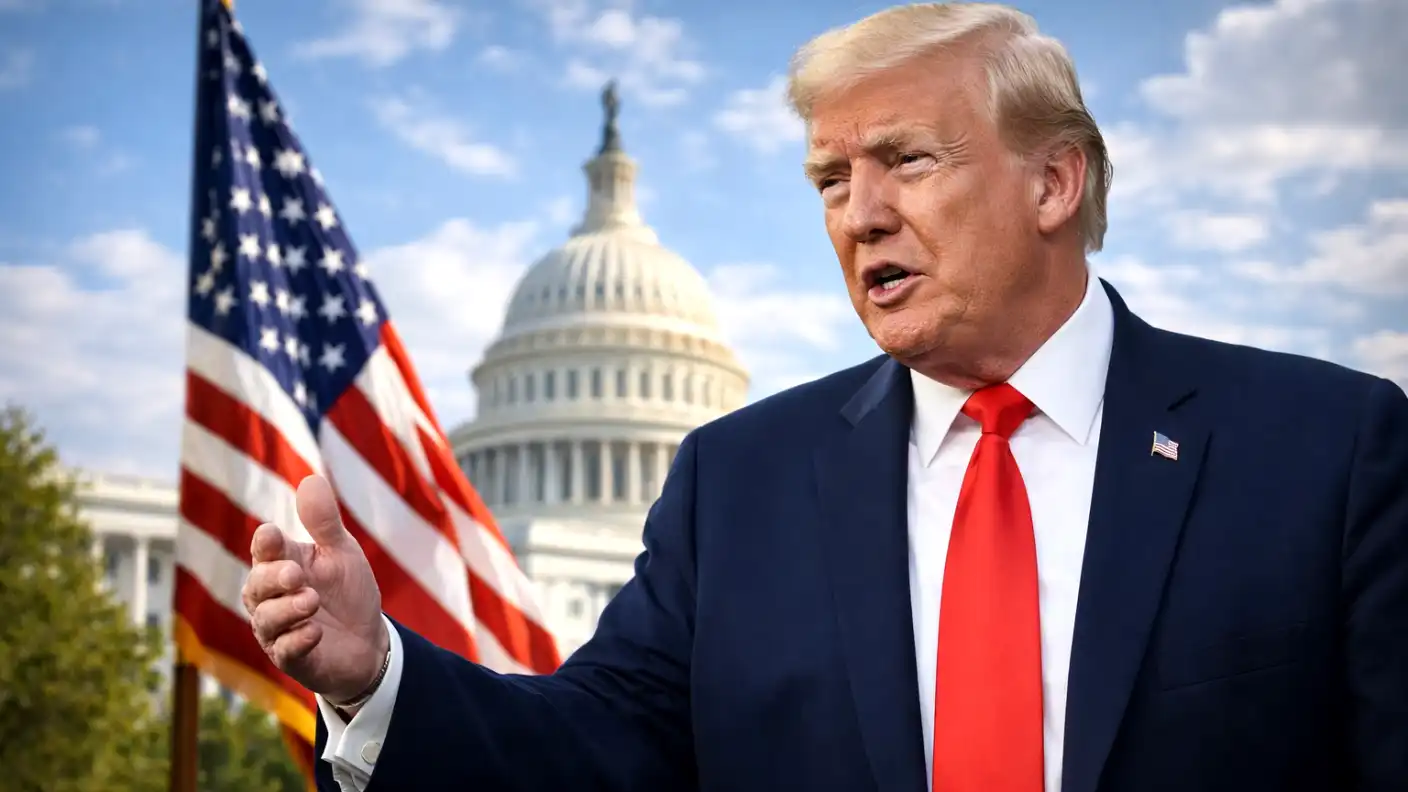
The United States trade landscape has experienced a major regulatory realignment. In August 2026, the U.S. Court of International Trade in New York ruled unanimously in favor of President Donald Trump’s executive action to eliminate a long-standing import tax carve-out. This crucial judicial decision upholds the administration’s authority to rescind the “de minimis” exemption, which previously allowed low-value packages to enter the country completely duty-free with minimal regulatory scrutiny.
The three-judge panel’s decision represents a monumental victory for Trump’s protectionist, “America First” trade agenda. For over a year, the administration has faced a relentless series of legal challenges from retail coalitions and small businesses, who argued that the president had overstepped his constitutional authority by bypassing Congress to alter tax lines. By confirming that the president possesses the legal authority to close the low-value tariff loophole under federal emergency laws, the court has handed the White House a powerful legal shield to continue its aggressive trade maneuvers.
The ruling has triggered immediate panic across the global e-commerce and retail logistics sectors. Under the previous de minimis framework, foreign shippers could send small parcels valued at $800 or less directly to American consumers without paying any import duties or undergoing time-consuming customs inspections. Removing this exemption immediately shifts millions of daily small-parcel imports onto standard, high-rate tariff lines, raising retail prices for consumers and forcing e-commerce platforms to fundamentally restructure their international supply chains.
The Core of the Ruling: The Legal Authority Under the IEEPA
The unanimous decision by the New York-based trade court focused heavily on the precise scope of executive power during declared national emergencies, establishing a critical distinction between imposing new taxes and revoking existing trade privileges.
Defining the President’s Power to Rescind “Privileges”
The lawsuit challenging the tariff policy argued that because Congress holds the exclusive constitutional authority to levy taxes and tariffs, the president cannot unilaterally eliminate a duty-free threshold that lawmakers previously enacted. However, the three-judge panel rejected this argument, pointing to the specific language of the International Emergency Economic Powers Act of 1977, commonly known as the IEEPA.
The judges clarified that while the IEEPA does not grant the president the independent authority to impose entirely new, global tariffs—a principle that the U.S. Supreme Court confirmed in a separate landmark ruling earlier in the year—the statute does permit the executive branch to “nullify” or “void” any trade-related “privilege” during a declared national emergency. Because the de minimis exemption is legally classified as a temporary, trade-related privilege rather than a permanent tax law, the court ruled that the president’s executive orders rescinding the carve-out fell squarely within his emergency economic powers.
Executing Congressional Policy in a National Emergency
The court also found that by closing the de minimis loophole, the president was actively executing the broader trade policies of Congress. The judges wrote that by rescinding the de minimis exemption, the president identified the existence of an underlying condition—a national emergency—and executed the policy of Congress by taking an action specifically enumerated in the IEEPA to deal with that emergency.
The Trump administration has consistently argued that the low-value import exemption had become a major threat to public safety and national security. In its related executive orders, the White House claimed that transnational criminal organizations, counterfeiters, and illicit drug cartels were actively exploiting the lighter customs scrutiny of the de minimis channel to smuggle dangerous narcotics like fentanyl and counterfeit goods directly into American neighborhoods. By linking the trade policy directly to a public health and law enforcement emergency, the administration successfully convinced the judges that closing the loophole was a necessary, legally sound exercise of emergency executive power.
The Story of Detroit Axle and the Squeeze on Small Importers
The legal challenge that led to the historic trade court ruling was spearheaded by Detroit Axle, a Michigan-based auto parts retailer and distributor that had built its entire modern business model around the low-value tariff exemption.
How Small Importers Adapted to the Low-Value Carve-Out
Like many mid-sized American retailers, Detroit Axle had restructured its logistics networks to take advantage of the de minimis rule. The company opened a major distribution center in Juarez, Mexico, where it gathered auto replacement parts manufactured abroad.
Using this border facility, the company packaged these replacement parts into small, individual parcels valued under $800 and shipped them directly to U.S. retail consumers duty-free.
This high-frequency, low-value shipping model allowed the auto parts distributor to avoid millions of dollars in import duties, keeping its retail prices highly competitive against larger corporate rivals.
The sudden suspension of the de minimis exemption in 2025 shattered this business model overnight.
Detroit Axle’s lawyers argued in court filings that the sudden imposition of tariffs on previously exempted small parcels inflicted severe, irreparable financial harm on the company, forcing it to pay millions in unexpected duties and threatening its long-term survival.
The Clash Over Congressional Timelines
Detroit Axle’s central legal argument was that the president had unlawfully overridden the explicit legislative intent of Congress. In late 2025, bipartisan lawmakers in Congress passed an omnibus tax-and-spending bill that permanently eliminated the de minimis exemption for low-value imports.
However, to give small businesses, logistics firms, and customs brokers time to adjust, Congress wrote a long transition timeline into the legislation, keeping the duty-free exemption active until July 2027.
The distributor argued that by utilizing executive orders to immediately halt the exemption in 2025, Trump had illegally shortened the timeline established by Congress.
Detroit Axle’s lawyers contended that the long transition period proved that lawmakers did not intend to grant the president the power to immediately eliminate the exemption on his own.
However, the trade court panel rejected this argument, ruling that the congressional timeline did not restrict the president’s independent, emergency authority under the IEEPA to act sooner if he identified an active national security threat, leaving small businesses with no choice but to pay standard duties immediately.
The Economic and Corporate Fallout: From Shein to Main Street
The elimination of the de minimis exemption has had a massive, immediate impact on the global e-commerce market, altering consumer pricing, corporate profitability, and international logistics.
Shein and Temu Face Massive Profit Compressions
The corporate entities feeling the strongest impact of the trade court’s decision are massive, Chinese-founded e-commerce platforms like Shein and Temu. These companies built highly successful, multi-billion-dollar global businesses by shipping low-cost apparel, electronics, and household goods directly from factories in Asia to individual consumers in the United States.
Because their business models relied almost entirely on shipping small, individual packages valued under the $800 threshold, the vast majority of their U.S. imports previously entered the country completely duty-free.
The loss of the de minimis carve-out has severely compressed their profit margins.
For example, Singapore-headquartered Shein recently disclosed in its corporate reports that it lost $99 million last quarter due to the loss of the exemption, as transferring millions of small parcels to standard tariff lines dramatically inflated its landed costs and forced it to raise retail prices for American shoppers.
The Ten-Billion-Dollar Tariff Revenue Windfall
While international e-commerce platforms and small importers struggle, the Trump administration has celebrated the trade court’s ruling as a major fiscal victory for the American taxpayer.
In a highly publicized post on his Truth Social platform, President Trump praised the “BIG WIN” at the U.S. Court of International Trade, calling the de minimis exemption one of the most despicable loopholes in American trade policy.
Trump noted that in 2024 alone, the de minimis loophole cost the United States an estimated $10.8 billion in foregone tariff revenue, while serving as a pipeline for fentanyl traffickers and counterfeiters.
He wrote that by closing this ridiculous giveaway, the government has ensured that foreign goods must play by the rules, generating billions of dollars in new tariff revenue that can instead help pay for a stronger military, tax relief, and national security programs.
The Shifting Balance of Power in U.S. Trade Policy
The trade court’s decision has introduced a new layer of complexity to the ongoing, high-stakes legal battles over the scope of executive trade power in the United States.
The Unpredictable Path of Executive Tariff Authority
For over a year, Trump’s protectionist trade agenda has faced a series of severe legal setbacks in the federal courts. In February 2026, the U.S. Supreme Court delivered a historic 6-3 ruling in a landmark customs case, finding that the president had exceeded his authority under the IEEPA when he attempted to impose sweeping, global tariffs on imports from China, Canada, and Mexico.
The High Court ruled that the IEEPA does not grant the president the independent authority to impose entirely new, global tariffs, forcing the administration to seek alternative legal pathways to implement its protectionist policies.
The Court of International Trade’s recent de minimis ruling has successfully established this legal alternative.
By confirming that the president has the power to rescind an existing trade-related privilege, even if he cannot impose new taxes, the court has created a highly volatile, dual-track legal environment.
The president remains blocked from imposing broad, global tariffs, but is fully cleared to eliminate existing carve-outs and exemptions, giving the administration a powerful tool to raise effective tariff rates on targeted foreign imports.
Navigating Supply Chain Relocations and Domestic Manufacturing
This highly volatile regulatory environment is forcing global logistics companies, supply chain managers, and retail platforms to fundamentally re-evaluate their long-term strategies.
As the cost of importing cheap, direct-to-consumer goods from Asia continues to rise, businesses are actively exploring plans to relocate their manufacturing facilities and distribution centers.
Many companies are choosing to move their assembly lines to countries with preferential trade agreements, or directly back to the United States.
By establishing local, automated manufacturing facilities that utilize advanced robotics and artificial intelligence, businesses want to protect themselves from sudden, unpredictable tariff changes, proving that even a 1.5% margin improvement can yield massive savings.
While these large-scale industrial projects require over $1 billion in capital investments, they represent the only way for modern enterprises to secure their supply chains and ensure long-term stability in an era of aggressive, state-sponsored trade nationalism.
Securing the American Industrial Base
The decision by the U.S. Court of International Trade to uphold the elimination of the de minimis exemption is a landmark moment in the history of American trade policy. By confirming that the president possesses the emergency legal authority to rescind low-value tariff carve-outs under the IEEPA, the court has handed President Trump a major, highly sought-after victory, closing what the administration called a giant loophole for tariff cheats and fentanyl traffickers.
While the loss of the duty-free privilege has caused immediate, severe financial pain for small importers like Detroit Axle and compressed the profit margins of global e-commerce giants like Shein, the policy has successfully generated billions of dollars in new tariff revenue for the federal treasury.
As the country continues to navigate a highly volatile, protected trade landscape, this aggressive protectionist strategy will force businesses to adapt, encouraging the development of highly automated, domestic manufacturing facilities and ensuring that the United States remains a highly resilient, self-reliant industrial superpower for decades to come.






