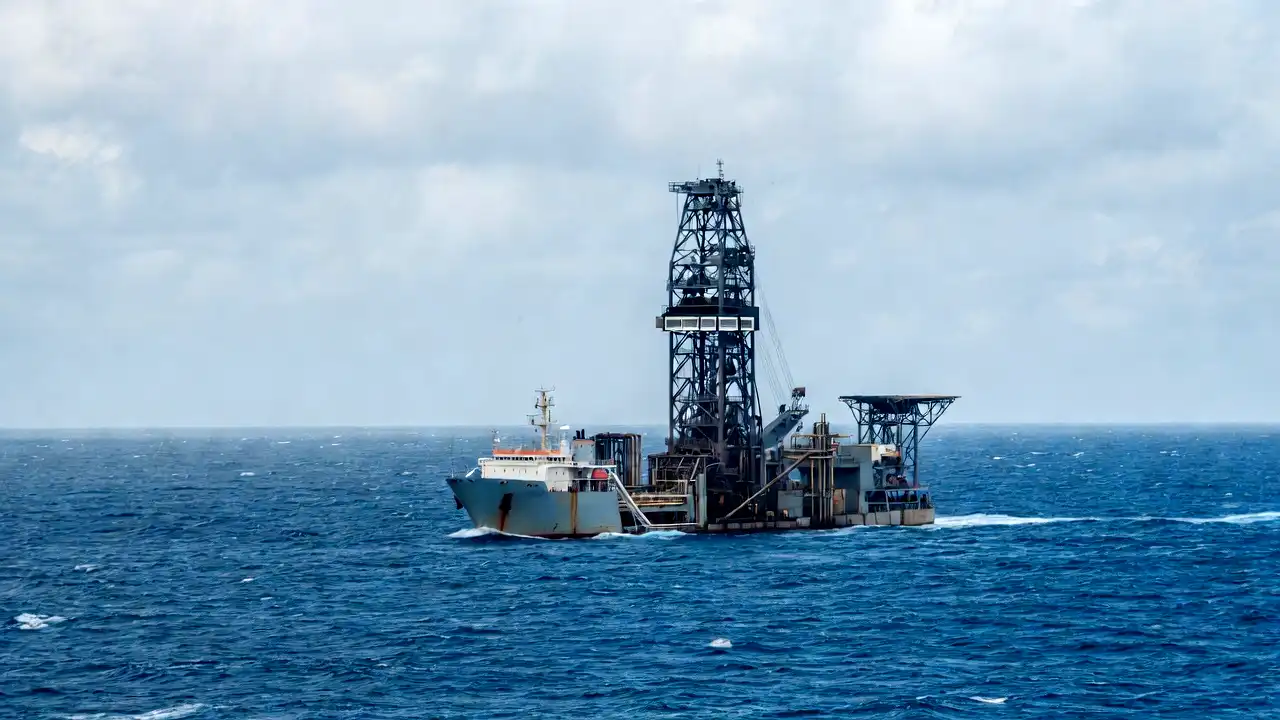
The global struggle to control critical mineral supply chains has descended to the absolute depths of the ocean. In August 2026, details emerged regarding an ambitious, highly strategic partnership between the United States and Japan to launch the world’s deepest undersea mining operation. The joint project aims to extract rare earth–rich mud from a depth of 6,000 meters (approximately 19,685 feet) below the surface of the Pacific Ocean, establishing a highly resilient, alternative source of the strategic metals required to support advanced defense systems, electric vehicles, and clean energy technologies.
The planned deep-sea mining demonstration will take place in the waters surrounding Minamitorishima Island, a remote Japanese coral atoll located roughly 1,950 kilometers southeast of Tokyo. By tapping these massive seabed deposits, Washington and Tokyo want to build a secure, independent supply chain, directly challenging China’s near-monopoly on rare earth refining and separation. The initiative comes at a critical time when international trade wars and diplomatic frictions have turned critical minerals into powerful geopolitical weapons.
While some environmental organizations and international regulators are calling for a strict moratorium on deep-sea mining due to ecological concerns, the strategic necessity of breaking China’s monopoly has pushed the two allied nations to move forward. The high-risk, capital-intensive project represents a major milestone in global industrial policy, proving that the battle for technological sovereignty has moved beyond terrestrial borders and into the deep ocean trenches.
The Mechanics of the Six-Thousand-Meter Undersea Mission
Operating at a depth of 6,000 meters is an extraordinary engineering challenge, requiring technology capable of withstanding extreme hydrostatic pressures and low temperatures that would instantly crush standard industrial equipment.
The Technology: Heavy Pipes and Norwegian ROVs
To execute this historic deep-sea mining test, the partners have developed a highly specialized, custom extraction system. The technology relies on a massive, 6,000-meter vertical steel pipe designed to lift mineral-rich mud directly from the ocean floor to a research vessel on the surface.
Engineers completed the delivery and installation of this heavy-lifting pipe in late May 2025, marking a major milestone in the project’s physical preparation.
To navigate the pitch-black, high-pressure environment of the seabed, the project is also deploying a state-of-the-art, custom-built remotely operated vehicle (ROV).
Manufactured by specialized deep-sea engineering firms in Norway, the ROV arrived in Japan in August 2025
The robotic vehicle is equipped with powerful mechanical claws, high-definition sonar arrays, and specialized suction pumps designed to vacuum up the thick, rare-earth-rich sediment and feed it into the vertical lift pipe, allowing for continuous extraction from the abyssal clay layer.
The Fifty-Tonne Sample Success of the Drilling Ship Chikyu
The joint program is already building on significant, real-world testing success. In early 2026, the deep-sea drilling ship Chikyu completed a preliminary testing mission near Minamitorishima Island, successfully recovering over 50 tonnes of seabed material from a depth of approximately 6,000 meters
The scientific analysis of these recovered samples confirmed the presence of highly valuable yttrium, gadolinium, and dysprosium, proving that the region’s abyssal clays host rich, high-purity deposits of heavy rare earth elements. Following the success of the Chikyu mission, the Japanese government’s National Platform for Innovative Ocean Developments is preparing for a full-scale, continuous mining demonstration scheduled to begin as early as February 2027
The trial system is designed to extract up to 350 tons of rare-earth-rich sediment per day .
If the 2027 pilot test successfully proves its commercial viability, the partners will begin designing a commercial-scale extraction fleet, bringing the world’s deepest undersea mine one step closer to active commercial production.
The Geopolitical Catalyst: Breaking China’s Rare Earth Monopoly
The primary driver behind this high-risk, multi-billion-dollar undersea alliance is the urgent need to break China’s dominant grip on the global critical minerals market.
The Vulnerability of Allied High-Tech Industries
Rare earth elements are not a luxury; they are non-substitutable inputs required to manufacture the high-performance permanent magnets, sensors, and microprocessors that power the modern economy.
Everything from commercial smartphones and electric vehicles to wind turbines, advanced missile guidance systems, and stealth fighter jets remains completely dependent on these strategic metals.
Currently, China controls approximately 60% of the world’s rare earth mining production and an astonishing 91% of the global refining and separation capacity.
This concentration has left Western allied nations highly vulnerable to economic coercion.
Despite spending heavily to secure alternative onshore supplies—including long-term financial backing for Australian miner Lynas Rare Earths—Japan still imports roughly 70% of its rare earths from China
When Beijing implemented strict export restrictions on products destined for military use, Japanese high-tech manufacturers faced immediate component shortages, proving that the current trade model is no longer sustainable.
The Memorandum of Cooperation Between Washington and Tokyo
To counter this strategic vulnerability, the United States and Japan have formalized their technological and resource alliance. On March 19, 2026, the United States and Japan signed a landmark Memorandum of Cooperation Regarding Deep-Sea Mineral Resource Development.
This bilateral agreement establishes a comprehensive framework for joint exploration, technological exchange, and capital sharing.
By combining Japan’s geographic sovereignty over the Minamitorishima exclusive economic zone with the United States’ immense financial resources and private-sector venture capital, the alliance wants to build a secure, independent critical mineral pipeline.
The agreement also serves as a vital political shield, providing the project with the necessary geopolitical backing to navigate international legal disputes and regulatory reviews as they establish the world’s deepest mining operations.
The Promise of Abyssal Clays: Meets Global Demand for Centuries
The geological deposits off Minamitorishima Island represent some of the most concentrated and valuable mineral wealth ever discovered on Earth, providing a powerful incentive for the partners to overcome the immense engineering challenges of deep-sea extraction.
The 2012 Discovery and the Wealth of Minamitorishima
The massive rare earth deposits surrounding the remote coral atoll were first discovered in 2012 by a joint research team from the University of Tokyo and the Japan Agency for Marine-Earth Science and Technology (JAMSTEC)
The discovery was a massive surprise to the scientific community, as the seabed samples revealed exceptionally high concentrations of critical rare earth elements.
Subsequent geological modeling and mapping projects have estimated that the Minamitorishima exclusive economic zone holds millions of tons of high-purity rare earth oxides.
Some optimistic researchers have suggested that these abyssal clay reserves are large enough to meet global demand for critical rare earth elements for centuries.
While Japan’s Strategic Innovation Promotion Program cautiously describes the deposits as “potentially viable for industrial-scale development,” the sheer size of the resource makes it a highly valuable strategic asset.
Rare Earth Elements Essential for the Energy Transition
The chemical composition of the Minamitorishima mud is particularly valuable because of its high concentration of heavy rare earth elements. The abyssal clays are densely loaded with key elements like neodymium, dysprosium, terbium, and yttrium.
These elements are the absolute baseline of the global energy transition:
- Neodymium: The primary component used to manufacture high-strength permanent magnets for electric vehicle motors and wind turbines.
- Dysprosium and Terbium: Added to permanent magnets to protect them from demagnetization at high operating temperatures, making them vital for defense and industrial equipment.
- Yttrium: A globally scarce element used in coating agents for semiconductor manufacturing equipment and advanced automotive catalysts.
By securing an independent, domestic supply of these critical elements, the United States and Japan can protect their high-tech manufacturing sectors, secure their national defense programs, and accelerate their clean energy transitions without fear of foreign export restrictions.
The Environmental Controversy and High-Capital Risks
While the strategic and geopolitical benefits of the deep-sea mining alliance are immense, the project must also navigate a highly volatile environmental and financial risk landscape.
The Enormous Engineering and Financial Barriers
Large-scale commercial mining of metals from the deep seabed has never been achieved, and the financial risks of the project are colossal.
Constructing, operating, and maintaining a fleet of specialized research vessels, drilling ships, and robotic vehicles at a depth of 6,000 meters requires an immense capital commitment, with single projects easily requiring over $1 billion in upfront investment.
To justify these immense expenditures, the partners must prove that the cost of extracting the undersea mud is competitive with land-based mining operations.
In a volatile commodities market, even a minor 1.5% improvement in processing yield or a 1.5% reduction in shipping and transport costs can determine whether the project is financially viable.
If the 2027 pilot tests reveal that the extraction costs are too high, or if the vertical lift system suffers frequent mechanical failures under extreme pressure, the project could easily become a highly expensive financial drain, slowing down the allied resource recovery.
The Growing Global Backlash and Environmental Moratoriums
The planned deep-sea mining operations have also triggered a powerful wave of international protest and environmental concern. Marine biologists and environmental groups warn that vacuuming up massive quantities of seabed sediment could devastate fragile, poorly understood abyssal ecosystems.
The physical extraction process generates massive underwater plumes of silt and industrial waste, which can drift for miles in ocean currents, choking out marine life, disrupting deep-sea food chains, and destroying unique habitats that have taken millions of years to form.
These environmental risks have prompted many nations, including several European Union members, to call for a strict global moratorium on deep-sea mining until the long-term ecological consequences are fully assessed.
As the International Seabed Authority wrestles with how to draft a formal, binding environmental code for deep-sea mining, the joint US-Japan project will remain a highly controversial, politically charged flashpoint on the global stage.
Securing the Strategic Frontier of Critical Minerals
The joint deep-sea mining project planned by the United States and Japan represents a bold, high-risk leap into the future of industrial policy. By preparing to extract rare earth–rich mud from a depth of 6,000 meters near Minamitorishima Island, the two allied nations are attempting to build an unassailable, independent supply chain to challenge China’s near-monopoly on critical minerals.
Through its innovative vertical lift technology, its strategic partnerships with advanced engineering firms, and the successful recovery of 50 tonnes of raw material, the alliance has proven that the technology is ready for real-world demonstration.
While the immense physical, financial, and environmental challenges of deep-sea mining will continue to cause intense public debate, the geopolitical necessity of securing the raw materials of the digital age has pushed the two nations to explore the absolute limits of technology.
As the 2027 pilot tests approach, the success of this deep-sea mining alliance will determine not only the safety and security of the allied high-tech and defense industries, but also who will control the physical building blocks of the modern global economy for the next century of progress.